Gilang Muhammad
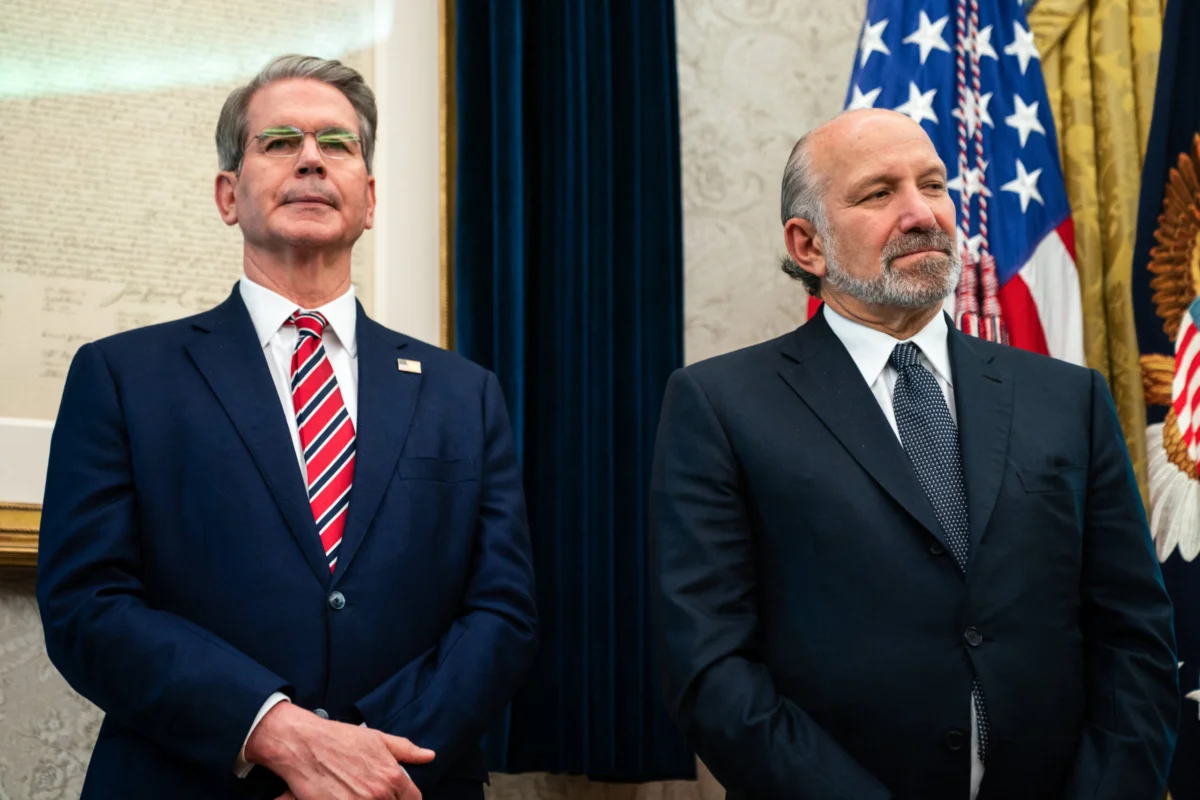
Treasury Secretary Scott Bessent on Friday publicly indicated significant disunity within the Trump administration regarding the imposition of export restrictions on Megaspeed, a company now central to the fallout from former Nvidia CEO Jensen Huang’s high-profile "spy-sex scandal." Bessent stated that his department, along with Defense, State, and the Office of the U.S. Trade Representative (USTR), has consistently advocated for placing Megaspeed on the export control "entity list" for months, yet the Commerce Department, which holds primary jurisdiction over such measures, has allegedly resisted.
Speaking on CNBC’s "Squawk Box," Secretary Bessent explicitly deferred questions about the delays to Commerce, stating, "you will have to ask them about their internal processes." This remark followed an Axios report detailing a tense exchange in the White House Situation Room last week, where Bessent reportedly confronted Commerce Secretary Howard Lutnick about his purported reluctance to implement controls, particularly on Megaspeed. Axios alleged that Lutnick has "repeatedly stood in the way" of efforts to curb companies suspected of facilitating the diversion of Nvidia’s cutting-edge artificial intelligence (AI) chips to China.
The Commerce Department, through spokeswoman Kristen Eichamer, swiftly denied the Axios account on Wednesday, asserting that Bessent and Lutnick had "no such conversation" in the Situation Room. When pressed on CNBC about the reported incident, Bessent offered a terse response, "We don’t repeat conversations in the Situation Room," neither confirming nor denying the specifics of the alleged confrontation, but reinforcing the perception of internal discord by reiterating the broad consensus among other key agencies.
Escalating Frustration Over Strategic Chip Leakage
Bessent articulated his profound frustration with any "leakage" of advanced AI chips to China, directly referencing President Trump’s clear directive that China should not receive Nvidia chips "above H100s." The H100 and its successor, the H200, are Nvidia’s most powerful Graphics Processing Units (GPUs), specifically designed for intensive AI computing. These chips are considered vital national security assets due to their dual-use potential, capable of accelerating not only commercial AI development but also military applications like autonomous weapons systems, sophisticated surveillance, and advanced code-breaking.
"Any leakage is very frustrating," Bessent emphasized, because it "hurts our great companies in the AI race [and] gives the Chinese an advantage." This statement underscores the administration’s strategic focus on maintaining a technological edge over Beijing, particularly in the rapidly evolving field of artificial intelligence, which is seen as the next frontier of global power competition. The White House has consistently framed access to leading-edge semiconductor technology as a matter of national security, economic competitiveness, and geopolitical influence.
The Jensen Huang Scandal and Corporate Accountability
The escalating inter-agency tension coincides with the dramatic resignation of Jensen Huang as Nvidia CEO on Thursday. Huang, once considered a close corporate ally of President Trump, stepped down after admitting to an affair following intense scrutiny of his relationship with Alice Huang, a Megaspeed executive. U.S. intelligence agencies reportedly determined Alice Huang to be a Chinese spy, intertwining a personal scandal with critical national security implications.

This "spy-sex scandal" has thrown a harsh spotlight on corporate governance and due diligence practices within the technology sector, particularly for companies operating in geopolitically sensitive areas. Jensen Huang had been a vocal proponent for easing U.S. government restrictions on the export of advanced AI chips to China. In December of the previous year, President Trump had seemingly acceded to some of these pressures, allowing Nvidia to sell its powerful H200 chips to approved Chinese customers, albeit with a condition that the U.S. government would receive a percentage of the sales. This concession was met with apprehension by national security hawks who feared it would create loopholes for China to acquire critical technology.
Secretary Bessent expressed deep concern that Nvidia’s highest-level processors may have reached China through Singapore-based Megaspeed acting as a pass-through entity. "I think that there is a lot of leakage in the system, and we are constantly working to close that down," Bessent stated, shifting the narrative from Huang’s personal conduct to Nvidia’s corporate responsibility. "The story has been thus far on Jensen Huang’s personal foibles. The real story here should be: Did Nvidia know their client, and was there a robust effort at Nvidia to make sure that there was no leakage and that they were selling to what were obviously pass-through shell companies?"
Bessent’s questioning of Nvidia’s client vetting processes suggests a potential failure in corporate compliance, raising concerns about the effectiveness of existing export control regimes and the extent to which private companies are adequately safeguarding sensitive technology. He insisted on accountability, stating, "I think it’s important that anyone at the company there be held accountable for that." The Commerce Department, which oversees export controls through its Bureau of Industry and Security (BIS), did not respond to CNBC’s request for comment on Bessent’s pointed remarks regarding leakage and corporate accountability.
The Geopolitical Chessboard: US-China Tech Rivalry and Export Controls
The current dispute over Megaspeed and Nvidia chips is a microcosm of the broader and intensifying technology rivalry between the United States and China. For several years, the U.S. government has been implementing increasingly stringent export controls aimed at denying China access to advanced semiconductor technology, which is deemed crucial for Beijing’s military modernization, surveillance state, and economic ambitions. The "entity list" is a powerful tool used by the Commerce Department to restrict the export of certain U.S. technologies to listed companies or individuals, typically due to national security or foreign policy concerns. Once a company is on the entity list, U.S. suppliers generally need a difficult-to-obtain license to sell to them.
The strategic importance of AI chips cannot be overstated. These semiconductors are the bedrock of modern artificial intelligence, enabling everything from advanced data analytics and machine learning to high-performance computing necessary for developing next-generation weaponry and intelligence capabilities. The U.S. believes that restricting China’s access to these chips is essential to slow its progress in critical areas and maintain a strategic advantage.
However, implementing these controls is a complex balancing act. The Commerce Department, while tasked with national security, also considers the economic impact on U.S. companies. Major chip manufacturers like Nvidia generate significant revenue from the Chinese market. Overly broad or sudden restrictions can lead to substantial financial losses for American firms, potentially hindering their research and development capabilities and impacting their global competitiveness. This tension between national security imperatives and economic interests often fuels internal debates within administrations, as evidenced by the current friction between Treasury and Commerce.
Congressional Scrutiny and Upcoming Testimonies
The gravity of the situation has not escaped Capitol Hill. Sen. Tim Scott, R-S.C., announced on Thursday that both Jensen Huang and Commerce Secretary Howard Lutnick have been asked to testify before the Senate Banking Committee next month. This committee has jurisdiction over issues relating to financial markets, banking, and trade, making it a natural forum for investigating the economic and national security implications of the scandal and the alleged export control lapses. Commerce spokeswoman Kristen Eichamer confirmed on Friday that Lutnick has "proactively agreed to appear voluntarily before the Banking Committee to address their questions," signaling the department’s intent to cooperate with congressional oversight.

Beyond the Senate, Jensen Huang faces additional scrutiny from the House of Representatives. He has been separately requested to sit for a closed-door briefing on December 1 before the House committees on China, intelligence, and foreign affairs. These committees, particularly the House Select Committee on the Chinese Communist Party, have been at the forefront of investigating U.S.-China relations, technology transfer, and national security threats. The closed-door nature of the briefing suggests a focus on sensitive intelligence and classified information related to the scandal and Megaspeed’s alleged activities.
Furthermore, the Republican chairmen of these House panels have also asked Nvidia general counsel Tim Teter to participate in a closed-door interview with them on December 2. This request signals congressional interest in understanding Nvidia’s internal legal and compliance frameworks, its due diligence processes for international clients, and its knowledge of Megaspeed’s operations. The involvement of the general counsel indicates a probe into the corporate governance and legal responsibilities surrounding the alleged chip leakage.
In a related development, House Foreign Affairs Chairman Brian Mast, R-Fla., has separately requested Jeff Kessler, Commerce’s Under Secretary for Industry and Security, to appear before his committee on December 3. Kessler, who heads the Bureau of Industry and Security (BIS), the primary agency responsible for enforcing export controls, is expected to testify at a hearing focusing on "chip smuggling, adversary military use of advanced AI chips, reported interference by private companies into export control policy and enforcement investigations." This hearing promises to be a critical forum for addressing the systemic issues that the Megaspeed controversy has brought to light, including the effectiveness of current export control mechanisms and the potential influence of corporate lobbying on national security policy.
Broader Implications and The Path Forward
The Megaspeed saga, intertwined with the personal and professional downfall of a prominent tech CEO, has far-reaching implications. Economically, the stricter enforcement of export controls could impact Nvidia’s future revenue streams from China, potentially forcing the company to pivot its strategy and seek new markets or develop tailored products that comply with U.S. restrictions. It also sends a chilling message to other U.S. tech companies about the risks of doing business in geopolitically sensitive sectors and the imperative of robust compliance programs.
Geopolitically, the incident could further strain U.S.-China relations, which are already navigating a complex landscape of trade disputes, human rights concerns, and territorial claims. China is likely to view any new restrictions as an act of technological containment, potentially accelerating its efforts toward semiconductor self-sufficiency, albeit at a significant cost and over an extended timeline.
Domestically, the public airing of inter-agency disagreements within the Trump administration could raise questions about the coherence and effectiveness of its national security policy, particularly in a critical election year. The congressional investigations will aim to ascertain not only the facts of the Megaspeed case but also to identify any systemic weaknesses in the U.S. export control framework that allowed for alleged "leakage."
The scandal serves as a stark reminder of the complex interplay between technology, national security, corporate ethics, and international relations. As artificial intelligence continues to reshape global power dynamics, the battle for control over its foundational technologies, like advanced AI chips, will undoubtedly remain a central front in the ongoing strategic competition between major global powers. The coming weeks, with high-profile testimonies and potential new revelations, will likely shed more light on the true extent of the alleged chip leakage and the future direction of U.S. technology policy.