Lina Wu
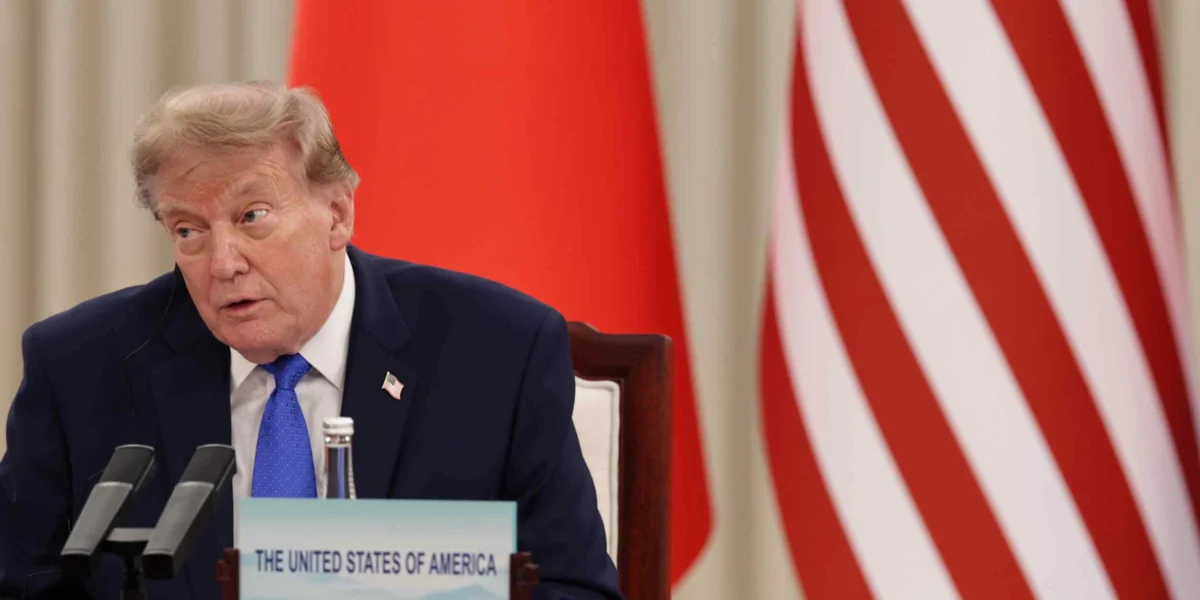
TOKYO — A discernible and escalating risk now looms over the international landscape: the potential resurgence of an era where paramount global decisions are unilaterally brokered amongst a select cadre of major powers, effectively reintroducing a form of geopolitical “great power tetris.” This chilling prospect was starkly illuminated by the highly consequential trilateral summit held on November 19th in Shenzhen, China, which brought together the leaders of the United States, the People’s Republic of China, and the Russian Federation. The meeting, occurring on the periphery of the Asia-Pacific Economic Cooperation (APEC) summit, served as a potent symbol of a shifting global order, one that appears to be moving away from multilateral consensus-building towards a more pragmatic, albeit potentially destabilizing, arrangement of power dynamics.
The image of U.S. President Donald Trump engaged in discussions with his Chinese counterpart, Xi Jinping, and Russian President Vladimir Putin, captured on the sidelines of the APEC summit, resonated with historical echoes of past geopolitical realignments. While the precise agenda and outcomes of the discussions remain largely undisclosed to the public, the very act of these three leaders convening for a dedicated, high-level meeting signals a significant development. It suggests a shared understanding, or at least a mutual acknowledgment, of the complex and interconnected challenges facing the global community, and a potential willingness to address them through direct, bilateral, or trilateral engagement, rather than solely through established international forums.
A Shift in the Geopolitical Landscape: Precursors to Shenzhen
The Shenzhen summit did not emerge from a vacuum. Its occurrence can be traced through a series of escalating geopolitical tensions, economic realignments, and evolving strategic doctrines that have characterized the preceding years. For over two decades following the end of the Cold War, the international system largely operated under the perceived dominance of a unipolar world, with the United States as the undisputed hegemonic power. This era was characterized by an emphasis on liberal internationalism, the expansion of democratic norms, and the strengthening of multilateral institutions such as the United Nations, the World Trade Organization, and various regional security alliances.
However, this unipolar moment began to erode in the late 2000s and early 2010s. The global financial crisis of 2008, while impacting all major economies, revealed vulnerabilities within the U.S.-led financial system and spurred greater economic assertiveness from emerging powers, particularly China. Simultaneously, Russia, under President Putin, began to reassert its influence on the global stage, challenging what it perceived as Western overreach and seeking to restore its historical sphere of influence. China, meanwhile, embarked on a comprehensive modernization of its military, pursued an ambitious Belt and Road Initiative aimed at expanding its economic and political reach, and adopted a more assertive foreign policy posture, particularly in the South China Sea.
The Trump administration, with its "America First" agenda, further disrupted the established international order. This policy saw a questioning of long-standing alliances, withdrawal from key international agreements (such as the Trans-Pacific Partnership and the Paris Agreement on climate change), and a confrontational approach to trade with both China and, at times, other allies. This period witnessed a significant increase in trade disputes and rhetorical sparring between the U.S. and China, while U.S.-Russia relations remained strained due to issues ranging from alleged election interference to geopolitical flashpoints in Eastern Europe and the Middle East.
The cumulative effect of these trends has been a gradual but undeniable shift towards a more multipolar world, where no single power holds unchallenged dominance. This has created a fertile ground for the kind of strategic discussions that likely took place in Shenzhen, where the three largest economies and most significant military powers engaged in direct dialogue.
The Shenzhen Summit: A Glimpse into the Discussions
While official readouts from the Shenzhen meeting were notably sparse, the context of the APEC summit itself provided a backdrop for discussions on trade, economic cooperation, and regional stability. However, the trilateral nature of this specific meeting suggests that the agenda extended far beyond routine economic discussions. It is highly probable that the leaders addressed issues of mutual strategic concern, including:
- Global Security and Arms Control: With rising geopolitical tensions and the potential for new arms races, discussions on nuclear non-proliferation, missile defense systems, and the future of strategic stability were likely high on the agenda. The U.S. withdrawal from the Intermediate-Range Nuclear Forces (INF) Treaty in 2019, and subsequent Russian responses, has created a significant vacuum in arms control architecture.
- Regional Conflicts and Spheres of Influence: The ongoing conflicts and political instability in regions like the Middle East, Eastern Europe, and potentially parts of Asia would have been a focal point. The U.S., China, and Russia all have distinct interests in these areas, and finding common ground, or at least managing their divergences, would be crucial for preventing further escalation.
- Economic Governance and Trade: While APEC focuses on trade, the trilateral meeting likely delved into the broader implications of the ongoing trade war between the U.S. and China, its impact on global supply chains, and the potential for alternative economic frameworks. Russia, as a major energy and commodity exporter, also has a vested interest in global economic stability.
- Cybersecurity and Emerging Technologies: The increasing reliance on digital infrastructure and the rapid development of technologies like artificial intelligence and quantum computing present both opportunities and significant security challenges. Discussions on norms of behavior in cyberspace and the responsible development of these technologies were likely part of the dialogue.
The selection of Shenzhen as the venue, a major economic and technological hub in China, further underscores the economic dimension of these discussions. It signals a recognition by all three powers that economic interdependence, even amidst competition, plays a crucial role in shaping global stability.
Supporting Data: The Shifting Tides of Global Power
The backdrop to the Shenzhen meeting is painted by a series of compelling data points that illustrate the shifting global power dynamics:
- Economic Dominance: China’s economy has grown exponentially, becoming the second-largest globally by nominal GDP and the largest by purchasing power parity. Its share of global GDP has steadily increased, while the U.S. share, though still substantial, has seen a relative decline. Russia’s economy, while smaller and more reliant on commodity exports, remains a significant player, particularly in energy markets.
- Nominal GDP (2025 Projections, in Trillions USD):
- United States: ~$27.0
- China: ~$19.5
- Russia: ~$2.1
- Global GDP Share (2025 Projections):
- United States: ~25.0%
- China: ~18.0%
- Russia: ~1.9%
- Nominal GDP (2025 Projections, in Trillions USD):
- Military Spending: While the U.S. continues to maintain the largest military budget globally, China’s defense spending has grown significantly, rapidly closing the gap. Russia’s military expenditures, though smaller, remain substantial and focused on modernization and strategic capabilities.
- Estimated Military Spending (2025 Projections, in Billions USD):
- United States: ~$850
- China: ~$350
- Russia: ~$70
- Estimated Military Spending (2025 Projections, in Billions USD):
- Technological Advancement: China has made substantial strides in areas like artificial intelligence, 5G technology, and advanced manufacturing, challenging U.S. technological leadership. Russia, while not at the same scale, possesses significant capabilities in areas such as cyber warfare and certain niche technological sectors.
- Diplomatic Influence: The increasing assertiveness of China in international institutions and its growing network of economic partnerships through initiatives like the Belt and Road Initiative have expanded its diplomatic footprint. Russia continues to exert influence through its role in organizations like BRICS and its strategic partnerships in various regions.
Reactions and Inferred Implications
The immediate reactions to the Shenzhen summit were varied, reflecting the complex geopolitical landscape. While official statements from the U.S., China, and Russia were carefully calibrated, emphasizing dialogue and the pursuit of common interests, independent analysts and foreign policy experts offered a range of interpretations.
From the United States: The Trump administration likely viewed the meeting as an opportunity to engage directly with its primary geopolitical rivals, potentially seeking to de-escalate tensions and carve out areas of cooperation while also reinforcing its position on contentious issues. A key objective would have been to manage the complex relationship with China while ensuring that Russia did not exploit U.S.-China friction to its own advantage.
From China: For President Xi Jinping, the summit represented a validation of China’s growing global stature and an opportunity to engage directly with the U.S. on an equal footing. Beijing likely sought to solidify its influence and explore avenues for managing the ongoing trade disputes while also ensuring that the U.S. did not form a united front with its allies against China.
From Russia: President Putin would have seen the meeting as a chance to reassert Russia’s status as a major global power and to gauge the willingness of both the U.S. and China to engage in direct, high-level discussions. Moscow likely aimed to leverage its position to achieve strategic objectives, such as securing its interests in Eastern Europe and the Middle East, and to prevent a complete isolation by Western powers.
Broader International Implications: The implications of such direct great power engagement are profound.
- Risk of Exclusion: A significant concern is that this approach could lead to a marginalization of smaller and medium-sized powers, as global decisions are made through a process of great power bargaining, potentially bypassing established multilateral frameworks. This could undermine the principles of inclusive global governance and create a less stable international system.
- Shifting Alliances: The nature of alliances could also be affected. As great powers engage in direct negotiations, existing alliances might be tested or reconfigured. Nations may find themselves compelled to align with one power bloc or another, leading to increased polarization.
- Erosion of Multilateralism: If great powers increasingly opt for direct, bilateral, or trilateral negotiations, the authority and relevance of institutions like the UN, WTO, and regional organizations could be further diminished. This could weaken the mechanisms for dispute resolution and collective action on global challenges.
- Potential for Stability (with caveats): Conversely, proponents of such direct engagement argue that it can lead to greater stability if the major powers can effectively manage their disagreements and find common ground on critical issues. However, this hinges on the willingness of these powers to prioritize global interests over narrow national ambitions, a prospect that remains uncertain.
The Unfolding Narrative: A New Geopolitical Calculus
The Shenzhen summit serves as a potent reminder that the international order is in a state of flux. The world is not necessarily returning to a bipolar Cold War-style division, nor is it uniformly embracing a truly multipolar system with equal power distribution. Instead, it appears to be entering a more complex phase, characterized by the assertive maneuvering of a few dominant powers, each seeking to shape the global landscape according to their strategic interests.
The coming months and years will reveal whether this era of great power negotiation leads to a more stable and predictable world, or one characterized by increased competition, fragmentation, and the marginalization of the international community. The lessons of history suggest that while direct dialogue among major powers is often necessary, it must be conducted within a framework that upholds the principles of international law, respects the sovereignty of all nations, and actively engages the broader global community in addressing shared challenges. The Shenzhen meeting has undoubtedly opened a new chapter in this unfolding narrative, and its long-term consequences remain a subject of intense observation and analysis.