Reynand Wu

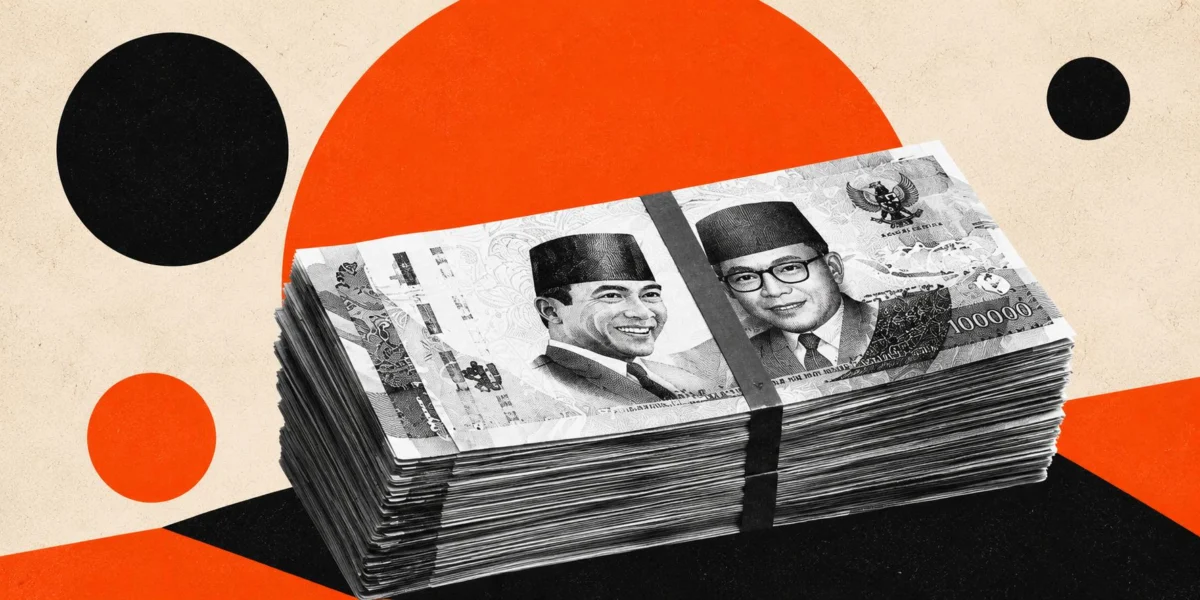
Commerzbank strategists Charlie Lay and Jeston Lim have issued a consolidated outlook for the USD/KRW currency pair, projecting it to stabilize within a range of 1,320 to 1,370 in the near term. This forecast is underpinned by South Korea’s persistently large current account surplus and a discernible improvement in domestic foreign exchange (FX) supply-demand conditions, factors identified as crucial pillars of support for the Korean Won (KRW). Their analysis suggests a degree of resilience for the Won, even amidst a backdrop of fluctuating global economic conditions and renewed strength in the U.S. Dollar.
Korean Won Supported, Pair Seen Rangebound
The immediate market reaction to recent monetary policy decisions, specifically a rate hike by the Bank of Korea (BOK), saw the USD/KRW pair remain largely unchanged, hovering around 1,343. This muted response aligns with Commerzbank’s long-held view that interest rate differentials, while typically a significant driver for currency valuations, have played a secondary role in the trajectory of the KRW. More strikingly, the Korean Won has demonstrated remarkable resilience over the past two months, maintaining its strength despite a broader resurgence of the U.S. Dollar and consistent outflows of foreign capital from the Korean equity market. This resilience points to deeper, structural strengths within the Korean economy that are buffering the currency against external pressures.
Over the last two months, the USD/KRW exchange rate has largely been confined to a trading band between 1,315 and 1,395. The primary catalysts for this stability are South Korea’s exceptionally robust current account surplus and the notable enhancement in domestic FX supply-demand dynamics. Specific supportive elements include increased foreign exchange hedging activities by the National Pension Service (NPS), one of the world’s largest pension funds, and the repatriation of U.S. Dollar earnings by Korean corporations. These actions collectively contribute to a healthier supply of foreign currency within the domestic market, bolstering the Won’s value.
Commerzbank maintains a constructive medium-term outlook for the KRW, even as the Bank of Korea signals that it is nearing the culmination of its monetary tightening cycle. This forward-looking perspective suggests that the underlying economic fundamentals are expected to continue supporting the Won, irrespective of the subtle shifts in interest rate policy. However, the strategists also highlight certain external risks, noting that the implications of renewed U.S. protectionism for the KRW are less clear-cut, given the complex and often competing effects on the U.S. Dollar, global trade flows, and overall risk sentiment. A more potent and definable downside risk to the KRW, they argue, would be a sustained downturn in AI-related investment. This scenario poses a greater threat due to South Korea’s heavy reliance on technology exports, particularly semiconductors, which are integral to the burgeoning AI industry. Such a downturn would directly impact the nation’s export performance, economic growth, and subsequently, its monetary policy outlook.
Chronology of Market Movements and Policy Actions
The recent history of the USD/KRW pair has been characterized by a tug-of-war between global safe-haven flows favoring the U.S. Dollar and the inherent strengths of the Korean economy. In early 2023, as global inflation concerns began to temper and central banks signaled a potential slowing of aggressive rate hikes, the Won saw some appreciation. However, renewed concerns about global growth, persistent inflation in major economies, and the robust performance of the U.S. economy led to a rebound in the Dollar’s strength in mid-2023. This period saw the USD/KRW pair test higher levels, pushing towards the upper end of its recent range.
The Bank of Korea, in its effort to combat domestic inflation and manage financial stability, has embarked on a series of interest rate hikes since late 2021. The most recent hike, while signaling a commitment to price stability, was met with the aforementioned muted market reaction in the FX market. This reaction underscores the market’s current focus on structural economic indicators rather than solely on interest rate differentials. The BOK’s stance has been cautiously hawkish, balancing the need to tame inflation with concerns about economic growth amidst a global slowdown. Governor Rhee Chang-yong and the Monetary Policy Board have repeatedly emphasized data dependency, indicating that future policy decisions will be guided by incoming economic data, particularly inflation and growth forecasts. This approach suggests a pragmatic pivot towards the end of the tightening cycle, with future adjustments likely to be more nuanced.
Globally, the U.S. Federal Reserve’s aggressive tightening cycle has been a primary driver of U.S. Dollar strength. The widening interest rate differential between the U.S. and other economies, including South Korea, typically makes dollar-denominated assets more attractive, drawing capital away from emerging markets. However, the Won’s ability to withstand this pressure highlights its unique supporting factors. Foreign equity outflows from the Korean market have also been a notable trend, driven by global risk aversion and a preference for safer assets. Despite these outflows, the KRW has not depreciated as sharply as might be expected, indicating that other, more powerful forces are at play in stabilizing its value.
Supporting Data and Economic Indicators Reinforcing KRW Stability
South Korea’s economic backbone is its export-oriented manufacturing sector, and the health of this sector is directly reflected in its current account balance. The nation has consistently posted significant current account surpluses, a testament to its robust export competitiveness. For instance, in recent months, despite global trade headwinds, South Korea has continued to record surpluses, driven by strong demand for its key products. In May 2023, for example, South Korea recorded a current account surplus of $1.93 billion, marking a positive shift after a brief deficit earlier in the year. While the surplus was smaller than previous years, it signaled a recovery trajectory, with exports showing signs of bottoming out. Key export items include semiconductors, automobiles, machinery, and petrochemicals. The semiconductor industry, in particular, is a critical component, accounting for a substantial portion of total exports. A large and sustained current account surplus signifies that a country is earning more foreign currency from its exports and investments abroad than it is spending on imports and foreign investments, thereby increasing the supply of foreign currency within the domestic economy and providing a fundamental boost to the local currency.
The role of the National Pension Service (NPS) in FX hedging has become increasingly significant. As one of the world’s largest pension funds, with assets exceeding $700 billion, the NPS has substantial overseas investments. To mitigate the currency risk associated with these foreign assets, the NPS has strategically increased its FX hedging ratio. This involves converting foreign currency assets back into Korean Won through various financial instruments, effectively increasing demand for the Won in the spot or forward markets. This strategic move by such a large institutional investor provides a substantial, consistent flow of foreign currency into the domestic market, acting as a crucial shock absorber for the Won against external volatility. Market estimates suggest that the NPS’s hedging activities can involve tens of billions of dollars annually, providing significant support to the KRW.
Furthermore, corporate USD repatriation is another vital source of FX supply. Korean multinational corporations, particularly those in the export-heavy sectors like electronics (e.g., Samsung, LG), automobiles (e.g., Hyundai, Kia), and chemicals, earn substantial revenues in U.S. Dollars. These companies periodically repatriate their foreign earnings back to South Korea for various purposes, including funding domestic operations, paying dividends to shareholders, investing in new domestic projects, or settling tax obligations. This conversion of U.S. Dollars into Korean Won creates consistent demand for the Won, especially around quarter-ends and year-ends when financial settlements are typically concentrated. This cyclical repatriation provides a structural inflow of foreign currency that underpins the Won’s value.
Inflation data from both South Korea and the U.S. continues to influence central bank policies. While South Korea’s inflation has shown signs of moderating from its peak, the BOK remains vigilant. Similarly, the U.S. Federal Reserve is carefully monitoring inflation trends, which will dictate the future path of U.S. interest rates and, consequently, the global demand for the U.S. Dollar. The interplay between these inflation dynamics and central bank responses creates a complex environment for currency valuation, yet the Won’s resilience suggests that domestic fundamentals are currently outweighing these differential interest rate pressures.
Official Responses and Policy Stances
The Bank of Korea’s primary mandate encompasses price stability and financial system stability. Governor Rhee Chang-yong has consistently reiterated the BOK’s commitment to bringing inflation down to its target level while carefully monitoring financial market conditions. While the BOK generally refrains from direct intervention in the FX market unless extreme volatility threatens financial stability, its policy communications and actions often have an indirect impact. By signaling the potential end of its tightening cycle, the BOK aims to provide clarity to markets, manage inflation expectations, and support economic growth. However, BOK officials have also expressed concerns about excessive currency volatility, indicating a readiness to implement measures if the exchange rate movements become disorderly.
The Ministry of Economy and Finance (MOEF), headed by the Deputy Prime Minister and Minister of Economy and Finance, plays a crucial role in shaping South Korea’s overall economic policy. The MOEF closely monitors global economic trends, trade conditions, and financial market developments. While their statements often focus on broader economic growth, employment, and fiscal policy, they also frequently comment on the stability of the financial markets and the exchange rate. Official statements from the MOEF often highlight the government’s commitment to fostering a stable economic environment conducive to trade and investment, implicitly supporting the Won’s stability. For instance, the MOEF has consistently emphasized efforts to enhance the competitiveness of key export sectors and diversify trade partnerships, which contribute to a healthy current account balance.
Broader Impact and Implications
The consolidation of the USD/KRW pair around the 1,320-1,370 range carries significant implications for various stakeholders within the Korean economy and for international investors.
For Korean exporters, a stable Won provides predictability in their revenue streams. While a weaker Won generally makes exports cheaper and more competitive, a strong current account surplus suggests that Korean goods remain competitive even with a relatively stable or slightly stronger Won. However, a significant appreciation could erode price competitiveness, especially for smaller businesses. Conversely, importers benefit from a stable or stronger Won, as it reduces the cost of imported goods, potentially easing inflationary pressures on consumer prices and input costs for domestic industries.
For foreign investors, a predictable and relatively stable Won, supported by strong fundamentals, can enhance confidence. While interest rate differentials still influence portfolio investment decisions, the demonstrated resilience of the Won against external shocks can make Korean assets more attractive, especially for long-term strategic investments. This stability reduces currency risk, making it easier for investors to forecast returns.
From a monetary policy perspective, the BOK’s approach to ending its tightening cycle will be crucial. With inflation showing signs of moderating and the Won demonstrating resilience, the BOK gains flexibility. It can pivot its focus more towards supporting economic growth, which has faced headwinds from global slowdowns. However, the BOK must carefully manage expectations and be prepared to react if inflation re-accelerates or if the Won experiences renewed volatility due from unforeseen external shocks.
Looking at broader geopolitical and trade factors, Commerzbank’s assessment of renewed U.S. protectionism as having "less clear-cut" implications for the KRW reflects a nuanced understanding. New U.S. tariffs or trade barriers could certainly impact global trade volumes, potentially hurting South Korea’s export-driven economy. However, protectionist measures might also weaken the U.S. Dollar if they lead to global economic slowdowns or retaliatory measures, thus creating competing effects. The overall impact would depend on the scope and nature of such protectionism, and how it affects global supply chains and risk sentiment.
More significantly, the strategists highlight a sustained downturn in AI-related investment as a "greater downside risk" to the KRW. This point is critical given South Korea’s dominant position in the global semiconductor industry, particularly in memory chips (DRAM and NAND flash), which are indispensable for AI applications. A slowdown in AI investment would directly translate into reduced demand for these high-value chips, severely impacting South Korea’s exports, industrial production, and overall economic growth. Such a scenario would pressure corporate earnings, potentially reduce corporate USD repatriation, and could force the BOK to consider more accommodative monetary policies to stimulate the economy, potentially weakening the Won. The global semiconductor cycle is notoriously volatile, and a prolonged downturn in a key growth area like AI would pose a profound challenge to South Korea’s economic stability.
In conclusion, Commerzbank’s forecast for the USD/KRW pair to consolidate within 1,320 and 1,370 is grounded in a detailed analysis of South Korea’s robust domestic fundamentals. The nation’s substantial current account surplus, coupled with enhanced FX supply-demand conditions driven by NPS hedging and corporate repatriation, are providing strong buffers against global headwinds. While the Bank of Korea approaches the end of its tightening cycle and external factors like U.S. protectionism present uncertainties, the more significant risk to the Won’s stability appears to stem from a potential downturn in the crucial AI-related investment cycle. This outlook paints a picture of a resilient Won, albeit one navigating a complex global economic landscape where technological demand plays an increasingly pivotal role.