Ella Zulfa
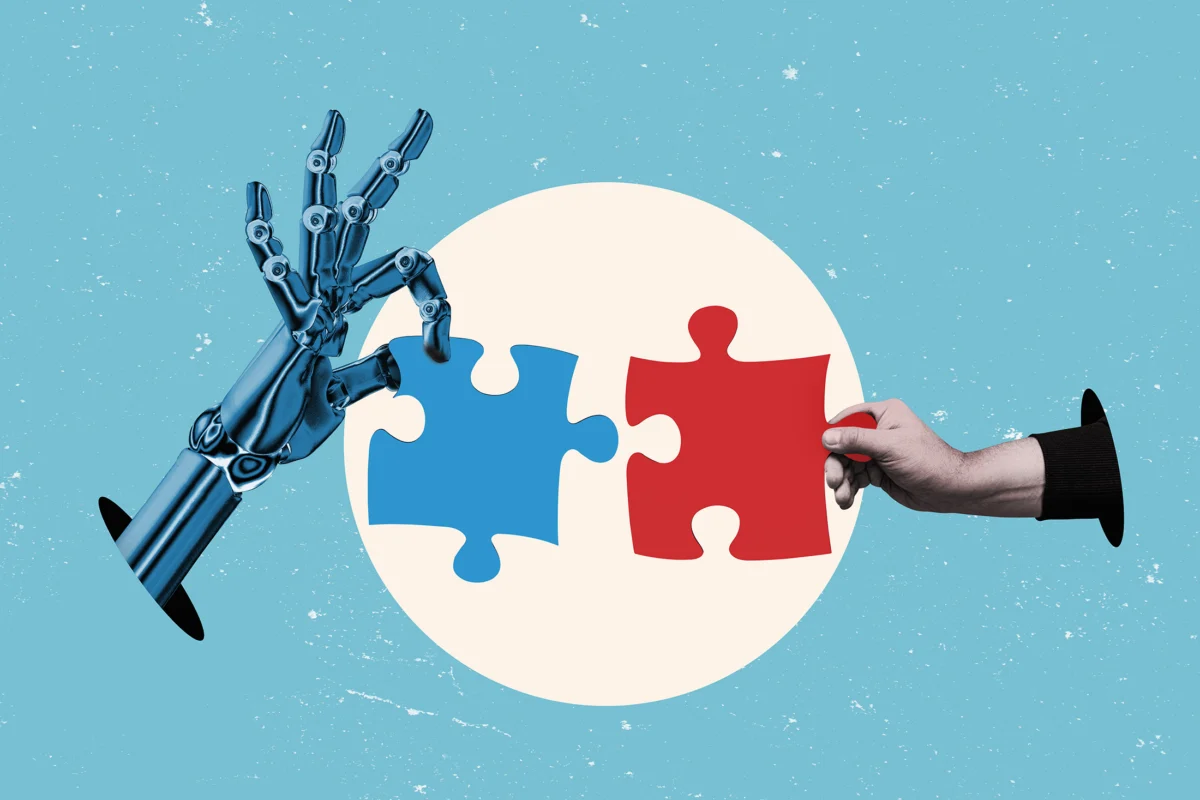
The pressure on software companies over the past two years has been palpable, with a near-universal mandate to integrate artificial intelligence into products to avoid appearing obsolete. This has led to a proliferation of AI features: chat panels appearing in the corners of dashboards, "Summarize with AI" buttons accompanying text fields, and new line items for AI credits on pricing pages. However, a closer examination of customer behavior reveals a more nuanced reality, suggesting a shift in strategy for software vendors. Instead of embedding their own AI assistants, companies are increasingly finding value in enabling their customers’ existing AI solutions to interact with their products.
The current landscape of business software is characterized by a rapid adoption of AI tools by end-users. Many employees in B2B environments are already utilizing corporate-sanctioned AI assistants, such as subscriptions to Claude or ChatGPT, or Microsoft 365 Copilot integrated into existing Office licenses. These platforms have undergone rigorous evaluation by IT and finance departments, including security reviews, and have been rolled out across organizations. Consequently, these AI assistants are evolving into the company’s primary, "at-home" AI. They are the tools employees are trained on, the ones approved by legal departments, and increasingly, the repositories of crucial business context, including internal documents, emails, meeting notes, and wikis. It is becoming a near certainty that virtually every company will have such a centralized AI assistant, and indeed, most already do.
The challenge arises when businesses rely on a multitude of software applications – perhaps eight to ten different tools – and each of these vendors has independently integrated its own AI assistant. This creates a fragmented and inefficient user experience. Each AI assistant boasts a different interface, operates under distinct limitations, and adheres to varying data policies. Crucially, they lack inter-operability; the AI integrated into a help desk software has no awareness of discussions held within the CRM, and the CRM’s AI cannot access information from the project tracking tool. This scenario, far from enhancing workplace productivity, leads to "AI sprawl" and directly contradicts the unified experience that customers desire.
A strategic pivot towards a "bring your own agent" (BYOA) model offers a compelling solution for both vendors and their clients. This approach mirrors successful precedents in the tech industry. A decade ago, "bring your own device" (BYOD) fundamentally altered how companies managed laptops and mobile phones. More recently, "bring your own key" (BYOK) allowed customers to integrate their preferred AI provider’s API keys into software, bypassing vendor-specific AI usage fees. BYOA represents the next logical evolution, enabling customers to bring their entire AI assistant, complete with its established context, permissions, and security approvals, to interact with third-party applications.
The advantages for customers are readily apparent. They can leverage a tool they already subscribe to and are familiar with. Their AI assistant can synthesize data from the vendor’s product with information from all other accessible sources. This holistic integration is essential for complex queries. For instance, understanding which key accounts have submitted support tickets in the past week and what was agreed upon during their last renewal call is only feasible if a single AI assistant has access to both help desk data and meeting notes.
For software vendors, the benefits, while perhaps less immediately obvious, are substantial and strategically significant.
Exiting the Token Reselling Business: When software companies build AI features atop third-party models, they effectively engage in wholesale purchase and retail resale of computing power. This model leads to escalating costs tied to usage, fluctuating margins dependent on external pricing changes, and a focus on designing complex credit systems and usage caps rather than core product development. BYOA shifts the burden of compute costs to the customer’s existing AI subscription, allowing the vendor to concentrate on providing data and facilitating actions within their product.
Avoiding Direct Competition with AI Giants: It is unrealistic for most software vendors to develop general-purpose AI assistants that can rival the capabilities of frontier AI labs, which invest billions in model development. Attempting to match these giants feature for feature is a losing proposition. The winnable race is to become the premier tool that these advanced AI assistants can seamlessly connect to and leverage.
Clarifying Product Development Priorities: A surprising but significant benefit of the BYOA model is its impact on product strategy. By accepting that the customer’s AI assistant will manage conversational interactions, the focus shifts from "What AI features should we build?" to "What can our product fundamentally do, and how efficiently can we expose those capabilities?" This refined question encourages a strengthening of core functionality, ensuring it is well-structured and permissioned, which benefits all users, not just those employing AI.
Unlocking New Marketing Channels: This is perhaps the least anticipated advantage. Leading AI platforms now maintain directories of connectors, and a growing ecosystem of independent marketplaces and listing sites is emerging. Securing a listing on these platforms places a vendor’s product directly in front of users at the precise moment they are seeking tools to integrate with their AI assistants. This represents a novel distribution channel that is currently less saturated and incurs no additional cost beyond the integration work already undertaken.
This strategic shift does not imply the complete elimination of built-in AI features. Certain functionalities, such as automated ticket categorization that operates passively in the background, can still be effectively integrated directly within a product. However, for interactive, conversational AI, the trend increasingly points towards the customer owning and managing the primary assistant.
Practical Implementation: The Model Context Protocol (MCP)
The most effective method for implementing the BYOA strategy today involves adopting the Model Context Protocol (MCP). MCP is an open standard designed to empower AI assistants to discover and utilize tools embedded within external applications. It is supported by prominent AI platforms such as Claude, ChatGPT, and Microsoft Copilot Studio, with a growing number of other clients also adopting the standard. By describing the capabilities of their product – such as searching records, creating new entries, or updating statuses – vendors enable compatible AI assistants to perform these actions on behalf of the user, operating within the user’s existing permission framework.
There are two primary approaches to deploying an MCP server, and the choice carries significant implications.
1. Hosted Endpoint via HTTP: In this model, the product exposes an MCP endpoint hosted on its own servers, utilizing the protocol’s streamable HTTP transport. Customers simply add a URL to their AI assistant, authenticate, and the integration is complete. This method requires no local installation. When new capabilities are introduced or bugs are resolved, all customers receive immediate updates, as there is a single, centralized version managed by the vendor.
2. Local Package Deployment: This approach involves publishing a command-line tool or an npm package that executes on the user’s machine and communicates with the vendor’s API. While this was a prevalent method in the early stages of AI integration and remains viable for individual developers, it presents challenges for larger organizations.
The hosted endpoint model is strongly recommended. For instance, at the author’s company, which initially supported both models, the local package deployment is being phased out. Each installed copy represents a distinct version that cannot be updated centrally, leading to customers missing out on newer features due to outdated packages.
Furthermore, the security implications are profound. Large enterprises are increasingly hesitant to permit third-party code execution on employee workstations, a stance driven by a consistent stream of critical vulnerabilities and software supply chain attacks, including compromised packages within the npm ecosystem itself. Obtaining security approval for a local package that accesses sensitive company data is a formidable task. In contrast, approving an HTTPS endpoint from a vendor that has already undergone vetting is a considerably simpler process for security teams.
A hosted endpoint also aligns seamlessly with how organizations implement AI solutions. Enterprise AI plans typically feature organization-wide connectors configured by administrators, making them accessible to all users. Implementing OAuth sign-in allows each employee to connect with their individual account and permissions, thereby mitigating a significant portion of the integration friction.
Embracing the Shift
It is natural to perceive a customer’s AI assistant as a competitor for user attention. The concern is that if employees spend their days within platforms like Claude or Copilot, their engagement with other products might diminish. However, the reality is that employees will utilize these AI assistants regardless. The crucial question is whether these assistants can access and interact with other essential business tools when needed. If an AI cannot reach a particular product, that product risks becoming an isolated silo, circumvented in favor of more integrated solutions. Conversely, if the AI can seamlessly incorporate a product into its workflow, that product becomes an integral part of the company’s operational fabric.
Business-to-business buyers are not seeking an additional AI solution. They are seeking to enhance the functionality of the AI solutions they already have, ensuring these tools integrate effectively with their existing technology stack. Software vendors that build for this imperative are poised to thrive in the evolving AI landscape.