Ella Zulfa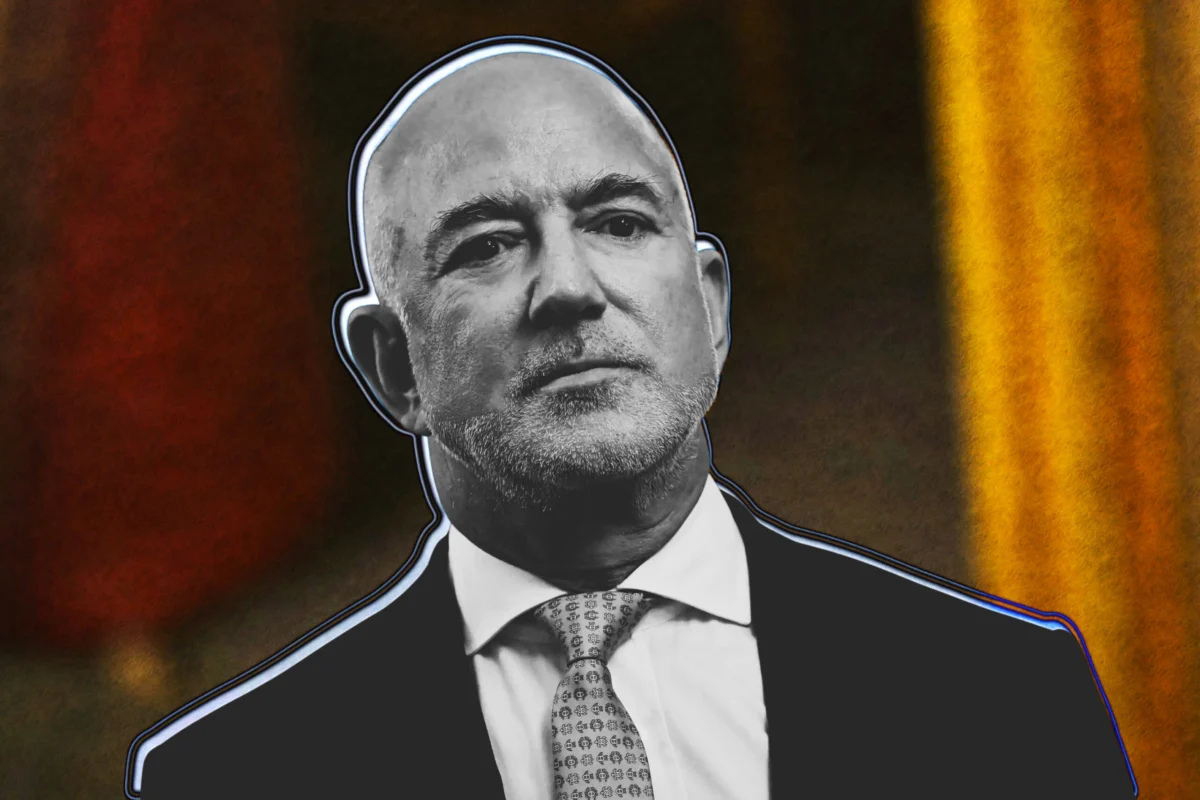
The burgeoning field of Artificial Intelligence (AI) is at a critical juncture, sparking a profound debate among industry leaders about its potential impact on the global workforce. While a segment of prominent figures, including co-founders of AI research firm Anthropic, have issued stark warnings of widespread job displacement and mass unemployment, Amazon founder Jeff Bezos presents a contrasting vision. Bezos posits that the exponential productivity gains driven by AI could instead lead to a significant shortage of human labor, fundamentally altering the economic landscape and family structures.
This divergence in opinion highlights the complex and multifaceted nature of AI’s integration into society. The core of the debate centers on whether AI will primarily augment human capabilities, leading to increased efficiency and leisure, or automate tasks to such an extent that human workers become redundant.
Bezos’s Optimistic Outlook: A Future of Abundance and Leisure
In a recent interview with Fox News anchor Bret Baier, Jeff Bezos articulated a future where AI-driven productivity could liberate individuals from the necessity of dual-income households. He predicted that the economic output generated by AI could elevate the standard of living to a point where a single salary is sufficient to support an entire family. This assertion is rooted in the belief that AI will drastically enhance productivity across various sectors, allowing for a more equitable distribution of wealth and resources.
"You’re not going to need to have a two-earner income household," Bezos stated, painting a picture of a society where economic pressures on families are significantly reduced. He further elaborated on the potential for a compressed workweek, suggesting that increased efficiency might allow individuals to meet their financial obligations by working only three days a week. "Some people will also decide, you know what, I can support my family working three days a week. That’s what productivity in the economy means."
This vision implies a fundamental shift in the societal perception of work and leisure. If AI can perform tasks more efficiently and at a lower cost than humans, the economic incentive to work long hours diminishes. Bezos suggested that this could lead to a scenario where employers struggle to find sufficient human workers, as a larger portion of the population opts for reduced working hours or exits the workforce altogether. "It’s going to actually be difficult to hire people because the productivity in the economy is going to make it so that if people don’t want to work two jobs, they won’t have to," he explained. This outlook suggests a move away from a labor-intensive economy towards one driven by intelligent automation, where human contribution is more specialized and potentially less demanding in terms of hours.
Echoes of Optimism: Other Leaders Share a Vision of Reduced Workloads
Bezos is not alone in envisioning a future where AI liberates humanity from the drudgery of extensive work. Jamie Dimon, CEO of JPMorgan Chase, has also publicly shared a similar perspective. In an interview with Bloomberg TV in October 2023, Dimon projected that future generations might find themselves working considerably less. He specifically suggested that today’s children could "probably be working three-and-a-half days a week." This prediction aligns with Bezos’s sentiment, indicating a growing consensus among some business leaders that AI will drive significant increases in efficiency, leading to more leisure time.
Elon Musk, the influential entrepreneur behind Tesla and SpaceX, has offered an even more radical optimistic outlook. Last year, at the U.S.-Saudi Investment Forum, Musk controversially stated that AI would eventually render money "irrelevant." He posited that as AI capabilities advance, work itself could become "optional," akin to pursuing hobbies like playing sports or engaging with video games. This provocative statement suggests a future where basic needs are met through automated systems, freeing humans to pursue more fulfilling endeavors.
The Counterpoint: Alarms of Mass Unemployment and Inequality
While Bezos and others foresee a future of increased leisure and economic ease, a significant contingent of AI leaders and experts warn of a much bleaker scenario: widespread job displacement and a widening chasm between the wealthy and the working class.
Anthropic, a leading AI safety and research company, has been at the forefront of these cautionary narratives. Co-founders of Anthropic have repeatedly voiced concerns that AI could rapidly automate tasks currently performed by humans, leading to mass unemployment. In May 2025, Anthropic CEO Dario Amodei presented one of the most stark forecasts, estimating that AI could eliminate half of all entry-level white-collar jobs within one to five years. He further predicted a potential surge in U.S. unemployment rates, reaching between 10% and 20%. This projection is based on the rapid advancements in AI’s ability to perform complex cognitive tasks, which were once considered exclusively human domains.
Geoffrey Hinton, a pioneering researcher widely regarded as the "Godfather of AI," has echoed these concerns, warning that the economic benefits of AI might not be equitably distributed. In an interview with the Financial Times in September 2025, Hinton expressed apprehension that "rich people are going to use AI to replace workers. It’s going to create massive unemployment and a huge rise in profits." This perspective highlights the potential for AI to exacerbate existing economic inequalities, concentrating wealth and power in the hands of a few while disenfranchising large segments of the workforce.
Jim Farley, CEO of Ford, has also raised similar alarms. At the Aspen Ideas Festival in June 2025, Farley stated, "Artificial intelligence is going to replace literally half of all white-collar workers in the U.S." This statement, coming from the head of a major industrial company, underscores the potential for AI to impact not just traditionally white-collar professions but also skilled labor sectors.
Analyzing the Divergent Predictions: Underlying Factors and Implications
The starkly different predictions from industry leaders stem from varying assumptions about the pace of AI development, its integration into economic systems, and societal responses to technological change.
- Productivity Gains vs. Automation: Bezos’s vision hinges on AI as a productivity enhancer that augments human work and frees up time. The pessimistic view emphasizes AI’s capacity for full automation, replacing human workers entirely. The reality will likely involve a complex interplay of both.
- Economic Models: The optimistic view implicitly assumes that the wealth generated by AI-driven productivity will be redistributed in ways that benefit society broadly, perhaps through universal basic income or reduced working hours. The pessimistic view suggests that without deliberate policy interventions, this wealth will accrue to capital owners, leading to increased inequality.
- Societal Adaptation: The speed at which societies and educational systems can adapt to these changes will be crucial. If reskilling and upskilling initiatives are not robust, large numbers of workers may find themselves without relevant skills in an AI-dominated economy.
- Regulatory Frameworks: The role of government regulation will be paramount. Policies related to labor, taxation, and social safety nets will heavily influence whether AI leads to mass unemployment or a more equitable distribution of its benefits.
The Road Ahead: A Spectrum of Possibilities
The debate between those who foresee labor shortages and those who predict mass unemployment underscores the profound uncertainty surrounding the future of work in the age of AI.
If Bezos’s prediction of a labor shortage materializes, it could usher in an era of unprecedented leisure and economic security for many. It might necessitate a fundamental rethinking of employment models, with a greater emphasis on individual choice and well-being. However, this scenario also presents challenges for businesses in terms of talent acquisition and potentially higher labor costs.
Conversely, if the warnings of mass unemployment prove accurate, societies could face significant social and economic upheaval. The potential for widespread joblessness could lead to increased poverty, social unrest, and a demand for radical policy changes. The implications for social cohesion and economic stability would be profound.
The timeline for these potential futures remains unclear. The rapid advancements in AI suggest that these transformative shifts could occur sooner rather than later. As AI continues to evolve, the dialogue among leaders, policymakers, and the public will be critical in shaping a future where the benefits of this powerful technology are shared broadly and equitably, mitigating the risks of widespread disruption. The coming years will likely see a continuous re-evaluation of these predictions as the real-world impact of AI on the global workforce becomes more apparent.