Farhan Pambudi

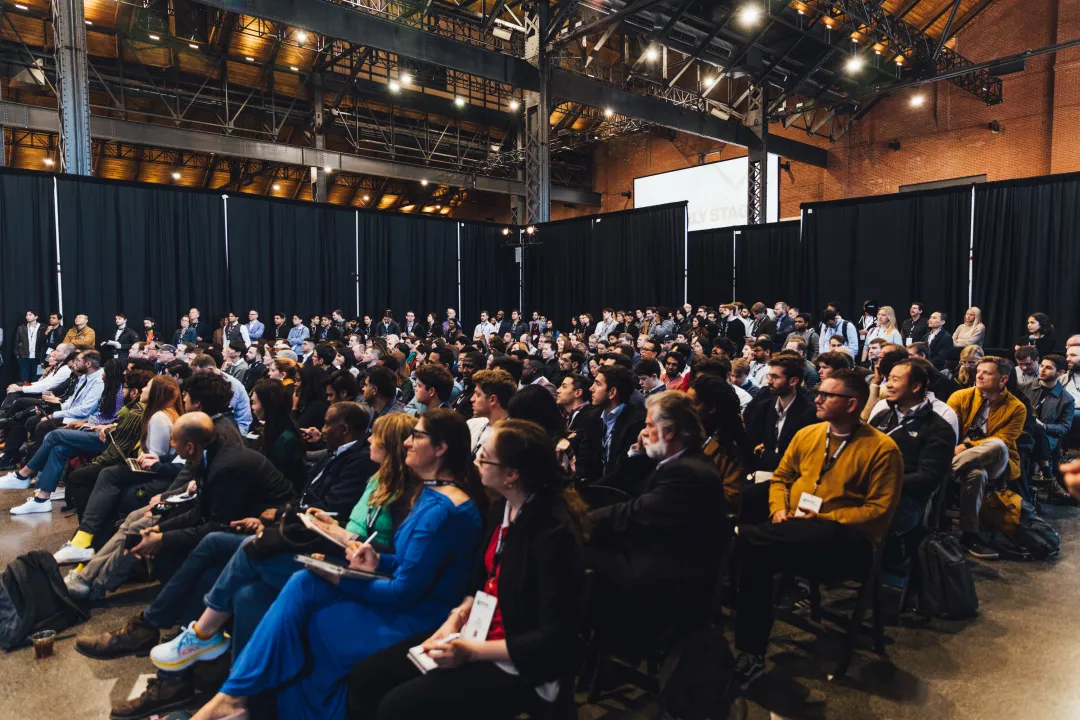
The 2026 edition of TechCrunch Disrupt officially opened its doors at San Francisco’s Moscone West, marking a pivotal moment for the global startup ecosystem as it navigates the transition from generative artificial intelligence to the era of autonomous agentic systems. With an expected attendance exceeding 10,000 startup founders, venture capitalists, and industry innovators, the three-day conference serves as a barometer for the technological and economic shifts defining the latter half of the decade. As San Francisco reaffirms its status as the epicenter of AI development, Disrupt 2026 is structured around six specialized industry stages, highlighting the intersection of silicon, software, and sustainability.

The atmosphere at Moscone West on Day 1 was one of high-stakes collaboration. The event’s hallmark, the Startup Battlefield, remains the center of gravity, with 200 hand-picked early-stage companies—the Battlefield 200—showcasing innovations that range from carbon-capture infrastructure to physical AI systems capable of operating in unstructured environments. For the top 20 finalists, the stakes are exceptionally high: a $100,000 equity-free prize and the prestigious Disrupt Cup, a title that has historically served as a springboard for companies like Dropbox and Mint.
The Strategic Shift Toward Physical and Agentic AI
A recurring theme throughout the opening sessions was the emergence of "Physical AI" and "Agentic AI." While the previous two years were dominated by large language models (LLMs) and chatbots, the conversations at Disrupt 2026 suggest a shift toward systems that can act independently in the physical world. RJ Scaringe, founder and CEO of Rivian, opened the Disrupt Stage with a discussion on "Building the Impossible," focusing on the integration of advanced robotics and autonomous systems in the automotive and manufacturing sectors.

This shift is not merely theoretical; it is backed by significant capital flows. According to industry data, investment in hardware-integrated AI and robotics has seen a 35% year-over-year increase as of mid-2026, as investors seek "moats" beyond simple software wrappers. Andrew Feldman of Cerebras Systems further emphasized this in his session, "Can AI Keep Scaling?", where he addressed the massive compute requirements and the innovative hardware architectures needed to sustain the next generation of intelligent systems.
The Builders Stage hosted a critical debate titled "What Happens When OpenAI Ships Your Roadmap." This session, featuring leaders from Radical Ventures, Webflow, and Airbyte, addressed the existential threat and opportunity facing startups as foundational model providers expand their native capabilities. The consensus among panelists was that value is shifting away from simple interfaces toward "agentic workflows"—complex, multi-step processes where AI agents manage entire business functions with minimal human intervention.

A Chronology of Innovation: Day 1 Highlights
The conference day began at 7:30 a.m. with a streamlined registration process utilizing "Klik" badge technology. This smart-badge system allows attendees to exchange contact information via a simple tap, reflecting the event’s emphasis on high-velocity networking. By 9:00 a.m., the Expo Hall was at full capacity, featuring 300 exhibiting startups.
The morning sessions on the Disrupt Stage were dominated by the Startup Battlefield’s "Space and Physical AI" category. A panel of judges, including prominent VCs from Kleiner Perkins and Maven Ventures, interrogated founders on the scalability of their hardware solutions. Meanwhile, on the Smart Systems Stage, the conversation turned toward the energy crisis precipitated by the AI boom. Jeff Lawson, the founder of Twilio, discussed his new ventures in tackling the power problem, while leaders from Helion and Commonwealth Fusion Systems provided updates on the timeline for bringing fusion energy to the commercial grid—a necessity if the current trajectory of data center expansion continues.

By midday, the focus shifted to the "Inference Economy." Experts from Glasswing Ventures and Cerebras Systems argued that while the "training era" of AI created the first wave of trillion-dollar companies, the next wave of wealth will be generated by companies that can execute AI inference at a fraction of current costs and energy consumption.
The afternoon featured "Equity Live," a live recording of TechCrunch’s flagship podcast. The team analyzed the venture capital landscape of 2026, noting that while "mega-rounds" have returned for AI infrastructure, seed and Series A investors are becoming increasingly disciplined, demanding clear paths to profitability and "product-market fit" (PMF). This was echoed in the Builders Stage session "PMF Red Flags," where partners from Iconiq and Sapphire Ventures warned founders about the dangers of "vanity metrics" in an agentic economy.

Sustainability and the Built World
The Startup Battlefield 200 also highlighted a significant focus on the "Built World" and "Sustainability." These categories showcased startups tackling the decarbonization of heavy industries—real estate, construction, and infrastructure. As global climate regulations tighten, the demand for "Climate Tech" has evolved from a niche interest into a core vertical.
The "Sustainability Fast Pitches" featured companies working on renewable energy storage, circular economy platforms, and clean water solutions. Founders in this space are increasingly focused on "planetary impact" alongside profitability, a sentiment reinforced by the presence of large-scale industrial investors looking for technologies to modernize legacy systems. The Built World category specifically looked at smart city infrastructure, with pitches focused on how AI can optimize urban density and energy distribution in real-time.

Fintech and the Future of Money Movement
On the Smart Money Stage, the discussion centered on how the "agentic era" is redefining financial services. Executives from Circle, Plaid, and Robinhood explored the concept of "money movement" between autonomous agents. In a world where an AI agent might independently negotiate and pay for a service on behalf of a human, the underlying financial rails must be instantaneous, verified, and secure.
The session "AI, Trust & Verification" addressed the rising threat of sophisticated deepfakes and automated fraud. Panelists from American Express and QED Investors argued that as AI becomes better at mimicking human behavior, the "identity layer" of the internet must be rebuilt using cryptographic proofs and advanced biometrics to ensure the integrity of the global financial system.

Networking and the Ecosystem Beyond Moscone
TechCrunch Disrupt has always been as much about the "hallway track" as the formal sessions. The Networking Lounge and the Deal Flow Café—an exclusive space for founders and investors—were hubs of activity throughout the day. Preliminary reports suggest that over 1,500 formal investor-founder meetings were scheduled through the event app on Day 1 alone.
The energy of the conference extended into the evening with "Side Events" across San Francisco. From "The Irish Shark Tank" hosted by Enterprise Ireland to networking nights for South Korean and global founders, these events illustrate the international reach of the Disrupt brand. San Francisco’s local tech scene, which has seen a resurgence in 2025 and 2026, served as the backdrop for these late-night sessions, where many of the industry’s most significant deals are traditionally initiated.

Industry Implications and Future Outlook
The first day of TechCrunch Disrupt 2026 has made one thing clear: the tech industry is no longer satisfied with "digital-only" solutions. The convergence of AI with the physical world—whether through robotics, energy grids, or hardware-enabled fintech—is the new frontier.
For founders, the bar for entry has been raised. The "agentic era" requires not just code, but deep domain expertise and the ability to navigate complex regulatory and physical environments. For investors, the challenge lies in identifying which companies will become the "foundational platforms" of this new economy and which will be subsumed by the rapid pace of innovation from established giants.

As Disrupt 2026 continues, the industry will look toward the final Startup Battlefield rounds and the closing keynotes to gain a clearer picture of the macroeconomic landscape heading into 2027. With 250+ speakers and hundreds of sessions still to come, the insights gathered here will likely dictate the narrative of the tech sector for the next eighteen months. The message from Day 1 is unambiguous: the age of autonomous systems has arrived, and the race to build the infrastructure of the future is well underway.