Clara Shinta
The United States economy significantly outperformed expectations in August, adding a robust 162,000 nonfarm payroll jobs, a figure that nearly tripled economists’ consensus forecast of approximately 56,000. This surprisingly strong labor market data, released on Friday, immediately sent ripples through financial markets, triggering a swift sell-off in Bitcoin (BTC) from $81,300 to local lows of $78,600, before stabilizing around $79,500 at the time of writing. The unexpected jobs surge has not only intensified the debate surrounding the Federal Reserve’s upcoming monetary policy decisions but has also drawn renewed public commentary from high-profile political figures, further complicating an already opaque economic outlook. Concurrently, the digital asset landscape is witnessing its own profound shifts, as a contentious soft fork on the Bitcoin network has led to a hard fork, giving birth to a new version of Bitcoin aimed at addressing long-standing concerns about mining centralization.
US Labor Market Exceeds Forecasts, Shakes Fed Policy Expectations
The August nonfarm payroll (NFP) report is a critical barometer of economic health, indicating the number of jobs added in the U.S. economy, excluding farm workers and certain government employees. The reported 162,000 new jobs represent a substantial increase, signaling resilience in the labor market despite ongoing economic uncertainties. This figure far surpassed analyst predictions, which had largely anticipated a slowdown in job creation amidst broader concerns about inflation and the potential for a recession. Typically, a strong jobs report like this is viewed as a positive sign for the economy, suggesting robust business activity and consumer spending potential. However, in the current environment, where the Federal Reserve is grappling with persistent inflation, an overly strong labor market can be a double-edged sword, potentially fueling wage growth and consumer demand, thereby making the central bank’s inflation-fighting mandate more challenging.
The immediate reaction in the cryptocurrency market underscored Bitcoin’s growing sensitivity to macroeconomic indicators. As the NFP data hit the wires, Bitcoin, often perceived as a risk-on asset, experienced a notable correction. The rapid descent from $81,300 to $78,600 within hours reflects how quickly algorithmic trading and investor sentiment can shift in response to data that could influence interest rate policy. While Bitcoin has often traded independently of traditional markets, its increasing institutional adoption and integration into global financial systems mean that macro events, particularly those affecting liquidity and interest rate expectations, now exert significant influence on its price movements. Investors often interpret stronger economic data as a signal for tighter monetary policy, which can lead to a reduction in liquidity and a decreased appetite for riskier assets like cryptocurrencies.
The Federal Reserve’s Tightrope Walk: Navigating Uncertainty
The release of this potent economic data carries amplified weight given the deep divisions surrounding the Federal Reserve’s rate outlook, particularly ahead of the highly anticipated Federal Open Market Committee (FOMC) meeting scheduled for September 15-16. Under previous Federal Reserve chairs, such as Jerome Powell or Janet Yellen, market expectations leading up to FOMC meetings were often meticulously managed through clear "forward guidance" – explicit communications about the central bank’s likely future policy path. This strategy aimed to reduce market volatility and ensure smooth economic adjustments.
However, the current climate under Chair Kevin Warsh appears to be characterized by a notable lack of such explicit forward guidance. This shift, coupled with the potential for significant dissent among committee members, has injected an unprecedented level of uncertainty into the market. The FOMC, composed of the seven members of the Board of Governors and five of the twelve Federal Reserve Bank presidents, makes critical decisions on the federal funds rate, which influences borrowing costs across the economy. Disagreement within this powerful body can lead to less predictable outcomes and greater market speculation.
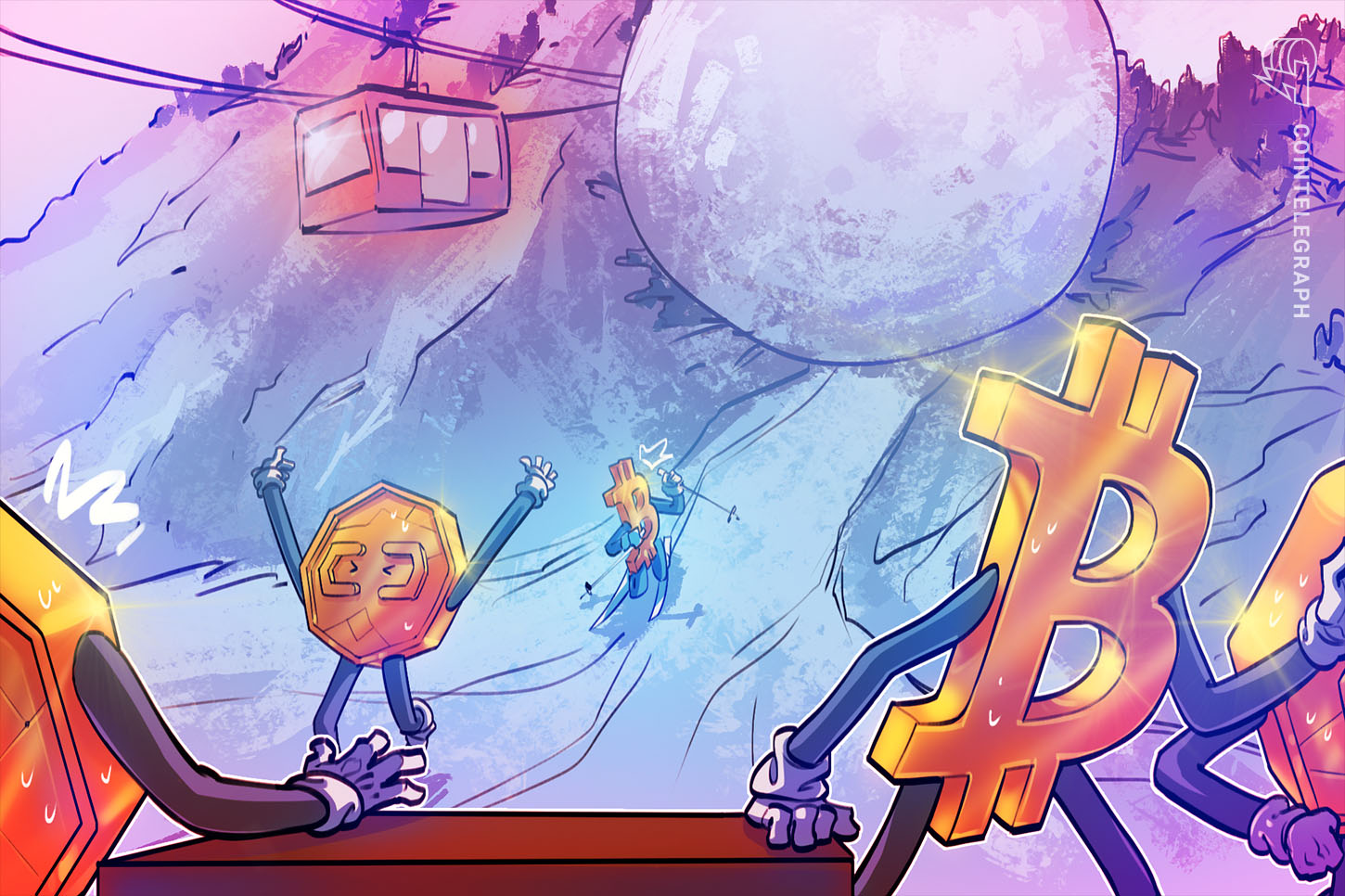
Just the day before the NFP announcement, on Thursday, Federal Reserve Governor Christopher Waller had publicly stated his inclination to favor a rate pause, pending the release of upcoming inflation data. Waller’s comments, coming from a influential voice within the Fed, significantly swayed market sentiment. Prediction markets, such as Polymarket, which allow participants to bet on future events, reflected this shift, with probabilities swinging to a 60% chance in favor of a rate pause and only 40% for a 25 basis-point interest rate hike. This indicated a strong leaning towards the Fed holding rates steady to assess the cumulative impact of previous hikes and observe inflation trends.
However, Friday’s surprisingly strong labor market data acted as a powerful counterweight. The robust job creation figures suggested that the economy might be able to withstand further tightening, and perhaps more importantly, hinted at underlying inflationary pressures that could necessitate additional rate increases. In response, the implied probabilities on Polymarket rapidly adjusted, reverting to an even 50/50 split between a pause and a hike. This dramatic swing within 24 hours perfectly illustrates the heightened sensitivity of markets to new economic information and the delicate balancing act faced by the Federal Reserve. Their dual mandate requires them to foster maximum employment while maintaining price stability, and the latest jobs report has made achieving both simultaneously even more challenging. A strong jobs market, while good for employment, could complicate the fight against inflation by potentially driving up wages and consumer demand, thus necessitating further monetary tightening.
Presidential Intervention and Central Bank Independence
Adding another layer of complexity to the monetary policy debate, former U.S. President Donald Trump weighed in immediately following the strong labor market data, renewing his demands for rate cuts. In a post on his Truth Social platform, Trump stated, "The Fed Board, with its great new leader, must get smart – BE PATRIOTS for a change," and continued, "High interest rates put the U.S.A. at a very unfair disadvantage, and I won’t allow that to happen!"
This public admonition marks a significant moment. Throughout his previous term, President Trump was a frequent and vocal critic of then-Federal Reserve Chair Jerome Powell, consistently urging him to lower interest rates. His arguments often centered on the idea that higher rates hindered U.S. economic competitiveness on the global stage and unnecessarily constrained growth. However, until Friday, Trump had largely refrained from making similar public statements directed at the hypothetical new Chair, Kevin Warsh. The sudden re-emergence of such direct political pressure on the central bank raises questions about the perceived independence of the Federal Reserve.
The principle of central bank independence is considered crucial for effective monetary policy. It posits that decisions on interest rates and money supply should be made free from political interference, allowing the Fed to pursue its dual mandate based purely on economic data and analysis. Presidential demands, while not legally binding, can create political headwinds for the Fed, potentially influencing public perception and even internal debates. This latest intervention underscores the ongoing tension between political objectives and the Fed’s role as an independent economic steward, adding another dimension of uncertainty to an already volatile financial landscape.
The Battle for Bitcoin’s Soul: A New Fork Emerges
While the traditional financial world grappled with jobs data and Fed speculation, the cryptocurrency ecosystem was navigating its own profound structural changes. On August 7, the Bitcoin network experienced a significant event with the activation of the BIP-110 soft fork. Bitcoin Improvement Proposals (BIPs) are formal documents proposing changes to the Bitcoin protocol, which are then subject to community discussion and, if widely supported, can be implemented. A soft fork is a backward-compatible change, meaning nodes that haven’t updated can still validate blocks from updated nodes, but updated nodes enforce stricter rules. In this case, BIP-110 was designed as a User-Activated Soft Fork (UASF), a mechanism where users (nodes) signal their readiness for a protocol change, intending to pressure miners to adopt the new rules.
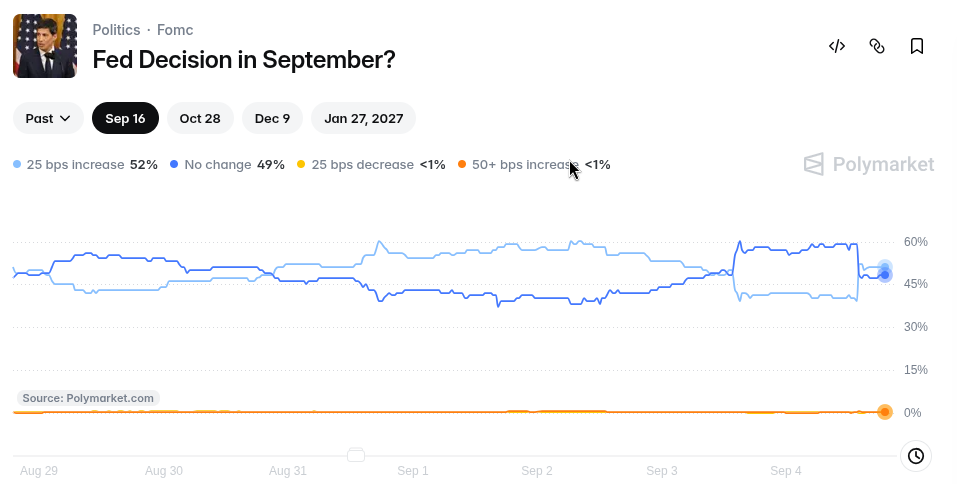
However, the activation of BIP-110 did not proceed as intended. The network briefly split into two competing chains: one attempting to enforce BIP-110’s new rules, and another continuing under the existing Bitcoin rules. The BIP-110 side largely stalled because a critical mass of miners did not devote enough computing power (hashrate) to extending that chain. Miners, who secure the network by solving complex cryptographic puzzles, have a powerful role in determining which version of the blockchain prevails. Their refusal to follow the UASF highlighted a deep-seated and growing concern among a segment of the Bitcoin community: the perceived centralization of Bitcoin’s mining layer.
Mining Centralization: A Growing Concern
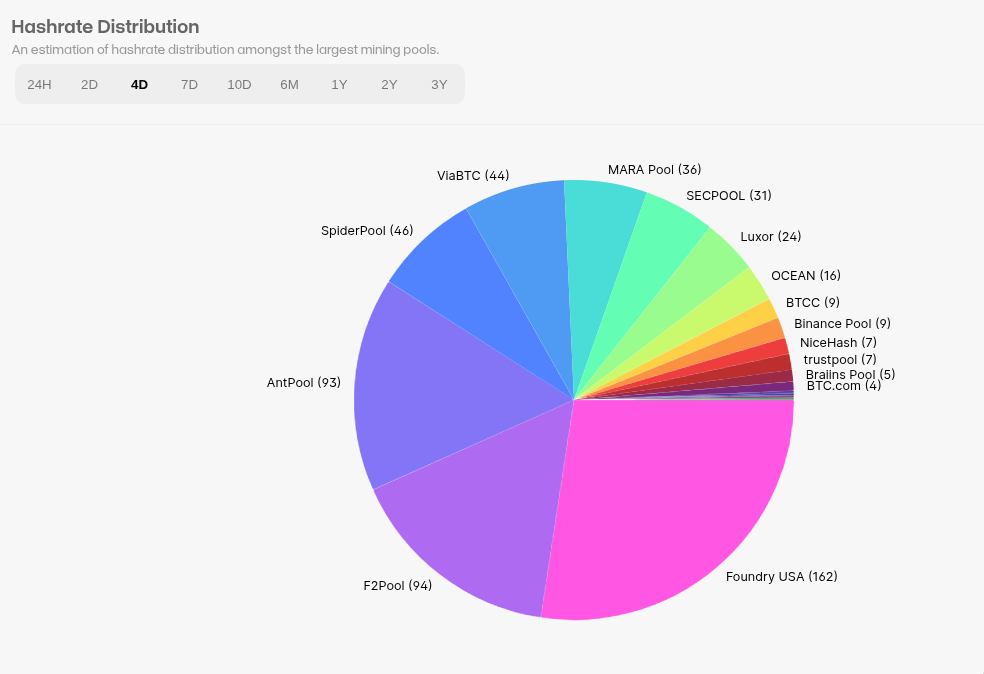
BIP-110 supporters interpreted the miners’ refusal as clear evidence that Bitcoin’s mining ecosystem has become overly centralized. This criticism was further sharpened by the absence of an organized counter-effort from the Bitcoin Core side, such as a User-Rejected Soft Fork (URSF), which would have formally signaled widespread community opposition to BIP-110. The core issue lies in the distribution of hashrate: currently, only a handful of large mining pools control the vast majority of Bitcoin’s computational power. This concentration gives them significant influence over which chain is extended, which transactions are included in blocks, and ultimately, the direction of the protocol’s development.
For a decentralized system like Bitcoin, the concentration of mining power poses several risks. It could theoretically make the network more vulnerable to 51% attacks, where a single entity or coordinated group could gain control of more than half of the network’s total hashrate, enabling them to censor transactions or even reverse past ones. More broadly, it undermines the ethos of decentralization that is fundamental to Bitcoin’s design and its promise of censorship resistance. Critics argue that this concentration allows a few powerful entities to dictate protocol changes, potentially overriding the will of the broader user base. The chart illustrating Bitcoin Network Hashrate Distribution (Source: Blockchain.com) starkly visualizes this concentration, showing how a limited number of pools command disproportionate control.
Blake2b: A Bid for Decentralized Mining
In response to the perceived failure of BIP-110 to achieve its goals through a soft fork and the continuing concerns about mining centralization, a subset of BIP-110 supporters, notably led by prominent Bitcoin developer LukeDashjr, decided to pursue a more radical path. On August 30, they initiated a hard fork, continuing the BIP-110 chain but with a crucial change: altering the proof-of-work (PoW) algorithm to Blake2b.
A hard fork creates a new, separate blockchain that is incompatible with the original chain. This means that nodes on the original Bitcoin network cannot process blocks from the new Blake2b chain, and vice versa. The decision to change the PoW algorithm from SHA-256 (used by original Bitcoin) to Blake2b was a deliberate strategic move. SHA-256 mining is dominated by highly specialized and expensive Application-Specific Integrated Circuits (ASICs). By switching to Blake2b, the developers aimed to render existing SHA-256 ASICs obsolete for this new chain, thereby leveling the playing field and allowing for a new, more decentralized set of miners to emerge, potentially utilizing more common hardware like GPUs or even CPUs. This approach is intended to democratize mining and reduce the barrier to entry, fostering a wider distribution of hashrate.
To further facilitate this vision, the new Blake2b version of Bitcoin is designed to integrate with DATUM gateway technology, which aims to make decentralized mining more accessible and efficient for a broader range of participants. The developers behind this new fork have also ensured that every address that held SHA-256 Bitcoin before August 7 (the BIP-110 activation date) – and potentially even after, depending on the exact snapshot details – will hold an equivalent amount on the Blake2b version of Bitcoin. This "airdrop" mechanism is a common strategy for new forks to distribute their coins to existing communities and incentivize initial adoption.
Early Market Adoption and Future Challenges
The nascent Blake2b version of Bitcoin has already taken its first steps into the market. So far, the only exchange listing the Blake2b coins (referred to as BTCB2) is Neoxa. While liquidity remains thin, reflecting its early stage of development and limited adoption, BTCB2 coins are currently trading at approximately $350 against USDC, with a reported 1.1% spread. This initial valuation, though significantly lower than the original Bitcoin’s price of nearly $80,000, provides a benchmark and allows for price discovery. The thin liquidity and narrow spread indicate that trading volume is low, and significant price movements could occur with relatively small buy or sell orders. The Neoxa Exchange orderbook (Source: Neoxa Exchange) provides a snapshot of this early market activity.
The emergence of the Blake2b Bitcoin fork highlights the ongoing ideological and technical battles within the broader cryptocurrency space. While it represents a bold attempt to address the critical issue of mining centralization, it faces numerous challenges. For any new fork to gain widespread adoption and long-term viability, it requires robust developer support, active community engagement, listings on major exchanges, and sufficient security provided by a decentralized mining network. The network effect of the original Bitcoin, built over more than a decade, is a formidable hurdle for any competitor. However, the Blake2b fork serves as a powerful testament to the community’s commitment to Bitcoin’s foundational principles of decentralization and censorship resistance, demonstrating a willingness to pursue alternative paths when perceived core tenets are challenged.
Conclusion: A Landscape in Flux
The events of the past week underscore a global financial and technological landscape in a state of continuous flux. On one hand, traditional markets are being buffeted by unexpectedly strong economic data, forcing central banks like the Federal Reserve to reconsider their carefully laid plans and navigate intense political scrutiny. The resultant volatility impacts assets across the spectrum, including the rapidly maturing cryptocurrency market, where Bitcoin’s price movements are increasingly intertwined with global macroeconomic narratives.
On the other hand, the very foundations of the cryptocurrency world are being tested and re-evaluated from within. The creation of the Blake2b Bitcoin fork is not merely a technical event but a profound statement in the ongoing philosophical debate about decentralization, governance, and power within the Bitcoin ecosystem. It reflects a community willing to experiment and innovate in pursuit of its core ideals, even if it means fragmenting the network. Both narratives, though seemingly disparate, speak to a common theme: a world striving for stability and resilience amidst forces pushing for change and adaptation. As these dynamics continue to unfold, investors, policymakers, and technologists alike will be keenly observing the implications for the future of finance and digital sovereignty.