Reynand Wu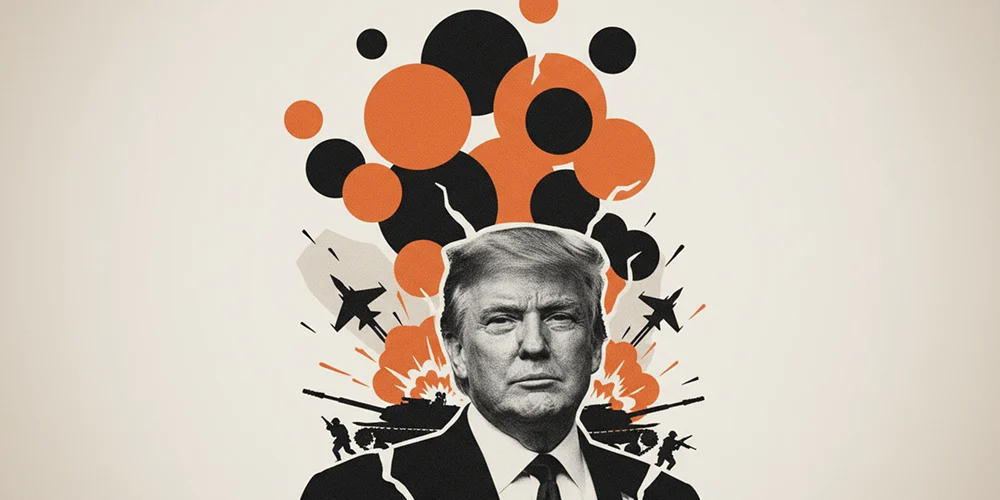
President Trump issued a stark warning regarding Iran, stating that any renewed military campaign against the Islamic Republic "won’t continue for too long" and reaffirming his readiness to authorize another attack. These assertive remarks underscore the persistent and volatile tensions between Washington and Tehran, raising concerns across the international community about potential escalation in the already fragile Middle East. The President’s comments were accompanied by specific allegations against Iran, claiming the nation was attempting to develop a rocket capable of deploying "seamen" – a phrase that has drawn attention for its unusual wording and potential implications for naval warfare or maritime security – and was actively engaged in rebuilding its radar and missile systems.
The President’s statement, delivered at a time when US-Iran relations remained fraught with animosity, echoed a long-standing policy of pressure and deterrence that characterized his administration’s approach to Tehran. The reference to a swift, decisive military response suggests a strategy aimed at minimizing prolonged engagement while achieving immediate objectives, reflecting a broader foreign policy doctrine that often prioritized swift action over protracted conflicts. The ambiguity surrounding the "seamen" allegation has led to various interpretations among analysts, ranging from a misstatement for naval mines, anti-ship missiles, or other maritime disruptive technologies, to a more direct, albeit cryptic, reference to threats against naval personnel or shipping lanes. Regardless of the precise interpretation, the underlying message conveyed a perceived and unacceptable threat to US interests or allies in the region, particularly concerning Iran’s naval and ballistic missile capabilities, which have long been a point of contention.
Historical Context of US-Iran Relations Under the Trump Administration
The backdrop to President Trump’s aggressive rhetoric is a history of escalating animosity that largely began with his decision in May 2018 to withdraw the United States from the Joint Comprehensive Plan of Action (JCPOA), commonly known as the Iran nuclear deal. This landmark agreement, signed in 2015 by Iran and the P5+1 group of world powers (China, France, Germany, Russia, the United Kingdom, and the United States), had curtailed Iran’s nuclear program in exchange for sanctions relief. Trump criticized the deal as "the worst deal ever," arguing it did not adequately address Iran’s ballistic missile program, its regional proxy activities, or the deal’s sunset clauses, which he contended allowed Iran to eventually resume its nuclear ambitions.
Following the US withdrawal, the Trump administration initiated a "maximum pressure" campaign, reinstating and expanding a comprehensive suite of economic sanctions targeting Iran’s oil exports, financial sector, and key industries. The stated goal was to compel Iran to negotiate a new, more restrictive agreement covering its nuclear program, missile development, and regional behavior. However, Iran consistently rejected renegotiation under duress, viewing the US withdrawal as a breach of international commitments. Tehran responded instead by gradually reducing its compliance with the JCPOA’s terms, increasing uranium enrichment levels, and activating advanced centrifuges, arguing these steps were reversible if the remaining signatories upheld their commitments and provided sanctions relief. This tit-for-tat escalation created a dangerous cycle of reciprocal actions and heightened rhetoric that brought the two nations to the brink of conflict on multiple occasions, each side testing the other’s resolve while attempting to avoid full-scale war.
A Chronology of Escalation and Near-Misses
The period following the US withdrawal from the JCPOA was marked by several critical incidents that underscored the precarious nature of US-Iran relations and the constant threat of miscalculation:
- May 2019 – Maritime Attacks: Four oil tankers, including two Saudi vessels, were attacked off the coast of Fujairah in the United Arab Emirates. The US blamed Iran for the sabotage, which denied involvement, describing the accusations as "ridiculous." This incident highlighted the vulnerability of maritime shipping in the Strait of Hormuz, a crucial global oil chokepoint, and raised fears of disruptions to global energy supplies. Weeks later, two more tankers were attacked in the Gulf of Oman, with the US releasing video footage purportedly showing Iranian forces removing an unexploded mine from one of the vessels.
- June 2019 – Drone Shootdown: Iran’s Islamic Revolutionary Guard Corps (IRGC) shot down a US RQ-4 Global Hawk surveillance drone over the Strait of Hormuz, claiming it had violated Iranian airspace. The US maintained the drone was in international airspace. President Trump reportedly approved retaliatory strikes against Iranian targets but called them off at the last minute, citing concerns about potential casualties – an estimated 150 Iranian lives – which he deemed disproportionate to the drone’s loss. This event was a significant near-miss for a direct military confrontation.
- September 2019 – Saudi Oil Facility Attacks: Major drone and missile attacks targeted Saudi Arabia’s Abqaiq and Khurais oil facilities, critical to global energy infrastructure. The attacks temporarily halved the kingdom’s oil production, sending shockwaves through international markets. While Yemen’s Houthi rebels, backed by Iran, claimed responsibility, the US and Saudi Arabia directly attributed the sophisticated attacks, which utilized precision-guided munitions, to Iran itself, presenting intelligence to support their claims. Iran again denied direct involvement.
- December 2019 – US Contractor Killed in Iraq: A rocket attack on the K-1 air base near Kirkuk, Iraq, killed a US civilian contractor and wounded several US and Iraqi service members. The US blamed an Iranian-backed militia, Kataib Hezbollah, and responded with precision airstrikes against the group’s facilities in Iraq and Syria, killing at least 25 militiamen.
- January 2020 – Assassination of Qassem Soleimani: In a dramatic and highly consequential escalation, a US drone strike at Baghdad International Airport killed Major General Qassem Soleimani, the commander of the Islamic Revolutionary Guard Corps’ (IRGC) Quds Force, and Abu Mahdi al-Muhandis, a leader of the Popular Mobilization Forces in Iraq. The US cited Soleimani’s responsibility for past attacks on American personnel and alleged planning of imminent future attacks. This act was widely condemned by Iran and its allies as an act of state terrorism and a severe breach of international law, promising "harsh revenge."
- January 2020 – Iranian Retaliation: Iran launched ballistic missile attacks against two Iraqi military bases housing US troops, Al-Asad Airbase and Erbil. While there were no fatalities, dozens of US service members suffered traumatic brain injuries, later diagnosed as concussions. Iran declared the attacks an act of "self-defense" and "severe revenge" for Soleimani’s assassination, signaling a desire to de-escalate after demonstrating a retaliatory capability.
- Subsequent Period: While direct military confrontations subsided, a "shadow war" continued, characterized by cyberattacks, maritime incidents involving seizures of vessels, and proxy skirmishes in regional conflict zones, maintaining a high level of alert and distrust between Washington and Tehran. It is against this backdrop of persistent tension, demonstrated willingness for both military action and retaliation, and a fragile regional security environment that President Trump’s latest warnings were delivered.
Allegations of Iranian Rocket and Missile Development
President Trump’s specific allegations – that Iran was trying to build a rocket that drops "seamen" and was rebuilding radar and missile systems – require closer examination within the context of Iran’s military doctrine and capabilities. Iran’s ballistic missile program has long been a source of regional and international concern, viewed by the US and its allies as a destabilizing force and a potential delivery mechanism for weapons of mass destruction, despite Iran’s insistence that its program is purely defensive and conventional.
The phrase "rocket that drops seamen" is particularly unusual and warrants careful interpretation. In a military context, "seamen" refers to naval personnel. However, it is far more probable that the President was referring to either:
- Sea Mines: Rockets or missiles could potentially deploy naval mines, posing a significant threat to maritime navigation and international shipping. Iran has a history of developing and deploying various types of naval mines, and their covert or overt use could quickly cripple vital waterways like the Strait of Hormuz, through which a fifth of the world’s oil supply passes.
- Anti-ship Missiles: Iran possesses a diverse and growing arsenal of anti-ship cruise missiles and ballistic missiles designed to target naval vessels. A "rocket that drops seamen" could metaphorically refer to the devastating impact such missiles would have on a ship’s crew upon impact, effectively "dropping" or incapacitating the sailors. This capability is central to Iran’s strategy of asymmetric warfare against superior naval forces.
- Other Maritime Ordnance or Payloads: It could also broadly refer to other forms of maritime weaponry, surveillance technology, or even unmanned surface or underwater vehicles that could be deployed via rocket, intended to disrupt or target naval operations.
- A Misstatement or Mishearing: Given the informal nature of some presidential remarks, it is also plausible that the term was a misstatement, perhaps intended to convey a threat to "shipping" or "maritime assets," or even a specific type of missile designed to disable vessels. Official White House or Pentagon clarifications on such specific phrasing are often sought by the press.
Regardless of the precise interpretation, the underlying concern points to Iran’s increasing capabilities in asymmetric warfare, particularly its ability to threaten maritime security in the Persian Gulf and beyond. The allegations regarding the rebuilding of radar and missile systems further reinforce this concern. Robust radar systems are crucial for detecting incoming threats and guiding defensive or offensive missile operations. The continuous development and enhancement of missile systems, including their range, accuracy, and payload capacity, are central to Iran’s military doctrine and its projection of power in the region. These developments are consistently cited by the US and its allies as reasons for maintaining a strong military presence and considering preemptive or retaliatory actions, especially as Iran’s missile technology has shown signs of improving in precision and reach.
Reactions from Related Parties
President Trump’s statements inevitably triggered a wave of reactions from various stakeholders, each assessing the implications through their own strategic lens:
- Iran: Official Iranian spokespersons typically respond to such threats with resolute defiance, condemning US "belligerence" and reiterating the purely defensive nature of their military capabilities. They would likely issue strong warnings against any military aggression, vowing a "crushing response" to any attack on their sovereignty or national interests. Iranian officials would also likely deny any aggressive intent behind their missile program or naval activities, framing them as necessary for national security in a hostile regional environment. They would dismiss the "seamen" allegation as baseless or a deliberate misrepresentation intended to demonize Iran.
- US Administration Officials: While President Trump’s comments set the tone, other senior US officials would likely seek to clarify or reinforce the message. The Pentagon would affirm its readiness to protect US interests and personnel in the region, without necessarily detailing specific operational plans, emphasizing military preparedness and deterrence. The State Department might emphasize that diplomatic avenues remain open, but only under conditions favorable to US interests, often reiterating calls for Iran to cease its "destabilizing activities" and return to the negotiating table on US terms.
- International Community: European signatories to the JCPOA (France, Germany, UK) would likely express deep concern, calling for de-escalation and dialogue. They have consistently sought to preserve the nuclear deal and encourage both Washington and Tehran to return to full compliance, fearing that renewed conflict would severely undermine regional stability, lead to a humanitarian crisis, and derail global non-proliferation efforts. The United Nations Secretary-General would likely issue a statement urging all parties to exercise maximum restraint and pursue diplomatic solutions, emphasizing the catastrophic humanitarian and economic consequences of a wider conflict in the already volatile Middle East.
- Regional Allies: Countries like Saudi Arabia and the United Arab Emirates, traditional adversaries of Iran and close US allies, would likely express support for US efforts to counter Iranian influence and aggression, while perhaps privately urging caution against actions that could spark a wider conflict that directly impacts their territories and economic interests. Israel, which views Iran as an existential threat due to its nuclear program ambitions and support for regional proxies, would likely support a firm stance against Iran’s military ambitions and welcome strong US deterrence.
Economic Impact and Market Reaction
Geopolitical tensions, particularly those involving major oil-producing regions like the Middle East, invariably have a significant impact on global financial markets. The prospect of military action or sustained conflict between the US and Iran tends to trigger a "risk-off" sentiment among investors, leading to shifts in currency and commodity markets.
Understanding Risk Sentiment:
As outlined in financial market analyses, "risk-on" markets are characterized by investor optimism and confidence in economic growth, leading to increased willingness to buy riskier assets like stocks, most industrial commodities (excluding gold), and currencies of commodity-exporting nations (e.g., Australian Dollar (AUD), Canadian Dollar (CAD), New Zealand Dollar (NZD)). Conversely, a "risk-off" environment emerges when investors are concerned about future uncertainty, political instability, or economic downturns, prompting them to seek safer, less volatile assets. In such periods, major government bonds (like US Treasuries) typically rise in value, gold shines as a traditional safe haven, and "safe-haven" currencies such as the US Dollar (USD), Japanese Yen (JPY), and Swiss Franc (CHF) tend to strengthen. This is because these assets are perceived as more secure during times of uncertainty, offering capital protection or reliable returns due to their liquidity and the economic stability of their issuing countries.
USD Performance in Context:
The provided currency data reflects the daily percentage change of the US Dollar against other major currencies. On the day referenced