Gilang Muhammad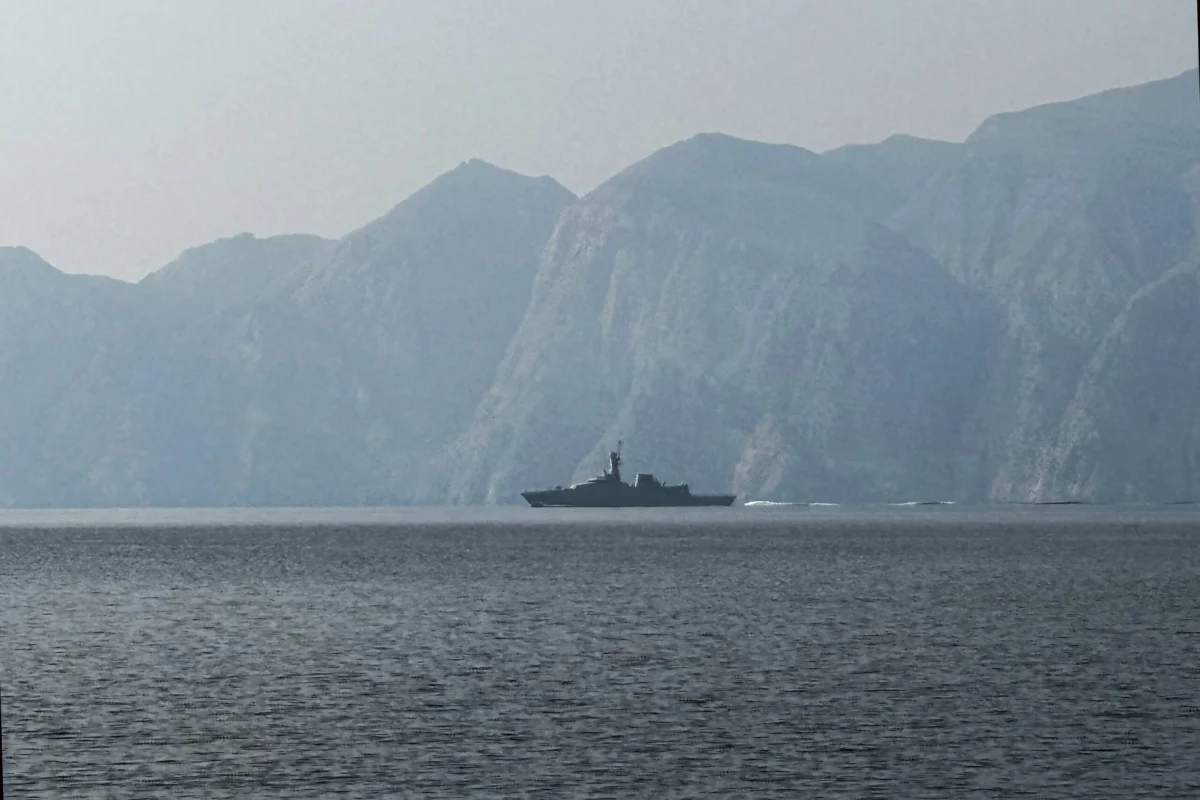
President Donald Trump on Sunday ordered a naval blockade of the Strait of Hormuz, a move that immediately dimmed hopes for a swift resolution to the escalating conflict in the Middle East and intensified a standoff with Iran that has already plunged the world into its most severe energy shock in history. The executive order targets all vessels attempting to enter or depart Iranian ports and coastal areas, encompassing strategic waterways within both the Arabian Gulf and the Gulf of Oman.
The blockade, slated to take effect at 10 a.m. ET on Monday, marks a dramatic escalation following the collapse of high-stakes weekend negotiations between Washington and Tehran. These talks, which stretched for 21 hours, failed to yield an agreement on several critical issues, including Iran’s nuclear program, control of the vital Strait of Hormuz, and Israel’s ongoing military actions against the Iranian-backed Hezbollah militant group in Lebanon. The U.S. Central Command confirmed the order in a concise statement, outlining the broad scope of the interdiction to include ships of all nations.
Immediate Market and Shipping Impact
The repercussions of President Trump’s announcement were instantaneous and severe. Tanker traffic through the Strait of Hormuz, which had shown tentative signs of recovery after a two-week ceasefire declared by Trump the previous week, ground to a halt within hours. Maritime intelligence firm Lloyd’s List Intelligence reported that at least two vessels previously heading towards the strait’s exit abruptly reversed course, underscoring the immediate chilling effect of the blockade order on commercial shipping.
Global crude oil markets reacted with alarm as investors scrambled to price in the prospect of a further, drastic reduction in Persian Gulf supply. U.S. West Texas Intermediate (WTI) futures for May delivery surged by more than 8%, climbing to $104.40 per barrel. Simultaneously, Brent crude, the international benchmark, rose over 7% to $101.86, reflecting profound market anxiety over the stability of global energy flows. These price spikes signify a significant acceleration of the energy crisis, with analysts warning of unprecedented economic challenges ahead.
Geopolitical Crucible: The Road to Blockade
The blockade order is the culmination of weeks of escalating tensions and military actions in the Middle East. The current crisis was ignited on February 28, when the United States and Israel launched coordinated strikes against Iran. This marked a new phase in the long-standing geopolitical rivalry, immediately disrupting global supply chains and sending shockwaves through international markets.
Prior to these initial strikes, approximately one-fifth of the world’s total oil supply—roughly 20 million barrels per day—transited through the Strait of Hormuz. This critical flow has since been reduced to a mere trickle, creating immense backlogs and impacting not just oil but also the transport of fertilizers, apparel, and industrial goods worldwide. Experts had already cautioned that even a resolution would require weeks to clear the accumulated disruption.
The weekend negotiations in Islamabad, intended to de-escalate the situation, were crucial but ultimately futile. Discussions covered Iran’s nuclear enrichment activities, which have long been a point of international contention, as well as the immediate operational control and future status of the Strait of Hormuz. The persistent conflict between Israel and Hezbollah in Lebanon, a proxy battleground reflecting the broader regional power struggle between Iran and its adversaries, further complicated the diplomatic landscape, proving to be an insurmountable obstacle to consensus.
The Strait of Hormuz: A Global Choke Point
The Strait of Hormuz is not merely a shipping lane; it is arguably the world’s most critical maritime choke point. Located between Oman and Iran, it connects the oil-rich Persian Gulf with the Gulf of Oman and the Arabian Sea. At its narrowest point, the strait is only about 21 nautical miles (39 kilometers) wide, with the shipping channel itself just two miles wide in each direction. This geographical constraint makes it highly vulnerable to disruption, a fact exploited in past conflicts and now, once again, central to global energy security.
Historically, the strait has been a flashpoint. During the Iran-Iraq War in the 1980s, both sides attacked tankers in what became known as the "Tanker War." The U.S. Navy intervened to protect shipping, underscoring its strategic importance even then. The current blockade, imposed by a major global power, represents an unprecedented level of direct intervention in the strait’s operations, transforming a critical transit passage into a potential military zone.
Deepening the Economic Fallout: A Crisis Beyond Oil
The imposition of a full blockade on the Strait of Hormuz promises to significantly exacerbate the existing global energy shock. Trita Parsi, executive vice president of the Quincy Institute for Responsible Statecraft, articulated the grim outlook on CNBC’s "The China Connection." "Taking more oil off the market – particularly the only oil that is now getting out from the Persian Gulf – will drive oil prices further up," Parsi stated, predicting a potential ascent to "around $150 per barrel." Such a price point would have devastating consequences for the global economy, particularly for energy-importing nations.
Beyond crude oil, the ripple effects are expected to impact a broader spectrum of commodities. Ben Emons, managing director at Fed Watch Advisors, warned that prices for critical inputs like fertilizer and helium are likely to continue their upward trajectory. Fertilizers are indispensable for global food production, meaning rising costs could trigger food price inflation and potentially exacerbate food security issues worldwide. Helium, crucial for semiconductor manufacturing, scientific research, and medical applications, would see its supply constrained, impacting technology and healthcare sectors. These commodity price increases would further fan an already accelerating global inflation, posing significant challenges for central banks attempting to maintain economic stability.
International financial institutions have already begun to adjust their forecasts. Officials from the International Monetary Fund (IMF) and the World Bank signaled last week that they would downgrade global growth forecasts and raise inflation projections. Their warnings highlighted that emerging markets, often more vulnerable to commodity price shocks and supply chain disruptions, would be hit hardest by the escalating conflict.
Barclays analysts echoed these concerns, stating, "The economic scarring from attacks on energy facilities and ports in Iran and other Gulf nations could continue to keep supply under stress in emerging Asia." The speed at which extraction, refining, and loading of oil and gas could be normalized remains uncertain, indicating a prolonged period of market instability and economic strain.

Historical Parallels and Unprecedented Disruption
The current month-long disruption in the Strait of Hormuz has already drawn stark comparisons to historical energy crises, with many experts warning that the world is facing a shortage potentially worse than the 1970s oil crisis. During that period, an embargo by Arab oil producers against countries aligned with the U.S. quadrupled oil prices, leading to widespread fuel rationing across major economies and triggering a global recession.
Fatih Birol, head of the International Energy Agency (IEA), offered a particularly stark assessment last week. He characterized the current disruption as "the worst energy shock the world has ever seen – more severe than the oil crises of the 1970s and the Ukraine war combined." This statement underscores the unprecedented scale and complexity of the present crisis, which combines geopolitical instability with an already tight energy market.
Daniel Yergin, vice chairman of S&P Global and a renowned energy historian, reinforced this view in an interview with Barron’s last month. "This is a historic disruption to world oil," Yergin said. "There has never been anything of this scale. Even the oil crises of the 1970s, the Iran-Iraq war of the 1980s, Iraq’s invasion of Kuwait in 1990 – none of those come close to the magnitude of this disruption."
Despite these dire warnings, some analysts point to factors that might mitigate the economic impact compared to previous crises. David Lubin, senior research fellow at Chatham House, noted that the global economy is significantly less oil-intensive today than it was five decades ago. In the early 1970s, a full barrel of oil was required per unit of GDP, whereas today, that figure stands at roughly 40% of a barrel. Furthermore, the diversification of the energy mix, with the growth of wind, solar, and nuclear power, offers some resilience that was absent in the 1970s. However, Lubin cautioned that should the conflict escalate further, "it’s quite possible that the energy impact of this crisis could start to deliver as big a negative shock as the 1970s crisis did."
International Reactions and Legal Challenges
The legality of the U.S. naval blockade is highly contentious among international law experts. Several prominent figures have asserted that neither the United States nor Iran possesses the authority to unilaterally close or impede transit passage through the Strait of Hormuz.
"Under international law, specifically the rules governing international straits, the U.S. has no legal authority to close, suspend, or impede transit passage through Hormuz," stated Ben Emons, reiterating a widely held interpretation of the United Nations Convention on the Law of the Sea (UNCLOS). UNCLOS, to which both the U.S. (though not a signatory, it adheres to most of its provisions as customary international law) and Iran are parties, establishes the right of "transit passage" through international straits, which cannot be suspended even by coastal states. As only Iran and Oman are coastal states bordering the strait, their ability to suspend transit is also severely restricted under international conventions. The U.S. action therefore treads on precarious legal ground, potentially setting a dangerous precedent for freedom of navigation.
For shipowners and operators, the practical deterrent to traversing the strait extends beyond military threats to include the complex web of Western sanctions on Iran. Payments to Iran, or even conducting business that indirectly benefits Iranian entities, risk breaching existing U.S. and European sanction regimes. Firms found in violation could face severe financial penalties, including massive fines and exclusion from financial markets, according to Lloyd’s List Intelligence. This financial risk, coupled with the physical danger, makes the strait an increasingly unviable route for commercial shipping.
Iran’s Islamic Revolutionary Guard Corps (IRGC) swiftly responded to the blockade order, hardening its rhetoric and issuing a stern warning on Sunday. The IRGC declared that any military vessels approaching the strait "under any pretext" would be considered a direct violation of the ceasefire. It further cautioned that "enemy vessels that make [a] wrong move will be trapped in [a] deadly vortex in the Strait of Hormuz," signaling a readiness to retaliate against any perceived encroachment or hostile action, thus raising the specter of direct military confrontation.
Global Repercussions: China, India, and Beyond
The U.S. blockade carries significant risks of drawing major global powers, particularly China, into the burgeoning confrontation. China remains Iran’s largest oil buyer and has, according to analysts, continued to receive crude shipments through the strait since the war began in late February. A blanket ban on tankers carrying Iranian crude directly threatens to sever this vital supply line, potentially reigniting tensions between Washington and Beijing just weeks ahead of President Trump’s planned trip to China next month.
Trita Parsi expressed skepticism about such an escalation, stating, "I doubt Trump is ready for that escalation." He added that "it wouldn’t be surprising" if the President eventually walks back on some of the more extreme threats, suggesting the blockade might be a negotiating tactic rather than a definitive policy. However, the Trump administration on Monday further complicated the situation by threatening to impose an additional 50% tariff on China if Beijing is found to be supplying advanced defense equipment to Tehran, adding another layer of economic pressure and potential trade conflict.
Other nations, including India and Pakistan, which had previously negotiated safe-passage arrangements with Iran for their energy needs, could also find themselves inadvertently caught in the crossfire. These countries rely heavily on stable energy supplies from the Persian Gulf and would face immense economic pressure if their access is curtailed by the U.S. blockade. The humanitarian and economic implications for these populous nations could be severe, forcing them to navigate a complex diplomatic and logistical challenge.
Negotiation Tactic or Dangerous Miscalculation?
The strategic intent behind President Trump’s blockade order is subject to intense debate among analysts. Some view the move primarily as a coercive leverage play, a tactic designed to bring Iran to the negotiating table on more favorable terms, rather than a definitive terminal escalation of hostilities. "Since neither side has explicitly stated that talks won’t resume or that the ceasefire is over, all these moves should be treated as tactics and threats within the negotiations," argued Trita Parsi, suggesting that the door to diplomacy might not be entirely closed.
Brian Jacobsen, chief economist at Annex Wealth Management, offered a cautiously optimistic perspective, postulating that Washington might eventually carve out specific safe-passage exemptions for vessels belonging to allied nations. This would allow some critical trade to continue while maintaining pressure on Iran.
However, Emons warned that such a high-stakes strategy carries serious downside risks. A move explicitly designed to bring Iran "to its knees" could just as easily provoke counterstrikes and trigger a fresh, dangerous cycle of military escalation. The IRGC’s defiant rhetoric underscores this risk, indicating a strong resolve to resist any perceived aggression. The possibility of miscalculation by either side in the highly volatile environment of the Strait of Hormuz remains a grave concern, with potentially catastrophic consequences for regional stability and global economic health. The world watches anxiously as the standoff unfolds, uncertain whether the blockade will serve as a pathway to renewed negotiations or a catalyst for wider conflict.