Gilang Muhammad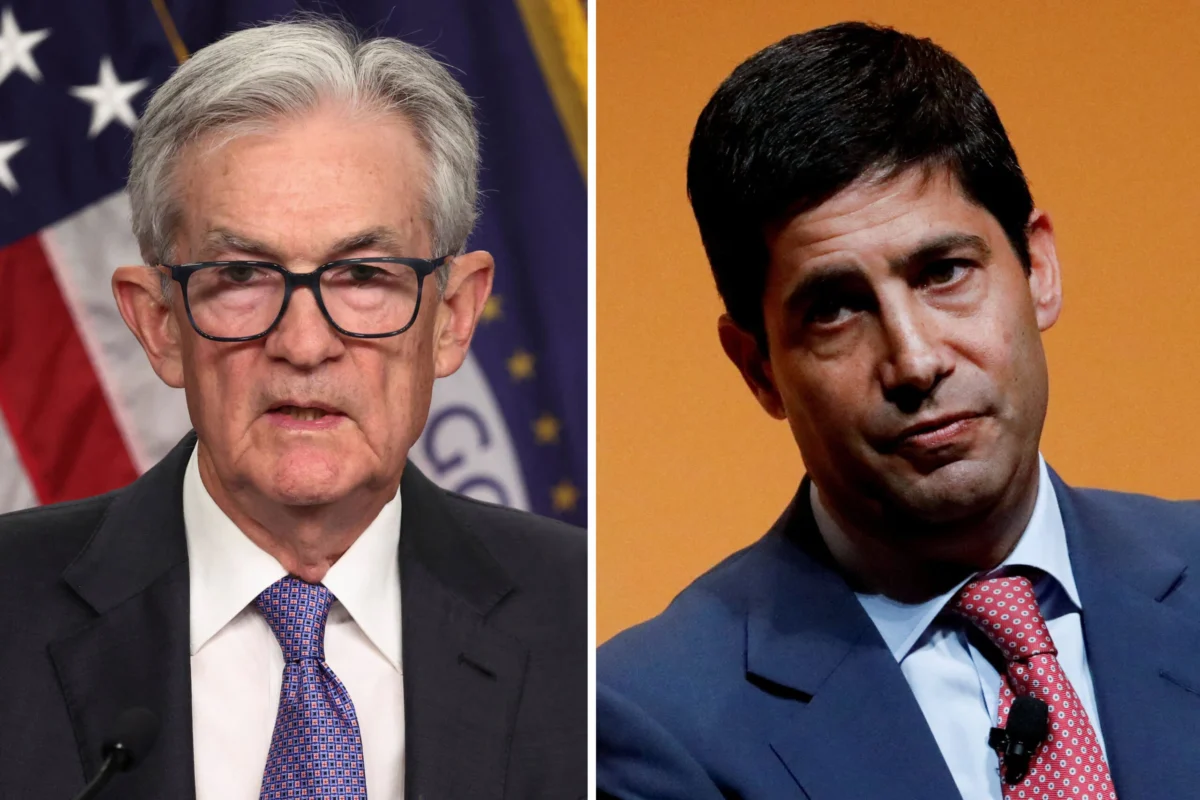
When the Federal Open Market Committee (FOMC) convenes for its pivotal mid-June meeting, the nation’s central bank will enter uncharted territory, marking the first time in nearly 80 years that a sitting and a former Federal Reserve chair conduct official business together. This historic overlap, featuring outgoing Chair Jerome Powell and incoming Chair Kevin Warsh, arrives at an exceptionally sensitive juncture for monetary policy, raising profound questions about leadership dynamics, institutional independence, and the future trajectory of interest rates. While some observers anticipate a collegial atmosphere, the potential for policy clashes and subtle power plays is undeniable, particularly given the backdrop of an assertive White House and persistent inflationary pressures.
A Rare Historical Precedent
The upcoming FOMC gathering is poised to etch itself into the annals of Federal Reserve history. The last instance of a former Fed Chair remaining on the Board of Governors after stepping down from the top post occurred in 1948, when Marriner Eccles continued to serve following his departure as Chair. Eccles’s tenure as governor was notably marked by tensions with the Truman administration over monetary policy, setting a precedent for potential friction when high-profile figures with differing policy philosophies occupy adjacent seats of power. This historical echo amplifies the scrutiny on the mid-June meeting, as markets and policymakers alike grapple with the implications of such an unusual arrangement.
The Federal Reserve, established in 1913, operates with a dual mandate: to foster maximum employment and maintain price stability. Its independence from political interference is widely considered crucial for its effectiveness and credibility. The FOMC, comprising the seven members of the Board of Governors and five of the twelve Federal Reserve Bank presidents, is the principal policymaking body, determining the federal funds rate target and other monetary policy settings.
The Protagonists: Powell, Warsh, and the Political Undercurrent
At the heart of this unfolding drama are two figures with distinct backgrounds and, seemingly, divergent policy inclinations.
Jerome Powell, whose term as Chair expires in May, has overseen a tumultuous period for the U.S. economy, navigating the unprecedented challenges of the COVID-19 pandemic, a rapid recovery, and a subsequent surge in inflation not seen in decades. His tenure has been characterized by aggressive monetary easing during the crisis, followed by an equally aggressive tightening cycle to combat inflation. Powell’s decision to remain on the Board of Governors after relinquishing the chairmanship has surprised many. He publicly stated his intention to stay to await the conclusion of an inspector general’s investigation into the Fed headquarters renovation, a move interpreted by some as a desire to clear his name and underscore institutional integrity. Powell has emphatically downplayed any notion of becoming a "shadow chair" or a "high-profile dissident," vowing to keep a low profile as a governor and emphasizing that "there’s only ever one chair."
Kevin Warsh, nominated by President Donald Trump to succeed Powell, brings a different perspective. A former Federal Reserve Governor himself from 2006 to 2011, Warsh served during the global financial crisis. He is widely perceived as more hawkish on inflation and has been a vocal critic of the Fed’s past policies, famously calling for "regime change" at the central bank. President Trump, a persistent and often harsh critic of Powell’s monetary tightening, has made no secret of his expectation that Warsh will pursue a policy of lower interest rates. This direct political pressure from the White House adds a layer of complexity, challenging the perceived independence of the institution at a moment when it requires unwavering focus.
The Economic Imperative: Inflation and a Robust Labor Market
The immediate economic landscape presents a formidable challenge to any push for premature rate cuts. Recent data underscore persistent inflationary pressures and a remarkably resilient labor market:
- Inflation: Fresh data released on Thursday indicated that core Personal Consumption Expenditures (PCE) inflation, the Fed’s preferred measure, ran at 3.2% in March. This figure remains significantly above the Fed’s symmetrical 2% target, signaling that inflationary forces are far from contained. Several factors are compounding these pressures, including the escalating Iran war and its impact on global oil prices, which have seen Brent crude futures spike above $90 a barrel, alongside lingering tariff fallout contributing to elevated consumer prices.
- Labor Market: Concurrently, weekly jobless claims tumbled to their lowest level since September 1969, providing compelling evidence of a robust and stable labor market. Layoffs continue to hold at levels not seen since the early years of the Nixon administration, indicating strong employer demand for workers and limited slack in the economy. The unemployment rate has remained near historic lows, hovering around 3.8%, with consistent wage growth, albeit moderating, still a factor in service sector inflation.
These economic indicators collectively provide little, if any, ammunition for arguments supporting an immediate policy easing. In fact, they suggest that the Fed’s battle against inflation is ongoing and that a premature pivot could risk reigniting price pressures, undermining years of diligent effort.

FOMC Dynamics and the Specter of Dissent
The most recent FOMC meeting under Powell’s chairmanship offered a preview of the potential fault lines. The post-meeting statement garnered a stunning four dissents, a highly unusual occurrence for a consensus-driven body. These "no" votes, primarily from regional presidents Neel Kashkari of Minneapolis, Lorie Logan of Dallas, and Beth Hammack (who succeeded Loretta Mester in Cleveland), mostly objected to a subtle phrasing in the document. This phrasing, which could be interpreted as signaling a predisposition towards future policy easing, drew sharp rebukes from members keen to maintain a firmly restrictive stance until inflation is definitively brought under control.
Loretta Mester, a seasoned Fed veteran who served as Cleveland Fed president until 2024 and possesses intimate knowledge of the committee’s inner workings, acknowledged the potential for challenges but expressed confidence in the FOMC’s professionalism. "They’re all adults, and they all know what the mission of the Fed is," Mester stated, affirming her belief that "that’s what will drive decision making, not any of these other things that people are worried about." However, she also cautioned against underestimating the resolve of the regional presidents. "Kevin Warsh is not going to, I don’t believe, be able to come in there and convince his colleagues that this is the time to cut rates," Mester asserted, emphasizing the need for Warsh to "evaluate the economic situation before he can argue that it’s time to start moving interest rates again."
The recent dissents can be interpreted as a clear signal from a segment of the FOMC, effectively a "shot across the bow" at the incoming chair and the perceived political pressure to lower rates. This suggests that Warsh will face a determined core of policymakers who will demand compelling economic evidence before considering any dovish shift.
Expert Perspectives on Independence and Influence
Economists and market analysts are closely monitoring the situation, with many expressing concerns about the potential erosion of the Fed’s cherished independence. Joseph Brusuelas, chief economist at RSM, minced no words in his assessment. "One should expect that any further pressure on the Federal Reserve to cut rates due to the political cycle will result in a much further, a much more severe push back, not just by Jay Powell, but other members of the Federal Reserve," Brusuelas warned. He characterized the situation as "what happens when one witnesses an assault on the central bank independence of the Federal Reserve," predicting a climate ripe for further clashes within the FOMC. Brusuelas even posited a scenario where Powell, despite his stated intentions, could end up being "the swing vote on any move to cut interest rates prematurely," given his deep understanding of current policy and institutional memory.
Roger Ferguson, a former Fed Vice Chair, echoed Powell’s sentiment regarding his intentions to avoid being a "shadow chair" but acknowledged the inherent difficulties. Speaking on CNBC, Ferguson expressed confidence in Warsh’s ability to focus on the Fed’s primary goals of low inflation and full employment, yet he underscored the challenging path ahead. "I think he is not interested in becoming an alternative power source, a shadow chair, anything of that sort. He’s expressed confidence in Kevin Warsh and Kevin Warsh’s ability, and I share that confidence," Ferguson stated. However, he also delivered a stark assessment of Warsh’s immediate policy prospects: "He will have to walk a fine line, because it’s pretty clear he doesn’t have the votes for any immediate action, certainly not lowering rates in the near term."
Broader Implications for Credibility and Markets
The confluence of a sitting and former chair, coupled with explicit political pressure and strong economic data pointing away from easing, carries significant implications for the Federal Reserve’s credibility and the stability of financial markets.
- Institutional Credibility: The primary concern is the potential for the unique leadership structure to sow confusion or doubt about the Fed’s unified policy direction. A central bank’s effectiveness hinges on its ability to communicate a clear, consistent message. Any perceived internal discord or external political influence could undermine public trust and market confidence in the Fed’s commitment to its dual mandate.
- Market Uncertainty: Financial markets abhor uncertainty. The prospect of competing policy positions, even if subtly expressed, could lead to increased volatility in bond yields, equity markets, and currency valuations. Traders and investors will be scrutinizing every statement, every vote, and every nuance from the FOMC meetings for signals of internal friction or shifts in policy trajectory.
- Challenges for Warsh’s Leadership: The incoming chair, Kevin Warsh, faces the immediate challenge of asserting his leadership and articulating a coherent policy vision while navigating the presence of his predecessor and the strong views of other FOMC members. His ability to build consensus and demonstrate independence from political directives will be critical in establishing his authority.
- The Role of Regional Presidents: The recent dissents highlight the important role of the regional Federal Reserve Bank presidents, who often bring diverse perspectives and robust economic analyses to the FOMC deliberations. Their willingness to challenge the prevailing view or political pressure serves as a vital check and balance within the system.
The Road Ahead: A Test of Institutional Resilience
As the mid-June FOMC meeting approaches, the financial world will be watching intently. The gathering will not only set the immediate course for U.S. monetary policy but also serve as a crucial test of the Federal Reserve’s institutional resilience, its commitment to independence, and its ability to maintain a clear focus on its mandate amidst unprecedented internal dynamics and external pressures. The interaction between Jerome Powell and Kevin Warsh, though perhaps outwardly collegial, will be analyzed for every subtle indication of policy alignment or divergence. The future of interest rates, and indeed the credibility of the world’s most influential central bank, hangs in the balance.