
 Gilang Muhammad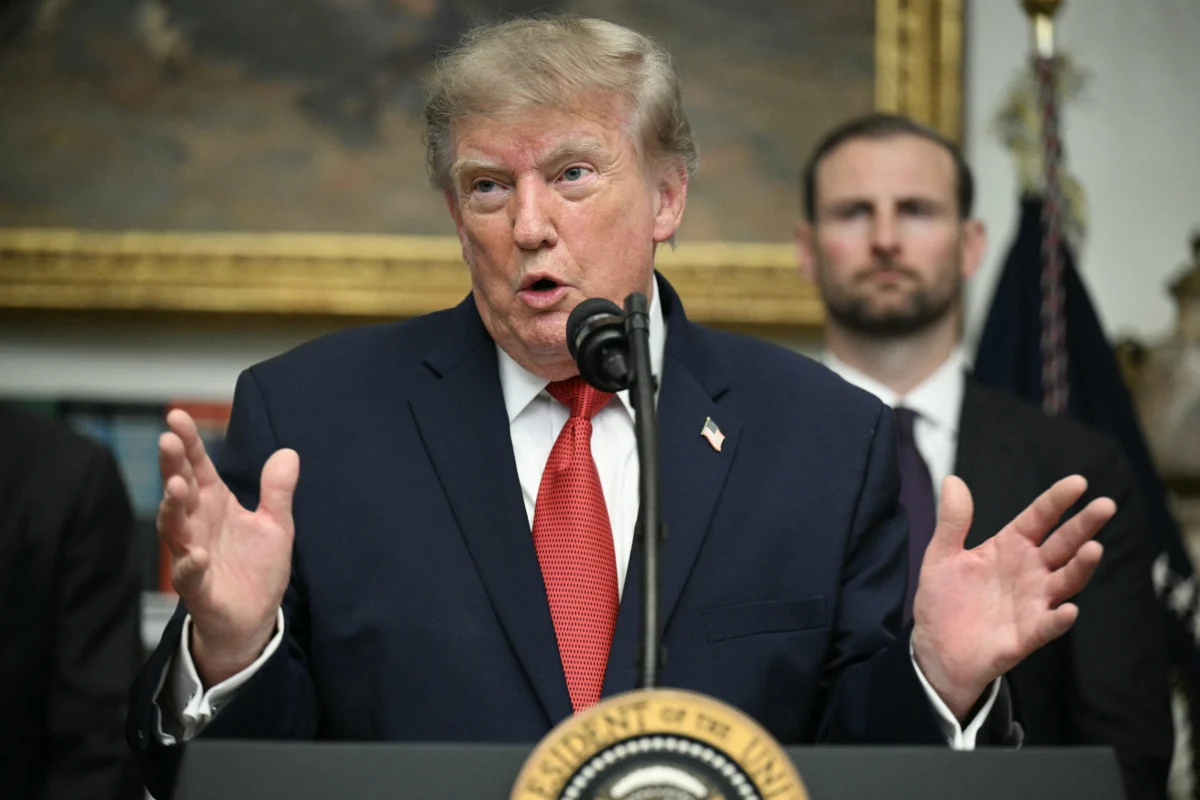
President Donald Trump on Wednesday, August 19, 2026, launched a renewed and pointed critique against the Federal Reserve, expressing significant frustration over its current monetary policy stance and what he perceives as an insufficient pace of interest rate reductions. Speaking from the Roosevelt Room of the White House, where he had earlier met with cryptocurrency executives, the President asserted that robust economic data should not serve as a deterrent for the central bank to adopt a more accommodative policy, reiterating his long-held belief that lower rates are essential for sustained economic expansion and the alleviation of the nation’s burgeoning debt burden.
This latest volley of criticism from the Oval Office underscores a persistent tension between the executive branch’s desire for stimulative monetary policy and the Federal Reserve’s statutory independence and dual mandate of maximizing employment and maintaining price stability. While acknowledging Chairman Kevin Warsh, whom he nominated to the top position earlier this year, is doing a "great job," President Trump pointedly accused other members of the Fed’s Board of Governors of harboring political motivations. "The problem is he has a board, and it’s a political board," Trump told reporters, specifying that "People put in by Obama, Biden, and me, and there are quite a few members still left, as you understand, and so they vote to raise interest rates. I don’t know if they’re doing it because they think they’re doing a good thing or because they like the politics of it." This statement reignites a familiar narrative from his previous term, where he frequently assailed then-Chairman Jerome Powell for similar reasons. Powell, despite his prior disagreements with the President, remains on the board as a governor.
A History of Presidential Pressure and Fed Independence
The relationship between the U.S. President and the Federal Reserve Chairman has often been characterized by a delicate balance, with the Fed historically striving to maintain its independence from political influence to ensure long-term economic stability. The Federal Reserve Act of 1913 established the central bank as an independent entity within the government, designed to make decisions free from short-term political pressures. However, presidential critiques of monetary policy are not unprecedented. Past presidents, from Lyndon B. Johnson to George H.W. Bush, have, at various times, voiced their dissatisfaction with the Fed’s actions.
President Trump’s current term has continued this pattern of overt pressure. Kevin Warsh assumed the chairmanship in May 2026, succeeding Jerome Powell, whose tenure was marked by frequent public badgering from President Trump for not lowering rates faster. Warsh, a former Fed Governor himself, was nominated with the expectation of a more dovish stance aligned with the President’s economic philosophy. His early months in office have coincided with a period of complex economic signals, forcing him to navigate the twin pressures of presidential demands and the Fed’s data-dependent mandate.
Economic Crossroads: Growth, Inflation, and Rate Expectations
Despite the President’s frustrations, the Federal Open Market Committee (FOMC), the Fed’s primary policymaking body, has not voted to raise its benchmark interest rate in over three years. In fact, 2025 saw three rate cuts in the latter half of the year, building on three reductions enacted in 2024. However, the pace and magnitude of these reductions have fallen short of President Trump’s expectations, who consistently advocates for even lower rates.
The economic data points informing the Fed’s cautious approach present a nuanced picture. The U.S. economy, while still growing, showed signs of deceleration in the second quarter of 2026, expanding at an annualized rate of just 1.5%. This figure was below market expectations and a notable drop from the 2.1% growth recorded in the first three months of the year. While slowing growth might typically signal a need for monetary easing, persistent inflationary pressures complicate the Fed’s decision-making. June’s core inflation rate, which strips out volatile food and energy prices, stood at 3.3%, significantly above the Fed’s long-term 2% target. The overall annual inflation rate, though showing some positive trends since the July FOMC meeting, remains stubbornly elevated.
The minutes from the FOMC’s July meeting, released the same day as President Trump’s remarks, highlighted this internal debate. The summary revealed that "many" officials believed higher interest rates might still be necessary unless inflation demonstrated more consistent progress towards the target. This hawkish sentiment within parts of the Board stands in stark contrast to the President’s call for aggressive cuts, creating a policy schism that could intensify in the coming months.
President Trump articulated his view on the relationship between economic performance and interest rates, stating, "My point is, years ago, 25 years ago, when the country announced good numbers, interest rates went down because we had a stronger country. Now, when we announce good numbers, the better they are, the worse it is for interest rates." This perspective suggests a fundamental disagreement with the contemporary economic theory often embraced by central banks, where strong growth can, if coupled with inflation, necessitate tighter monetary policy to prevent overheating.
The Burden of Debt and Fiscal Policy Interplay
A significant component of President Trump’s argument for lower interest rates centers on the nation’s colossal and rapidly expanding debt. The U.S. national debt is nearing an unprecedented $40 trillion, a figure that has grown substantially over recent decades due to a combination of tax cuts, increased spending, and economic stimulus measures across various administrations. Higher interest rates directly translate to a greater burden on the federal budget, as the cost of servicing this debt escalates. Each percentage point increase in interest rates can add hundreds of billions of dollars annually to the nation’s interest payments, diverting funds that could otherwise be allocated to other government priorities or deficit reduction.
The President has consistently argued that lower financing costs are crucial to manage this fiscal challenge and ensure the government has sufficient flexibility for future spending. This perspective often places monetary policy (interest rates) in direct dialogue with fiscal policy (government spending and taxation), highlighting the interconnectedness of these two powerful levers of economic management.
International Comparisons and Geopolitical Threats
President Trump further amplified his case for lower rates by drawing comparisons with global competitors, specifically citing Switzerland. He noted that Switzerland’s benchmark interest rate is anchored around a half percent (0.5%), while the U.S. currently maintains rates around 3.5%. "I see countries like Switzerland where they’re the number one lowest interest rates, a half a percent, and we pay three and a half percent," he said.
However, economic analysts are quick to point out the vastly different economic contexts that underpin these disparities. Switzerland, a global financial hub known for its strong currency and often battling deflationary pressures, has historically maintained ultra-low or even negative interest rates to stimulate its economy and counter an unusually strong safe-haven currency that can hinder exports. The U.S., by contrast, has been grappling with elevated inflation and a robust labor market, necessitating a different policy approach.
In a striking statement that quickly drew attention, President Trump added, "I have the absolute right to cut off all business with a country like Switzerland." While such a drastic measure would likely face significant legal and international hurdles and provoke widespread diplomatic and economic fallout, the remark underscores the President’s willingness to use all available levers, or at least the threat of them, to achieve his desired economic outcomes. Such rhetoric, even if symbolic, can introduce uncertainty into global markets and diplomatic relations. Other major economies, such as the Eurozone and Japan, also maintain different monetary policies based on their unique economic conditions, often with rates lower than the U.S., reflecting varied battles against inflation, growth, and demographic shifts.
Treasury’s Bond Market Intervention
Coinciding with the President’s comments, the Treasury Department announced a significant move aimed at managing the nation’s debt profile. Earlier on Wednesday, the Treasury revealed it was stepping up its bond buyback program, specifically targeting longer-maturity debt, defined as duration of at least 10 years. This action came after a recent surge in yields for longer-term U.S. government bonds, which had raised concerns about the cost of future borrowing.
Bond buybacks by the Treasury are a tool used to improve liquidity in certain segments of the bond market, reduce outstanding debt, and potentially influence longer-term interest rates downward. By purchasing older, less liquid bonds, the Treasury can signal its intent to manage debt costs and supply, which often results in lower yields for new issuances. Market observers noted that this strategic intervention by the Treasury could be seen as an attempt to complement the President’s desire for lower financing costs, even if the Federal Reserve maintains a higher policy rate.
Despite the Treasury’s proactive measures and the President’s public frustrations with interest rates, he stated that he does not believe the U.S. has a bond market problem. This perspective suggests that he views the current rates as artificially high due to Fed policy, rather than reflective of fundamental market dysfunction or investor apprehension about the nation’s fiscal trajectory.
Implications for Markets and Policy
President Trump’s latest remarks are likely to send ripples through financial markets, even if investors are accustomed to his outspoken stance on monetary policy. Bond yields, particularly on shorter-term maturities, may react to the perceived pressure on the Fed, while equity markets could show volatility as they weigh the implications of potential rate cuts against persistent inflation concerns. The U.S. dollar’s value could also be influenced by the prospect of diverging monetary policies relative to other major economies.
For the Federal Reserve, the renewed presidential pressure presents a delicate challenge. Maintaining its independence and credibility is paramount for its effectiveness. Any perception that its decisions are swayed by political considerations could undermine market confidence and its ability to manage the economy effectively. Chairman Warsh, still relatively new to the top post, faces the task of balancing his commitment to data-driven policy with the strong and public demands from the President who appointed him.
Economists and market analysts generally emphasize the importance of central bank independence for several reasons: it allows for long-term economic planning free from electoral cycles, prevents the politicization of monetary policy which can lead to inflationary spirals, and fosters greater market predictability and trust. The ongoing public dialogue between the President and the Fed will therefore continue to be a focal point for understanding the future direction of U.S. monetary policy and its broader economic implications as the nation navigates complex fiscal and economic challenges. The next FOMC meeting, scheduled for late September, will be closely watched for any signals regarding the Fed’s response to the current economic data and the mounting political pressure.








