Gilang Muhammad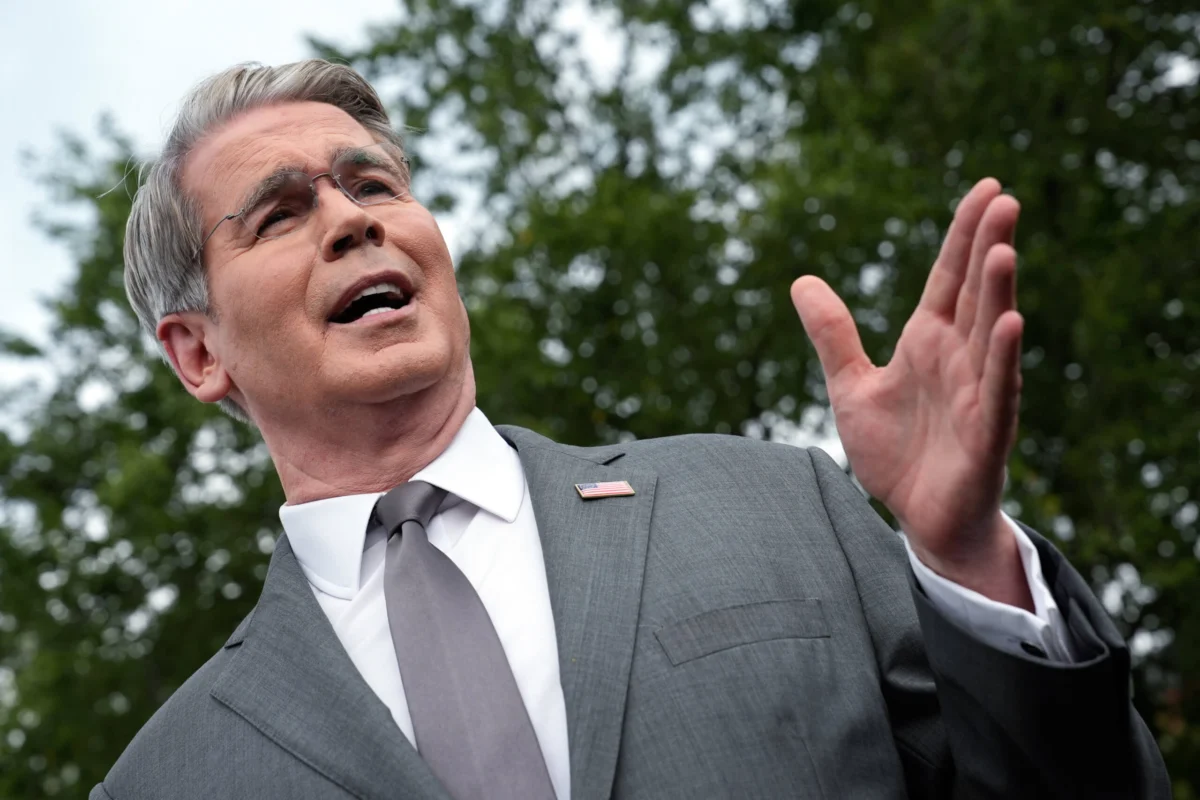
Despite Treasury Secretary Scott Bessent’s steadfast assurances on Thursday regarding the robust "toolkit" at his disposal to mitigate burgeoning liquidity concerns within the colossal government debt market, his initial two-pronged strategy—encompassing accelerated bond buybacks and a concerted public relations effort to rationalize these actions—has encountered significant market skepticism, failing to restore enduring calm. The Treasury’s announcement on Wednesday, signaling a commitment to at least double its bond buyback operations beginning in early September, initially sparked a positive reaction, with yields on longer-maturity government bonds experiencing a temporary decline as investors seemingly welcomed a governmental backstop. However, this fleeting optimism proved short-lived; by Thursday, yields across the longer end of the curve had quickly rebounded, reflecting a deep-seated apprehension among market participants regarding the efficacy of these measures against a formidable array of countervailing pressures impacting U.S. Treasurys.
A Chronology of Interventions and Rebuttals
The recent sequence of events began with the U.S. Treasury’s highly anticipated announcement on August 19, 2026, revealing plans to significantly scale up its bond buyback program. Specifically, the department indicated it would at least double the frequency and volume of its operations, focusing on longer-term debt instruments. This move, widely interpreted as an attempt to enhance liquidity in a market segment that has shown signs of strain, was initially met with enthusiasm. Longer-term yields, which move inversely to bond prices, saw a noticeable dip, suggesting that investors viewed the Treasury’s intervention as a credible commitment to supporting the market. The rationale often cited for such buybacks is to remove older, less liquid securities from the market, replacing them with cash or shorter-term, more liquid instruments, thereby improving overall market functioning.
However, the positive momentum dissipated swiftly. By August 20, 2026, the very next day, bond yields, particularly at the long end of the curve, began to climb once more. This reversal underscored a fundamental skepticism among market experts and traders, who questioned whether the announced scale of buybacks would be sufficient to counteract the myriad of powerful factors exerting upward pressure on Treasury yields. The market’s quick pivot suggested that while the concept of a backstop was appreciated, the practical execution and potential impact of the proposed buybacks were viewed as inadequate.
Treasury Secretary Bessent’s subsequent appearance on CNBC on Thursday was intended to quell these rising anxieties and clarify the Treasury’s objectives. He emphatically stated that the intervention was solely designed to provide market liquidity and not to manipulate or control the yield curve – a distinction crucial for maintaining the Treasury’s credibility and avoiding accusations of "financial repression." While Bessent’s remarks initially caused a minor downward nudge in yields, the effect was fleeting. Market prices quickly reverted, and analysts, such as Evercore ISI’s Krishna Guha, characterized Bessent’s television appearance as having "minimal impact" on the prevailing market pressures. This rapid oscillation in market sentiment within hours highlights the fragile confidence in the current environment.

The "Big Toolkit" and Its Limitations
Secretary Bessent’s assertion that the Treasury possesses a "big toolkit" is fundamentally true. The Treasury, as the primary issuer of government debt, has various levers it can pull, including adjusting issuance sizes and maturities, conducting debt exchanges, and utilizing buyback programs. "Part of it is signaling here and to show that we believe that the yields don’t reflect the underlying fundamentals," Bessent remarked, indicating a belief that current market pricing is overstating risks or underestimating the economy’s strength.
However, the market’s current reaction suggests that the tools deployed thus far are perceived as insufficient in scale or scope. Criticism quickly mounted regarding the size of the announced buybacks. Bessent confirmed that the operations could exceed $4 billion, a sum that, while substantial in isolation, is dwarfed by the sheer scale of the U.S. government debt market, which has surpassed $40 trillion. Analysts argue that such an amount might be too small to have a lasting, material impact on liquidity or yields in such a vast and dynamic market.
Krishna Guha of Evercore ISI likened the plan to a "weak form of Operation Twist." Operation Twist was a Federal Reserve initiative, notably employed in 1961 and again in 2011-2012, where the central bank sold shorter-term securities and used the proceeds to buy longer-term bonds. The aim was to lower long-term interest rates without expanding the overall size of the Fed’s balance sheet. Guha’s comparison implies that the Treasury’s current buyback program lacks the systemic power and scale of a full-fledged central bank intervention. He cautioned that the current move "in itself will have little enduring impact and could backfire if it is seen as signaling concern about the ability to fund longer-term at acceptable cost." This points to a critical risk: if the market interprets the buybacks as a sign of desperation rather than strategic liquidity management, it could exacerbate, rather than alleviate, concerns about the U.S. government’s ability to finance its debt burden.
Credibility at Stake: A Breach in Communication Strategy
Beyond the size and immediate impact of the buybacks, the very manner of their announcement has drawn sharp criticism, particularly concerning the Treasury’s long-standing commitment to "regular and predictable" communication regarding its debt management policies. Thomas Simons, chief U.S. economist at Jefferies, voiced strong concerns, pointing out that the buyback announcement came only two weeks after the Treasury’s quarterly refunding plans were unveiled. During that earlier, traditionally pivotal announcement, there was no indication whatsoever that a change to the buyback scheme was under consideration.

Simons argued that this departure from established protocol "breaks with Treasury’s long-held strategy of making ‘regular and predictable’ announcements, and using the Refunding to announce almost all of their policy changes and guidance." He further elaborated, "We do not think it is hyperbole to say that this break in communication strategy reduces the overall credibility of their guidance." This erosion of credibility is a significant risk, as market trust in the Treasury’s forward guidance is paramount for stable and efficient debt issuance. A perception of hasty or ill-considered decisions, compounded by what Simons described as "sloppy wording of [the] headline on [the] release," can lead investors to demand a higher risk premium for holding U.S. government debt, thereby driving yields even higher. The challenge for Secretary Bessent, therefore, is multi-faceted: not only must he manage market liquidity, but he must also meticulously safeguard the Treasury’s reputation for transparent and predictable policy formulation.
Multifarious Headwinds: Beyond Liquidity
The pressures confronting the Treasury market extend far beyond mere liquidity issues, encompassing a complex interplay of fundamental and structural factors. Secretary Bessent himself acknowledged that not all elements at play are strictly fundamental, pointing to several significant headwinds:
- Rising Competition from Corporate Bond Issuance: The corporate bond market offers an alternative for investors seeking yield. If corporate bonds become relatively more attractive due to their yield-to-risk profile, capital can flow away from Treasurys, increasing the supply pressure on government debt.
- Attractive Yields of Other Sovereigns: Historically, U.S. Treasurys have been a safe haven, often offering superior yields compared to other developed nations. However, suddenly more attractive yields from other sovereign issuers, such as Japan (which has traditionally maintained ultra-low rates but might be seeing shifts in its monetary policy stance), can draw away international demand for U.S. debt.
- Correlation with Oil Prices and Inflation Fears: A strong correlation between rising oil prices and bond yields often indicates heightened inflation expectations. As oil prices climb, investors anticipate higher consumer prices, which erodes the real return on fixed-income investments. To compensate for this anticipated loss of purchasing power, investors demand higher nominal yields on bonds.
- Increasing Term Premiums: The term premium is the extra compensation investors demand for holding a longer-term bond compared to rolling over a series of shorter-term bonds for the same period. This premium compensates for interest rate risk, inflation risk, and liquidity risk over longer horizons. An increasing term premium suggests that investors are becoming more apprehensive about future inflation, interest rate volatility, or the ability to easily sell their long-term holdings, thus demanding higher yields for locking up their capital.
Adding to these dynamics, Atsi Sheth, chief credit officer at Moody’s Ratings, highlighted a "structural shift in who buys U.S. government debt." Traditionally, central banks and institutional investors with long-term liabilities (like pension funds and insurance companies) were major buyers of U.S. Treasurys. However, "As central banks shrink their balance sheets and traditional duration buyers reach the limits of how much additional issuance they can absorb, new buyers, such as leveraged hedge funds running relative-value strategies, are playing a bigger role." This shift implies a more volatile and less predictable demand base, as hedge funds typically have shorter investment horizons and are more sensitive to subtle market dislocations and relative value opportunities.
The Elephant in the Room: The U.S. Fiscal Situation
Perhaps the most formidable long-term challenge facing the Treasury is the deteriorating U.S. fiscal situation. The nation currently grapples with a deficit-to-GDP ratio of nearly 6%, a staggering figure that is approximately triple its average from the end of World War II until the onset of the Covid-19 pandemic. This unsustainable fiscal trajectory is contributing to the rapid expansion of the national debt, which recently surpassed an unprecedented $40 trillion mark.

The political landscape offers little immediate solace. With President Donald Trump reportedly advocating for further tax cuts and Congress demonstrating a persistent reluctance to curb spending, the trajectory for fiscal problems appears upward. In recognition of this critical issue, Secretary Bessent indicated plans to meet soon with Russell Vought, head of the Office of Management and Budget, to discuss "fiscal consolidation"—a term generally understood to refer to efforts aimed at reducing government deficits and slowing the growth of the national debt. However, achieving meaningful fiscal consolidation in the current political climate presents an immense challenge.
JoAnne Bianco, senior investment strategist at BondBloxx, succinctly summarized the pervasive concerns: "It’s that combination of the deficits, the borrowing needs, inflation expectations, not really knowing what future Fed policy is going to be, and the sustainability of being able to issue higher, ever higher, levels of U.S. Treasury debt, and what rates those need to be at." She concluded, "There’s just the idea that there needs to be a higher risk premium for all the issuance." This sentiment encapsulates the market’s demand for greater compensation for the perceived risks associated with holding U.S. government debt in an environment of escalating fiscal imbalance and policy uncertainty.
The Potential for Fed Cooperation and Future Outlook
In light of these multifaceted challenges, one potential avenue for Bessent is seeking enhanced cooperation with the Federal Reserve. While Fed Chairman Kevin Warsh has consistently emphasized the importance of allowing market forces to determine interest rates, Secretary Bessent did suggest on Thursday that the two entities "would work together" in addressing complications in the bond markets, particularly as the central bank manages its own substantial Treasury holdings. Any coordinated action between the Treasury and the Fed would represent a powerful signal to the market, potentially bolstering confidence more effectively than unilateral Treasury actions. Historically, instances of close cooperation, such as during the 2008 financial crisis or the early stages of the pandemic, have been instrumental in stabilizing financial markets.
However, the Fed operates under a dual mandate of price stability and maximum employment, and its primary tool, the federal funds rate, is set independently. Any "cooperation" would likely involve careful coordination of communication and potentially adjustments to the Fed’s balance sheet management, rather than direct intervention in the yield curve by the Fed at the Treasury’s behest.
The current situation represents a paradigm shift in global government debt markets. The era of persistently low interest rates and abundant liquidity, driven by quantitative easing and central bank balance sheet expansion, appears to be receding. As central banks normalize monetary policy and governments grapple with historically high debt levels and persistent deficits, the cost of borrowing for sovereign nations, particularly the U.S., is under intense scrutiny. The market’s skeptical reception of the Treasury’s initial interventions underscores the gravity of the challenges ahead for Secretary Bessent and the broader U.S. economy. The coming months will test the full extent of the Treasury’s "toolkit" and its ability to navigate a complex financial landscape where credibility, fiscal prudence, and effective communication are paramount.