Gilang Muhammad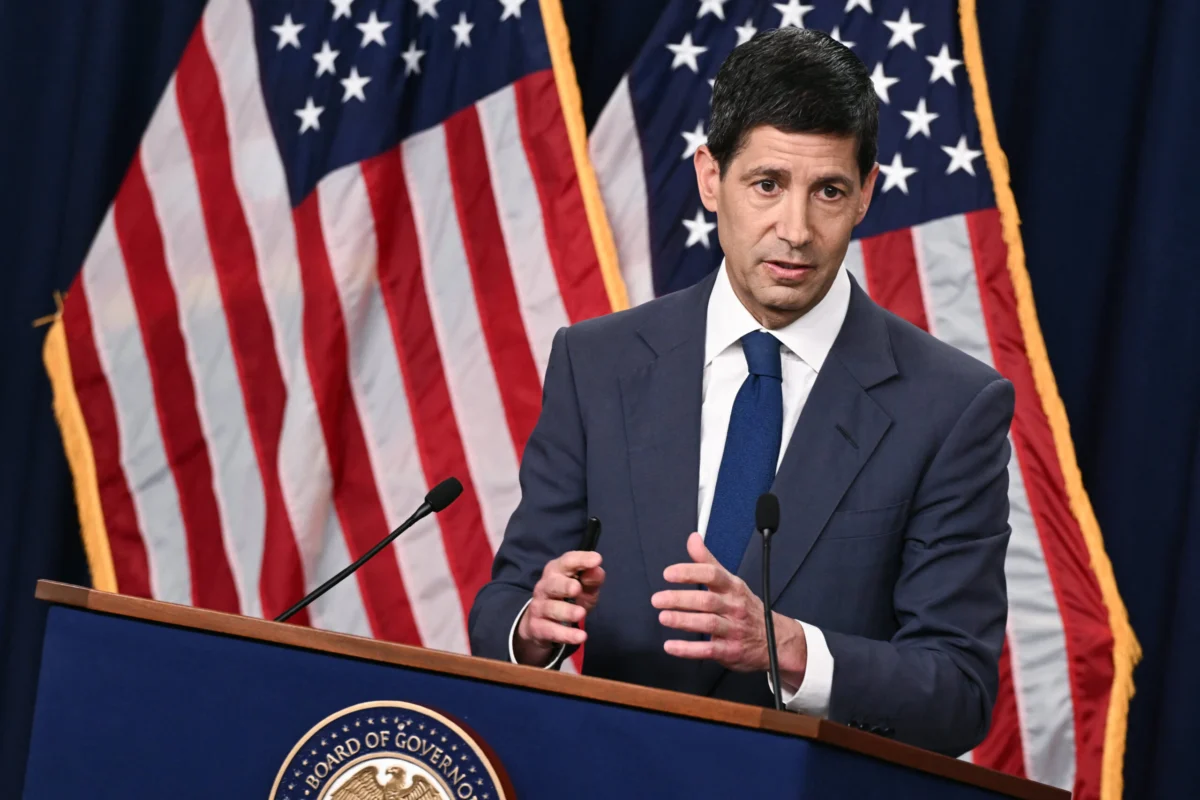
Federal Reserve Chairman Kevin Warsh delivered a pivotal address at the annual Jackson Hole Economic Symposium on Friday, signaling deep concern over persistently elevated inflation and hinting that further interest rate increases may be necessary if price pressures do not show more substantial improvement. His closely scrutinized remarks at the prestigious gathering in Jackson Hole, Wyoming, eschewed the explicit forward guidance and clear "reaction function" often favored by his predecessors, instead advocating for a more disciplined and less communicative approach to monetary policy. The financial markets reacted swiftly, with stock indexes initially climbing before Treasury yields moved significantly higher, reflecting increased expectations for tighter monetary policy.
Warsh’s Stance on Inflation: "Work to Do"
Chairman Warsh’s central message revolved around the stubborn nature of inflation. Despite recent data suggesting some moderation, he cautioned against complacency, stating, "while this summer’s [inflation] readings were better than expected, they do not tell me that underlying trends have meaningfully improved." This assessment underscores a cautious outlook from the Fed’s new chief, suggesting that the battle against inflation is far from over.
He articulated the Fed’s unwavering commitment to its price stability mandate, emphasizing, "We must be confident that underlying inflation is moving to our objective, clearly and at sufficient speed. Otherwise, we have work to do. That’s our job, our mandate and our charge to keep." This declaration served as a stark reminder that the central bank remains focused on bringing inflation back to its long-term target of 2%, even if it necessitates further restrictive measures. The latest data available, for example, showed the Personal Consumption Expenditures (PCE) price index, the Fed’s preferred inflation gauge, rising 3.3% annually in July for core prices (excluding volatile food and energy), well above the central bank’s target. The Consumer Price Index (CPI) had also shown a 3.2% annual increase in July.
Market Response and Rate Hike Expectations
Financial markets absorbed Warsh’s speech, delivered at 10 a.m. ET, with noticeable movements. Stock market indexes, particularly the technology-heavy Nasdaq Composite and the broader S&P 500, initially saw modest gains, perhaps interpreting Warsh’s confidence in the economy as a positive signal. However, the bond market’s reaction was more pronounced and indicative of heightened rate hike expectations. The policy-sensitive 2-year Treasury note soared nearly 8 basis points, or 0.08 percentage point, reaching 4.31% – its highest level since late July. This specific bond is often seen as a proxy for market expectations of the Fed’s near-term interest rate trajectory, and its sharp rise signaled a clear shift in investor sentiment.
Furthermore, traders significantly raised the probability for a rate hike at the upcoming September policy meeting. According to CME Group’s FedWatch tool, the likelihood of an increase jumped to 55.7%, a substantial rise of approximately 20 percentage points from just a day prior. This reflects a consensus forming among market participants that Warsh’s remarks have made a September hike, or at least one before the year’s end, a much stronger possibility.
Heather Long, chief economist at Navy Federal Credit Union, echoed this sentiment, stating, "Warsh opened the door to a Fed rate hike. A hike probably won’t come in September, but it will by October or December. Warsh explicitly said this summer’s encouraging inflation readings don’t indicate ‘meaningful’ improvement on inflation. Bond markets reacted swiftly by pricing in a hike." Her analysis aligns with the market’s immediate repricing of interest rate futures.
Broader Economic Confidence and AI’s Role
Despite his stern warning on inflation, Warsh expressed a generally confident outlook on the broader economy, asserting that it "appears to have strengthened." He reiterated his previous optimism regarding the transformative potential of artificial intelligence (AI), citing its benefits as a potential driver of productivity and economic growth. Business and consumer spending, he noted, have largely held up well, indicating underlying resilience.
Addressing concerns about a slowdown in hiring, Warsh attributed this not to weakening demand but rather to a "flattening labor supply." This suggests that the constraints in the labor market are more structural, related to demographic shifts and labor force participation rates, rather than a cyclical downturn in demand for workers. This distinction is crucial, as it implies that the economy’s productive capacity might be facing longer-term limitations, which could complicate the Fed’s efforts to cool inflation solely through demand-side measures.
A New Philosophy for the Fed: Discipline Over Decisions
A significant portion of Warsh’s speech was dedicated to outlining his overarching philosophy on policymaking, marking a distinct departure from recent Fed leadership. He consciously avoided providing any explicit signals on the immediate direction of interest rates or specific economic thresholds that would trigger a policy adjustment, instead declaring, "I stand here today committed to a discipline, not to a decision." This statement, delivered to an audience comprising fellow policymakers, economists, and media, encapsulates his desire to move away from a prescriptive approach to monetary policy.
Responding to Critics: A "Quieter Fed"

Chairman Warsh’s tenure, now just over 100 days since taking office in May, has been characterized by a noticeable shift in communication strategy, drawing both praise and criticism. He has been particularly vocal in his opposition to "forward guidance"—the practice of providing verbal cues about the Fed’s future intentions. He views this as "hand-holding for markets" that should instead be interpreting economic data, not relying on Fed rhetoric.
Early in his speech, aptly titled "In Our Time," Warsh quipped, "You can call it an outline, you can call it a trail map, just don’t call it forward guidance," adding that the practice "has overstayed its welcome." This direct challenge to a communication tool widely employed during and after the 2008 financial crisis and the COVID-19 pandemic highlights his resolve to reshape how the Fed interacts with the public and markets.
Warsh has initiated five task forces since assuming office, aiming to re-evaluate various Fed functions. A core theme emerging from these efforts is a desire to wean markets off their perceived over-reliance on every utterance from policymakers. He advocated for a "quieter Fed, more purposeful in its communications," arguing that while the Fed’s tools are powerful and market participants will always try to anticipate its moves, "we should not indulge a regime in which market participants are looking primarily to the Fed for their next trade." This philosophy seeks to foster greater market self-reliance and reduce the potential for excessive volatility driven by constant parsing of Fed statements.
Jackson Hole: A Historical Platform for Policy Shifts
The Jackson Hole Economic Symposium, hosted annually by the Federal Reserve Bank of Kansas City, has historically served as a critical platform for central bankers to signal significant shifts in monetary policy or introduce new frameworks. Over the decades, speeches delivered here by Fed Chairs have often moved markets and shaped global economic expectations. Paul Volcker’s address in 1982, for instance, cemented his commitment to fighting inflation through high interest rates. Alan Greenspan often used the forum to muse on structural changes in the economy. More recently, Ben Bernanke used it to outline quantitative easing, and Janet Yellen to discuss the labor market. Last year, then-Chair Jerome Powell hinted at impending interest rate cuts, triggering an aggressive rally on Wall Street.
In contrast to these historical precedents, Warsh’s speech deliberately refrained from offering such explicit policy signals. His approach represents a conscious pivot, harkening back to an era prior to the 2008 financial crisis when the Fed communicated less directly, and markets were expected to infer policy direction more from economic data than from official pronouncements.
The Absence of a "Reaction Function"
Beyond forward guidance, market participants had also hoped Warsh might provide a "reaction function"—a clear set of economic signals that would trigger a specific policy response. However, even on this front, he remained reticent. He acknowledged the calls for such clarity, posing the question himself: "So, if forward guidance is ill-suited to normal times, then how about the new Fed chief commits—at the very least—to an explicit reaction function? Surely, he should tell us his interest rate path—if, say, the data were to come in hot or cold."
Yet, Warsh firmly asserted that the Fed’s "knowledge just doesn’t extend that far—at least not yet—and the factors most relevant to the proper conduct of monetary policy change over time." He committed his colleagues and himself to "endeavor to construct more reliable models and more robust rules to guide policy decisions," but cautioned that "accuracy in economic forecasting is still just an aspiration. With so much changing so fast in geopolitics, global supply chains, and technology, it’s wise to be modest about what we can and cannot know." This underscores his belief in the inherent uncertainties of economic forecasting and the need for flexibility over rigid rules.
Unaddressed Issues: Treasury’s Debt Buybacks
Notably, Warsh’s speech made no mention of the recent announcement from Treasury Secretary Scott Bessent regarding accelerated buybacks of government debt. This omission is significant, as Bessent’s initiative to reduce outstanding government debt and improve market liquidity could be seen as a form of government intervention in financial markets. Such a move appears somewhat contrary to Warsh’s expressed desire for less government involvement and a "quieter" presence in markets. The lack of commentary from the Fed chair on a major Treasury action suggests either a deliberate separation of roles, a lack of alignment, or perhaps a strategic decision not to muddy his core message on monetary policy.
Broader Implications for Monetary Policy and Markets
Chairman Warsh’s Jackson Hole address sets a new tone for the Federal Reserve. His emphasis on discipline, data interpretation, and a less explicit communication style marks a significant shift from the highly transparent and often pre-emptive approaches of recent chairs. For investors, this could mean navigating a more ambiguous landscape, where interpreting the Fed’s intentions requires deeper analysis of economic indicators rather than relying on direct cues.
The implications for monetary policy are profound. If the Fed indeed adopts a "quieter" approach, it could lead to less market volatility driven by Fed-speak but potentially more volatility if market expectations diverge significantly from actual policy actions. The challenge for Warsh will be to balance this desired discipline with the need to effectively anchor inflation expectations and maintain market confidence in the Fed’s commitment to its dual mandate of price stability and maximum employment.
As the financial world looks ahead to the next Federal Open Market Committee (FOMC) meeting, all eyes will be on incoming economic data—particularly inflation readings and labor market reports—to gauge whether the "work to do" that Chairman Warsh referenced will indeed translate into further interest rate hikes in the coming months. The era of explicit forward guidance may be waning, but the imperative for the Fed to control inflation remains paramount.