Farhan Pambudi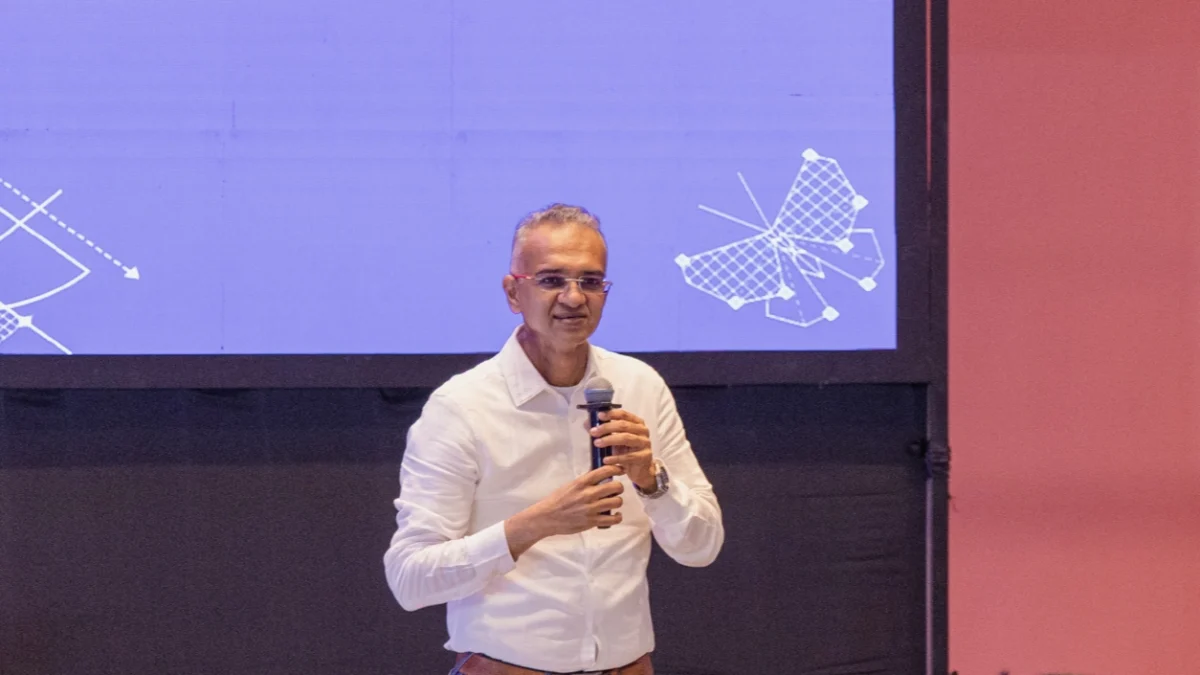
The Indian digital payments landscape is undergoing a monumental shift as the National Payments Corporation of India (NPCI) prepares to integrate advanced artificial intelligence (AI) to scale the Unified Payments Interface (UPI) to one billion daily transactions. Dilip Asbe, Managing Director and CEO of NPCI, recently detailed a comprehensive roadmap for the next phase of India’s digital evolution, emphasizing that AI will be the primary driver for user acquisition, fraud prevention, and the democratization of credit. Speaking at the Mumbai Tech Week (MTW) 2026, Asbe highlighted the collaborative efforts between the NPCI, the Reserve Bank of India (RBI), and the central government to onboard the next 500 million users into the formal digital economy.
The current trajectory of UPI is unprecedented in the global fintech sector. Having already surpassed 750 million daily transactions, the platform has become the backbone of India’s retail economy. However, to reach the next milestone of a billion transactions, the NPCI recognizes that traditional growth strategies must be augmented by cutting-edge technology. The integration of AI is not merely an incremental update but a fundamental necessity to manage the sheer volume of data, ensure the security of the ecosystem, and provide personalized financial services to a diverse population with varying levels of digital literacy.
The Three Pillars of the AI Integration Strategy
Asbe identified three critical areas where AI will play a transformative role: reaching new demographics, safeguarding the system against sophisticated financial crimes, and facilitating credit distribution. The first pillar focuses on simplifying the onboarding process for citizens who have yet to adopt digital payments. By leveraging AI-driven multilingual solutions and voice-based interfaces, the NPCI aims to break down the barriers of language and literacy. In a country with over 22 scheduled languages and hundreds of dialects, a "one-size-fits-all" text-based interface is insufficient for total financial inclusion.
The second pillar involves the deployment of AI for systemic security. As transaction volumes surge, the risk of fraud and the proliferation of "mule accounts"—bank accounts used by criminals to launder illicit funds—pose a significant threat. Asbe noted that AI must be used "very effectively" to identify suspicious patterns in real-time, allowing the system to flag or block fraudulent activity before it impacts the user. This proactive defense mechanism is essential for maintaining public trust in the digital payment ecosystem.
The third pillar focuses on the distribution of credit to the "unbanked" and "underbanked" populations. Traditionally, creditworthiness has been determined by formal income documentation and credit scores, which many small-scale merchants and rural users lack. However, these individuals often possess a significant "digital footprint" through their UPI transaction history. By using AI to analyze these transaction patterns, financial institutions can offer micro-loans and credit lines to users who were previously excluded from the formal banking sector.
The Evolution of Voice Interfaces and Multilingual Solutions
The concept of "voice as an interface" has been a recurring theme in the Indian tech sector, given the country’s oral traditions and diverse linguistic landscape. In 2023, the NPCI launched "Hello! UPI," a voice assistant designed to facilitate transactions through natural language processing. While the initial adoption has been gradual, Asbe maintains that the technology is in its early stages and holds immense potential. The primary challenge remains the accuracy of voice models across various accents and local dialects.
To address this, the NPCI is looking toward more sophisticated AI models that can operate with high precision in "noisy" environments, such as busy marketplaces. As these voice models become more deterministic and reliable, they are expected to become a critical component of the payment ecosystem, particularly for the elderly and the rural population. The goal is to move beyond simple commands to a conversational interface where a user can perform complex financial tasks—such as checking balances, setting up mandates, or disputing transactions—simply by speaking in their native tongue.
Regulatory Frameworks for Agentic Commerce and AI Finance
The global trend toward "agentic" finance—where AI agents act on behalf of users to execute trades or manage accounts—has seen significant traction in the United States. Companies like Coinbase and OpenAI are already exploring these capabilities. India is also piloting similar initiatives; last year, NPCI demonstrated agentic commerce and payment solutions in partnership with Razorpay. However, a wider rollout has been approached with caution due to the complexities of the Indian regulatory environment.
Asbe emphasized that the adoption of AI-powered finance in India must be underpinned by a robust regulatory framework. The NPCI’s vision involves a system where AI can act as an intermediary, but only within a strict set of parameters that prioritize user protection. In the event of a technical error or a disputed transaction, the system must be capable of auditing the specific instructions and the explicit consent provided by the user to the AI agent. This "consent-first" architecture is intended to mitigate the risks associated with autonomous financial systems and ensure that the ultimate control remains with the citizen.
The Rise of Small Language Models in the Financial Ecosystem
One of the most significant shifts in the NPCI’s technological philosophy is the move toward Small Language Models (SLMs). While Large Language Models (LLMs) like GPT-4 have garnered global attention, Asbe believes that the Indian finance sector has a unique opportunity to build specialized, "sharp," and "specific" models. These SLMs would be trained on the rich, localized datasets available within the Indian banking and fintech ecosystem.
The advantage of SLMs lies in their efficiency and accuracy for specific tasks. For instance, in 2024, the NPCI launched "FIMI," an AI model specifically tailored for resolving user disputes. FIMI is already serving over a million users, assisting with the cancellation of mandates and the resolution of transaction issues. By focusing on domain-specific data rather than general-purpose information, these models can provide more deterministic outcomes, which is vital in financial services where there is no margin for error. Asbe suggested that banks and fintech companies should collaborate to create a library of these specialized models to enhance the overall efficiency of the network.
Addressing Market Concentration and the 30% Market Share Cap
Despite the growth of the UPI ecosystem, the market remains highly concentrated. Data indicates that two major players—Walmart-owned PhonePe and Google Pay—currently command over 80% of the market share in terms of transaction volume. This concentration risk has been a point of concern for regulators who seek to ensure a competitive and resilient marketplace.
The NPCI has introduced a policy to cap the market share of any single Third-Party App Provider (TPAP) at 30%. Originally slated for earlier implementation, the deadline for compliance has been deferred several times and is currently set for December 31, 2026. Asbe acknowledged the dominance of the incumbent players, noting that they have invested hundreds of millions of dollars to build their user bases. However, he pointed out that the lack of a "viable commercial model" for smaller players has been a hurdle to diversification.
In the current UPI framework, Peer-to-Peer (P2P) and most Peer-to-Merchant (P2M) transactions are free for users and merchants, meaning apps do not earn a direct commission on the transactions themselves. Asbe believes that as new business models emerge—such as integrating credit, insurance, and investment products into UPI apps—newer players will find the incentive to invest heavily and challenge the current duopoly.
The Strategic Role of BHIM as a Sovereign Alternative
In an effort to stimulate competition and provide a secure, state-backed option, the NPCI spun off its BHIM (Bharat Interface for Money) app into a wholly-owned subsidiary in 2024. While BHIM’s current market share hovers around 1%, its purpose extends beyond mere volume. Asbe clarified that the NPCI is not targeting a specific market share for BHIM but rather aims to position it as a "sovereign and secure alternative."
The revitalization of BHIM is intended to set a benchmark for security and privacy in the industry. By operating a sovereign app, the NPCI can ensure that there is always a reliable platform available to the public, regardless of the commercial decisions made by private entities. This also provides the NPCI with a sandbox to test new AI features and multilingual interfaces before they are recommended for the broader ecosystem.
Implications for the Global Fintech Landscape
The developments within the NPCI and the UPI ecosystem carry significant implications for the global digital economy. India’s success in scaling a real-time payment system has already led to partnerships with several countries, including Singapore, the UAE, France, and several nations in Africa and South America, to link payment systems or adopt the UPI stack.
As India integrates AI into its financial infrastructure, it is creating a blueprint for other emerging economies. The focus on low-cost, high-volume transactions, coupled with AI-driven security and credit distribution, offers a model for achieving financial inclusion at a national scale. Global investors are closely monitoring the regulatory landscape in India, as the shift toward a more competitive and AI-enhanced market is expected to create new opportunities for fintech innovation.
The transition from 750 million to one billion daily transactions represents more than just a numerical increase; it signifies the maturation of the world’s most successful public digital good. Through the strategic application of AI and a commitment to maintaining a robust regulatory environment, the NPCI aims to ensure that the benefits of the digital revolution reach every citizen, regardless of their geographic location or economic status.