Clara Shinta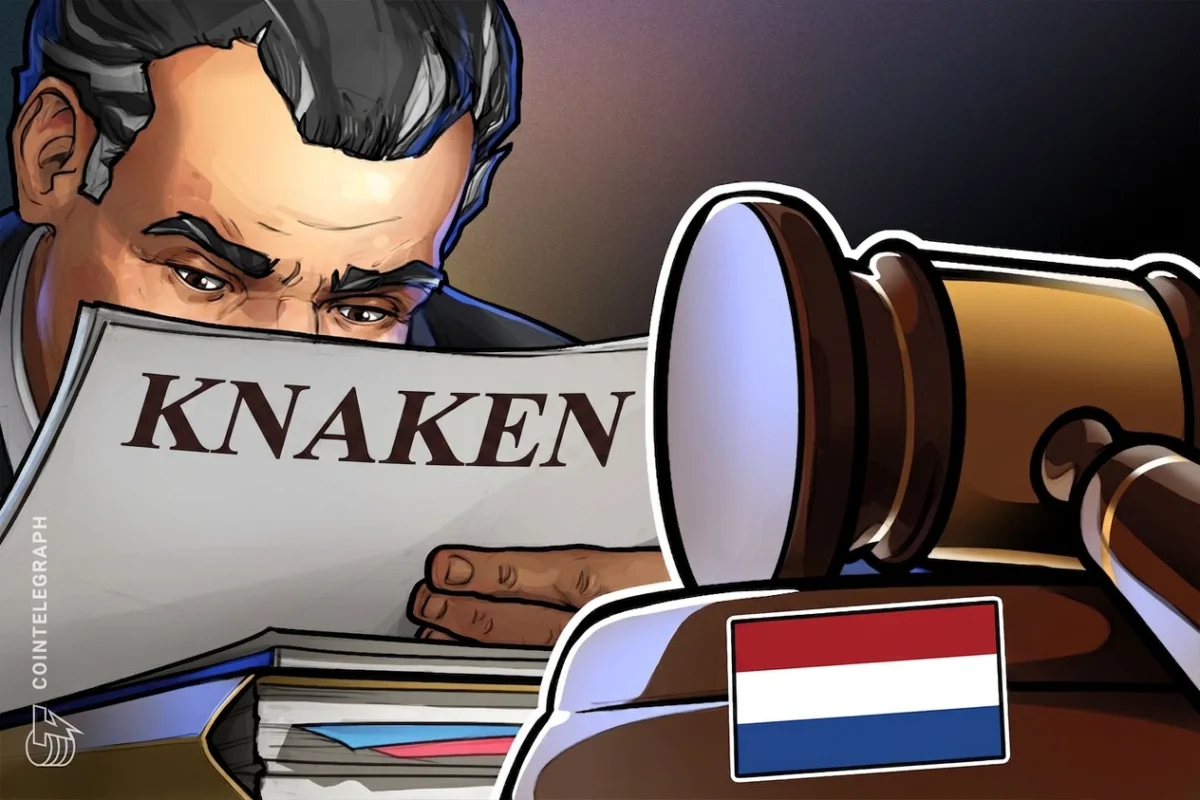
A Dutch court has formally declared cryptocurrency platform Knaken Cryptohandel BV and its affiliated foundation bankrupt, a decisive legal action following allegations by prosecutors that a staggering 7 million euros (approximately $8 million USD) in customer assets had vanished. The ruling, issued by the Rotterdam court on a recent Thursday, underscores the escalating scrutiny faced by digital asset service providers, particularly those operating outside the established regulatory frameworks. This move aims to ensure an orderly settlement process, a critical step after Knaken abruptly blocked access to its platform and user accounts, leaving countless investors in a state of uncertainty and financial distress.
According to official court statements, the company possesses insufficient assets to fully repay its extensive user base. This financial shortfall, coupled with the court’s observation that customers lacked adequate information to ascertain their legal standing, painted a grim picture for those who entrusted their digital wealth to Knaken. The declaration of bankruptcy was not a sudden event but the culmination of a rapidly unfolding crisis that began with the platform’s sudden disappearance from the online sphere and quickly escalated into a full-blown criminal investigation.
The Unraveling of Knaken: A Detailed Chronology of Events
Knaken Cryptohandel BV, established in Rotterdam in 2017, positioned itself as a accessible platform for cryptocurrency trading within the Dutch market. For several years, it operated, attracting a customer base seeking to engage with the burgeoning digital asset economy. However, the company’s trajectory took a sharp downturn in early June 2026, when its platform mysteriously went offline, rendering user funds inaccessible and communication channels silent. This sudden disappearance, first reported by NL Times, immediately raised red flags among its clientele and industry observers.
The initial alarm swiftly transformed into official action. By late June 2026, the Netherlands’ financial crime investigation service launched a comprehensive raid on the company’s premises. This operation, indicative of the seriousness with which authorities viewed the situation, resulted in the seizure of various devices and assets, crucial steps in gathering evidence for an impending legal battle. Concurrently, the Dutch Public Prosecution Service initiated a criminal investigation into the missing funds, signaling a potential case of fraud or misappropriation rather than merely a business failure.
Responding to the gravity of the situation and the immediate need to protect creditor interests, the Public Prosecution Service formally filed a petition for bankruptcy on June 30, 2026. This legal maneuver was designed to bring the company under judicial oversight, preventing further dissipation of assets and initiating a structured process for addressing claims. The Rotterdam court, after reviewing the evidence and the urgent pleas from authorities, subsequently issued its definitive ruling on Thursday, declaring both Knaken Cryptohandel BV and its affiliated foundation bankrupt. This judicial decision cemented the platform’s fate and initiated the complex, often lengthy, process of asset recovery and distribution to affected parties. The timeline clearly demonstrates a rapid and coordinated response from Dutch legal and financial authorities to a significant alleged financial transgression within the crypto sector.
The Regulatory Void: Knaken’s Unauthorized Status
A critical aspect of the Knaken saga is its operational status within the Dutch regulatory landscape. Investigations revealed that Knaken Cryptohandel BV did not appear in the official register of authorized crypto-asset service providers maintained by the Dutch Authority for the Financial Markets (AFM). This absence is not merely a bureaucratic oversight; it signifies a fundamental breach of regulatory compliance, with profound implications for the company’s legitimacy and the security of its customers’ assets.
The AFM, as the financial markets supervisor in the Netherlands, is responsible for overseeing the conduct of financial institutions and ensuring market integrity. For cryptocurrency service providers, this involves a mandatory registration process designed to enhance transparency, prevent money laundering, and protect consumers. Operating without such authorization means a company bypasses essential safeguards, including anti-money laundering (AML) and know-your-customer (KYC) protocols, capital requirements, and robust operational standards. These requirements are in place precisely to mitigate risks such as the commingling of customer funds with operational capital, inadequate cybersecurity, and, crucially, the disappearance of assets. Knaken’s unauthorized status thus placed its customers in a highly vulnerable position, devoid of the protections afforded by regulated entities. This lack of oversight significantly complicates the task of asset recovery and further underscores the risks associated with engaging with unregistered crypto platforms.
MiCA’s Shadow: A Proactive Regulatory Stance in the Netherlands
The bankruptcy of Knaken Cryptohandel BV unfolds against a backdrop of significant regulatory shifts within the European Union, specifically the implementation of the landmark Markets in Crypto-Assets (MiCA) regulation. MiCA represents the EU’s comprehensive framework for regulating crypto-asset markets, aiming to provide legal certainty, support innovation, and protect consumers and investors. Its scope covers various crypto-assets, including utility tokens, asset-referenced tokens, and e-money tokens, and imposes stringent requirements on crypto-asset service providers (CASPs) related to authorization, governance, operational resilience, and market abuse prevention.
Crucially, the Netherlands demonstrated a proactive stance in adopting MiCA’s principles. While the EU-wide maximum transition deadline for MiCA implementation is July 1, 2026, the Dutch deadline for compliance ended significantly earlier, on June 30, 2025. This accelerated timeline positioned the Netherlands as a frontrunner in establishing a robust regulatory environment for digital assets. The AFM had explicitly stated to Cointelegraph in early July 2026 that it had already commenced taking supervisory and enforcement action against unauthorized crypto-asset service providers following this earlier transition period conclusion.
The Knaken case, therefore, serves as a stark example of the AFM’s commitment to enforcing these new, stricter regulations. The timing of the criminal investigation, the bankruptcy petition, and the court’s ruling, all occurring shortly after the Dutch MiCA deadline and the broader EU deadline, highlights a concerted effort to cleanse the market of non-compliant entities. The AFM’s proactive approach is designed to foster a more mature and secure crypto ecosystem, ensuring that only registered and compliant firms operate within its jurisdiction. This preemptive enforcement aims to prevent future incidents of missing funds and to bolster investor confidence by creating a level playing field for regulated businesses.
The Plight of the Investors: Missing Millions and Legal Uncertainty
For the customers of Knaken Cryptohandel BV, the declaration of bankruptcy translates into a dire financial reality. The reported 7 million euros in missing customer assets represents a significant loss for potentially thousands of individuals who had entrusted their savings or investment capital to the platform. The court’s explicit statement that the company "has insufficient assets to fully repay users" confirms that a full recovery for all creditors is highly improbable, if not impossible.
In a bankruptcy proceeding, creditors are typically categorized, and claims are prioritized. Secured creditors, such as banks with collateral, usually stand first in line, followed by unsecured creditors, which often include customers with deposits. In the context of a cryptocurrency platform, the legal classification of customer assets can be complex, especially if the terms of service allowed for commingling of funds or if assets were held in omnibus accounts. The court’s additional finding that "customers lacked sufficient information to determine their legal position" further complicates matters, making it challenging for individual users to understand their rights and the potential avenues for recovery.
The process of claiming assets in a crypto bankruptcy is often protracted and arduous. A court-appointed trustee will now be responsible for gathering all remaining assets, liquidating them, and distributing the proceeds according to legal priorities. This process can take months, if not years, and typically yields only a fraction of the original investments for unsecured creditors. The Knaken case regrettably echoes the experiences of customers affected by other high-profile crypto firm failures globally, such as FTX, Celsius Network, and Voyager Digital, where users have faced significant delays and substantial losses. These instances collectively underscore the inherent risks of unregulated crypto platforms and the devastating impact when safeguards fail or are non-existent.
Law Enforcement and Judicial Response: A Coordinated Effort
The coordinated response from Dutch law enforcement and judicial bodies in the Knaken case reflects a growing sophistication in addressing financial crimes within the digital asset space. The Dutch Public Prosecution Service, responsible for investigating and prosecuting criminal offenses, took the critical step of filing the bankruptcy petition. This action was not merely an administrative procedure but a strategic move aimed at securing assets and initiating a formal legal process under judicial oversight, thereby preventing further illicit activity or asset concealment.
Concurrently, the Netherlands’ financial crime investigation service played a pivotal role by conducting raids and seizing devices and assets. These actions are essential in building a criminal case, as digital evidence and financial records are crucial for tracing the flow of funds, identifying responsible parties, and understanding the full scope of the alleged misconduct. The involvement of specialized financial crime units highlights the complex nature of investigating crypto-related offenses, which often require expertise in blockchain analysis, digital forensics, and international cooperation.
The Rotterdam court’s decision to declare bankruptcy, grounded in the necessity "to ensure an orderly settlement," emphasizes the judicial system’s role in providing structure and fairness in situations of financial collapse. While the criminal investigation proceeds separately, aiming to hold individuals accountable for potential criminal acts, the bankruptcy proceeding focuses on the orderly liquidation of the company and the distribution of its remaining assets to creditors. This dual approach—criminal prosecution for alleged wrongdoing and civil bankruptcy for asset resolution—is a standard legal strategy for complex financial failures, now increasingly applied to the crypto sector. The outcome of the criminal investigation will be closely watched, as it could set precedents for how digital asset fraud is prosecuted in the Netherlands and beyond.
Broader Implications for the Dutch and European Crypto Landscape
The bankruptcy of Knaken Cryptohandel BV carries significant implications that extend far beyond the immediate losses suffered by its customers. Firstly, it will undoubtedly impact investor confidence within the Dutch crypto market. Such incidents can erode trust in legitimate, regulated platforms, making potential new investors more hesitant to enter the market and current participants more cautious. The distinction between regulated and unregulated entities becomes even more critical in the wake of such failures.
Secondly, this case strongly reinforces the imperative for robust regulation in the digital asset space. The fact that Knaken was operating without AFM authorization underscores the very reason MiCA and similar frameworks are being implemented. It serves as a stark reminder that regulatory compliance is not merely a bureaucratic hurdle but a fundamental layer of protection for consumers and market integrity. The Netherlands’ proactive stance in accelerating its MiCA transition period and the AFM’s swift enforcement actions are likely to be seen as a positive development in the long run, signaling a commitment to fostering a secure and trustworthy environment for digital assets.
Thirdly, the incident highlights the challenges faced by regulators in a rapidly evolving technological sector. Keeping pace with innovation, identifying non-compliant entities, and enforcing complex regulations requires continuous adaptation and significant resources. The Knaken case demonstrates that even with proactive measures, illicit or non-compliant operations can emerge, necessitating vigilance and a strong enforcement arm.
Finally, for both crypto businesses and users, the Knaken saga offers crucial lessons. For businesses, it reinforces that operating without proper authorization is not only illegal but carries severe reputational and financial risks. For users, it serves as a powerful cautionary tale about the importance of conducting thorough due diligence before entrusting funds to any platform. Verifying a platform’s regulatory status, understanding its terms of service, and being aware of the risks associated with digital assets are paramount.
Looking Ahead: The Future of Crypto Regulation and Consumer Protection
The Knaken bankruptcy marks a significant moment in the evolving narrative of cryptocurrency regulation in the Netherlands and across Europe. It signals a new era where authorities are increasingly willing and able to take decisive action against non-compliant entities, especially as MiCA comes fully into force. This heightened scrutiny is not designed to stifle innovation but rather to create a safer, more transparent, and sustainable ecosystem for digital assets.
Moving forward, it is expected that the AFM and other European regulators will continue their supervisory and enforcement efforts, ensuring that all crypto-asset service providers adhere to the stringent requirements of MiCA. This will likely involve ongoing monitoring, investigations, and, where necessary, legal actions against firms that fail to meet compliance standards. The focus will be on protecting consumers, preventing market abuse, and maintaining financial stability in a sector that has historically been characterized by volatility and regulatory arbitrage.
For users, the future demands greater personal responsibility and vigilance. The onus will increasingly be on individuals to verify the legitimacy and regulatory compliance of any platform they choose to engage with. Tools like the AFM’s register of authorized crypto-asset service providers will become indispensable resources for making informed decisions. As the digital asset landscape matures, the balance between innovation and regulation will continue to be refined, with the ultimate goal of fostering a robust and trustworthy environment for the future of finance. The Knaken incident, while unfortunate for those affected, will undoubtedly serve as a catalyst for further strengthening these critical protections.