Lina Wu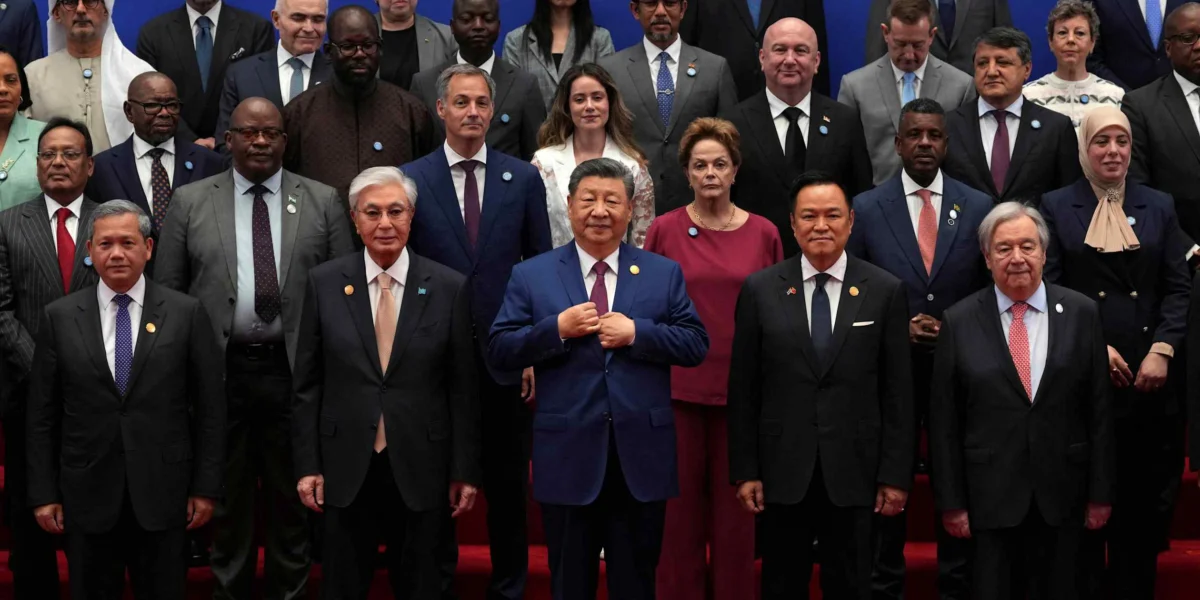
TOKYO — Chinese President Xi Jinping on Friday issued a compelling call for enhanced collaboration among developing nations in the realm of artificial intelligence, articulating a vision aimed at diminishing the existing international technology chasm. Beijing strategically leveraged the prominent World Artificial Intelligence Conference (WAIC) in Shanghai to underscore its escalating global aspirations in the rapidly evolving AI landscape. The conference, a significant annual fixture in China’s technological calendar, served as a crucial platform for President Xi to articulate his administration’s strategic priorities and to foster international partnerships.
World AI Conference: A Global Stage for China’s Tech Ambitions
The World AI Conference, now in its [Insert Year, e.g., eighth] iteration, has solidified its position as a premier global gathering for AI researchers, industry leaders, policymakers, and innovators. Held annually in Shanghai, a burgeoning hub for technological advancement, the conference typically attracts thousands of participants from across the globe, showcasing cutting-edge AI research, groundbreaking applications, and forward-thinking discussions on the ethical and societal implications of artificial intelligence. This year’s event, held on July 17, 2026, was no exception, drawing a high-profile contingent of international dignitaries, including Cambodian Prime Minister Hun Manet, Kazakhstan’s President Kassym-Jomart Tokayev, Thai Prime Minister Anutin Charnvirakul, and UN Secretary-General Antonio Guterres. Their presence underscored the geopolitical significance of AI and China’s growing influence in shaping its global trajectory.
President Xi’s address, delivered prior to the opening ceremony, set a distinct tone for the conference. He emphasized that AI is not merely a technological frontier but a critical determinant of future economic competitiveness and national sovereignty. His call for increased cooperation among developing countries resonated with the broader narrative of global South solidarity and the desire to forge an alternative development pathway, less dominated by established technological powers.
Bridging the Digital Divide: A Strategic Imperative
The call to bridge the international technology gap through AI cooperation is rooted in China’s long-standing commitment to fostering a more equitable global technological order. In recent years, China has invested heavily in AI research and development, aiming to transition from a manufacturing powerhouse to a global leader in innovation. However, it faces a significant technological divide with developed nations that possess established AI ecosystems, extensive patent portfolios, and deep pools of specialized talent.
Supporting Data and Context:
- Global AI Investment Trends: While global AI investment has seen exponential growth, with projections indicating the market could reach over $1.5 trillion by 2030 according to some industry analyses, a significant portion of this investment and intellectual property remains concentrated in North America and Europe. Developing nations often struggle to secure adequate funding, access cutting-edge research, and build indigenous AI capabilities.
- China’s AI Investment: China has consistently ranked among the top two global investors in AI, with substantial government and private sector funding allocated to research, talent development, and commercialization. By 2025, it was estimated that China’s AI market would reach hundreds of billions of dollars, highlighting its ambition to lead.
- The "Digital Divide": The UN’s International Telecommunication Union (ITU) has long highlighted the digital divide, with disparities in internet access, digital literacy, and technological infrastructure exacerbating inequalities between developed and developing countries. President Xi’s initiative seeks to address a critical aspect of this divide within the AI domain.
President Xi’s proposal is not merely altruistic; it aligns with China’s strategic objectives. By fostering AI collaboration with developing nations, China can:
- Expand Market Access: Create new markets for Chinese AI technologies and solutions.
- Secure Resource Access: Potentially gain access to unique datasets and emerging talent pools.
- Shape Global AI Governance: Advocate for international AI standards and ethical frameworks that align with its interests.
- Counter Western Dominance: Build a bloc of nations that are less reliant on AI technologies developed and controlled by Western powers.
Chronology of Key Developments Leading to the WAIC Address
The lead-up to President Xi’s address at the World AI Conference was marked by a series of strategic moves by China to solidify its position in the global AI arena.
- [Insert Earlier Year, e.g., 2023]: China’s State Council releases a new "New Generation Artificial Intelligence Development Plan," outlining ambitious targets for AI innovation and application by 2030, emphasizing the need for breakthroughs in core AI technologies and the development of a robust AI industry.
- [Insert Earlier Year, e.g., Late 2023/Early 2024]: Diplomatic engagements intensify. Chinese officials engage in bilateral discussions with leaders from Southeast Asia, Africa, and Latin America, laying the groundwork for potential AI cooperation initiatives. This includes exploring joint research projects, talent exchange programs, and the transfer of AI-related infrastructure.
- [Insert Earlier Year, e.g., Early 2024]: The World AI Conference planning committee announces its theme and key speakers, signaling a focus on international cooperation and the development of AI for global good.
- [Insert Date, e.g., July 15, 2026]: Premier Li Qiang, in a separate forum, reiterates China’s commitment to open innovation and international collaboration in AI, subtly preparing the ground for President Xi’s more direct appeal.
- [Insert Date, e.g., July 16, 2026]: The pre-conference workshops and seminars at WAIC begin, featuring discussions on AI ethics, regulation, and the equitable distribution of AI benefits, providing a context for President Xi’s subsequent pronouncements.
- July 17, 2026: President Xi Jinping delivers his keynote address, officially launching his initiative for AI cooperation among developing nations.
Statements and Reactions: A Spectrum of Responses
The implications of President Xi’s call were immediately felt across the international diplomatic and technological communities.
- Cambodian Prime Minister Hun Manet: Speaking alongside President Xi, Prime Minister Hun Manet expressed strong support for increased South-South cooperation in AI. "Cambodia views artificial intelligence as a transformative technology that can accelerate our national development. We are eager to partner with China and other developing nations to harness its potential and ensure that its benefits are shared equitably," he stated. This reflects a common sentiment among many developing nations seeking to leapfrog technological stages.
- Kazakhstan’s President Kassym-Jomart Tokayev: President Tokayev indicated a willingness to explore collaborative avenues, particularly in areas like AI for resource management and smart agriculture. "Kazakhstan is committed to leveraging technology for the betterment of its citizens. We welcome initiatives that foster mutual learning and technological advancement among nations with similar development aspirations," he remarked.
- UN Secretary-General Antonio Guterres: While not directly endorsing any specific nation’s initiative, Guterres reiterated the UN’s commitment to ensuring that AI serves humanity and contributes to achieving the Sustainable Development Goals (SDGs). He emphasized the importance of inclusivity and ensuring that no country is left behind in the AI revolution. "The United Nations stands ready to facilitate dialogue and cooperation to ensure that AI technologies are developed and deployed responsibly, ethically, and for the benefit of all humankind, particularly in the Global South," Guterres stated in a press briefing.
- Western Technologists and Policymakers: Reactions from Western capitals and tech industry leaders were more measured, with some expressing caution about the potential for such initiatives to further bifurcate the global AI landscape. Concerns were raised about data privacy, intellectual property rights, and the potential for AI technologies to be used for surveillance or to reinforce authoritarian regimes. Analysts suggested that the West would likely focus on strengthening its own alliances and promoting its vision of AI governance, emphasizing open standards and democratic values.
Broader Impact and Implications: Reshaping the Global AI Order
President Xi’s initiative at the World AI Conference carries significant implications for the future of artificial intelligence and global technological development.
- Formation of New AI Blocs: The call for cooperation could lead to the formation of new alliances or strengthen existing ones focused on AI development and deployment among developing nations. This could create a counterweight to existing Western-dominated AI ecosystems and standards.
- Accelerated AI Adoption in Developing Countries: Increased collaboration could provide developing nations with greater access to AI expertise, funding, and technologies, potentially accelerating their adoption and adaptation of AI solutions for pressing challenges in healthcare, education, agriculture, and infrastructure.
- Geopolitical Realignment: The initiative underscores China’s ambition to play a leading role in shaping global technological governance. It signals a potential shift in the geopolitical balance of power, with AI becoming a key battleground for influence and technological supremacy.
- Ethical and Governance Debates: The push for South-South AI cooperation will likely intensify global debates on AI ethics, data governance, and the need for inclusive AI frameworks. It raises questions about how to ensure that AI development in these new collaborations adheres to human rights principles and promotes sustainable development.
- Economic Opportunities and Challenges: For participating developing nations, there is the potential for significant economic growth and technological advancement. However, challenges remain in building the necessary infrastructure, developing skilled human capital, and ensuring that the benefits of AI are equitably distributed within these countries.
The World AI Conference, by providing a global stage for President Xi’s pronouncements, has highlighted a critical juncture in the evolution of artificial intelligence. The coming years will reveal the extent to which this call for cooperation translates into tangible partnerships and reshapes the international AI landscape, potentially ushering in a new era of decentralized AI innovation and governance. The success of such an initiative will depend on overcoming complex technical, economic, and political hurdles, but its ambition is clear: to ensure that the transformative power of AI benefits a broader spectrum of nations and contributes to a more inclusive global future.