Farhan Pambudi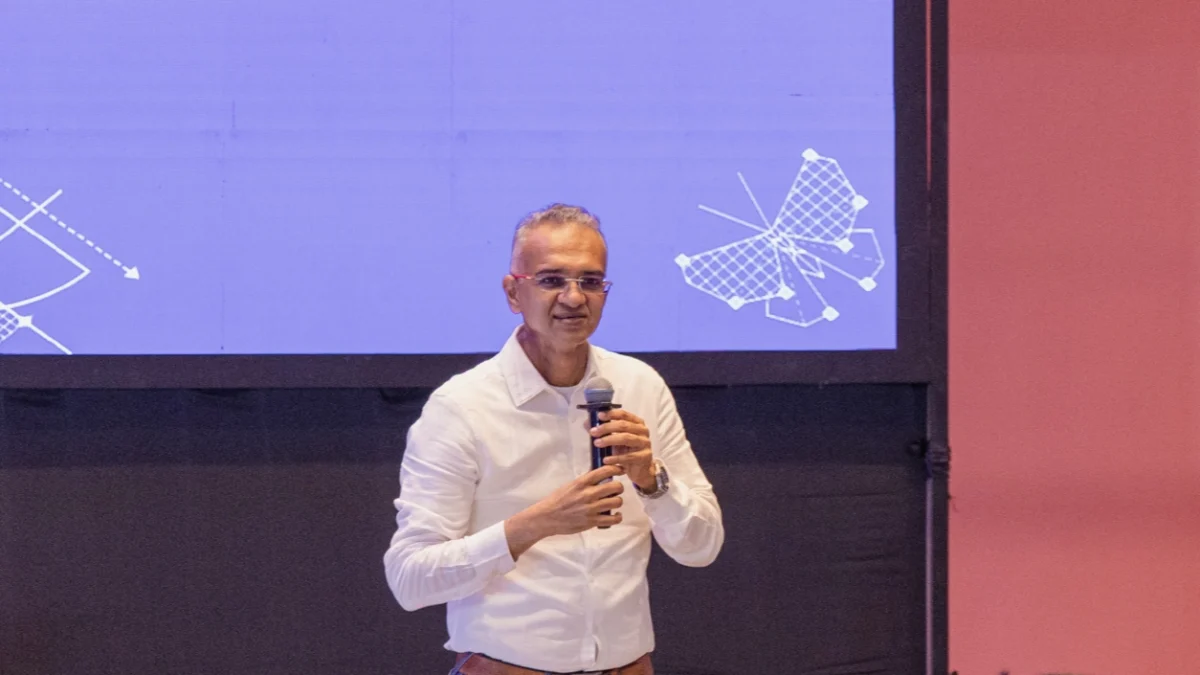
The landscape of digital finance in India is on the precipice of a transformative shift as the National Payments Corporation of India (NPCI) prepares to leverage artificial intelligence to push the Unified Payments Interface (UPI) beyond its current record-breaking milestones. Speaking at the Mumbai Tech Week (MTW) 2026, Dilip Asbe, Managing Director and CEO of NPCI, detailed a comprehensive roadmap aimed at scaling the platform from its current 750 million daily transactions to more than one billion. This next phase of growth is not merely about volume but about deepening the integration of AI to solve complex challenges in user onboarding, fraud mitigation, and the democratization of credit.
Since its inception in 2016, UPI has fundamentally rewritten the rules of the Indian economy, moving the nation from a cash-heavy society to a global leader in real-time digital payments. However, as the platform matures, the "low-hanging fruit" of urban, tech-savvy users has largely been captured. The next wave of expansion, estimated to bring in an additional 500 million users, requires a more sophisticated approach. Asbe emphasized that AI will be the primary engine driving this inclusion, particularly through the development of multilingual voice interfaces and hyper-localized solutions that cater to India’s diverse demographic profile.
The Strategic Pivot to Artificial Intelligence
The NPCI’s vision for AI is multi-dimensional, focusing on three core pillars: security, accessibility, and financial utility. According to Asbe, the deployment of AI is no longer a luxury but a systemic necessity for a platform handling billions of data points. The focus on fraud prevention is particularly critical as digital payment volumes rise. NPCI aims to use AI to identify "money mules" and sophisticated fraudulent patterns in real-time, protecting both individual citizens and the integrity of the banking system.
Beyond security, AI is being positioned as a tool for financial empowerment. By analyzing the digital footprints generated by millions of small-scale merchants and individual users, AI models can assist financial institutions in providing credit. This "credit on UPI" initiative is expected to bridge the massive credit gap in India’s informal economy, where traditional collateral-based lending often fails. By using transaction history as a proxy for creditworthiness, NPCI hopes to facilitate a more inclusive lending ecosystem.
The third pillar involves simplifying the user experience. While digital literacy has improved, a significant portion of the Indian population remains hesitant to use complex app interfaces. Asbe noted that voice-based systems and multilingual solutions are essential for the next phase of onboarding. While NPCI launched "Hello UPI"—a voice-assistant-based system—in 2023, adoption has been gradual. Asbe acknowledged that the industry is still in the early stages of voice technology, noting that models must become more accurate and deterministic before they can be fully trusted with high-stakes financial transactions.
Small Language Models and the Sovereignty of Data
One of the most significant technical shifts discussed by Asbe is the move toward Small Language Models (SLMs). While the global tech conversation is often dominated by Large Language Models (LLMs) like GPT-4 or Gemini, Asbe argued that the Indian finance ecosystem has a unique opportunity to build specialized, "sharp," and "specific" models.
The rationale behind SLMs in finance is twofold: cost-efficiency and accuracy. Financial transactions require a high degree of determinism—meaning the AI must provide consistent and correct answers without the "hallucinations" often associated with broader generative AI. Because India possesses a rich, localized dataset through the UPI ecosystem, banks and fintech companies can train smaller, more efficient models that are tailored to the specific linguistic and transactional nuances of the Indian market.
NPCI has already demonstrated the viability of this approach with the launch of FIMI, an AI language model specifically designed to resolve user disputes. Currently serving over a million users, FIMI helps automate the process of canceling mandates and resolving transaction issues. Its success provides a blueprint for how specialized AI can reduce the burden on human customer support while providing faster resolutions for users.
Addressing Market Concentration and the 30 Percent Cap
The discussion at Mumbai Tech Week also touched upon the persistent issue of market concentration within the UPI ecosystem. Currently, two major players—Walmart-owned PhonePe and Google Pay—command over 80% of the total market share. This duopoly has raised concerns regarding systemic risk and the lack of a "level playing field" for newer entrants.
NPCI has historically advocated for a more distributed market, proposing a 30% market share cap for third-party app providers (TPAPs). While the enforcement of this cap has been deferred multiple times, it is currently slated to take effect on December 31, 2026. Asbe noted that the low switching costs of UPI apps mean that users can easily move between platforms, but the dominant players have secured their positions through massive capital investments and early-mover advantages.
The CEO pointed out that the lack of a viable commercial model for UPI apps has been a significant barrier to competition. Unlike traditional credit cards, UPI operates on a "zero Merchant Discount Rate" (MDR) policy for most transactions, meaning apps do not earn a direct fee from merchants for processing payments. Asbe suggested that once a sustainable commercial framework is established—perhaps through the cross-selling of financial products like insurance or credit—newer players will have the incentive to invest heavily and challenge the current market leaders.
In an effort to provide a sovereign and secure alternative, NPCI recently spun off its BHIM (Bharat Interface for Money) app into a separate subsidiary. Although BHIM currently holds only about 1% of the market share, the restructuring is intended to make it more competitive and agile. Asbe clarified that NPCI is not chasing a specific market share percentage for BHIM but rather aims to ensure it remains a robust, state-backed option that can serve as a benchmark for security and reliability.
Comparative Global Context and Agentic Commerce
The shift toward AI-powered finance in India mirrors trends seen in the United States, though the implementation strategies differ. In the U.S., companies like Coinbase and Robinhood are experimenting with "agentic" systems where AI agents can execute trades on behalf of users. Similarly, OpenAI has introduced features allowing users to integrate personal financial data into ChatGPT for tailored advice.
India is exploring its own version of this future. Last year, NPCI collaborated with Razorpay to demo "agentic commerce," where AI assistants could handle the end-to-end process of shopping and payment. However, Asbe emphasized that a wider rollout would require a robust regulatory framework. He stressed the importance of user protection and risk mitigation, stating that if an AI agent makes a mistake, the system must have a clear "audit trail" of the instructions and consent provided by the user.
The Reserve Bank of India (RBI) and the central government are expected to play a crucial role in drafting these regulations. The goal is to foster innovation while ensuring that the "agentic" shift does not introduce new vulnerabilities into the national payment infrastructure.
Chronology of UPI’s Evolution and AI Integration
The journey toward a billion daily transactions can be traced through several key milestones:
- 2016: Launch of UPI by NPCI, introducing a simplified, mobile-first payment system.
- 2020-2021: The COVID-19 pandemic accelerates digital adoption, pushing UPI into the mainstream for both P2P and P2M transactions.
- 2023: Launch of "Hello UPI" and "Credit Lines on UPI," signaling a shift toward voice-based interaction and credit-linked payments.
- 2024: NPCI unveils FIMI, the first AI model tailored for payment dispute resolution, and spins off BHIM as a separate entity.
- 2025 (Projected): Increased pilot programs for agentic commerce and the rollout of multilingual SLMs by major Indian banks.
- December 2026: The scheduled deadline for the 30% market share cap, a potential turning point for the competitive landscape.
Implications for the Future of the Digital Economy
The integration of AI into UPI represents a fundamental shift from a transactional platform to an intelligent financial ecosystem. For the Indian government, this evolution is a key component of the "India Stack," a set of digital public goods aimed at fostering economic growth.
The success of NPCI’s AI strategy will have several long-term implications. First, it will likely set a global standard for how emerging economies can use AI to bypass traditional banking hurdles. Already, countries like Singapore, the UAE, and France have partnered with NPCI to enable UPI-based cross-border payments, and the addition of AI capabilities will only increase the platform’s exportability.
Second, the push for SLMs could spark a localized "AI revolution" within India’s tech sector. By focusing on domain-specific models, Indian fintech companies can develop intellectual property that is highly relevant to the "Global South," potentially opening up new export markets for Indian software and AI services.
Finally, the move toward one billion daily transactions will require an unprecedented level of infrastructural resilience. As AI takes over more of the decision-making process—from fraud detection to credit approval—the need for transparency and regulatory oversight will become paramount. Dilip Asbe’s remarks at Mumbai Tech Week suggest that while NPCI is bullish on the technology, it remains cognizant of the immense responsibility that comes with managing the world’s most successful real-time payment system.
As India continues its march toward becoming a $5 trillion economy, the marriage of AI and UPI is set to be the cornerstone of its financial future. The next two years will be a critical testing ground for whether AI can truly bridge the digital divide and turn the vision of "universal financial inclusion" into a daily reality for over a billion people.