Gilang Muhammad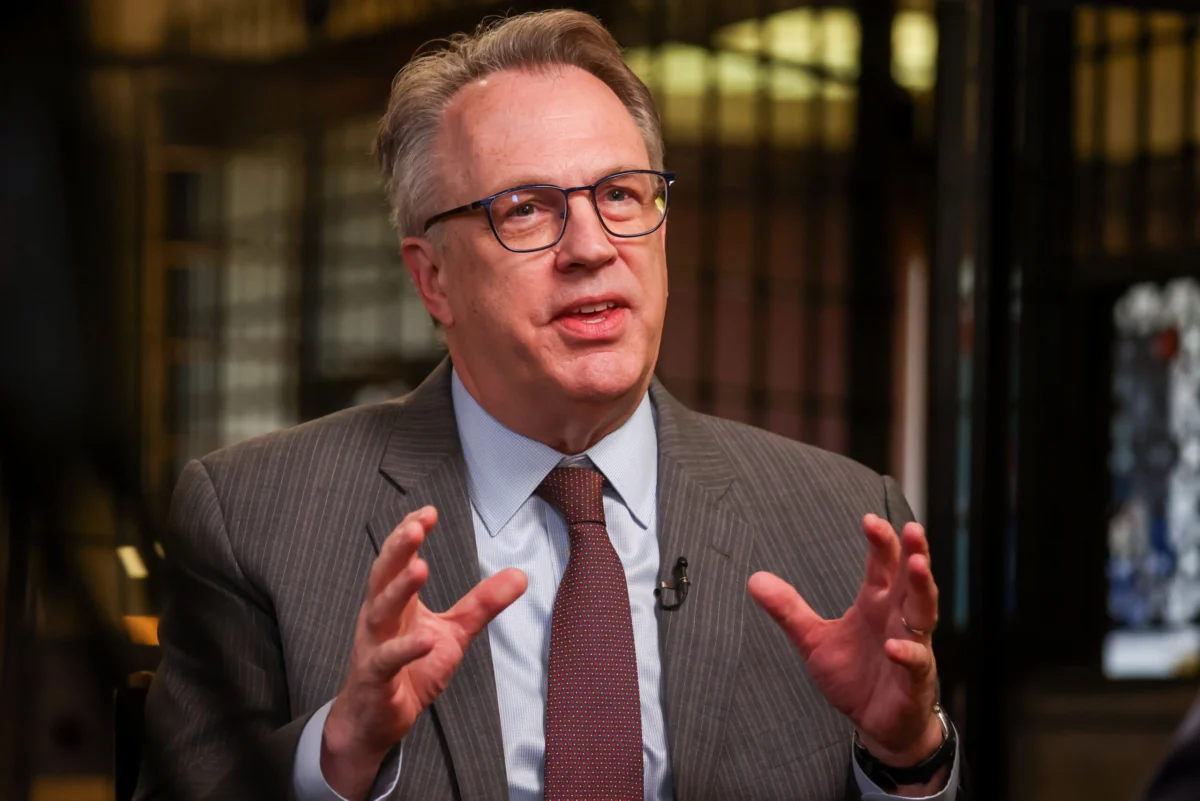
New York Federal Reserve President John C. Williams expressed significant concern on Thursday regarding the escalating geopolitical tensions in the Middle East and their immediate and potential long-term ramifications for the global and domestic economies. Speaking to a gathering of bankers in his home district, Williams highlighted that the ongoing instability has already begun to manifest in tangible economic challenges, notably by exerting upward pressure on prices and simultaneously dampening the pace of economic expansion. This delicate balance, he noted, has "intensified the uncertainty" pervading both national and local economic conditions, presenting a complex challenge for policymakers navigating the Federal Reserve’s dual mandate of achieving maximum employment and stable prices.
Heightened Geopolitical Risks and Their Economic Echoes
Williams’ remarks underscored a growing apprehension within central banking circles that geopolitical flashpoints, particularly those impacting critical global supply chains and energy markets, could derail carefully laid economic forecasts. While maintaining a baseline confidence that the U.S. economy would continue to grow and inflation would gradually recede throughout the year, he articulated clear threats to both pillars of the Fed’s mandate. The conflict, though not explicitly named as the "Iran war" in broader official discourse, refers to the ongoing regional instability that has seen increased volatility in the Red Sea shipping lanes, direct military actions, and heightened tensions involving key oil-producing nations, creating a ripple effect across global commodity markets.
"Assuming energy supply disruptions ease reasonably soon, energy prices should come down, and these effects should partially reverse later this year," Williams stated, offering a glimmer of conditional optimism. However, he swiftly followed with a more sobering assessment: "However, the conflict could also result in a large supply shock with pronounced effects that simultaneously raises inflation – through a surge in intermediate costs and commodity prices – and dampens economic activity. This has begun to play out already." This observation points directly to the core of the dilemma, where a supply-side shock simultaneously pushes up costs for businesses and consumers while reducing overall economic output, a scenario economists frequently refer to as stagflation.
The Specter of Stagflation: A Central Bank’s Nightmare
Stagflation, characterized by slow economic growth coupled with high inflation, represents a particularly toxic combination for central bankers. It presents a profound policy conundrum, as the traditional tools for combating inflation (raising interest rates) typically slow economic growth further, while measures to stimulate growth (lowering interest rates) risk exacerbating inflation. This leaves policymakers in a difficult position, often forced to prioritize one objective over the other, with potentially adverse consequences for the broader economy.
Federal Reserve Chair Jerome Powell recently dismissed the characterization of the U.S. economy as currently experiencing stagflation, emphasizing the robust labor market and resilient consumer spending. However, Williams’ nuanced comments suggest that the risk, while perhaps not as severe as the prolonged and debilitating episode of the late 1970s and early 1980s, remains a significant concern for policymakers. The 1970s stagflation, driven by oil price shocks and expansive fiscal policies, led to double-digit inflation and high unemployment, necessitating aggressive interest rate hikes that ultimately triggered a recession to bring prices under control. While the current U.S. economic backdrop differs significantly – with a stronger labor market and better-anchored inflation expectations – the confluence of supply shocks and demand pressures from geopolitical events rekindles these historical anxieties.
Unpacking the Supply Chain Pressures and Inflationary Channels
Williams specifically highlighted "increasing disruptions" in global supply chains, with a particular emphasis on energy and related goods. The New York Fed’s own Global Supply Chain Pressure Index (GSCPI), a composite measure of various global supply chain indicators, confirmed this trend, showing that conditions in March were the most strained since early 2023. This index, which incorporates factors such as shipping costs, delivery times, and backlogs, serves as a crucial barometer for global trade efficiency. Its recent uptick signals that bottlenecks and logistical challenges are once again intensifying, driven in part by the re-routing of shipping around the Cape of Good Hope to avoid Red Sea attacks, adding significant transit times and costs.
"Not only are elevated energy prices showing up in the rising cost of fuel, but there are also pass-through costs in the form of higher airfares, groceries, fertilizer, and other consumer products," Williams explained. This "pass-through" effect is a critical mechanism by which initial energy shocks permeate the broader economy. Higher crude oil prices translate into more expensive gasoline and jet fuel, directly impacting transportation costs for goods and people. This, in turn, increases input costs for a vast array of industries, from agriculture (due to fertilizer production relying heavily on natural gas) to manufacturing and retail. Businesses facing these higher input costs often pass them on to consumers through increased prices for final goods and services, contributing to broader inflationary pressures.

Monetary Policy Stance and Future Outlook
Despite these mounting concerns, Williams asserted that under current conditions, monetary policy "is well positioned to balance the risks to our maximum employment and price stability goals." This statement suggests that the Federal Open Market Committee (FOMC), of which Williams is a permanent voting member, believes its current interest rate setting provides sufficient flexibility to respond to evolving economic data without pre-committing to a specific future path.
The FOMC decided in March to maintain its benchmark federal funds rate target between 3.5%-3.75%, a level reached after a series of aggressive rate hikes aimed at taming inflation. This decision reflected a cautious approach, acknowledging that while inflation has moderated from its peaks, it has not yet consistently reached the Fed’s 2% target. Financial markets have largely absorbed this cautious stance, with pricing indicating a 100% probability that the committee will keep rates unchanged at its upcoming April 28-29 meeting. Furthermore, market expectations currently suggest that no rate cuts are anticipated for the remainder of the year, a significant shift from earlier projections that had foreseen multiple cuts in 2024.
Williams refrained from committing to any specific future policy stance, underscoring that the outlook remains "highly uncertain." However, he did offer his personal projections for key economic indicators. He anticipates real gross domestic product (GDP) advancing at a respectable 2%-2.5% clip this year, a forecast that suggests continued resilience despite headwinds. Regarding inflation, he projects it to hover around 2.75%-3% before eventually drifting back to the Fed’s 2% target in 2027. This long-term projection for inflation is crucial, as it indicates that while short-term pressures exist, longer-term inflation expectations, which significantly influence wage and price setting behavior, appear to remain largely anchored. This anchoring of long-term expectations is a key achievement for the Fed and a safeguard against a spiral of self-fulfilling inflationary predictions.
Broader Economic Context and Global Implications
Williams’ concerns are echoed by various international bodies and economic analysts. The International Monetary Fund (IMF) and the World Bank have repeatedly warned that geopolitical fragmentation and regional conflicts pose significant downside risks to global economic growth and could exacerbate inflation. Energy price volatility, in particular, remains a critical vulnerability for the global economy, especially for import-dependent nations. A sustained surge in oil prices, for instance, could lead to a global slowdown, trigger inflationary pressures across continents, and complicate monetary policy decisions for central banks worldwide.
Beyond energy, the broader impact on trade routes and supply chains affects a wide array of goods. Disruptions in the Red Sea, a vital artery for East-West trade, have forced shipping companies to reroute vessels, increasing transit times and freight costs. This directly translates to higher prices for imported goods and can create shortages, further fueling inflationary pressures. For example, container shipping rates from Asia to Europe have seen dramatic spikes since late 2023, adding to the cost burden for businesses and consumers.
The labor market, while robust, also presents a nuanced picture. A strong labor market typically fuels wage growth, which can contribute to inflation if productivity does not keep pace. However, it also provides a buffer against economic shocks. The current unemployment rate remains historically low, a factor that might mitigate some of the "slow growth" aspect of stagflation, differentiating the current environment from the severe unemployment seen in the 1970s. Nonetheless, if businesses face higher input costs from supply chain disruptions, they might eventually slow hiring or even reduce their workforce, impacting the employment side of the Fed’s mandate.
Conclusion: A Tightrope Walk for Monetary Policy
In essence, New York Fed President John Williams’ address painted a picture of an economy at a critical juncture, buffeted by external geopolitical forces that introduce significant uncertainty and potential volatility. While the U.S. economy has demonstrated remarkable resilience, the emerging signs of simultaneous inflationary pressures and growth deceleration — even if not yet full-blown stagflation — demand vigilant monitoring and a flexible, data-dependent monetary policy approach. The Federal Reserve, with its dual mandate, faces the delicate task of navigating these complex crosscurrents, aiming to maintain price stability while supporting maximum employment, all while acknowledging that the path ahead is fraught with geopolitical risks that are largely beyond its direct control. The coming months will be crucial in determining whether these external shocks can be absorbed without fundamentally altering the economic trajectory or forcing the Fed into more difficult policy trade-offs.