Putri Inara
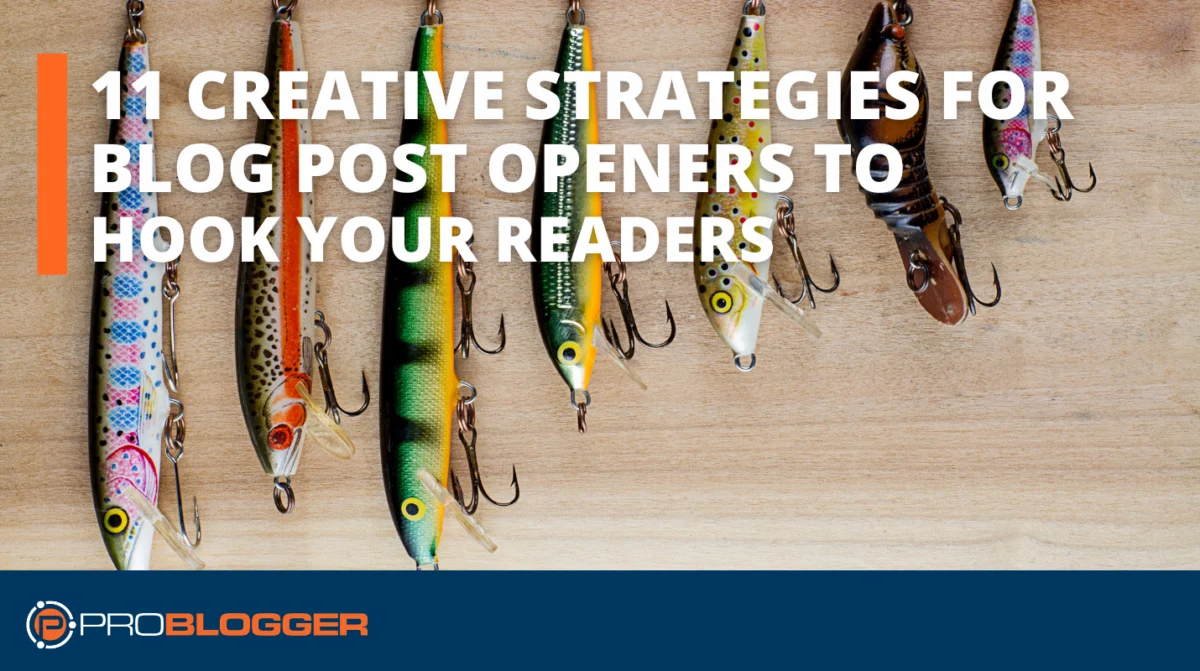
The Digital Attention Crisis and the Evolution of the Lead
The necessity for high-impact opening lines is rooted in a fundamental shift in how information is consumed. In the traditional era of print journalism, the "inverted pyramid" structure focused on delivering the "who, what, where, when, and why" immediately. However, in the age of the "attention economy," content creators have moved toward more narrative and psychological hooks. Research from the Nielsen Norman Group indicates that users typically read only 20% to 28% of the words on a page during an average visit. This "skimming culture" necessitates an opening that does more than inform; it must provide a compelling reason for the reader to cease their scrolling behavior.
Content strategists note that while a headline serves as the initial "handshake" to attract a click, the opening line acts as the "conversation starter" that secures a commitment from the reader. Without a strategic hook, even the most valuable information remains unread, buried beneath the fold of a browser window.
A Chronology of Engagement Strategy Development
The transition from purely informational leads to the "11-strategy framework" utilized by top-tier digital publishers has occurred over the last two decades.
- The Early Web (1995–2005): Focus was primarily on keyword density and basic information delivery.
- The Blog Boom (2005–2012): Personalization and conversational tones began to take precedence, as seen in the work of pioneers like Darren Rowse of ProBlogger, who emphasized the importance of the second most important words in a post—the opening line.
- The Algorithm Era (2012–Present): With the rise of social media and search engine optimization (SEO), the opening line became a metric-driven component of content performance, directly impacting "time on page" and "dwell time."
Analysis of the 11 Core Engagement Strategies
To address the complexities of modern reader psychology, industry experts have codified eleven distinct strategies for opening content. These methods are designed to trigger specific cognitive responses, ranging from curiosity to the validation of personal needs.
1. The Identification of Immediate Needs
This strategy relies on the psychological principle of "relevance realization." By identifying a reader’s problem or pain point in the first sentence, the author establishes immediate utility. Market analysts suggest that "solution-oriented" leads have a 15% higher retention rate in the B2B (business-to-business) sector compared to generic introductions.
2. The "Yes-Response" Question
Commonly used by professional copywriters, this technique involves asking a question to which the reader is almost certain to answer "yes." This creates a "consistency bias," where the reader, having agreed with the author’s premise, is more likely to follow the subsequent logic of the article.
3. The Intrigue-Based Inquiry
Unlike the "yes-response" question, the intriguing question leverages the "Curiosity Gap." By posing a question that promises a novel revelation—such as "What is the one habit all successful CEOs share?"—the author creates a cognitive itch that the reader can only scratch by continuing to read.
4. The Element of Surprise and Personal Anecdote
Using an unexpected fact or a relatable personal story breaks the reader’s "pattern recognition." For instance, starting a professional article with a humorous account of a mistaken identity—such as a spouse using the wrong name—humanizes the author and lowers the reader’s skeptical defenses.
5. Narrative and Analogical Framing
Humans are neurobiologically wired for storytelling. When an author opens with a narrative or a "tangent" analogy, it activates the sensory cortex of the reader. This transition from a "formal" genre to a "narrative" one serves as a mental reset for the user, making the content feel less like a chore and more like an experience.
6. The Bold Claim and Authoritative Promise
In a sea of equivocation, a strong assertion stands out. Making a bold claim—and backing it up—establishes the author as an authority. Data from digital marketing platforms indicate that headlines and leads featuring specific, high-stakes promises (e.g., "I became a six-figure blogger in twelve months") see significantly higher engagement, provided the content delivers on the claim.
7. Strategic Controversy
Provocation is a high-risk, high-reward strategy. By stating a counter-intuitive or controversial opinion on a popular product or industry trend, the author forces the reader to take a mental stance, thereby increasing the likelihood of comments and social shares.
8. Vivid Sensory Visualization
Encouraging a reader to "imagine a scenario" utilizes mental simulation theory. When readers visualize a positive or negative outcome, they become emotionally invested in the solution provided by the text. This technique is frequently used in long-form journalism to ground abstract concepts in reality.
9. Impactful Statistical Data
Leading with a startling statistic—such as "Only 1% of blog readers ever leave a comment"—provides immediate objective weight to the content. This appeals to the "rational actor" within the reader, providing a factual foundation for the arguments that follow.
10. The Authority of the Quote
Opening with a quote from a recognized figure allows an author to borrow established credibility. It sets a scholarly or philosophical tone and provides a "social proof" anchor for the article’s thesis.
11. Visual-First Lead Integration
In the visual-centric era of the 2020s, the "opening line" is often preceded or accompanied by a striking image. Studies on the "Picture Superiority Effect" show that information paired with a relevant image is 65% more likely to be remembered three days later than text alone.
Supporting Data on Reader Retention and Engagement
Quantitative analysis of digital content performance reinforces the necessity of these strategies. According to a study by Microsoft, the human attention span has dropped to approximately eight seconds, a decrease attributed to the rapid-fire nature of mobile browsing. Furthermore, heat-map tracking studies show an "F-shaped" reading pattern, where users read the first two paragraphs of a page horizontally and then scan vertically. This confirms that if the opening lines do not capture interest, the remainder of the content—regardless of its quality—is effectively invisible to the majority of the audience.
Further research from the Content Marketing Institute suggests that "highly engaged" content—defined as content with a low bounce rate and high scroll depth—utilizes at least three of the aforementioned eleven strategies in its introductory section.
Expert Reactions and Industry Implications
Digital media analysts argue that the mastery of the opening hook is no longer optional for those seeking to maintain a competitive edge. "The ‘lead’ is the single most expensive piece of real estate in your entire digital strategy," says one senior editor at a leading tech publication. "If you fail there, you lose the investment you made in the rest of the 2,000 words."
Psychologists specializing in media consumption note that the "11 strategies" are effective because they address the "cognitive ease" required by modern readers. By reducing the friction of entry, these strategies allow the reader to transition from a state of passive browsing to active engagement without significant mental effort.
Future Outlook: The Role of AI and Authenticity
As generative AI tools begin to automate content creation, the importance of the "human-centric" opening line is expected to grow. While AI can synthesize facts, it often struggles with the nuanced "surprise" of a personal anecdote or the "bold claim" backed by genuine lived experience. Future trends suggest a "flight to quality," where readers increasingly value opening lines that display a distinct, authentic voice that cannot be replicated by algorithms.
In conclusion, the art of the opening line has moved far beyond simple creative writing. It is now a multifaceted discipline involving psychology, data science, and strategic communication. For publishers, journalists, and bloggers, the ability to "hook" a reader in the first few seconds is the definitive barrier between digital obscurity and meaningful influence. The 11 strategies outlined provide a roadmap for navigating this high-stakes environment, ensuring that valuable content finds the audience it deserves.