Gilang Muhammad
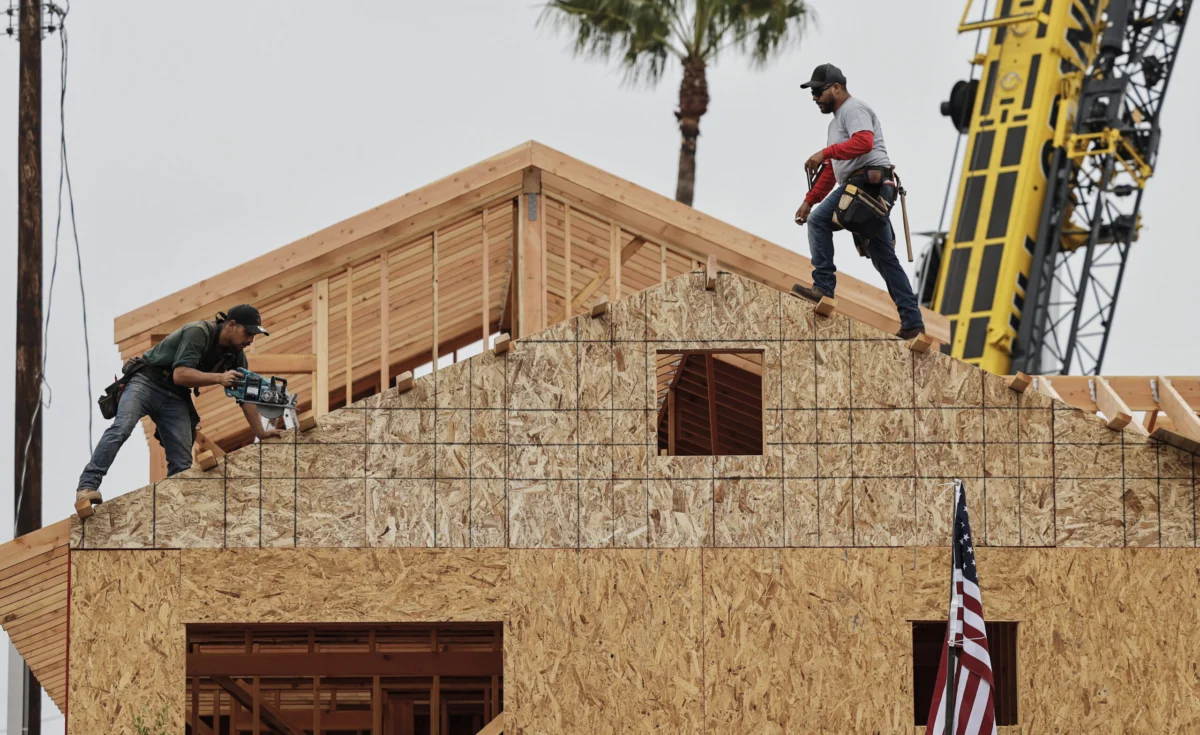
New data released on Tuesday, October 20, 2026, painted a stark picture of a housing sector in rapid decline, with key indicators deteriorating far beyond already muted expectations for September. This downturn comes at a critical juncture for the central bank as it grapples with its next moves on interest rates, caught between the imperative to tame inflation and the risk of further destabilizing a vital economic pillar. With mortgage rates already hovering above 7%, and anticipated future rate hikes by the Fed, affordability is poised to worsen, casting a long shadow over the immediate future of homeownership in America.
Deep Freeze: Deteriorating Housing Data Signals Market Contraction
September’s housing market performance delivered a series of discouraging blows, underscoring the severe impact of rising borrowing costs. The National Association of Realtors (NAR) reported that its Pending Home Sales Index, a crucial forward-looking metric tracking homes under contract but not yet closed, plummeted to an all-time low in records dating back to 2001. The index registered a sharp 7.3% decline for the month and was down a staggering 11.3% from the previous year, significantly missing Wall Street’s consensus estimate for a modest 0.4% dip. This dramatic fall signifies a profound slowdown in buyer activity, as potential purchasers retreat from a market made increasingly inaccessible.
Further compounding the bleak outlook, the Commerce Department’s latest figures revealed a substantial drop in privately owned housing starts. These fell at a seasonally adjusted annualized rate of 5.2% in September, defying expectations for a mere 0.4% decrease. Building permits, an indicator of future construction activity, also declined by 0.2%, contrary to the Dow Jones consensus outlook for a 2% gain. Particularly concerning was the single-family permits total, which reached just 845,000, a 4% drop from August and the lowest level recorded since 2023. This contraction in new construction permits suggests that homebuilders, facing diminished demand and higher financing costs, are scaling back future projects, which could exacerbate the existing housing shortage in the long run.
Chris Rupkey, Chief Economist at Fwdbonds, encapsulated the market’s dire state, stating, "The housing market is about to go into a deep sleep unless Washington can do a 180 on its policies and make the cost of a new home more affordable. It is not winter yet but housing is going into a deep freeze." His assessment highlights the dual challenge of high rates and the underlying structural issues contributing to the housing crisis.
Adding to the sentiment of retreat, home builder confidence, as measured by the National Association of Home Builders (NAHB) index, has fallen to levels not witnessed in 14 years. This sustained pessimism among builders underscores a lack of optimism regarding future sales and profitability, leading to a reluctance to embark on new developments despite a chronic undersupply of homes in many regions. The confluence of these data points — plummeting sales activity, contracting new construction, and eroding confidence — paints a picture of a housing market firmly entrenched in a significant downturn.
The Federal Reserve’s Unfolding Dilemma: Balancing Inflation and Economic Stability
The Federal Reserve finds itself navigating an increasingly treacherous economic landscape. Its dual mandate tasks it with achieving maximum employment and maintaining price stability. Typically, a weakening sector like housing would prompt policymakers to consider easing monetary conditions to stimulate demand. However, the current environment is far from typical. Broader inflationary pressures continue to stubbornly persist, forcing the Fed to prioritize its fight against rising prices, even if it means further dampening the housing market.
The central bank’s aggressive campaign of interest rate hikes, initiated in early 2022 to combat inflation that reached four-decade highs, has been the primary catalyst for the housing market’s woes. These rate increases have translated directly into higher mortgage rates, significantly eroding affordability. The rate for a 30-year fixed mortgage, which was closer to 3% during the COVID-era housing boom five years ago, spent most of September above 7%, concluding the month around 7.6% according to Mortgage News Daily. This dramatic increase has priced out a substantial segment of potential buyers, particularly first-time homeowners and those with limited equity.
A key component of the Consumer Price Index (CPI), the Fed’s preferred inflation gauge, is "shelter," which includes rent and homeowners’ equivalent rent. This component typically lags market movements by several months due to the nature of lease agreements and data collection methods. While the housing market is clearly cooling, the shelter component of CPI has remained stubbornly high, contributing significantly to overall inflation figures. This lag creates a difficult situation for the Fed: even as the housing market itself struggles, its statistical contribution to inflation remains elevated, making it harder for the central bank to justify a pause or pivot in its hawkish stance.

Readings from last week on both consumer and producer prices provided little cause for optimism, indicating that the broader inflation fight is far from over. Wholesale final demand goods prices, for instance, rose by 2.6%, marking the fastest pace in a Bureau of Labor Statistics data series extending back to December 2009. These persistent inflationary signals outside of housing reinforce the Fed’s conviction that more tightening may be necessary, despite the mounting collateral damage to the housing sector.
Fed officials have also highlighted other emerging inflationary factors, such as the robust investment in artificial intelligence. While AI investment promises long-term productivity gains, it is currently driving up the cost of critical components like chips and advanced electronics, contributing to price pressures in certain sectors. Policymakers believe that the eventual benefits from AI investment could help offset weaker sectors of the economy like housing, but this is a long-term projection that offers little immediate relief for the current market downturn.
Mortgage Rates: The Primary Driver of the Affordability Crisis
The rapid ascent of mortgage rates stands as the single most impactful factor in the current housing market slump. A 30-year fixed mortgage rate soaring from around 3% to over 7% in a relatively short period has fundamentally altered the economics of homeownership. This drastic increase means that a buyer financing a $400,000 home today could face monthly payments hundreds of dollars higher than they would have just a couple of years ago, even if the home’s price remained constant. This erosion of purchasing power is a direct consequence of the Federal Reserve’s efforts to cool the economy by making borrowing more expensive.
Lawrence Yun, the NAR’s chief economist, emphasized this point, stating, "Market conditions weakened in September due to fast-rising mortgage rates. Although job growth and income gains can support home purchases, housing affordability is more affected by changes in mortgage rates." Indeed, while the labor market has remained relatively robust and wage growth has been observed, these gains have been largely outstripped by the dramatic rise in home borrowing costs, rendering any income increases insufficient to offset the affordability crunch.
This phenomenon has created a significant "lock-in" effect within the existing housing stock. Data from Goldman Sachs indicates that more than 95% of current mortgage borrowers have rates significantly below prevailing levels, with 65% enjoying rates at least two percentage points lower. For these homeowners, selling their current property and purchasing a new one would mean taking on a substantially higher mortgage rate, leading to a much larger monthly payment for a similar or even smaller home. This disincentive to move has severely constrained inventory, further contributing to the market’s stagnation. Existing home sales are forecast at 3.9 million for 2027, roughly similar to 2026 but a notable 26% below pre-Covid 2019 levels, primarily due to this "lock-in" effect.
The historical context further illuminates the severity of the current rate environment. While not at the double-digit highs of the early 1980s, current rates are significantly higher than anything seen since the 2008 financial crisis, effectively unwinding more than a decade of ultra-low borrowing costs that fueled previous housing booms. This sudden shift has caught many by surprise and fundamentally reshaped buyer expectations and financial planning.
Voices from the Economic Front Lines: Forecasts and Fissures
Economists are largely in agreement about the immediate trajectory of the housing market, though some offer a glimmer of hope for a future stabilization. Ronnie Walker, an economist at Goldman Sachs, articulated a widely held view, noting that "conditions generally point to a housing market likely to weaken further before stabilizing." His analysis, shared in a client note, projects that "in 2027, we expect the headwind from affordability—reignited by the recent rebound in mortgage rates—to increasingly dominate, weighing further on activity." Goldman Sachs forecasts residential investment to decline by 2.5%, 4%, and 1% respectively over the next three quarters, with a potential for even steeper declines if mortgage rates do not ease. They anticipate single-family starts of just 875,000 in 2027, largely unchanged from 2026, underscoring the persistent challenges.
Walker’s assessment underscores the structural issues at play, stating, "Housing activity has remained rangebound in recent years, capped on the upside by affordability headwinds and buffered on the downside by the longstanding housing shortage. In 2027, we expect the headwind from affordability to increasingly dominate, weighing further on activity." This highlights the paradoxical nature of the current market: severe affordability issues are depressing demand, yet an underlying shortage of homes prevents a complete collapse in prices in many areas.
However, a note of potential optimism emerges from Lawrence Yun of the NAR. He posits that "given that mortgage rates have already risen much more than the Federal Reserve’s short-term interest rate hikes, mortgage rates could be topping out." Yun suggests that the bond market, which heavily influences long-term mortgage rates, may have already priced in the Fed’s anticipated future moves, potentially leading to a plateau or even a modest decline in mortgage rates even if the Fed continues with its benchmark rate hikes. "Buyers and sellers may simply be holding back until mortgage rates move favorably," he added, indicating that a perception of rates having peaked could unlock some pent-up demand. This perspective offers a potential counter-narrative to the otherwise universally grim outlook.

Broader Economic Backdrop and Persistent Inflationary Pressures
Despite the housing sector’s pronounced weakness, the broader U.S. economy has shown remarkable resilience. The labor market, in particular, remains robust, with unemployment rates near historical lows and continued job creation, albeit at a slower pace than previous years. Consumer spending, while showing some signs of moderation, has largely held up, supported by accumulated savings and wage growth. This underlying economic strength provides the Federal Reserve with room to continue its restrictive monetary policy without immediately triggering a widespread recession, a delicate balancing act.
However, the inflation challenge extends beyond the housing market. Energy prices, geopolitical tensions, and ongoing supply chain adjustments continue to exert upward pressure on various goods and services. The robust investment in technologies like Artificial Intelligence, while promising long-term economic benefits, is also contributing to short-term inflationary pressures in specific sectors, as mentioned by Fed officials. These factors suggest that even if the housing component of inflation begins to decelerate significantly, other forces may keep overall price pressures elevated, compelling the Fed to maintain its hawkish stance for longer than many market participants might prefer.
Implications for Builders, Homeowners, and Future Policy
The housing market slowdown carries significant implications across the economy. For homebuilders, reduced demand and higher financing costs translate into fewer new projects, potential layoffs in construction, and a hit to profitability. This retrenchment in new construction will further exacerbate the long-standing housing supply shortage, making future recovery efforts even more challenging. The declining single-family permits are a direct leading indicator of this trend, signaling a constrained pipeline for new homes.
Existing homeowners with low mortgage rates face the "lock-in" effect, making them less likely to sell. This lack of inventory stifles market activity and creates a unique dynamic where prices, while potentially softening, may not collapse dramatically due to limited supply. However, homeowners who purchased at the peak of the market with higher rates may face equity erosion if local prices decline, although widespread foreclosures are not anticipated given stricter lending standards compared to the 2008 crisis.
First-time homebuyers bear the brunt of the affordability crisis. High home prices combined with prohibitive mortgage rates create an insurmountable barrier for many, pushing the dream of homeownership further out of reach. This has long-term societal implications, potentially delaying household formation and wealth accumulation for younger generations.
Looking ahead, markets currently anticipate the Federal Reserve to hold benchmark rates steady at its next meeting. However, futures pricing, as indicated by the CME Group’s FedWatch tool, implies a strong probability of a quarter-point hike in December 2026, followed by another in March 2027. These anticipated moves underscore the central bank’s unwavering commitment to achieving its 2% inflation target, even if it means prolonged pain for the housing sector. The path forward for the Fed is fraught with challenges, requiring careful calibration to avoid tipping the economy into a deep recession while still effectively taming inflation.
Structural Challenges and Long-Term Outlook
Beyond the immediate cyclical downturn driven by interest rates, the U.S. housing market grapples with fundamental structural challenges. Decades of underbuilding in many regions have created a persistent housing shortage, particularly for affordable single-family homes. Zoning restrictions, rising material and labor costs, and a scarcity of developable land have all contributed to this deficit. While the current downturn is largely demand-side driven by affordability, the underlying supply constraints mean that even if rates eventually fall, a rapid recovery could be hampered by a lack of available homes.
The interplay between a supply-constrained market and a demand-suppressing interest rate environment creates a complex scenario. Unlike previous housing busts, where oversupply was often a key factor, the current situation sees a tightening supply amidst collapsing affordability. This could lead to a protracted period of low transaction volumes and stagnant activity rather than a dramatic price crash across the board, though localized price corrections are certainly possible.
Ultimately, the trajectory of the housing market remains inextricably linked to the Federal Reserve’s inflation fight. Until broader price pressures show convincing signs of sustained deceleration, enabling the Fed to ease its monetary policy, the housing sector is likely to remain in its "deep freeze," awaiting a thaw that appears increasingly distant on the horizon. The central bank’s success in navigating this complex environment will determine not only the future of housing but the overall health and stability of the U.S. economy.