Lina Wu
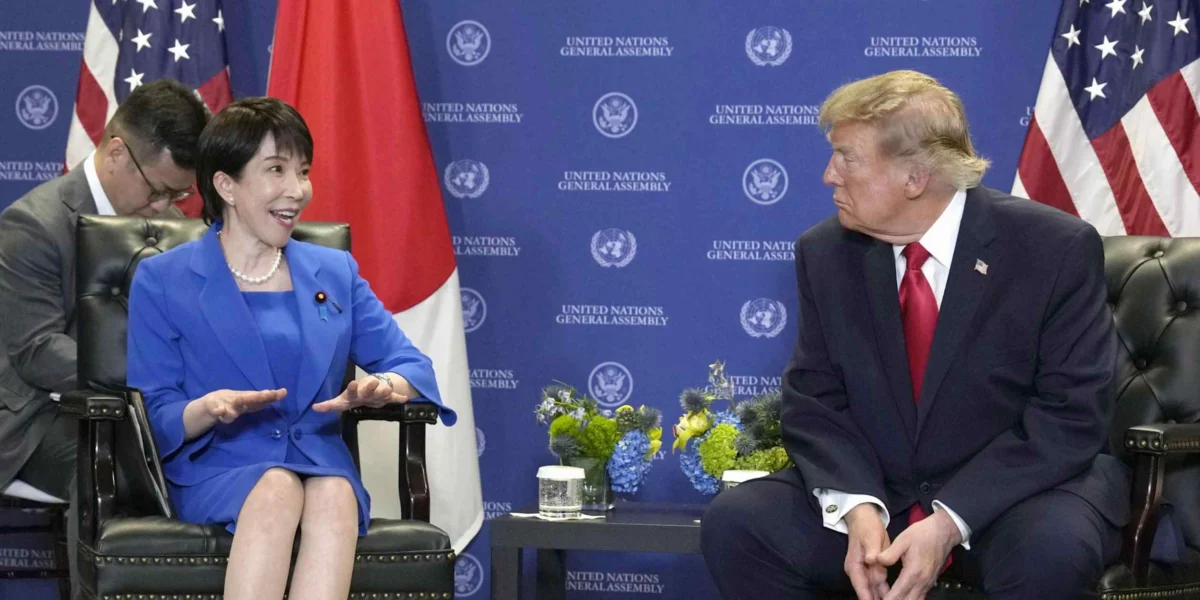
TOKYO – Japanese Prime Minister Sanae Takaichi is poised to seek a high-level meeting with U.S. President Donald Trump during her upcoming international engagements, a strategic diplomatic maneuver designed to proactively address potential concerns from Washington regarding Tokyo’s significant revisions to its core security documents. This outreach aims to preempt any dissatisfaction or misunderstanding that might arise from Japan’s ambitious plans to bolster its defense capabilities and spending, signaling a commitment to transparency and a desire to maintain robust bilateral security cooperation. The timing of these proposed discussions, as indicated by sources close to the Japanese government, underscores the critical juncture in regional security dynamics and the perceived necessity of close alignment between the two allied nations.
The impetus for this proactive diplomatic engagement stems from Japan’s ongoing comprehensive review and subsequent amendment of its three key security documents: the National Defense Program Guidelines (NDPG), the Mid-Term Defense Program (MTDP), and the Acquisition, Technology and Logistics Program (ATLP). These documents collectively chart the course for Japan’s defense posture, procurement strategies, and technological development for the coming years. Prime Minister Takaichi’s administration views these revisions not merely as an internal policy update but as a significant signal of Japan’s evolving role in regional and global security, a role that necessarily involves a closer partnership with its most crucial ally, the United States.
Background: A Shifting Security Landscape and Japan’s Evolving Role
The geopolitical landscape in the Indo-Pacific region has been in a state of flux, characterized by rising regional tensions, evolving military doctrines of neighboring powers, and a growing recognition of the need for a more robust and capable Japan. For decades, Japan’s post-World War II security policy has been guided by a pacifist constitution and a defensive posture, primarily reliant on the U.S.-Japan Security Treaty for its ultimate security guarantees. However, recent developments have necessitated a reassessment of this approach.
The increasing assertiveness of China, its rapid military modernization, and its territorial claims in the East China Sea have created a palpable sense of unease among Japan’s leadership and populace. Similarly, the unpredictable nature of North Korea’s missile and nuclear programs continues to pose a direct threat to Japan’s national security. These factors, coupled with the broader strategic shifts and uncertainties emanating from the global stage, have propelled Japan towards a more proactive and capable defense strategy.
Prime Minister Takaichi, a prominent figure within the Liberal Democratic Party (LDP) known for her strong stance on national security, has been a driving force behind these proposed security policy reforms. Her government’s ambition extends beyond simply increasing defense expenditure; it encompasses a qualitative enhancement of Japan’s military capabilities, including the acquisition of longer-range strike capabilities, improved missile defense systems, and greater interoperability with U.S. forces.
The Core of the Security Policy Review: Strategic Enhancements
The proposed amendments to Japan’s security documents are multifaceted, aiming to equip the nation with the necessary tools and strategies to navigate the complex security environment.
-
National Defense Program Guidelines (NDPG): This document, typically revised every five to ten years, sets the overarching strategic direction for Japan’s defense. The forthcoming revision is expected to articulate a more dynamic and forward-looking defense strategy, potentially emphasizing capabilities that allow for greater operational flexibility and the ability to project power in a deterrence-focused manner. This could include advancements in cyber warfare, space-based capabilities, and autonomous systems, alongside the widely discussed enhancement of counter-strike capabilities.
-
Mid-Term Defense Program (MTDP): This program outlines the specific defense capabilities to be acquired and developed over a five-year period, aligning with the NDPG. The current MTDP is expected to be revised to reflect the new strategic priorities, leading to significant shifts in procurement plans. This will likely involve increased investment in advanced weaponry, surveillance, and reconnaissance systems. Reports suggest a substantial increase in the defense budget over the next five years, potentially reaching or exceeding 2% of GDP, a long-standing benchmark often discussed in relation to NATO members and a significant departure from Japan’s post-war defense spending norms.
-
Acquisition, Technology and Logistics Program (ATLP): This program focuses on the technological advancements and logistical support required to maintain and enhance Japan’s defense capabilities. The revised ATLP is expected to accelerate research and development in cutting-edge defense technologies, fostering innovation and collaboration with international partners, particularly the United States. This could include advancements in artificial intelligence, hypersonic weapons, and advanced materials.
Timeline and Diplomatic Engagement
The current discussions surrounding the security policy review have been ongoing for several months, with various government bodies and advisory panels contributing to the deliberations. Official pronouncements from the Ministry of Defense and the Prime Minister’s office have consistently highlighted the need for a modernized defense posture in response to the evolving threat environment.
The decision to seek a meeting with President Trump underscores the critical importance of U.S. endorsement and understanding of Japan’s strategic reorientation. The meeting, if realized, would likely occur during Prime Minister Takaichi’s upcoming overseas trip, the specifics of which are still being finalized. This proactive approach is a departure from previous defense reviews, where significant policy shifts sometimes led to subsequent clarifications rather than pre-emptive consultations at the highest level.
Sources indicate that the Japanese side intends to use this potential meeting to provide a detailed briefing on the rationale behind the security policy changes, emphasizing how these enhancements will contribute to regional stability and bolster the U.S.-Japan alliance. The goal is to ensure that Washington views these developments not as a unilateral deviation from the alliance’s framework, but as a strengthening of Japan’s contribution to collective security.
Supporting Data and Projected Impacts
While specific figures for the revised defense budget and procurement plans are still under official deliberation, projections from defense analysts and think tanks offer a glimpse into the scale of the proposed changes. Several reports suggest that Japan’s defense spending could rise to approximately $50 billion annually over the next five years, a substantial increase from current levels. This would place Japan among the top global defense spenders and represent a significant fiscal commitment.
The proposed acquisition of counter-strike capabilities, such as long-range cruise missiles and potentially stand-off offensive weapons, is a particularly noteworthy aspect of the policy review. This represents a shift from a purely defensive posture to one that includes a greater capacity for deterrence through the ability to strike enemy missile bases. Such a development would require careful communication with regional powers and, critically, with the United States, to avoid misinterpretation or escalation.
Official Responses and Inferred Reactions
While official statements from both Tokyo and Washington regarding the potential meeting remain cautious, the proactive nature of Japan’s approach suggests a desire for a smooth and collaborative process.
A spokesperson for the Japanese Ministry of Foreign Affairs, speaking on condition of anonymity, stated that "Japan values its alliance with the United States immensely. We are committed to open and transparent communication with our allies on all matters of mutual security interest." This sentiment is echoed by officials within the Ministry of Defense, who have repeatedly emphasized the defensive nature of any proposed capabilities, while acknowledging the need for enhanced deterrence.
From the U.S. perspective, any move by Japan to increase its defense capabilities and spending is generally viewed favorably, given the shared security interests in the Indo-Pacific. However, the specifics of the proposed changes, particularly the acquisition of offensive capabilities, will undoubtedly be scrutinized. The Trump administration has consistently called on allies to increase their defense contributions and take on greater responsibility for regional security. Prime Minister Takaichi’s initiative to brief President Trump directly suggests an understanding of this U.S. priority and a desire to align Tokyo’s actions with Washington’s expectations.
It is reasonable to infer that U.S. defense officials and policymakers will be keen to understand the strategic implications of Japan’s evolving defense posture, particularly in relation to interoperability, burden-sharing, and the overall balance of power in the region. The meeting will provide an opportunity for both sides to reaffirm their commitment to the alliance and to ensure that Japan’s enhanced capabilities serve to strengthen, rather than complicate, regional security architecture.
Broader Impact and Implications
The potential meeting between Prime Minister Takaichi and President Trump, coupled with the comprehensive overhaul of Japan’s security documents, carries significant implications for regional and global security.
Strengthening the U.S.-Japan Alliance: A successful engagement would solidify the bedrock of the U.S.-Japan alliance, demonstrating a shared vision for regional security and a willingness to adapt to evolving threats. This could lead to enhanced joint military exercises, more integrated command and control structures, and a more seamless response to potential crises.
Regional Stability: By bolstering its defense capabilities, Japan aims to contribute more effectively to deterrence against potential aggressors. This could, in turn, foster greater regional stability by discouraging unilateral actions and promoting a more predictable security environment. However, it also carries the risk of sparking an arms race if not managed carefully through diplomatic channels.
Economic and Technological Cooperation: The increased defense spending will likely spur innovation and technological development within Japan’s defense industry and create opportunities for collaboration with U.S. defense contractors. This could lead to the development of advanced, interoperable defense systems.
International Perceptions: Japan’s proactive stance and its commitment to transparency in this process could enhance its standing as a responsible global security actor. It signals a willingness to shoulder greater responsibility for its own defense and for the collective security of the region.
The upcoming period will be crucial for observing how Prime Minister Takaichi’s diplomatic efforts unfold and how these significant shifts in Japanese security policy are received by both its closest ally and the broader international community. The success of this strategic outreach will likely shape the future trajectory of security dynamics in the Indo-Pacific for years to come.