Gilang Muhammad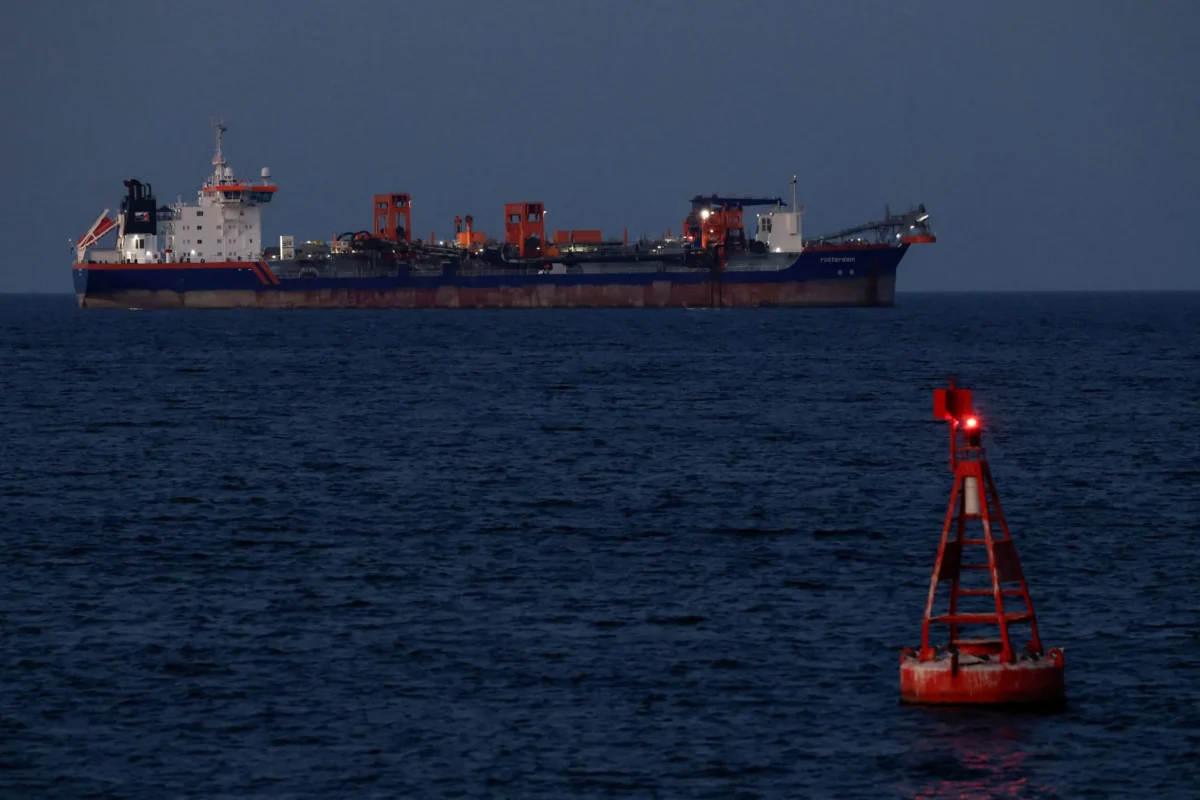
Despite the profound dangers posed by an active conflict involving the U.S., Israel, and Iran, Tehran has maintained a steadfast, albeit perilous, flow of crude oil through the Strait of Hormuz, primarily destined for China. This continued supply lifeline, evidenced by recent maritime intelligence, underscores both Iran’s determination to sustain its vital oil revenues and China’s strategic imperative to bolster its energy reserves amidst a volatile geopolitical landscape. The narrow waterway, a chokepoint for approximately one-fifth of the world’s oil and gas, has seen its traffic severely disrupted since the war’s onset on February 28, 2026, yet Iranian tankers, some operating covertly, persist in their transits.
Iran’s Persistent Exports Amidst Heightened Risk
Since the eruption of hostilities between the U.S.-Israel alliance and Iran, a period marked by escalating tensions and direct military engagements, Iran has dispatched a substantial volume of crude oil through the Strait of Hormuz. Samir Madani, co-founder of TankerTrackers.com, a firm renowned for its meticulous monitoring of global vessel movements via satellite imagery, confirmed on Tuesday that at least 11.7 million barrels of Iranian crude have traversed the strait since February 28, all bound for Chinese ports. This figure is corroborated by shipping intelligence data provider Kpler, which estimates roughly 12 million barrels of crude oil to have passed through the strait during the same timeframe.
The practice of "going dark" – switching off Automatic Identification System (AIS) transponders to evade detection – has become increasingly common among vessels navigating the Strait of Hormuz. This maneuver is a direct response to Tehran’s explicit threats to target any ship attempting passage through the critical waterway. TankerTrackers.com’s advanced satellite imagery capabilities are crucial in identifying these covert movements, providing a rare window into the clandestine operations sustaining Iran’s oil trade. Nhway Khin Soe, a crude analyst at Kpler, noted the increasing difficulty in confirming the ultimate destinations of these vessels, though he affirmed China as the primary recipient of Iranian crude in recent years, making it the most probable destination for a significant share of these barrels.
The Strait of Hormuz: A Geopolitical Flashpoint
The Strait of Hormuz, linking the Persian Gulf with the Arabian Sea, has long been recognized as one of the world’s most strategically vital maritime chokepoints. Its significance has been magnified by the ongoing conflict, which has cast a long shadow over global energy markets. The inherent risks of transit through the strait are not merely theoretical; less than two weeks into the war, ten vessels operating in or near the Strait of Hormuz fell victim to Iranian attacks, resulting in the tragic deaths of at least seven seafarers, according to reports from the International Maritime Organization (IMO).

This aggressive posture was underscored by a spokesman for Iran’s Ministry of Foreign Affairs, who, in an interview with CNBC’s Dan Murphy on Monday, issued a stark warning: oil tankers transiting through the Strait "must be very careful." This official statement, coupled with the documented attacks, highlights the perilous environment for maritime commerce. Despite these overt threats and the tangible risks, the continued flow of Iranian oil signals a complex interplay of economic necessity, strategic defiance, and China’s unwavering demand. Madani’s analysis of satellite imagery further revealed that three of the six tankers that departed Iran since February 28 were Iranian-flagged, suggesting a direct state-backed effort to maintain these shipments.
The international community has reacted with a mix of alarm and frustration. U.S. President Donald Trump, speaking to Fox News’ Brian Kilmeade, adopted a more confrontational stance, urging ships stranded near the passageway to "show some guts" and push through the channel. Trump’s assertion, "There’s nothing to be afraid of, they have no Navy, we sunk all their ships," reflects a broader U.S. strategy of projecting strength and challenging Iranian control over the waterway, even as the realities on the ground suggest a far more complex and dangerous situation for commercial shipping.
Exploring Alternative Export Outlets: The Jask Terminal
For decades, Kharg Island terminal, situated approximately 15 miles off the Iranian mainland, has served as the linchpin of Iran’s oil export infrastructure, handling an estimated 90% of its crude exports before tankers embark on their journey through the Strait of Hormuz. However, the heightened security risks associated with the strait have prompted Iran to reactivate and potentially expand the use of alternative export facilities.
Notably, Iran has resumed loading tankers at the Jask oil and gas terminal, located along the Gulf of Oman, south of the Strait of Hormuz. This facility holds strategic importance as Iran’s sole crude export outlet on the Sea of Oman that entirely bypasses the Strait of Hormuz, offering a potential lifeline should the strait become completely impassable or too dangerous for transit. TankerTrackers.com recently observed an Iranian vessel loading 2 million barrels of crude oil at Jask – a significant event, marking only the fifth such loading at the terminal in the past five years.
This renewed activity at Jask, while strategically significant, also highlights the logistical challenges Iran faces. As Nhway Khin Soe of Kpler noted, it signals Tehran’s exploration of alternatives, though the viability of Jask as a large-scale replacement for Kharg Island remains uncertain. Samir Madani of TankerTrackers.com elaborated on these inefficiencies, pointing out that loading a single Very Large Crude Carrier (VLCC), a supertanker designed for long-haul oil transport, can take up to 10 days at Jask. This stands in stark contrast to the one to two days required to load a VLCC at the more established and efficient Kharg Island terminal. Madani concluded that while Jask offers "good domestic propaganda value," its "logistical advantage" is limited, suggesting it currently serves more as a symbolic gesture of resilience and a contingency option rather than a fully efficient alternative.
China’s Strategic Stockpiling and Energy Security

China’s role as the principal destination for Iranian crude is pivotal in this complex scenario. While current shipments of approximately 1.22 million barrels per day (mbd) are notably lower than pre-war levels, they remain substantial given the prevailing risks. Kpler’s Soe reported that Iran exported 2.16 mbd in February, marking the highest level since July 2018, with all these barrels destined for China. This surge in imports reflects Beijing’s proactive strategy to amass reserves and insulate itself from potential energy supply shocks.
Chinese customs data released on Tuesday underscored this urgency, revealing a 15.8% increase in crude imports during the first two months of the year compared to the same period last year. This aggressive stockpiling effort peaked in the week of February 16, when Iranian crude loadings hit a record high of 3.78 mbp, more than double the previous weekly average of roughly 1.48 mbd. This pre-conflict accumulation provided China with a significant buffer against the subsequent market volatility.
Over the years, China has systematically built up vast crude stockpiles, accumulating an estimated 1.2 billion barrels of inventory as of January 2026, according to the Atlantic Council. This formidable reserve could fulfill China’s demand for an estimated three to four months, providing a critical hedge against global supply disruptions. The urgency behind this build-up intensified this year as the U.S. administration, under President Donald Trump, initiated aggressive actions against two of Beijing’s most critical oil suppliers: Venezuela and Iran. The military strike against Venezuela’s leader Nicolas Maduro at the beginning of the year, followed by the killing of Iran’s supreme leader Ayatollah Ali Khamenei in the U.S.-Israel war last month, sent clear signals of a dramatically altered geopolitical landscape, compelling China to accelerate its energy security measures.
Global Market Reactions and International Responses
The escalation of the Middle East conflict and the associated risks to the Strait of Hormuz sent immediate shockwaves through global energy markets. Oil prices surged dramatically, with Brent crude reaching nearly $120 a barrel on Monday, March 10, levels not seen in four years. This sharp increase was driven by widespread fears of supply disruptions, exacerbated by reports of several oil-producing countries in the Persian Gulf curbing production and the virtual standstill of other shipping traffic through the Strait of Hormuz.
In response to the looming threat of a global oil shock, international leaders scrambled to contain the fallout. The Group of Seven (G7) nations, including the U.S., reportedly considered the largest ever release of oil from strategic reserves – a coordinated measure designed to inject liquidity into the market and stabilize prices. Concurrently, President Trump offered a glimmer of hope, signaling that the "war may be over soon," a statement that, if materialized, could significantly de-escalate tensions and ease market anxieties.
These interventions and signals have had a noticeable effect on crude prices. After their initial spike, oil benchmarks pulled back, reflecting a cautious return of confidence or at least a tempering of the most extreme fears. As of Tuesday, March 11, at 10:50 p.m. ET, U.S. WTI crude oil for April delivery had eased to approximately $84.9 a barrel, while the global benchmark Brent crude with May delivery stood at $88.9 per barrel. This volatility underscores the delicate balance between geopolitical events and the intricate dynamics of global energy supply and demand. The ongoing conflict continues to keep international markets on edge, highlighting the profound interconnectedness of regional stability and global economic well-being. The long-term implications for shipping routes, energy security policies, and international relations remain under intense scrutiny, as the world navigates a period of unprecedented geopolitical uncertainty in a critical energy region.