Gilang Muhammad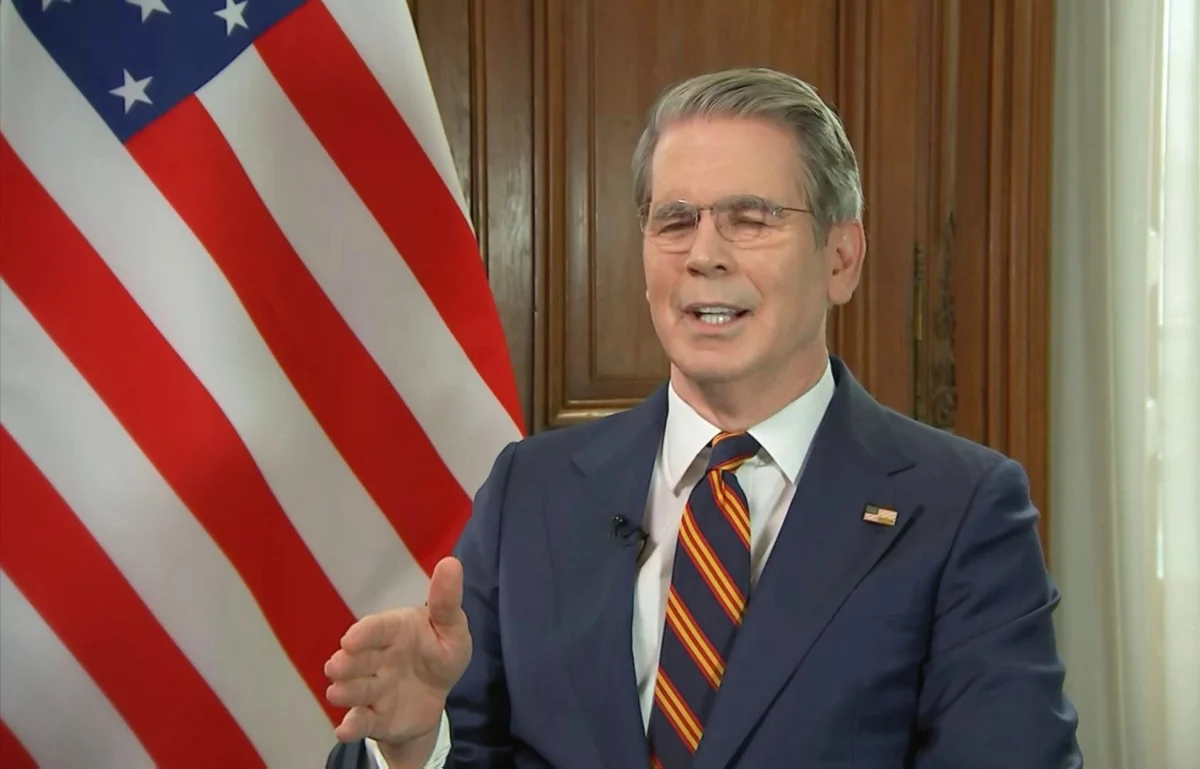
Treasury Secretary Scott Bessent on Monday firmly stated that the current administration harbors no intentions of intervening directly in financial markets, specifically addressing persistent rumors regarding efforts to temper soaring oil prices. Speaking in a candid interview on CNBC, Bessent underscored that the government not only lacks plans for such an intervention but also likely possesses no statutory authority to execute such a complex and potentially destabilizing maneuver, even if it were contemplated. His remarks come at a time of significant global energy market volatility, where crude oil prices have reached multi-year highs, fueling inflation concerns and placing considerable strain on consumers and industries worldwide.
The core of the speculation centered on the Treasury Department, or another governmental entity, potentially stepping into oil futures markets. This hypothetical action would involve actively trading against rising prices, effectively attempting to depress them through financial engineering rather than by influencing the physical supply of crude. Such a move, Bessent highlighted, would be without precedent in modern U.S. financial history, marking a stark departure from established government roles in economic stabilization.
"That rumor’s in the market," Bessent confirmed to CNBC’s Brian Sullivan during a "Squawk Box" segment. "When there’s big dynamic price action, that always happens. We haven’t done that." When pressed on whether such an extraordinary measure was even under consideration, the Secretary was unequivocal in his skepticism, questioning the legal and operational framework: "I’m not sure under what authority or what auspices."
A Turbulent Period for Crude: Contextualizing the Rumors
The rumors of potential government intervention did not emerge in a vacuum. Global crude oil markets have experienced a period of intense turbulence over the past several months, characterized by a confluence of factors driving prices upwards. Following the initial shock of the COVID-19 pandemic and a subsequent collapse in demand, the global economy has witnessed a robust, albeit uneven, recovery. This resurgence in economic activity has led to a significant rebound in energy consumption, outstripping the pace of supply increases.
Several key elements have contributed to this supply-demand imbalance:
- OPEC+ Production Discipline: The Organization of the Petroleum Exporting Countries and its allies (OPEC+) have maintained a cautious approach to increasing output, often adhering to gradual, pre-agreed increments despite calls from major consuming nations for more substantial supply. Their rationale frequently cites concerns about market stability and underinvestment in new production capacity during leaner years.
- Underinvestment in Upstream Projects: Years of lower oil prices, coupled with increasing pressure for energy transition and ESG (Environmental, Social, and Governance) considerations, have led to reduced capital expenditure in exploration and production across the industry. This has limited the ability of non-OPEC+ producers, particularly in the U.S. shale patch, to rapidly scale up output.
- Geopolitical Tensions: Conflicts and instability in key oil-producing regions, alongside broader geopolitical rivalries, introduce significant risk premiums into crude prices. Threats to supply routes or direct sanctions on major producers can trigger immediate price spikes as traders factor in potential disruptions. While the original article referenced an "Iran war" link, Bessent’s comments were framed generally around "dynamic price action," suggesting broad market anxiety rather than a specific singular event as the sole driver.
- Inflationary Pressures: Broader global inflationary trends, fueled by supply chain disruptions, strong consumer demand, and expansionary fiscal and monetary policies, have also contributed to higher commodity prices, including oil. Energy costs are a significant component of inflation indices, directly impacting purchasing power and economic stability.
Leading up to Bessent’s statement, oil prices had indeed seen considerable fluctuation. U.S. benchmark West Texas Intermediate (WTI) crude, for instance, had recently traded near the high-$90s per barrel, while international benchmark Brent crude hovered above $100. On the Monday of Bessent’s interview, markets saw a slight calming, with WTI trading around 1.9% lower at $96.86 a barrel, and Brent nudging marginally higher at $103.15. This slight reprieve, however, did little to quell the underlying anxiety or the debate over potential government responses.
The Strategic Petroleum Reserve: A Different Mechanism
Secretary Bessent’s clarification is crucial because it distinguishes the rumored intervention from a more conventional tool available to U.S. presidents: releases from the Strategic Petroleum Reserve (SPR). The SPR is the world’s largest emergency supply of crude oil, established in the aftermath of the 1973-74 oil embargo. Its primary purpose is to protect the U.S. economy from severe supply disruptions, such as those caused by natural disasters, geopolitical conflicts, or significant technical outages.
Throughout history, presidents have authorized SPR releases or exchange loans during times of significant stress in the energy sector. For example:
- President George H.W. Bush authorized a release during the 1991 Persian Gulf War.
- President George W. Bush released oil after Hurricane Katrina in 2005.
- President Barack Obama coordinated a multilateral release with other International Energy Agency (IEA) members in 2011 during disruptions in Libya.
- President Donald Trump authorized releases in response to various market pressures and hurricane threats.
- President Joe Biden ordered releases in late 2021 and again in 2022 to combat rising gasoline prices and global supply shortages stemming from geopolitical events.
These actions involve releasing physical barrels of crude oil into the market, thereby directly increasing supply and aiming to lower prices. This is a well-established and legally authorized mechanism. The rumored intervention in futures markets, by contrast, would involve trading financial instruments without necessarily altering the immediate physical supply, representing a fundamentally different approach with distinct legal and economic implications.
Past Interventions and Their Lessons
While direct intervention in commodity futures markets by the Treasury Department is unprecedented, the U.S. government has historically grappled with various forms of economic intervention, particularly during periods of crisis. For instance, in the early 1970s, the Nixon administration imposed wage and price controls in an attempt to combat inflation. These controls, however, led to unintended consequences, including shortages, black markets, and ultimately proved largely ineffective in the long term, eventually being abandoned. The lessons from such historical episodes often highlight the complexities and potential pitfalls of government attempts to override market forces.
The Federal Reserve, the nation’s central bank, does engage in financial market operations, such as buying and selling government bonds to influence interest rates and liquidity (quantitative easing/tightening) or intervening in foreign exchange markets to stabilize the dollar. However, these actions are distinct from direct intervention in specific commodity futures markets like oil, and are undertaken under different statutory authorities and with different objectives. The Treasury’s role is primarily focused on fiscal policy, managing the nation’s finances, and ensuring the stability of the financial system, rather than acting as a market participant in specific commodity segments.
The Complexities of Futures Trading and Government Influence

To understand the magnitude of what Bessent dismissed, it’s important to grasp the nature of oil futures markets. Futures contracts are agreements to buy or sell a commodity at a predetermined price on a specified future date. They are critical tools for price discovery, hedging, and speculation in the global energy complex. Billions of dollars worth of these contracts trade daily on exchanges like the New York Mercantile Exchange (NYMEX) and Intercontinental Exchange (ICE).
A government intervention aiming to lower prices would theoretically involve selling a massive quantity of oil futures contracts. This influx of supply into the futures market could, in theory, drive down the contract prices, which often serve as a benchmark for physical oil prices. However, such an operation would be fraught with challenges:
- Scale: To effectively counter the immense forces of global supply and demand, the intervention would need to be of an unprecedented scale, requiring vast financial resources and sophisticated trading infrastructure not typically associated with the Treasury.
- Market Depth and Liquidity: Even a large government entity would struggle to consistently move a market as deep and liquid as global oil futures without facing significant resistance or requiring ever-larger interventions.
- Risk of Loss: Trading in futures markets involves inherent risk. If market fundamentals continued to push prices higher, the government could incur substantial financial losses, effectively subsidizing consumers at taxpayer expense through market manipulation.
- Unintended Consequences: Such an action could distort market signals, discourage private investment in energy production, and create moral hazard, where market participants come to expect government bailouts or interventions whenever prices move unfavorably.
Economic and Market Integrity Concerns
Beyond the practical difficulties, direct government intervention in commodity futures raises profound questions about market integrity, economic philosophy, and the role of government in a free-market economy.
- Market Manipulation: Critics would argue that such an intervention constitutes market manipulation, undermining the principles of fair and open markets. It could erode investor confidence and create an uneven playing field.
- Precedent: Establishing such a precedent could open the door for interventions in other commodity markets (e.g., agricultural products, metals) or even broader financial markets, potentially leading to an unpredictable and politically driven economic landscape.
- Distortion of Price Signals: Prices in free markets serve as crucial signals for producers and consumers, guiding investment decisions and consumption patterns. Intervening to artificially suppress prices could send misleading signals, potentially leading to underinvestment in supply or overconsumption, exacerbating future imbalances.
- Political Interference: The specter of a government actively trading in markets based on political expediency rather than sound economic principles could politicize financial markets, making them more susceptible to short-term electoral cycles rather than long-term economic fundamentals.
The Broader Economic Impact of Elevated Oil Prices
Secretary Bessent’s comments highlight the administration’s cautious approach to managing the economic fallout from high energy costs. Elevated oil prices have far-reaching economic implications:
- Inflationary Pressures: Higher crude oil prices translate directly into increased costs for gasoline, heating oil, and jet fuel, impacting household budgets and corporate operating expenses. This directly feeds into broader inflation, which has been a persistent concern for central banks globally.
- Consumer Spending: Higher fuel costs act as a regressive tax, disproportionately affecting lower-income households. This can reduce discretionary spending on other goods and services, potentially dampening overall economic growth.
- Business Profitability: Industries reliant on transportation and energy, such as airlines, trucking, manufacturing, and agriculture, face increased input costs, which can squeeze profit margins or force them to pass costs onto consumers, further fueling inflation.
- Monetary Policy Response: Persistent energy-driven inflation puts pressure on central banks, like the Federal Reserve, to tighten monetary policy through interest rate hikes. While intended to cool the economy and bring down inflation, aggressive rate hikes can also risk slowing economic growth or even triggering a recession.
Analyst Perspectives on Bessent’s Stance
Energy analysts and economists largely echoed Bessent’s sentiment regarding the impracticality and undesirability of direct oil futures market intervention. Many experts would concur that the scale of intervention required to meaningfully and sustainably alter global oil prices through futures trading would be immense, costly, and likely ineffective in the long run.
"The global oil market is simply too vast and complex for a single entity, even a government, to manipulate effectively through financial trading without incurring massive losses or creating severe distortions," one hypothetical energy market strategist might observe. "The Treasury’s mandate is not to trade commodities; it’s to manage the nation’s finances and ensure financial stability. Stepping into this arena would be a radical departure."
Economists would likely emphasize that market-based solutions, such as encouraging increased production, diplomatic efforts to stabilize geopolitical flashpoints, or accelerating the transition to alternative energy sources, are more sustainable approaches than attempting to short-circuit market mechanisms. The "authority" question also resonates with legal scholars who would scrutinize the existing statutes and executive powers to determine if any legal basis exists for such an intervention, generally concluding that it does not.
The Legal and Mandate Debate
The question of "authority" raised by Secretary Bessent is paramount. The Treasury Department’s powers are derived from acts of Congress. While the Treasury has broad responsibilities related to fiscal policy, tax administration, and enforcing financial regulations, its mandate does not typically extend to direct trading in specific commodity markets with the intent of price manipulation. Such an action would likely require new, explicit legislative authority, which would undoubtedly face intense scrutiny and debate in Congress. Without such authority, any attempt at intervention would be on shaky legal ground and susceptible to immediate legal challenges.
Beyond Direct Intervention: Addressing Supply and Demand
With direct market intervention off the table, the administration’s focus remains on more conventional, supply-side, and demand-side strategies to manage energy costs:
- Strategic Petroleum Reserve Releases: As demonstrated, these remain a viable option for increasing physical supply during emergencies or significant price shocks.
- Diplomatic Engagement: Working with OPEC+ nations to encourage greater crude production and stabilizing geopolitical situations that threaten supply.
- Domestic Production Incentives: Encouraging domestic oil and gas producers to increase output, balancing energy security needs with environmental objectives.
- Demand Management: Promoting energy efficiency, investing in renewable energy infrastructure, and encouraging electric vehicle adoption to reduce overall reliance on fossil fuels in the long term.
- International Cooperation: Collaborating with other major oil-consuming nations to coordinate policy responses and mitigate market volatility.
In conclusion, Treasury Secretary Scott Bessent’s clear dismissal of oil market intervention rumors serves as a definitive statement on the administration’s approach to managing energy price volatility. His emphasis on the lack of authority and the unprecedented nature of such an action underscores a commitment to market principles and a reluctance to engage in financially risky and legally ambiguous endeavors. While the pressures of high oil prices persist, the administration signals that its strategy will continue to rely on established tools and policy frameworks aimed at influencing supply and demand fundamentals, rather than directly manipulating financial markets. This stance provides clarity to markets, reinforces the boundaries of government intervention, and shifts the focus back to broader energy policy and economic stability measures.