Gilang Muhammad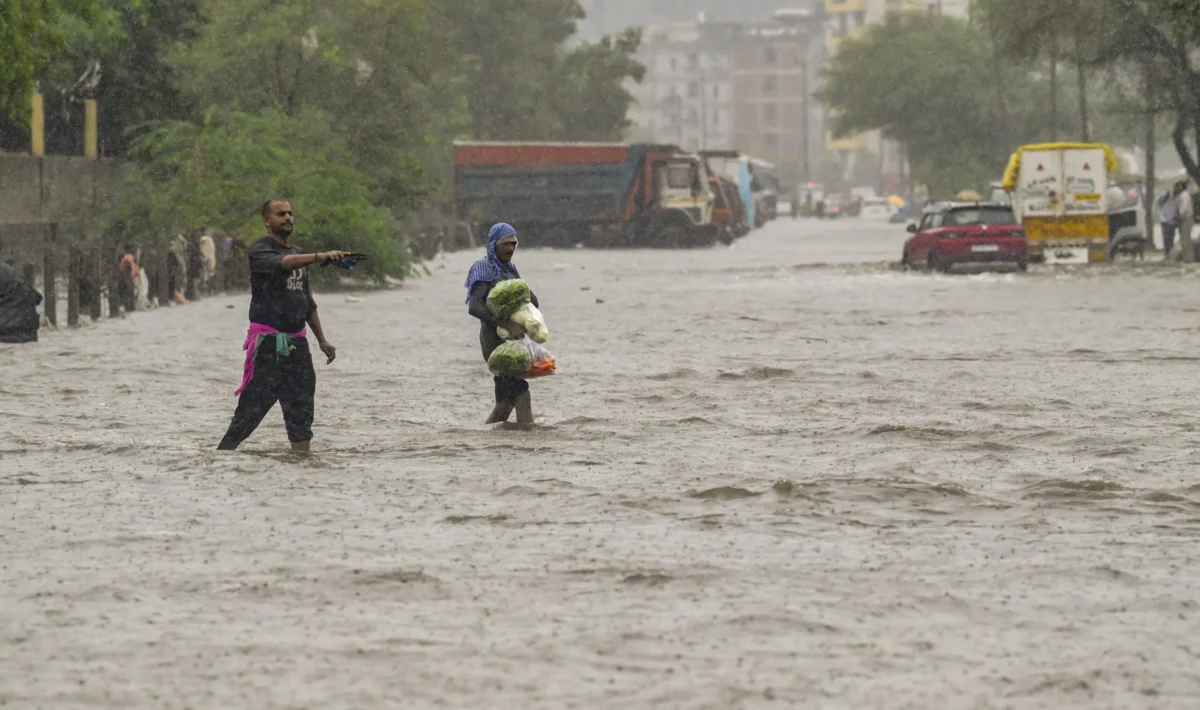
NEW DELHI – India’s consumer price inflation (CPI) surged to 4.38% in June, marking a notable increase from 3.93% recorded in May. This acceleration positions the nation’s inflation above economists’ projections and underscores growing economic pressures stemming from a confluence of global geopolitical tensions and domestic weather-related disruptions. The primary culprits identified are the escalating U.S.-Iran conflict, which has driven up global fuel prices, and an increasingly erratic monsoon season, threatening agricultural output and elevating food costs.
The latest figures, released by India’s Ministry of Statistics and Program Implementation on Monday, reveal that the headline inflation number surpassed the 4.30% rise anticipated by economists in a Reuters poll. This unexpected jump adds a layer of complexity to the Reserve Bank of India’s (RBI) monetary policy decisions, as it navigates the delicate balance between price stability and economic growth in the world’s fastest-growing major economy.
Rising Inflation: A Dual Challenge
The inflationary surge is not monolithic but rather a consequence of intertwined factors impacting both the supply and demand sides of the economy. Fuel and food prices, two critical components of India’s consumer basket, have been particularly susceptible to external and internal shocks. The year-on-year inflation rate based on the All India Consumer Food Price Index (CFPI) for June stood at 5.32%, indicating significant pressure on household budgets. Furthermore, transport inflation saw a substantial rise to 4.3% in June, a sharp acceleration from the 1.75% increase recorded in May, directly reflecting the impact of higher fuel costs.
This dual challenge – geopolitical instability pushing up energy prices and climate variability threatening agricultural yields – presents a formidable test for policymakers. The economic landscape is characterized by inherent vulnerabilities, particularly India’s heavy reliance on imported energy and the monsoon’s pivotal role in its agrarian economy.
The Geopolitical Fuel: US-Iran Tensions and Global Oil Markets
The rekindling of hostilities between the United States and Iran has emerged as a significant external shock to global energy markets. Following a brief ceasefire in June, tensions in the Middle East flared anew last week, sending ripple effects across the world. The Strait of Hormuz, a narrow waterway connecting the Persian Gulf to the open ocean, has once again become a focal point of geopolitical contention. This strait is not merely a maritime passage but a critical chokepoint through which approximately one-fifth of the world’s total petroleum liquids and a quarter of its liquefied natural gas (LNG) pass daily. Any disruption or perceived threat to this route invariably triggers a surge in global oil prices.
India, a nation heavily dependent on energy imports, is acutely vulnerable to such fluctuations. The country imports nearly 85% of its crude oil requirements, making it one of the largest purchasers in the global market. Its reliance on the Strait of Hormuz is profound, with about 50% of its crude imports, 60% of its liquefied natural gas, and almost all of its liquefied petroleum gas (LPG) supplies transiting through this strategic waterway. The immediate consequence of rising global crude oil benchmarks is a direct upward pressure on domestic petrol, diesel, and LPG prices, which in turn feeds into broader transport and manufacturing costs, ultimately impacting the consumer price index.
Economists and energy analysts widely note that sustained high oil prices could erode India’s current account balance, weaken the rupee against major currencies, and exacerbate imported inflation. This scenario creates a difficult environment for the RBI, as it contends with inflation that is partly beyond its direct control through conventional monetary policy tools.
Monsoon’s Unpredictable Dance: El Niño’s Shadow
Complementing the external energy shock is the internal challenge posed by an increasingly capricious monsoon season, shadowed by the looming threat of El Niño. The Indian monsoon, a complex weather phenomenon, is the lifeblood of the nation’s agriculture, directly influencing crop yields, rural incomes, and the availability and pricing of essential food items. Over half of India’s cultivated land is rain-fed, making the monsoon’s performance inextricably linked to the country’s economic health and food security.
This year, the monsoon has exhibited erratic behavior, oscillating between periods of scarcity and intense downpours. "Following a parched June, the monsoon advanced rapidly, reducing the all-India rainfall deficit from 40% to 15% as of July 8," stated Crisil, an S&P Global-owned Indian research and rating firm, in a report issued on Friday. While this rapid advancement brought some relief and led to copious rainfall and localized flooding across many parts of the country in the last two weeks – as evidenced by scenes of waterlogged roads in areas like Gazipur Sabzi Mandi in New Delhi on July 9, 2026 – the overall outlook remains precarious.
The India Meteorological Department (IMD) has tempered expectations, forecasting July rainfall to come in at 6% below the long-period average. This prediction, coupled with the observed variability, suggests that India still faces the prospect of a deficient monsoon year. The El Niño phenomenon, characterized by the warming of sea surface temperatures in the central and eastern tropical Pacific Ocean, is a well-documented factor associated with weaker monsoons in India and heightened risks of drought. Its presence this year amplifies concerns about crop shortages, potentially leading to upward pressure on food prices.
Crisil further emphasized that these swings between rainfall scarcity and surplus "can be as disruptive to agriculture as a weak monsoon itself." Such volatility directly influences critical agricultural decisions, including sowing patterns, the health and growth of standing crops, and ultimately, the incomes of millions of rural households. A weak or uneven monsoon can curtail agricultural output, trigger food price inflation, and dampen rural demand, which is a significant driver of India’s domestic consumption.
Reserve Bank of India’s Stance and Forecasts
The escalating inflationary pressures arrive at a critical juncture for the Reserve Bank of India. Last month, the central bank opted to keep interest rates unchanged, signaling a cautious approach amidst an uncertain global and domestic economic environment. However, the RBI’s accompanying policy statement and forecasts clearly indicated an expectation for inflation to rise, while projecting a tempering of economic growth in the financial year ending March 2027.
The RBI has explicitly forecasted headline inflation to shoot up to 5.1% for the current financial year. This projection is underpinned by the anticipation that consumers will continue to bear the brunt of higher fuel prices and that the country faces a tangible risk of crop shortages, exacerbated by weather-related disruptions linked to El Niño. For the same period, the central bank pegged core inflation, which excludes volatile food and fuel components, at 4.7%.
The central bank’s consistent emphasis on core inflation underscores its long-term strategic focus on tackling underlying price pressures. While core inflation has yet to become a major concern in the same vein as food and fuel, analysts warn that a prolonged period of elevated energy and food prices could inevitably feed into core inflation. This transmission mechanism occurs through various channels, including higher input costs for manufacturing and services, increased transportation expenses for goods, and higher operational costs for businesses across sectors. Should core inflation begin to trend upwards significantly, it would signal a more entrenched inflationary environment, compelling the RBI to consider more aggressive monetary tightening measures.
Broader Economic Ramifications and Outlook
The current inflationary surge carries significant ramifications for various segments of the Indian economy. For the average Indian consumer, rising food and fuel prices translate directly into reduced purchasing power and a higher cost of living. This erosion of real incomes can dampen consumer sentiment and discretionary spending, potentially slowing down overall economic activity.
Businesses, particularly those in manufacturing, logistics, and food processing, face the challenge of managing higher input costs. While some may absorb these costs, others will likely pass them on to consumers, further fueling inflation. Small and medium-sized enterprises (SMEs), often operating on tighter margins, are particularly vulnerable to such cost pressures.
From a fiscal perspective, the government might face increased pressure to implement measures to mitigate the impact on vulnerable populations, such as subsidies for essential goods or fuel, which could strain public finances. Managing food security also becomes paramount, potentially necessitating interventions in agricultural markets or adjustments to trade policies.
Looking ahead, the outlook for India’s inflation remains complex and heavily contingent on both external geopolitical developments and the performance of the monsoon. Should the US-Iran conflict intensify further, global oil prices could climb even higher, placing additional strain on India’s economy. Similarly, a significantly deficient monsoon could lead to widespread agricultural distress and persistent food inflation.
The RBI will remain vigilant, closely monitoring inflation trends and their drivers. While interest rate hikes are typically employed to combat inflation, the central bank must also weigh the potential impact on economic growth, especially if the underlying causes are largely supply-side shocks beyond the direct influence of monetary policy. Analysts suggest that if inflationary pressures persist and core inflation begins to accelerate, the RBI might be compelled to reconsider its accommodative stance, potentially leading to interest rate adjustments in subsequent policy reviews. The coming months will be crucial in determining whether the current inflationary uptick is a transient phenomenon or the precursor to a more sustained period of price instability, challenging India’s trajectory as the world’s fastest-growing major economy.