Gilang Muhammad
The U.S. economy concluded 2025 with significantly weaker growth than initially projected, while inflationary pressures intensified at the start of 2026, according to revised data released by the Commerce Department on Friday. The confluence of these factors presents a complex and challenging landscape for policymakers, particularly the Federal Reserve, as it navigates an environment of sluggish expansion and persistent price increases, exacerbated by escalating geopolitical tensions.
A Sharper Deceleration in Economic Growth
Gross Domestic Product (GDP), the broadest measure of goods and services produced across the American economy, expanded at a mere 0.7% annual rate in the fourth quarter of 2025, a stark downward revision from the preliminary estimate of 1.4%. This figure also fell considerably short of the Dow Jones consensus forecast, which had anticipated a 1.5% growth rate. The revised data from the Bureau of Economic Analysis (BEA) underscores a substantial deceleration from the robust 4.4% gain recorded in the third quarter of 2025, painting a picture of an economy losing significant momentum as the year drew to a close.
For the entirety of 2025, the economy posted a 2.1% increase, a tenth of a percentage point lower than previous readings and a noticeable step down from the 2.8% pace observed in 2024. This trend suggests a cooling off from the post-pandemic rebound and raises questions about the underlying strength of the recovery.
The primary drivers behind this significant downward revision were adjustments in key components of GDP: consumer spending, government expenditures, and exports. While a decline in imports, which technically subtracts from GDP, was less pronounced than initially estimated, its positive contribution was insufficient to offset the broader weaknesses.
Components of the GDP Revision
Consumer spending, a critical engine of U.S. economic activity, saw its growth rate for the fourth quarter revised down to 2%, following a 0.4 percentage point adjustment. This marks a notable slowdown from the 3.5% increase recorded in the third quarter. The BEA specifically highlighted a downward revision in services, particularly health care spending, as a significant factor in this deceleration. A weakening in consumer demand for services, often considered a stable segment of the economy, signals a broader caution among households.
Government spending also played a substantial role in the anemic Q4 performance. The period was marred by a record-long government shutdown, which severely hampered federal outlays. Government spending tumbled by a sharp 16.7% during the quarter, reflecting the direct impact of stalled operations and delayed projects. Such shutdowns, often stemming from budgetary stalemates in Congress, create immediate drags on economic activity by reducing public sector demand and creating uncertainty. The protracted nature of the 2025 shutdown meant a considerable portion of federal economic engagement was curtailed, directly impacting GDP calculations.
Beyond these headline figures, a proxy for underlying demand, known as private sales to private domestic purchasers, also saw a significant downward revision. This metric, which strips out volatile components like government spending, inventories, and net exports, increased by just 1.9% in Q4. This was a half-percentage point revision down and a full percentage point lower than the prior quarter’s performance, indicating a broader softening in fundamental domestic demand.
Inflationary Pressures Persist into 2026
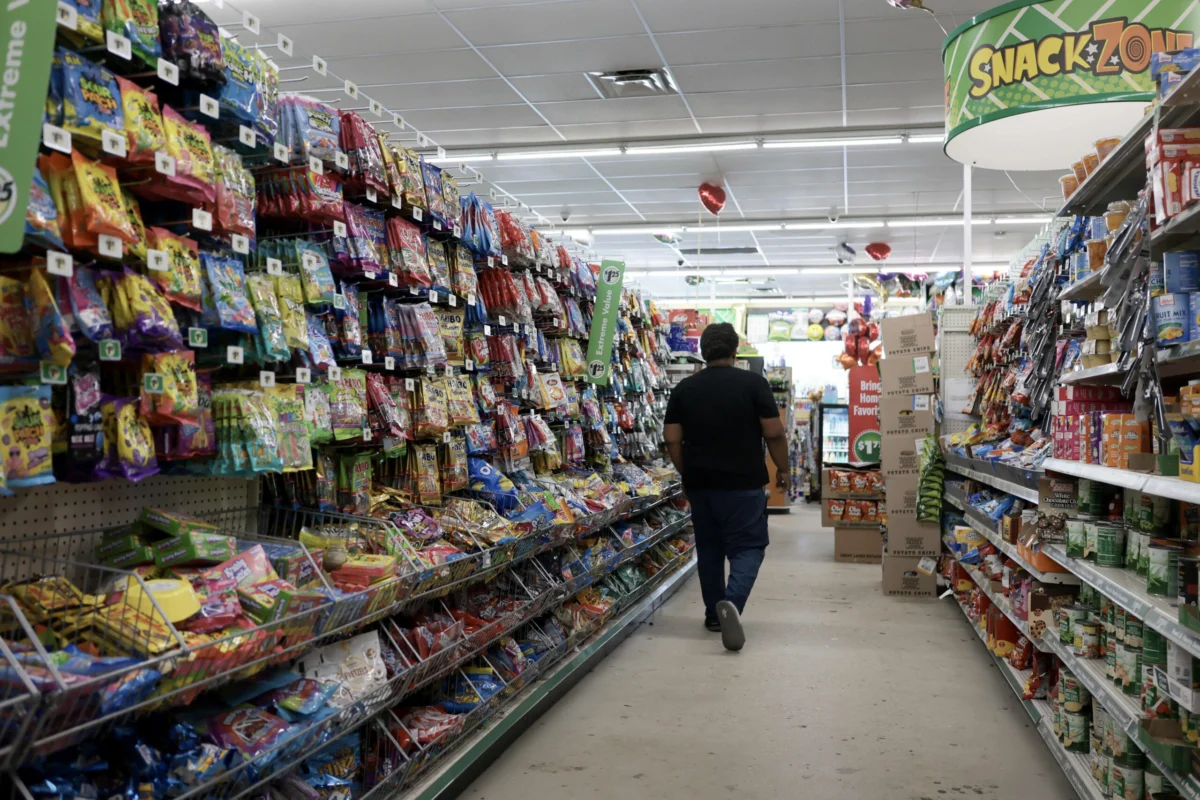
While economic growth faltered, inflation continued to run hotter than the Federal Reserve’s target, signaling persistent price pressures at the outset of 2026. The Personal Consumption Expenditures (PCE) price index, the central bank’s preferred gauge for inflation, showed a seasonally adjusted gain of 0.3% for January. This brought the annual rate to 2.8%, largely in line with economists’ expectations of 0.3% monthly and 2.9% annually.

However, the more closely watched core PCE price index, which excludes volatile food and energy components, presented a more concerning picture. Core PCE rose 0.4% in January on a monthly basis and accelerated to 3.1% on a 12-month basis. This annual core reading was 0.1 percentage point higher than December’s figure of 3.0% and remained significantly above the Fed’s long-term 2% target. Fed officials pay particular attention to the core PCE as it is considered a better indicator of underlying, longer-run inflation trends, filtering out temporary price swings. The acceleration in this key metric suggests that inflationary pressures are becoming more entrenched rather than transitory.
Broader Economic Indicators and Market Sentiment
Other economic reports released concurrently further underscored the mixed and challenging economic environment. A separate Commerce Department report revealed that orders for long-lasting goods, such as transportation equipment, appliances, and computers, were unexpectedly flat in January. This performance was well below the estimated 1.3% gain, though it represented an improvement from the 0.9% decline observed in December. Excluding the often-volatile transportation sector, durable goods orders rose by a modest 0.4%. Durable goods orders are a forward-looking indicator, signaling future manufacturing activity and business investment, and the stagnant January figures suggest caution among businesses regarding capital expenditures.
On the personal finance front, both personal income and spending increased by 0.4% in January. While personal spending met estimates, personal income slightly missed the 0.5% forecast. Interestingly, the personal saving rate saw a notable jump of half a percentage point, reaching 4.5%. This increase in savings could be interpreted in two ways: either households are building resilience, or they are becoming more cautious in their spending habits due to economic uncertainties, which could further dampen future consumption.
Expert Commentary: Rising Stagflation Risks
The revised economic data has prompted strong reactions from economists and market strategists, many of whom are voicing concerns about the potential for stagflation – a challenging economic condition characterized by slow growth and high inflation.
David Russell, global head of market strategy at TradeStation, described the significant downward revision in GDP as a "gut check" for the economy. He warned that the combination of weak growth and persistent inflation "increases the risk of stagflation." Russell further noted, "The soft January durable goods data also suggests the economy entered this crisis weaker than hoped. This creates challenges for investors with PCE inflation still running well above the Fed’s target." His comments highlight the precarious position of the U.S. economy, struggling for momentum while grappling with elevated prices.
Sonu Varghese, chief macro strategist for the Carson Group, echoed these concerns regarding inflation, stating that the data "tells us that the inflation picture wasn’t looking good even before the Middle East crisis." He emphasized the mounting pressure on the Federal Reserve, suggesting that "An already large headache for the Federal Reserve is going to turn into an even larger one, and it’s likely the Fed will not cut rates in 2026 and may even start talking about rate hikes later this year." This reflects a growing sentiment that the central bank’s path to achieving its 2% inflation target without stifling growth is becoming increasingly narrow.
Broader Economic and Geopolitical Context
These economic figures are not occurring in a vacuum but are set against a backdrop of significant external developments that further complicate the outlook.
Timeline of Influential Events:
-
Pre-existing Tariffs and Supreme Court Ruling: The economic data precedes a pivotal Supreme Court decision that voided many of President Donald Trump’s tariffs, which he had exercised under provisions of the International Emergency Economic Powers Act (IEEPA). The IEEPA grants the President broad authority to regulate international commerce during national emergencies. Trump’s extensive use of these powers resulted in tariffs on a wide range of imported goods, particularly from China. Economists had generally assumed that these tariffs added approximately half a percentage point or more to domestic inflation trends by increasing the cost of imported goods and reducing competition. While the removal of these tariffs could, in theory, offer some future disinflationary relief, the immediate economic data reflects an environment where these tariffs were still impacting prices. The full economic effect of this Supreme Court ruling is yet to be realized but could offer some long-term benefits to consumers and businesses.

-
Escalation of Middle East Conflict (Late February 2026): Critically, the reported inflation data largely predates the significant escalation of geopolitical tensions in the Middle East. On February 28, the U.S. and Israel launched joint attacks against Iran, marking a dramatic intensification of regional conflict. This event, driven by complex geopolitical dynamics, immediately sent shockwaves through global energy markets.
In the nearly two weeks since these attacks, energy prices have surged dramatically. The Brent crude international benchmark, a key global oil price, touched $100 a barrel on Thursday, a level not seen in a considerable time. The Middle East is a vital source of global oil supply, and any instability in the region raises fears of supply disruptions, shipping route blockages, and heightened risk premiums. This sharp rise in energy costs will inevitably translate into higher prices at the pump for consumers and increased operational costs for businesses, further exacerbating the inflationary pressures already identified in the January PCE data. The timing of this energy crunch, directly following a period of already elevated inflation, presents a severe challenge to central banks worldwide.
The Federal Reserve’s Intensifying Dilemma
The confluence of slower growth, persistent core inflation, and external geopolitical shocks places the Federal Reserve in an unenviable position. The central bank operates under a dual mandate: to achieve maximum employment and maintain stable prices (typically interpreted as 2% inflation). The latest data indicates that both parts of this mandate are under strain.
Earlier in the week, the Bureau of Labor Statistics reported a February headline Consumer Price Index (CPI) rate of 2.4% and a core CPI of 2.5%. While the core CPI reading marked the lowest level since March 2021, it still remains above the Fed’s 2% target. The PCE index is generally considered a broader measure of inflation than the CPI, covering a wider range of goods and services and using a different weighting methodology. The continued divergence and elevation of both key inflation measures underscore the persistent challenge.
The central bank is scheduled to issue its next rate decision on Wednesday. Given the current economic backdrop, markets are assigning a nearly 100% probability that the rate-setting Federal Open Market Committee (FOMC) will opt to remain on hold, keeping interest rates steady. This decision reflects the delicate balancing act the Fed faces: raising rates further to combat inflation risks stifling the already weakening economic growth, potentially pushing the economy into a recession. Conversely, cutting rates prematurely could reignite inflationary pressures, making it even harder to bring prices back to target.
Sonu Varghese’s warning that the Fed "may even start talking about rate hikes later this year" suggests a growing possibility that the central bank might be forced to consider more aggressive measures if inflation remains stubbornly high, especially with the added impetus from surging energy prices. The prospect of further rate hikes in an environment of slowing growth highlights the increasing difficulty for the Fed to engineer a "soft landing" – bringing inflation down without triggering a severe economic downturn.
Outlook and Future Implications
The revised fourth-quarter GDP and January inflation figures present a sobering assessment of the U.S. economic trajectory. The significant slowdown in growth, particularly driven by weakening consumer spending and government outlays, combined with persistent and accelerating core inflation, signals a challenging start to 2026.
The external factors – the Supreme Court’s tariff ruling and, more immediately, the escalating Middle East conflict and its impact on energy prices – add layers of complexity and uncertainty. The Fed’s upcoming decision will be closely scrutinized for any signals regarding its assessment of these evolving risks and its future monetary policy stance.
Businesses and consumers alike will face continued headwinds from higher energy costs and potential supply chain disruptions if geopolitical tensions persist. Investors will be keenly watching for subsequent economic data releases, particularly those related to consumer confidence, manufacturing output, and, crucially, future inflation reports, to gauge the economy’s resilience and the effectiveness of policy responses. The path ahead appears fraught with challenges, requiring careful navigation from policymakers to steer the economy toward stable growth and price stability.