Gilang Muhammad
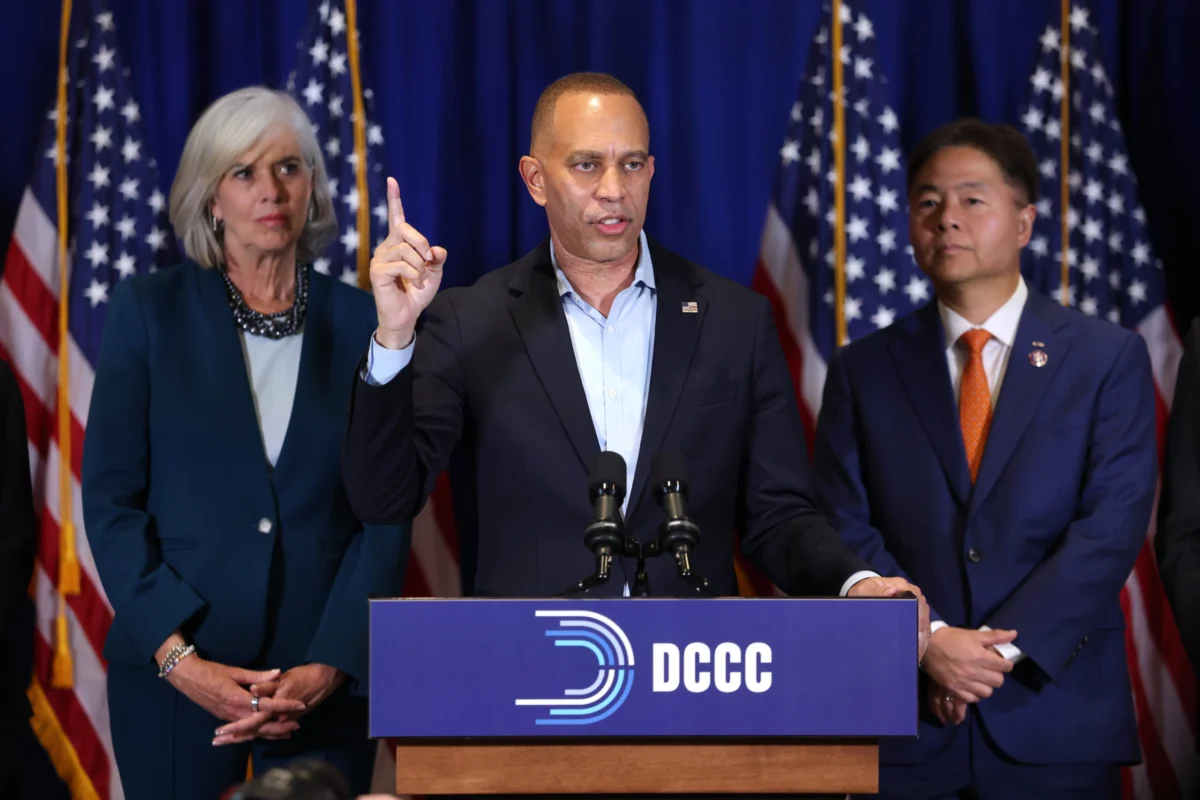
The Democratic Party’s sweeping victories in the recent 2026 midterm elections, securing control of both the House and Senate alongside key gubernatorial and state races, are poised to trigger significant shifts in Washington’s economic policy discourse, particularly concerning trade, spending priorities, and the burgeoning field of artificial intelligence. However, analysts caution that the most formidable forces shaping the nation’s economic trajectory—affordability pressures, substantial government spending, and growth increasingly reliant on the artificial intelligence boom—are deeply entrenched and unlikely to fundamentally alter simply due to a change in congressional leadership. Economists warn that these persistent factors collectively present considerable risks to an economy already deemed by some as precariously balanced.
A Nation at the Crossroads: The Post-Midterm Economic Outlook
The electoral upheaval of early November 2026 saw Democrats defy conventional expectations, securing upset wins across the legislative and executive branches at both federal and state levels. This political realignment immediately prompted questions about the future direction of the economy, especially given the backdrop of ongoing geopolitical strife and domestic financial strains. While the legislative agenda may now lean towards Democratic priorities, much of the nation’s economic and foreign policy continues to be shaped by the executive branch. President Donald Trump, despite expressing a willingness to work with the newly empowered Democratic majority, remains ideologically distant from his adversaries on key policy fronts.
Mark Zandi, chief economist at Moody’s Analytics, articulated a prevailing sentiment of caution following the election results. "It’s in a very kind of fragile place, and I don’t know that it would take a lot to push the economy off the rails, and recession becomes a much greater risk," Zandi stated, emphasizing that while a recession isn’t imminent, the underlying vulnerabilities have not dissipated. His pre-election concerns regarding inflation, a suboptimal labor market, and escalating geopolitical dangers, notably the ongoing Iran war, persist. This assessment underscores the delicate balance the U.S. economy currently maintains, caught between robust top-line indicators and pervasive anxieties among ordinary citizens.
Executive Authority vs. Legislative Imperatives: The Policy Divide
A critical point of analysis revolves around the division of power in policy-making. President Trump’s administration has heavily relied on executive orders to implement core economic and foreign policies. This approach, analysts suggest, will likely shield several contentious policies from immediate reversal, even with a Democratic-controlled Congress. "I don’t expect any change in economic policy. The Iran war, the tariffs and trade policy, the heavy-handed immigration policy, all are done under executive order. They’re not legislatively driven," Zandi explained. He posited that the President, having viewed these as beneficial policies prior to the election, has little incentive to alter his stance now. Such continuity, Zandi warned, could continue to "restrain growth and add to inflationary pressures and interest rates."
The Iran war, launched in late February 2026 by the U.S. and Israel, stands as a stark example of executive-driven foreign policy with profound economic consequences. This conflict, which significantly predates the midterm elections, has been directly linked to soaring gas prices and an exacerbation of inflationary conditions, contributing to the broader affordability crisis gripping American households. The consumer price index (CPI), which stood at a relatively moderate 2.4% at the war’s outset, surged to 3.7% by September 2026, marking a significant increase from 2.3% in April 2025 when President Trump initiated a new round of "reciprocal tariffs." These timelines highlight how executive actions have demonstrably shaped the economic environment leading into and following the midterms.
The Bifurcated Economy: Strong Metrics, Lingering Discontent

The 2026 midterm elections unfolded against a backdrop of starkly contrasting economic narratives. On one hand, headline economic figures painted a picture of robust growth and employment. The gross domestic product (GDP) expanded at an impressive 3.4% annualized pace in the third quarter of 2026, accompanied by a 3.8% surge in consumer spending. The unemployment rate registered a low 4.2%, while layoffs hovered near their lowest levels since 1969, suggesting a dynamic labor market. These metrics, often cited by the administration, indicate an economy where those seeking employment are largely finding it and consumer activity remains strong.
However, beneath these seemingly positive top-line numbers, a pervasive sense of economic discontent has taken root, largely fueled by persistent inflation. The 3.7% CPI in September 2026 meant that the cost of living continued to outpace wage gains for many Americans. Data from the Bureau of Labor Statistics revealed that real wage growth, adjusted for inflation, had turned negative, declining by 0.7% from a year prior in September. This erosion of purchasing power has overshadowed the strong employment figures, leading to what many characterize as an "affordability crisis." For countless families, the ability to make ends meet and maintain their standard of living has become a primary concern, directly influencing voter sentiment and contributing to the Democratic sweep. This dichotomy—a robust economy on paper versus a challenging reality for many—defined the economic landscape of the midterms.
The AI Paradox: Growth Engine and Systemic Risk
A significant driver of recent economic expansion has been the rapid buildout of artificial intelligence infrastructure, particularly by hyperscalers. Mark Zandi identifies this AI-driven growth as crucial but simultaneously highlights its inherent fragility and potential for peril. "The risks are decidedly to the downside because the growth is so dependent on AI, and the AI growth effects are so dependent on the equity market, and the equity market is so dependent on the valuations," he elaborated. This intricate chain of dependencies creates a highly susceptible system, where a correction in equity markets, driven by concerns over AI valuations, could cascade into broader economic slowdowns.
Adding another layer of complexity to the AI narrative is growing local opposition to data centers. CNBC polling indicated that this issue, while ranking below more immediate concerns like the cost of living and political corruption, emerged as a fairly significant factor in the election, particularly influencing Democratic voters. As the physical footprint of AI infrastructure expands, local communities grapple with environmental impacts, energy consumption, and land use, potentially creating future economic headwinds for an industry seen as vital for national growth. The tension between national economic strategy and local community concerns represents a nascent but potentially impactful challenge for the AI sector.
Prospects for Bipartisan Compromise: The Case of Tariffs
Despite the entrenched policy differences, some areas may offer avenues for bipartisan cooperation, notably on trade and tariffs. Historically, Congressional Democrats have not been uniformly opposed to strategic tariff applications aimed at leveling the international playing field, especially when targeting unfair trade practices. However, the Trump administration’s "sweeping nature" of tariffs has drawn considerable criticism for their broad application and the retaliatory measures they often provoke.
Gary Cohn, who served as Director of the National Economic Council during President Trump’s first term, articulated this potential for common ground in a post-election CNBC interview. "There’s become a much more universal view on tariffs and what they’re good for," Cohn observed, suggesting a growing consensus around protecting U.S. workers and manufacturing jobs, particularly against competition from China. While acknowledging that certain policies, such as "shutting down the borders between Canada and Mexico and the United States, has probably not been so good for policy," Cohn expressed optimism for a compromise. He envisioned a scenario where tariffs could be "put through the legislative system and they become law," thereby gaining more permanence than executive orders, which can be unilaterally rescinded by subsequent administrations. This legislative approach could lend greater stability and predictability to U.S. trade policy, an outcome that could appeal to both parties, albeit for different reasons.
Democratic Legislative Agenda: Addressing Affordability and Fiscal Health

With their newfound congressional majority, Democrats are expected to prioritize policies aimed at alleviating the affordability crisis and re-evaluating certain fiscal measures enacted under Republican control. Morgan Stanley analysts, in a client note, anticipate that Democrats will likely seek to roll back spending cuts to crucial social safety net programs, specifically SNAP food stamp benefits and Medicaid, which were approved under the Republican-controlled Congress’s "One Big Beautiful Bill Act." This would represent a direct effort to bolster support for vulnerable populations and counter austerity measures.
However, reversing other deeply ingrained policies will prove more challenging. Morgan Stanley emphasized that "policy uncertainty since the beginning of President Trump’s second term has been tied to executive, not legislative, action." Consequently, policies related to tariffs, geopolitics, trade agreements, deregulation, and export controls are "all likely to persist," signaling continued policy uncertainty.
The issue of government debt and budget deficits also looms large. The national debt currently stands at an astounding $40.5 trillion, representing an increase of over $4 trillion since President Trump took office in January 2025. The fiscal year 2026 concluded with a deficit nearing $2 trillion, approximately 6.1% of GDP. Net interest payments on this colossal debt totaled $1.05 trillion in fiscal 2026, surpassing spending in every category except Social Security and Medicare. Morgan Stanley projects that deficits of this magnitude are likely to persist, even as some Democratic officials advocate for greater fiscal discipline.
The perennial threat of a debt ceiling standoff is another potential flashpoint. Goldman Sachs chief economist Jan Hatzius noted that while such impasses generate concern, "Democrats are likely to leverage [an impasse] to win policy concessions." Hatzius speculated on Democratic priorities in such negotiations, stating, "It is not yet clear what Democrats will seek in return, but limiting the war with Iran, tariff rollbacks, the reversal of spending cuts, and expanded health benefits appear to be high on the list of priorities." This suggests that the debt ceiling, traditionally a fiscal battleground, could evolve into a broader political leverage point for the new Democratic majority to influence executive foreign and domestic policy.
The Broader Economic Horizon: Continued Growth Amidst Volatility
Despite the complex interplay of political shifts, persistent economic challenges, and geopolitical tensions, the consensus among many Wall Street economists points towards a continuation of economic growth, albeit punctuated by "hiccups" and ongoing struggles with the cost of living. Joseph Brusuelas, chief economist at RSM, maintained an optimistic outlook, stating, "My sense is that the economic expansion will continue to roll on, featuring above trend growth near 2½ percent." He further qualified this by noting a relatively low "15% probability of recession over the next 12 months," indicating that the outcome of the midterms was "immaterial to that estimate."
Brusuelas also identified an opportunity to "reset" the trade agreement between the U.S., Mexico, and Canada (USMCA), which has experienced significant tension and uncertainty over the past year and a half due to the Trump administration’s tariffs and subsequent retaliatory measures. A more stable and predictable trade environment with key North American partners could provide a buffer against global economic volatility and foster regional economic integration.
In conclusion, the Democratic midterm sweep of 2026 marks a pivotal moment in American politics, heralding potential shifts in legislative priorities, particularly concerning social welfare and domestic economic policy. However, the nation’s economic bedrock remains characterized by persistent inflationary pressures, a burgeoning national debt, and growth increasingly tied to the potentially volatile artificial intelligence sector. Furthermore, the enduring influence of executive orders on critical issues like foreign policy, trade, and immigration ensures that significant aspects of the economic landscape will continue to be shaped by the White House, irrespective of the legislative shift. The challenge for the new Democratic majority will be to navigate these complex realities, seeking avenues for compromise where possible, while simultaneously asserting their policy agenda to address the affordability crisis and secure a more stable economic future for all Americans.