Gilang Muhammad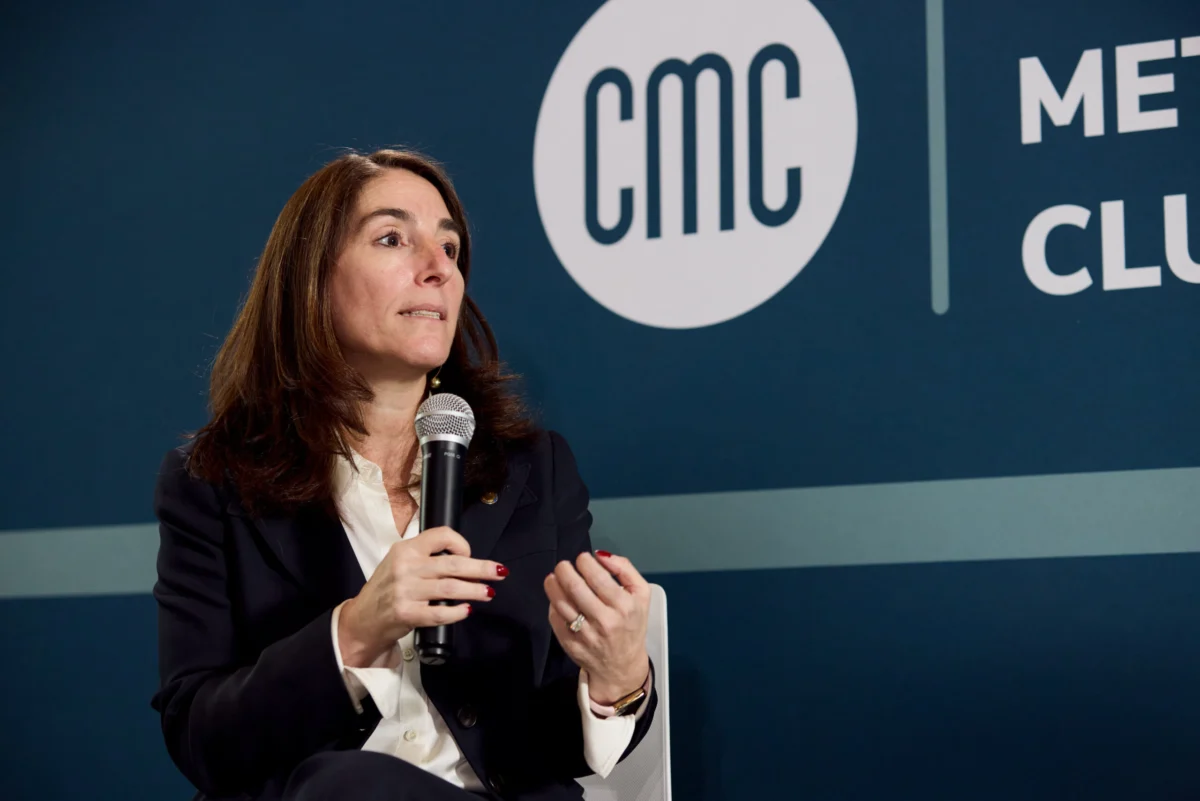
Cleveland Federal Reserve President Beth Hammack on Wednesday articulated a cautious stance on monetary policy, emphasizing the central bank’s delicate balancing act between managing inflation and fostering maximum employment. Speaking in a live CNBC interview, Hammack advocated for maintaining the current interest rate levels for an extended period, allowing incoming economic data to guide future decisions amidst evolving global and domestic conditions. Her comments underscore a growing consensus among some Fed officials for a patient, data-dependent approach, acknowledging the complex and often contradictory signals emanating from the U.S. economy.
The Federal Reserve, tasked with its dual mandate of achieving stable prices and maximum sustainable employment, has been navigating an unprecedented period of economic volatility in the post-pandemic era. Following an aggressive series of rate hikes to combat surging inflation, the central bank initiated a series of three rate cuts in the latter part of 2025, signaling a pivot towards easing as inflationary pressures appeared to recede. However, the initial months of 2026 have seen the Federal Open Market Committee (FOMC) — the Fed’s primary monetary policy-making body — opt for two consecutive holds, maintaining the benchmark federal funds rate within a target range of 3.5%-3.75%. Hammack, a voting participant in this year’s FOMC meetings, described this current rate as a "good place" for monetary policy, reflecting a posture of watchful waiting.
Hammack’s Call for Patience Amidst Evolving Risks
During her appearance on CNBC’s "Squawk Box," President Hammack articulated her baseline expectation: "My baseline is that we’re going to remain on hold for a good while." This statement highlights a desire to observe the full impact of past policy adjustments and respond deliberately to new economic developments. Crucially, Hammack stressed the presence of "two-sided risks to rates." This nuanced perspective acknowledges that while inflation remains a concern, an overly restrictive monetary policy could unduly harm economic growth and employment. Conversely, an premature easing could reignite inflationary pressures, undoing the progress made.
"I think there’s risks that we might need to be more accommodative or more restrictive, depending on how the data comes out," Hammack explained, reinforcing the data-dependent nature of the Fed’s current strategy. "But that’s why it’s a good time for us to stay patient and wait and see how the data flows through." This outlook suggests that the Fed is not pre-committed to either further rate cuts or hikes, but rather prepared to react to a wide range of potential economic scenarios. The sentiment reflects a broader caution within the FOMC, particularly after a period where rapid policy shifts were necessitated by extraordinary economic circumstances.
Inflationary Headwinds and Supply Shocks
A significant portion of Hammack’s concern revolved around the potential for renewed inflationary pressures, particularly stemming from geopolitical events and trade policies. She specifically cited the "Iran war and tariffs" as factors currently pressuring prices. This indicates that global supply chain disruptions and elevated energy costs, coupled with potential import duties, are viewed as tangible threats to the Fed’s price stability mandate. The ongoing conflict in the Middle East, for instance, could lead to significant spikes in crude oil prices, impacting transportation costs and a wide array of goods. Similarly, new tariffs could raise the cost of imported components and finished goods, passing those costs onto consumers.

"All of these successive supply shocks are hard to think about how we’re supposed to handle those from monetary policy perspective," Hammack noted. Historically, central banks often "look through" temporary supply-side shocks, assuming they do not translate into persistent, broad-based inflation. However, Hammack cautioned that the current environment is different: "Normally, you like to look through these types of supply shocks, but when it’s coming on the back of already-elevated inflation, it may not be the same as it would be had we been entering this period at low and stable inflation." This distinction is critical. If inflation expectations are already unanchored or economic agents are accustomed to higher prices, even transient supply shocks can become embedded in the wage-price spiral, making them much harder to dislodge. For example, the March 2026 Consumer Price Index (CPI) report, released just weeks prior to Hammack’s remarks, showed a headline inflation rate of 3.2% year-over-year, still above the Fed’s 2% target, with core inflation (excluding volatile food and energy) at 2.8%. These figures, while lower than their peak, suggest that the "already-elevated inflation" environment Hammack referenced is a tangible reality, making the Fed’s task more complex.
Dissecting the "Curious Balance" in the Labor Market
On the employment front, Hammack characterized the labor market as "roughly in balance," but added the intriguing qualifier that it is a "curious balance." This description points to a nuanced understanding of current employment dynamics, where traditional indicators might not fully capture underlying trends. She specifically noted the combination of "low level of job creation along with modest increases on the supply side."
The March 2026 jobs report, released earlier in the month, indeed showed non-farm payrolls adding a relatively modest 120,000 jobs, below the average of the preceding year. While the unemployment rate remained historically low at 3.9%, suggesting tightness, other metrics like the labor force participation rate have shown only gradual improvement. The "curious balance" might refer to a situation where demand for labor, while still robust, is cooling from its peak, but the supply of labor is also not expanding rapidly enough to fully alleviate wage pressures in certain sectors. This creates a challenging scenario for the Fed: too much tightening could push the economy into a recession, leading to higher unemployment, while insufficient tightening could allow wage growth to contribute to persistent inflation. Hammack’s assessment indicates that while the risk of overheating in the labor market has diminished, it’s not yet at a point of outright weakness that would necessitate immediate rate cuts.
Recent Monetary Policy Trajectory: A Chronology of Shifts
To understand the current posture, it’s essential to review the recent trajectory of the Fed’s monetary policy. After an aggressive tightening cycle that began in early 2022 and saw the federal funds rate climb from near zero to over 5%, the Fed began to pivot in late 2025. Facing evidence of decelerating inflation and some softening in economic activity, the FOMC implemented three successive rate cuts in October, November, and December of 2025. These cuts, each by 25 basis points, brought the federal funds rate down from a peak of 5.50%-5.75% to the current 3.5%-3.75% range. This easing was largely driven by a desire to prevent an overshooting of the disinflationary process and to provide some stimulus to an economy that had shown signs of slowing.
However, the start of 2026 brought renewed caution. The January and March FOMC meetings saw the committee opt to hold rates steady. This pause reflected a re-evaluation of the economic landscape, particularly as incoming data suggested that the disinflationary trend was not as robust or linear as initially hoped. The lingering "already-elevated inflation" and the new "successive supply shocks" cited by Hammack played a significant role in this decision to halt further easing. The Fed, in essence, shifted from a mode of active rate reduction to one of careful observation, recognizing the need to balance the risks of cutting too much against the risks of cutting too little.
FOMC Dissension and Market Expectations
The path forward for interest rates remains a subject of considerable debate, even within the FOMC itself. At the March 2026 meeting, while the official projections still indicated a median expectation for one rate cut this year, there was "considerable disagreement" among committee members. This divergence of views highlights the genuine uncertainty surrounding the economic outlook and the appropriate policy response. Some members may lean towards more cuts, fearing an economic slowdown, while others may advocate for a longer hold or even a hike if inflation proves more stubborn.

Financial markets reflect this uncertainty. On Wednesday morning, according to data from the CME Group’s FedWatch Tool, markets were pricing in approximately a 1-in-3 chance of a rate reduction by the end of 2026. This relatively low probability, particularly after three cuts in the previous year, underscores the market’s skepticism about aggressive easing in the near term. The pricing suggests that investors largely anticipate the Fed to remain "on hold for a good while," aligning with Hammack’s baseline expectation. Any deviation from this, either a surprise cut or a hike, would likely trigger significant market reactions. Bond yields, for instance, would typically fall with expectations of cuts and rise with expectations of hikes or holds. Equity markets would react based on their sensitivity to borrowing costs and economic growth prospects.
Broader Economic Implications and the Path Ahead
The Fed’s decision to hold interest rates, as advocated by President Hammack, carries significant implications for various sectors of the U.S. economy. For consumers, borrowing costs for mortgages, auto loans, and credit cards will likely remain elevated, impacting housing affordability and consumer spending on big-ticket items. Savers, however, may continue to benefit from relatively higher yields on deposits.
Businesses will continue to face higher financing costs for investment and expansion. This could temper hiring plans and capital expenditures, potentially slowing overall economic growth. However, a stable rate environment, even if elevated, provides a degree of certainty that businesses can plan around, unlike periods of rapid rate changes. The Fed’s cautious approach aims to prevent both a resurgence of inflation that erodes purchasing power and an excessive tightening that triggers a sharp economic downturn.
The "two-sided risks" Hammack highlighted encapsulate the Fed’s ongoing challenge. On one side, persistent inflation, fueled by supply shocks and potentially sticky wage growth, could necessitate a return to more restrictive policies. On the other, signs of a significant economic slowdown, perhaps indicated by a sharp rise in unemployment or a contraction in GDP, could force the Fed to resume rate cuts to support growth. The coming months will be crucial, with each piece of economic data — from inflation reports and jobs numbers to consumer confidence and manufacturing surveys — meticulously scrutinized by Fed officials.
In conclusion, Cleveland Fed President Beth Hammack’s comments provide a clear window into the prevailing cautious sentiment at the Federal Reserve. Her advocacy for patience and a prolonged hold on interest rates reflects a deep awareness of the delicate balance required to navigate an economy grappling with lingering inflationary pressures and a uniquely balanced labor market, all while contending with unpredictable global events. The Fed’s commitment to a data-dependent strategy, underscored by the "two-sided risks," signals that flexibility and adaptability will be paramount as the central bank continues its mission to achieve both price stability and maximum employment in an ever-evolving economic landscape. The path ahead remains uncertain, but Hammack’s remarks suggest a prudent, watchful approach will guide the Fed’s actions in the foreseeable future.