Farhan Pambudi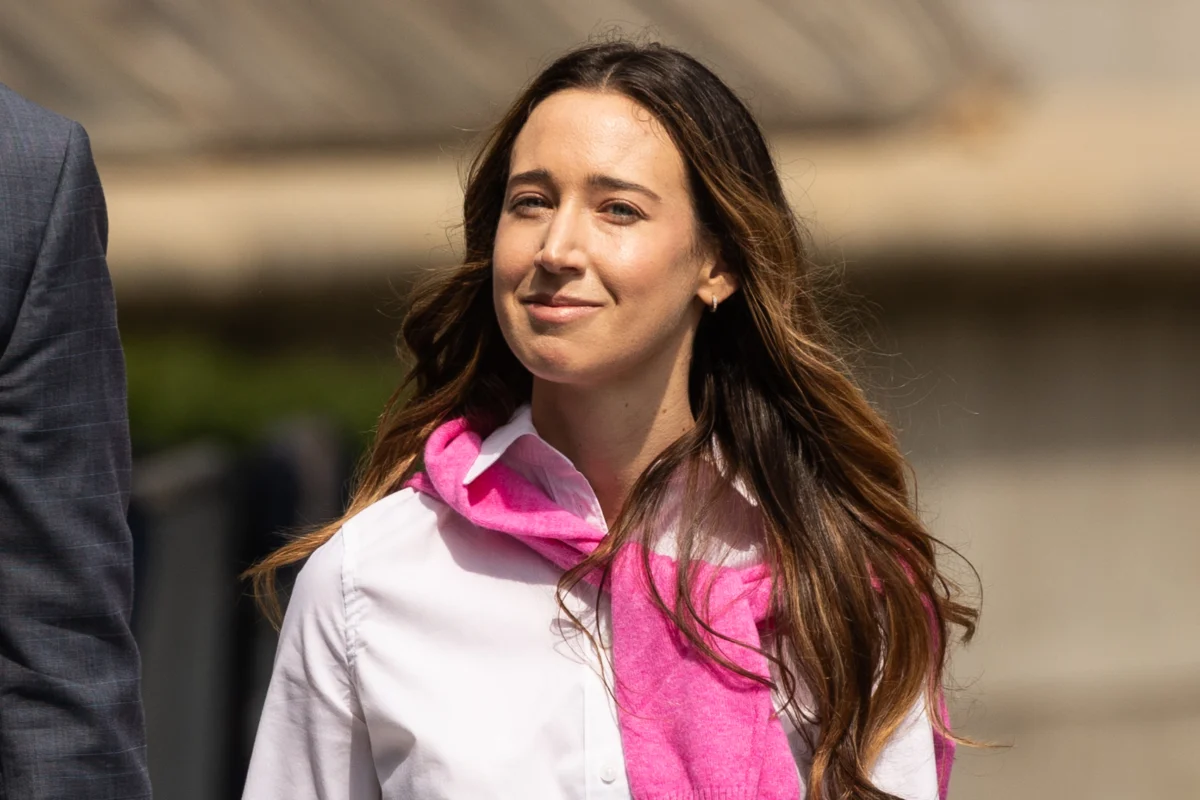
In a move that has sent ripples through both the financial sector and the legal community, Charlie Javice, the convicted founder of the financial aid startup Frank, is reportedly making a concerted effort to secure a presidential pardon. Sources familiar with the matter indicate that Javice’s representatives have been quietly engaging with individuals close to the Trump administration, hoping to include her name in a anticipated wave of clemency actions. While her name has not yet appeared on the formal clemency request list maintained by the Department of Justice, the strategy appears to be a high-stakes play for freedom following her conviction for one of the most high-profile startup frauds in recent history.
The pursuit of a pardon comes as the administration reportedly considers a massive slate of approximately 250 pardons and commutations to coincide with the 250th anniversary of the United States. This "Semicentennial Clemency Initiative" has attracted a surge of applications from white-collar defendants, including figures such as Sam Bankman-Fried, the disgraced founder of the cryptocurrency exchange FTX. For Javice, the timing is critical as she continues to serve a sentence of more than seven years in federal prison.
The Rise and Fall of Frank: A Chronology of Deception
The legal saga of Charlie Javice began with what appeared to be a quintessential Silicon Valley success story. Founded in 2016, Frank was marketed as a platform designed to simplify the complex and often daunting process of applying for student financial aid. Javice, a charismatic entrepreneur, quickly gained recognition, appearing on prestigious lists such as Forbes 30 Under 30 and securing millions in venture capital.
However, the narrative shifted dramatically in September 2021 when JPMorgan Chase, the nation’s largest bank, announced it had acquired Frank for $175 million. The deal was intended to give the bank access to Frank’s purported user base of over four million students—a demographic highly coveted for long-term banking relationships.
The acquisition quickly soured. During the due diligence process following the merger, JPMorgan’s marketing team noticed a staggering discrepancy. When the bank sent test emails to the list of 4.25 million customers Javice had provided, only about 1% were successfully delivered. Internal investigations revealed a shocking truth: Javice had allegedly fabricated the vast majority of her user base to inflate the company’s valuation.
By late 2022, JPMorgan had shuttered Frank and filed a civil lawsuit against Javice. Federal prosecutors followed suit in 2023, charging her with wire fraud, bank fraud, and conspiracy. The trial in late 2024 and early 2025 laid bare the mechanics of the fraud. Evidence presented by the government showed that when JPMorgan demanded proof of Frank’s user numbers, Javice paid a data science professor $18,000 to create a "synthetic" list of millions of fake students, complete with names, addresses, and birthdays.
In September 2025, a jury found Javice guilty on multiple counts. She was subsequently sentenced to 90 months in prison and ordered to pay millions in restitution. Despite the conviction, Javice has remained defiant, maintaining her innocence and pursuing an appeal on the grounds that the prosecution’s case was fundamentally flawed and that JPMorgan had failed in its own due diligence.
The Political Calculus: JPMorgan, Trump, and the "Debanking" Controversy
The prospect of a pardon for Javice is complicated by the fraught relationship between the Trump administration and JPMorgan Chase. The tension dates back to early 2021 when JPMorgan, led by CEO Jamie Dimon, made the decision to close accounts associated with Donald Trump and his various business entities. This move followed the January 6 Capitol riot and was part of a broader trend of corporate distancing from the then-outgoing president.
Trump has frequently cited this action as a primary example of "political debanking," a term used by his allies to describe financial institutions allegedly weaponizing their services against conservative figures. In early 2026, Trump filed a $5 billion lawsuit against JPMorgan and Jamie Dimon, alleging that the bank engaged in discriminatory practices. JPMorgan has vigorously denied these claims, asserting that account closures are based on risk management and compliance, not political affiliation.
Legal analysts suggest that Javice’s pardon request may be viewed through this political lens. By granting clemency to a woman who successfully—albeit illegally—defrauded JPMorgan, the administration could deliver a symbolic blow to a financial institution it views as an adversary. A pardon for Javice would not only nullify the bank’s victory in the criminal courts but also reinforce the administration’s narrative that the legal and financial "establishment" is unfairly targeting certain individuals.
High-Profile Backers and the Lobbying Effort
Javice is not navigating the pardon process alone. She retains the support of several influential figures, most notably Marc Rowan, the CEO of Apollo Global Management. Rowan was an early investor in Frank and a vocal supporter of Javice throughout her rise. He notably testified on her behalf during her criminal trial, speaking to her character and entrepreneurial drive.

Rowan’s influence in Washington has grown significantly in recent years. He has been a major donor to Republican campaigns and, since the 2024 election, has contributed millions of dollars to Republican congressional groups and leadership PACs. While Rowan has not publicly commented on the pardon effort, his close ties to the administration and his historical support for Javice provide her with a level of access that few federal inmates possess.
The lobbying strategy reportedly emphasizes Javice’s youth, her potential for future contribution to the economy, and the argument that the dispute with JPMorgan should have remained a civil matter rather than a criminal one. This "over-criminalization" argument is a common theme in white-collar clemency petitions, often finding a receptive audience among those who believe the Department of Justice has historically overreached in corporate cases.
Supporting Data: The Landscape of White-Collar Crime and Clemency
The push for Javice’s pardon occurs against a backdrop of shifting trends in white-collar crime enforcement and executive clemency. According to data from the United States Sentencing Commission, fraud remains one of the most frequently prosecuted federal offenses. In the fiscal year 2025, fraud cases accounted for nearly 10% of all federal sentencings, with a median loss of approximately $250,000. Javice’s case, involving a $175 million loss, places her in the highest tier of fraud offenders.
Historically, presidential pardons for high-value fraud have been rare and often controversial. However, the use of the pardon power has become increasingly politicized. During his first term, President Trump granted 143 pardons and 90 commutations, many of which went to political allies or individuals whose cases were championed by media personalities and high-profile donors.
The current administration’s reported plan to issue 250 pardons for the 250th anniversary suggests a move toward a more expansive—and perhaps less traditional—use of the clemency power. If Javice is included, she would join a list of recipients that critics argue favors the wealthy and well-connected over those serving long sentences for non-violent drug offenses or systemic injustices.
Reactions and Broader Implications
The news of Javice’s pardon seeking has drawn sharp criticism from consumer advocacy groups and legal experts. "A pardon for Charlie Javice would send a devastating message to the startup ecosystem," said Sarah Thompson, a senior fellow at the Center for Financial Integrity. "It would essentially signal that if you are well-connected enough, you can fabricate an entire business, defraud a major institution of hundreds of millions of dollars, and walk away without serving your time. It undermines the very concept of due diligence and market honesty."
JPMorgan Chase has declined to comment officially on the report, but sources within the bank suggest there is significant internal frustration. The bank has spent millions in legal fees not only to prosecute the civil case but also to cooperate with federal investigators. For the executive branch to intervene would be seen as a direct undermining of the judicial process.
Within the tech community, the reaction is mixed. While some founders view Javice as a victim of a "fake it till you make it" culture gone wrong, others fear that her actions have made it significantly harder for legitimate startups to secure acquisitions or funding from major banks. "Every founder now has to deal with ten times the amount of due diligence because of what happened with Frank," said one venture capitalist who requested anonymity. "A pardon doesn’t fix that; it just makes the ‘bad actor’ problem look even more intractable."
Analysis: The Future of Accountability in the Founder Era
The outcome of Javice’s pardon request will likely serve as a bellwether for the administration’s approach to corporate accountability. If granted, it may encourage a more aggressive "lawfare" approach from other convicted white-collar defendants, who may see political lobbying as a more viable path to freedom than the traditional appeals process.
Furthermore, the intersection of Javice’s request with the "debanking" lawsuit against JPMorgan highlights the increasingly blurred lines between private commerce, criminal law, and executive politics. If the pardon power is used as a tool to settle scores with private corporations, the long-term stability of the U.S. financial and legal systems could be called into question.
As the summer of 2026 approaches, all eyes remain on the White House. The decision to grant or deny clemency to Charlie Javice will be more than just a ruling on one individual’s fate; it will be a statement on the value of truth in the marketplace and the impartiality of the American justice system. For now, Javice remains in federal custody, waiting to see if her gamble on a political rescue will pay off.