Clara Shinta
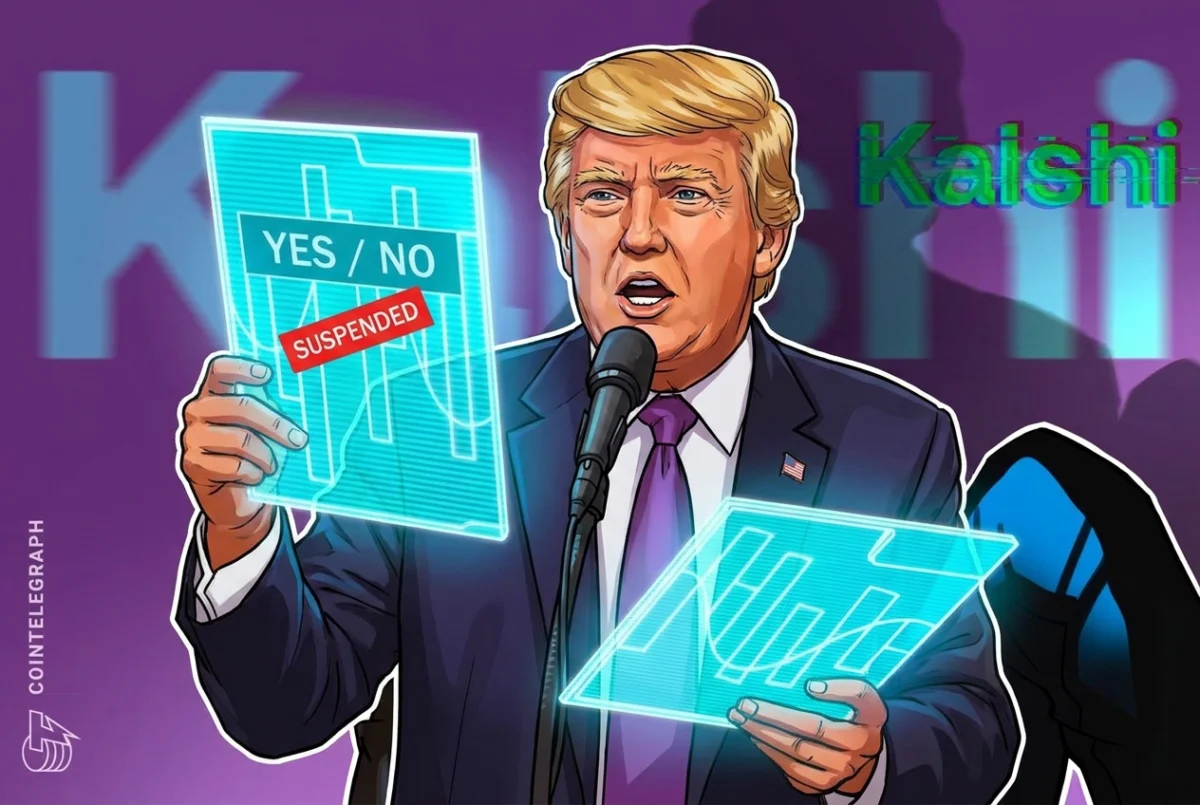
The regulatory action, detailed in a Nov. 13 order, directly targeted Kalshi’s "What nicknames will Trump say before 2027?" market and its associated TRUMPSAY contract series. This move by the CFTC underscores a growing tension between the burgeoning prediction market industry and federal regulators tasked with safeguarding financial markets from undue influence and illicit gains. The Commission’s immediate concern stemmed from Kalshi’s decision to list the controversial nickname market subsequent to a Sept. 22 staff advisory that explicitly warned of significant manipulation risks inherent in such "event contracts." Critically, the regulator noted that Kalshi had failed to update its certification to adequately address these newly articulated concerns before proceeding with the listing.
The CFTC officially confirmed to Cointelegraph that it has indeed stayed the listing of specific Kalshi mention markets, indicating that this is an interim measure pending further, more thorough proceedings. Kalshi, a U.S.-regulated prediction market platform, has been granted until Dec. 11 to formally respond to the CFTC’s order, a period during which the regulator will refrain from making a final determination on whether these particular contracts fully comply with federal law. This temporary injunction highlights the CFTC’s proactive stance in scrutinizing novel financial instruments, particularly those that blur the lines between speculative entertainment and regulated commodities trading.
Kalshi’s Vision and the Regulatory Gauntlet
Kalshi, founded in 2020 by former MIT classmates Tarek Mansour and Hooman Mohammadi, positions itself as the first regulated exchange where individuals can trade on the outcome of future events. Unlike traditional financial instruments that track asset prices, Kalshi’s contracts are designed around "event outcomes," such as whether a specific economic indicator will reach a certain level, or, in this contentious case, whether a public figure will utter particular words. The company operates as a designated contract market (DCM) under the CFTC’s oversight, a status that typically grants it the ability to list new contracts by self-certification, provided they meet the Commodity Exchange Act’s requirements, including the crucial "not readily susceptible to manipulation" standard.
CEO Tarek Mansour expressed strong disagreement with the CFTC’s latest decision, telling Axios on Tuesday, "We disagree with this decision." Mansour articulated a core argument for the economic utility of these markets, contending that contracts predicting the words of influential figures like the President possess legitimate economic value. His rationale is rooted in the observable fact that presidential remarks frequently have the power to move financial markets, influence policy decisions, and shape public discourse. From Kalshi’s perspective, these markets offer a unique mechanism for hedging against or speculating on such impactful statements, thereby providing a new form of data and risk management. This argument often forms the bedrock of prediction market proponents who advocate for their role in aggregating dispersed information and providing real-time probabilities for future events.
However, the CFTC’s September advisory directly challenged this perspective, at least concerning contracts where human action directly influences the outcome. The staff warning explicitly highlighted that individuals whose actions determine a contract’s outcome – or those closely affiliated with them – could potentially manipulate the result or exploit privileged, advance knowledge of it for personal financial gain. This advisory effectively laid the groundwork for the subsequent enforcement action against Kalshi, signaling a heightened level of regulatory scrutiny for "event contracts" that rely on the statements or actions of specific individuals.
The Gabriel Perez Case: A Concrete Illustration of Insider Risks
The regulatory action against Kalshi is not an isolated event but rather follows closely on the heels of a significant insider-trading case that vividly illustrated the very manipulation risks the CFTC had warned against. This case involved Gabriel Perez, a former White House teleprompter operator, who leveraged his unique access to sensitive, non-public information to profit from Kalshi contracts.
In July, it was reported that Kalshi’s internal surveillance system, designed to detect unusual trading patterns, had flagged Perez’s suspicious trades. Recognizing the potential for illicit activity, Kalshi proactively referred these findings to the CFTC, demonstrating a level of internal oversight, even as it navigates the regulatory complexities. The CFTC’s subsequent enforcement order, issued on Aug. 28, detailed Perez’s illicit activities. It found that Perez typically gained access to President Trump’s prepared speeches approximately an hour before their public delivery. Armed with this advance knowledge, he placed bets on Kalshi markets, specifically those tied to whether certain words would be spoken during the speeches.
The CFTC’s investigation revealed a clear pattern of abuse: Perez profited on an astonishing 39 out of 43 contracts across 14 different mention markets. In one particularly telling instance, he was observed changing his position on a contract after the President either skipped or significantly deviated from a part of his prepared speech, a clear indication of exploiting real-time, non-public information. This direct correlation between his access to internal speech drafts and his trading success provided irrefutable evidence of insider trading.
As a consequence of his actions, the CFTC, in August, ordered Perez to disgorge $107,539 in ill-gotten profits and imposed a civil monetary penalty of $65,000. Perez settled the charges without admitting or denying the agency’s findings, a common practice in regulatory settlements. The Gabriel Perez case served as a stark and concrete example of the manipulation risks that the CFTC had previously articulated in its September advisory. It provided undeniable justification for the regulator’s concerns regarding markets where the outcome is directly influenced by human action, particularly when individuals with privileged information can participate.
Broader Implications for the Prediction Market Landscape
The CFTC’s actions against Kalshi carry significant implications not just for the platform itself, but for the broader prediction market industry. This sector, which includes other prominent players like Polymarket and PredictIt (which itself has faced significant regulatory challenges), operates in a regulatory grey area, often grappling with the fundamental question of whether its offerings constitute legitimate financial instruments or unregulated gambling.
For years, platforms like PredictIt operated under a "no-action letter" from the CFTC, which allowed it to run political prediction markets for academic research purposes, but with strict caps on individual bets and market sizes. That letter was revoked, leading to PredictIt’s eventual shutdown. Kalshi, by contrast, sought and obtained full DCM status, aiming for a more robust and compliant operational model. However, the current actions suggest that even with DCM status, certain types of contracts, particularly those susceptible to insider influence, will face intense scrutiny.
The ongoing debate centers on the concept of "economic utility." For a contract to be considered a legitimate commodity under the Commodity Exchange Act, it must generally serve a hedging or price-discovery function, demonstrating genuine economic utility beyond mere gambling. While Kalshi argues that presidential remarks have economic impact, the CFTC is clearly drawing a line when the outcomes are contingent on actions that can be influenced or known in advance by a select few. This regulatory pushback suggests that the CFTC is becoming increasingly assertive in defining the boundaries of what constitutes a permissible "event contract" within its purview.
The specific targeting of "mention markets" also highlights a key vulnerability in prediction markets tied to human statements or actions. Unlike markets based on objective data points (e.g., inflation rates, election outcomes), "mention markets" introduce a subjective element and a direct nexus to individuals who might possess non-public information. This makes them inherently more challenging to regulate against manipulation and insider trading.
Regulatory Crossroads: Balancing Innovation and Oversight
The situation presents a critical juncture for both Kalshi and the CFTC. For Kalshi, the immediate challenge is to formulate a compelling response by Dec. 11 that either convinces the CFTC of the contracts’ compliance or outlines a path to mitigate the identified risks. This might involve stricter participant screening, enhanced surveillance mechanisms specifically for "mention markets," or even a strategic shift away from such highly sensitive contract types. The company’s prior cooperation in discontinuing other mention markets, including sports-related contracts, at the CFTC’s request, indicates a willingness to adapt, but the current dispute over presidential "nickname" markets points to a more fundamental disagreement on risk assessment.
For the CFTC, this episode reinforces its role as a vigilant overseer of nascent financial markets. The agency must strike a delicate balance: fostering innovation in financial products while rigorously upholding market integrity and investor protection. Its actions demonstrate a clear intent to prevent scenarios where influential individuals or their associates can game prediction markets for personal gain, eroding public trust and undermining the legitimacy of these platforms.
Ultimately, the resolution of this dispute will likely set an important precedent for the entire prediction market industry. It may lead to clearer guidelines on what types of event contracts are permissible under federal law, particularly concerning those tied to human actions or statements. The outcome could shape the future trajectory of these platforms, pushing them towards more objectively verifiable event contracts and away from those deemed too susceptible to manipulation or insider influence. As the financial landscape continues to evolve with technological advancements, the tension between innovative market designs and robust regulatory oversight remains a defining challenge.