Clara Shinta

Bitcoin (BTC) crossed the significant $84,000 threshold on Wednesday, following the Wall Street open, as robust corporate earnings reports fueled gains across U.S. stock markets. The flagship cryptocurrency’s ascent was particularly influenced by an exceptional third-quarter performance from aerospace giant SpaceX, which resonated positively through global financial markets and helped calm lingering anxieties regarding corporate spending on artificial intelligence infrastructure.
SpaceX’s Stellar Q3 Performance Propels Market Optimism
The primary catalyst for Wednesday’s market buoyancy, including Bitcoin’s upward movement, appeared to be the stellar third-quarter earnings reported by SpaceX. After the market close on Tuesday, Elon Musk’s privately held space exploration company unveiled a remarkable Q3 revenue of $14.6 billion, representing a staggering 161% year-on-year increase. This figure not only significantly surpassed analyst expectations by nearly 15% but also demonstrated the company’s accelerating growth trajectory. Furthermore, SpaceX reported a robust net income of $4.4 billion for the quarter, underscoring its operational efficiency and expanding profitability.

Bret Johnsen, SpaceX’s Chief Financial Officer, commented on the earnings release, stating, "The combination of our launch leadership, recurring Starlink revenue, and the significant expansion of our SI infrastructure continues to drive meaningful operating leverage." This statement highlighted the diversified revenue streams contributing to the company’s success. SpaceX’s core businesses include its advanced launch services, primarily through its Falcon rocket family, and its rapidly expanding Starlink satellite internet constellation. The strong performance of Starlink, which provides high-speed, low-latency broadband internet globally, has been a particularly strong growth driver, attracting millions of subscribers and generating consistent recurring revenue. The company’s continued investment in its "SI infrastructure" — likely referring to its satellite and ground network infrastructure for Starlink, as well as its facilities for rocket development and production – further positions it for long-term expansion.
The impressive financial results from a prominent private technology company like SpaceX, known for its innovation and ambitious projects, served as a powerful signal of strength within the broader tech sector. While SpaceX itself is not publicly traded, its financial health and growth trajectory are often viewed as bellwethers for investor confidence in high-growth, technology-driven enterprises, which frequently correlate with the performance of digital assets like Bitcoin.
Broader Market Catalysts: US Equities and AI Confidence
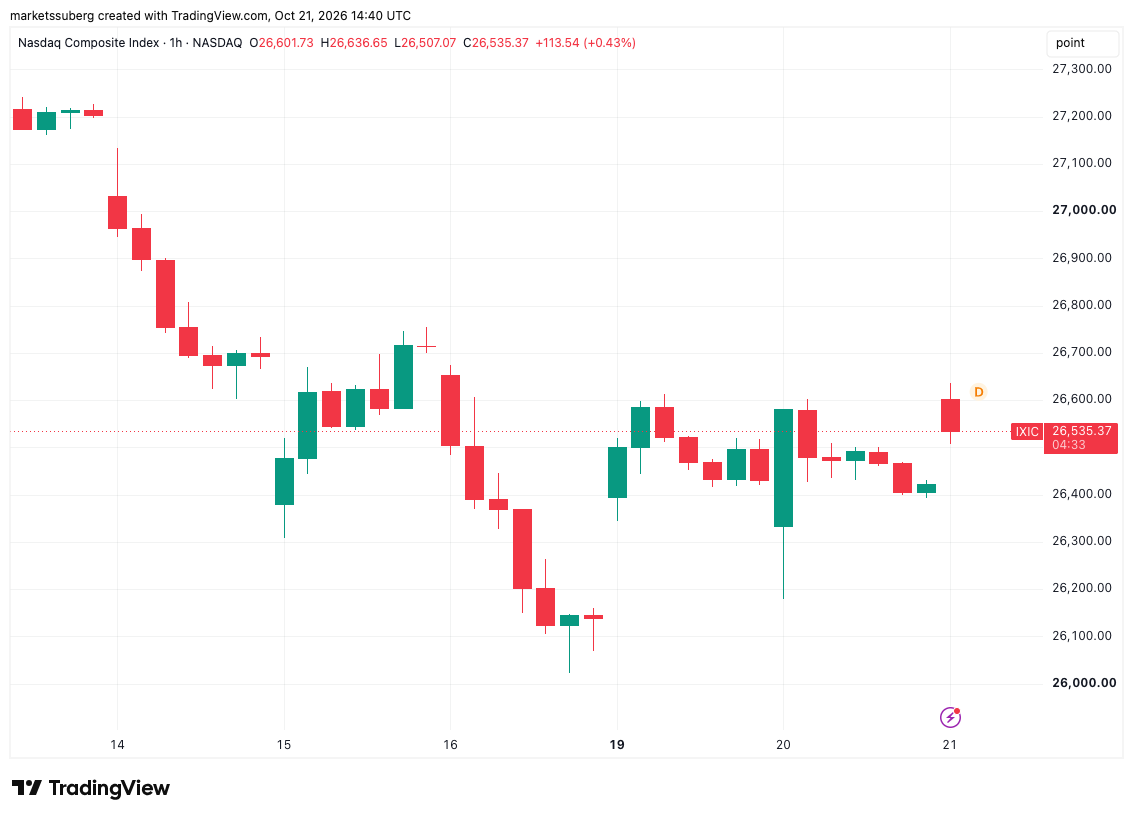
The positive sentiment generated by SpaceX’s earnings extended across U.S. equity markets. At the commencement of the U.S. trading session, major indices opened in positive territory, with the tech-heavy Nasdaq Composite Index initially climbing 0.7% to reach 26,601 points before experiencing a slight retracement. This uplift in tech stocks is particularly relevant for Bitcoin, which has often shown a correlation with technology sector performance, especially during periods of increased investor appetite for risk assets.
The broader context of these gains comes amidst a crucial corporate earnings season. Companies across various sectors are reporting their Q3 financial results, providing investors with vital insights into the health of the economy and corporate profitability. Strong earnings reports typically assuage investor concerns, leading to increased capital inflows into equities and, by extension, often into more volatile assets like cryptocurrencies.
A notable implication of SpaceX’s performance, as highlighted by analysts at Truist Securities, was its role in alleviating market fears concerning corporate spending on Artificial Intelligence (AI) buildouts. In a note quoted by CNBC, Truist analysts suggested that "Despite market concerns relating to financing for AI cloud providers this past week, we believe SpaceX’s third-quarter 2026 represents the first data point during the earnings season to support the bull case for AI cloud providers."
These "market concerns" had manifested last week in a fresh tech sell-off, originating in South Korea and subsequently spreading to other Asian markets and the United States. The sell-off was driven by anxieties that the substantial capital expenditure required for developing and deploying AI infrastructure – particularly by cloud service providers – might strain corporate balance sheets or face financing challenges amidst a potentially tightening credit environment. SpaceX’s robust earnings, demonstrating strong revenue growth and profitability in a capital-intensive, high-tech sector, provided a tangible counter-narrative, suggesting that significant investments in advanced technologies can indeed yield substantial returns and that the financing environment might not be as precarious as previously feared. This renewed confidence in high-growth tech investments indirectly bolstered sentiment for assets like Bitcoin, often perceived as a proxy for innovation and future-oriented technologies.
Global Market Ripple Effects: Asia’s Resurgence
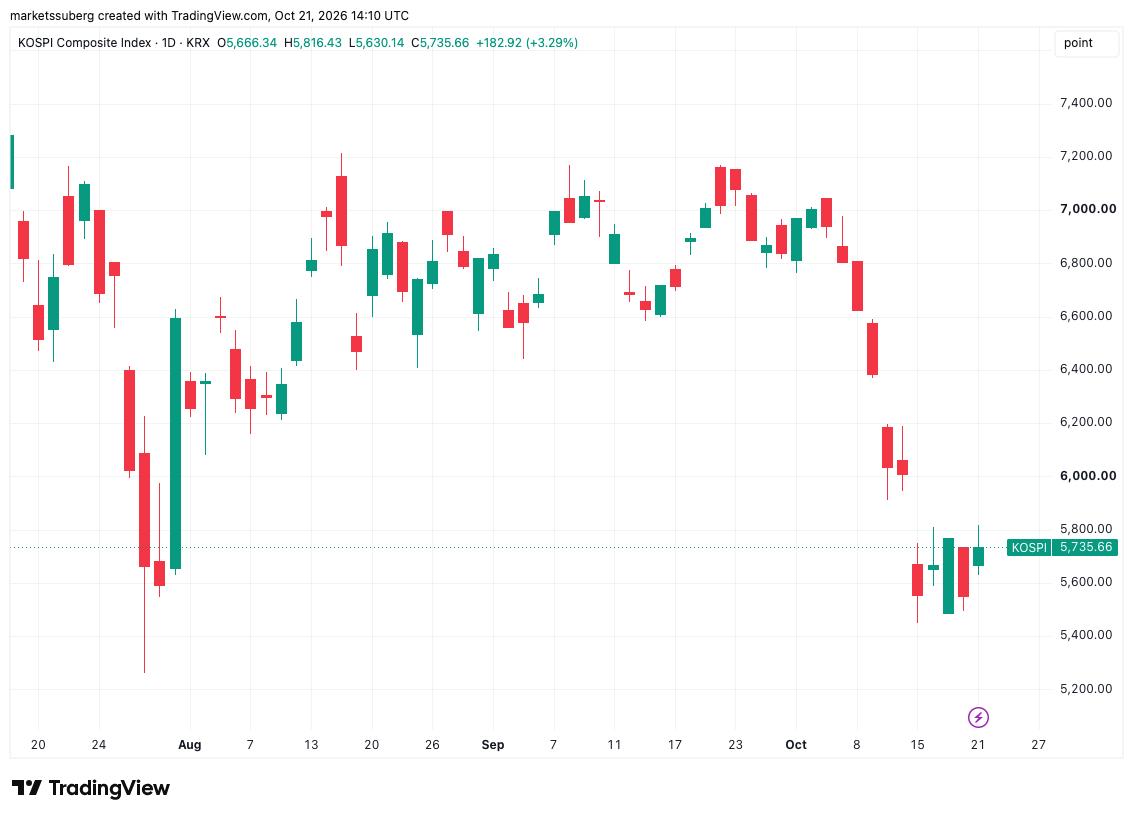
The positive sentiment was not confined to Western markets. South Korea’s KOSPI Composite Index, a key barometer for technology and export-driven economies in Asia, mirrored the global resurgence. The index concluded Wednesday’s trading session with a significant gain of 3.29%, closing at 5,735 points. This rebound was particularly noteworthy given that the KOSPI had been at the epicenter of the previous week’s tech sell-off. The strong recovery underscored the interconnectedness of global financial markets and the rapid transmission of investor sentiment. When confidence returns to one major tech-centric market, it often cascades to others, especially those with similar economic drivers and investor bases.
The previous tech sell-off, which began in South Korea and spilled over to other Asian markets and eventually the U.S., had highlighted vulnerabilities in investor confidence regarding the sustainability of rapid tech growth and the financing of ambitious projects like AI infrastructure. The swift reversal, propelled by strong earnings from a global tech leader like SpaceX, demonstrated the market’s capacity for rapid re-evaluation and its responsiveness to concrete positive data points.
Bitcoin’s Technical Landscape: Navigating Key Levels
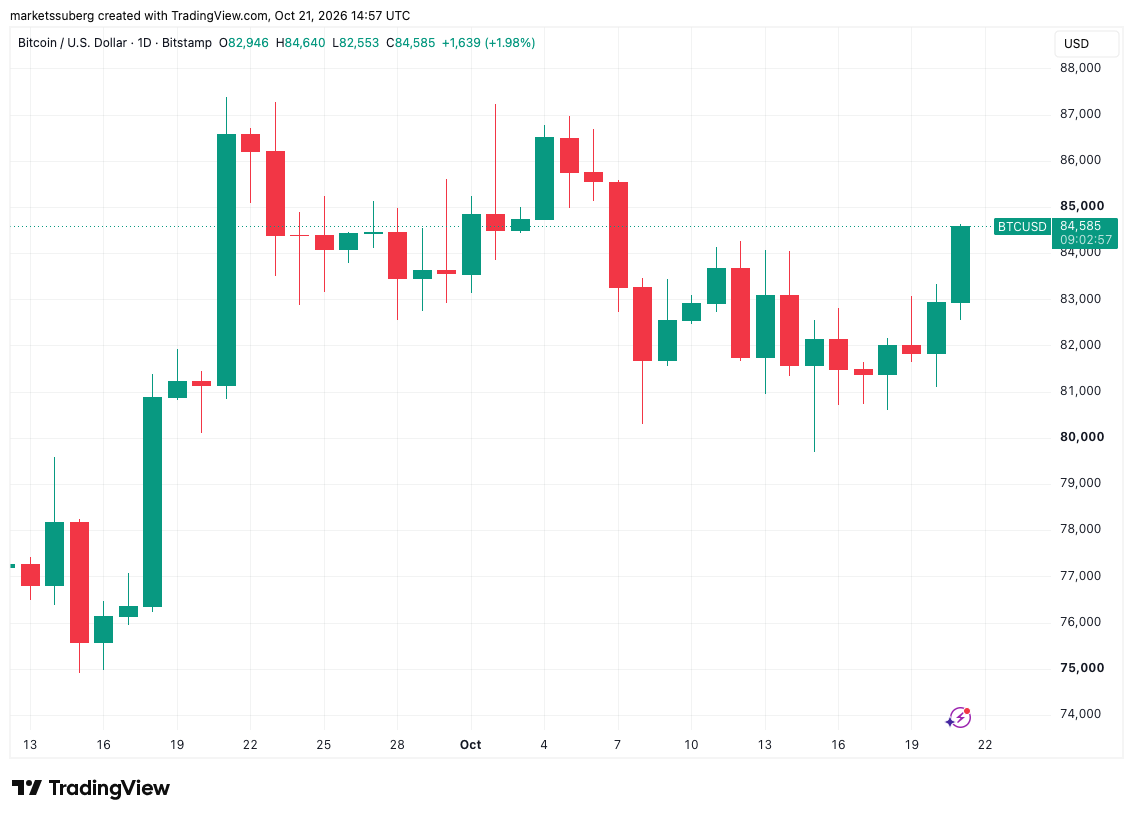
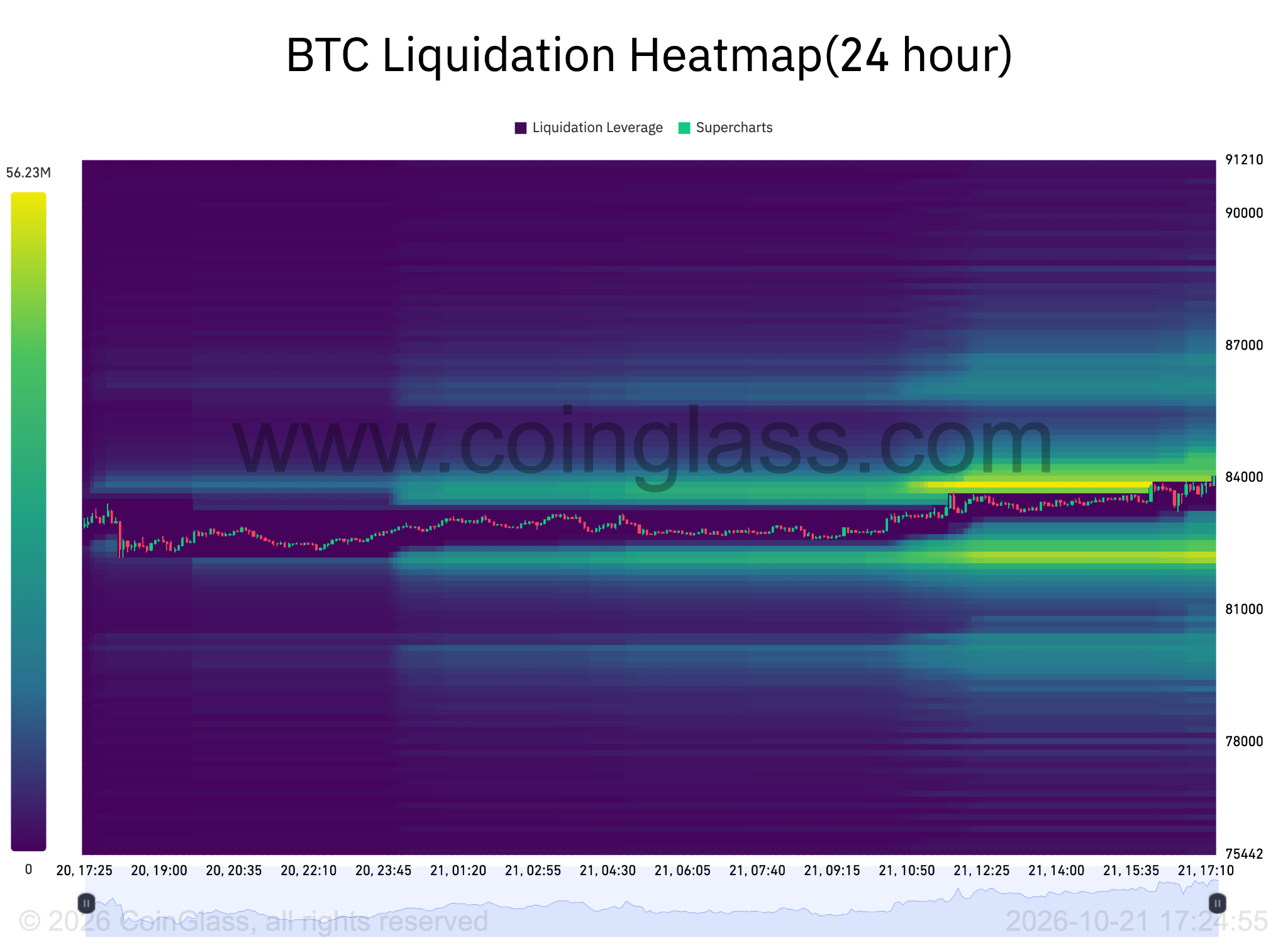
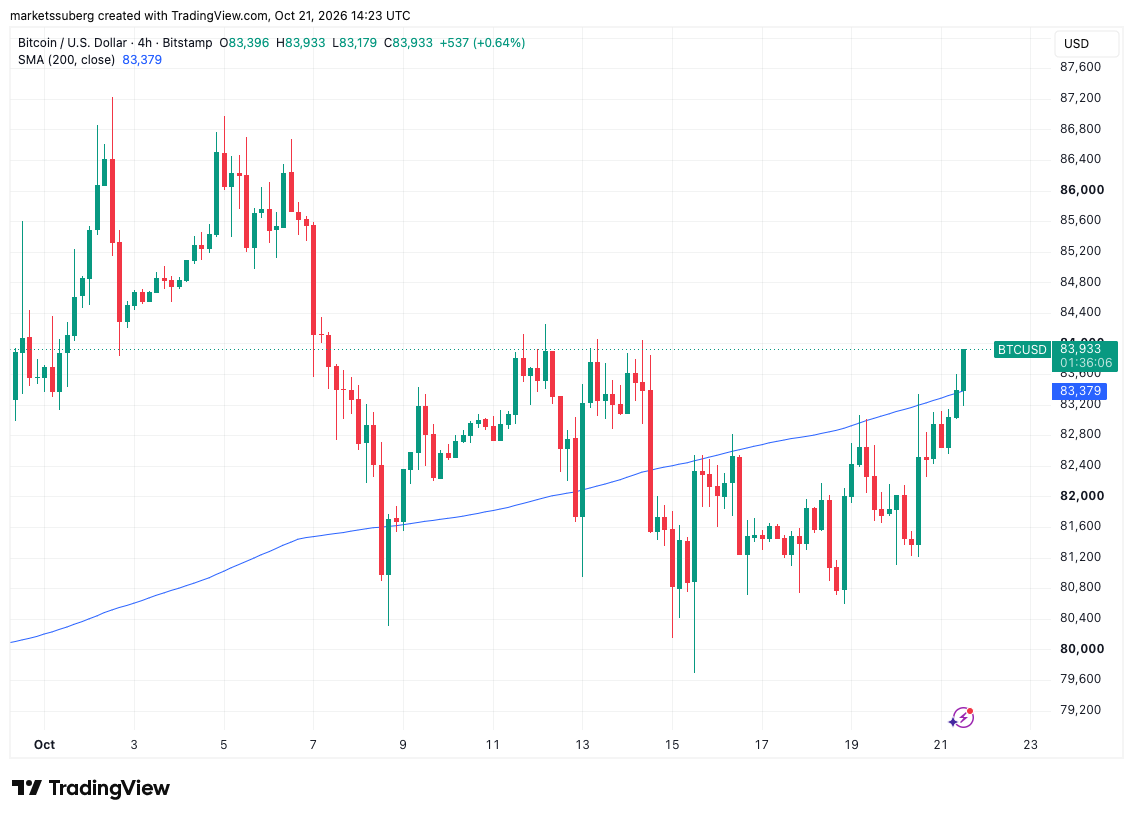
Amidst the broader market rally, Bitcoin’s price action demonstrated significant technical movements. Data from TradingView indicated that BTC/USD gained nearly 2% on the day, reaching highs around $84,600. This upward momentum led to a substantial amount of short liquidations in the cryptocurrency derivatives market, with total crypto short liquidations nearing $110 million over a four-hour period, according to CoinGlass data. Short liquidations occur when the price of an asset rises sharply, forcing traders who bet on a price decline to close their positions, often by buying back the asset, which further fuels the upward price movement in a cascading effect.
On four-hour time frames, BTC/USD notably broke above its 200-period simple moving average (SMA) at $83,878 for the first time since October 14. The 200-period SMA is a widely watched technical indicator that often serves as a dynamic support or resistance level, indicating the long-term trend of an asset. A break above this level is generally considered a bullish signal, suggesting a potential shift in momentum.
The $84,000 mark had previously acted as a formidable resistance level, hosting multiple equal highs generated between October 11 and October 14. Overcoming such a reinforced resistance level typically signals a strong buying interest and can pave the way for further price appreciation.
However, despite the bullish momentum, crypto trader and analyst Rekt Capital offered a cautious perspective, emphasizing the importance of a sustained close above a critical technical level. In an analysis shared on X (formerly Twitter) on Wednesday, Rekt Capital stated that Bitcoin still needed a daily close above $83,400 to definitively revisit the top of its local trading range. "Bitcoin needs to avoid rejecting from $83400 (red) because that would once again send price below $82500," he summarized alongside an explanatory chart. This highlights the delicate balance in market movements, where initial breakthroughs need confirmation through sustained closes above key levels to solidify new support zones and prevent reversals. A failure to hold above $83,400 could indicate that the break was temporary, potentially leading to a retest of lower support levels.
The Interplay of Traditional Finance and Crypto
The events of Wednesday underscore the increasingly intertwined nature of traditional financial markets and the cryptocurrency space. While Bitcoin was once considered an uncorrelated asset, its price movements have frequently shown a correlation with major equity indices, particularly the tech-heavy Nasdaq. This correlation suggests that as institutional adoption of cryptocurrencies grows and their integration into the broader financial ecosystem deepens, macroeconomic factors and corporate performance in traditional sectors exert a more significant influence on crypto valuations.
Investor sentiment, driven by corporate earnings, interest rate expectations, and global economic outlooks, plays a crucial role. When traditional markets exhibit confidence, characterized by strong earnings and positive economic data, investors are often more willing to allocate capital to higher-risk, higher-reward assets like Bitcoin. Conversely, periods of uncertainty or economic downturns in traditional markets can lead to capital flight from crypto assets.
Looking Ahead: Earnings Season and Market Sentiment
The earnings season continues to unfold, with more major corporate reports anticipated. Notably, Tesla and Meta Platforms, two other significant players in the technology and innovation space, are scheduled to release their earnings after Wednesday’s market close. The performance of these companies, particularly Tesla, which shares an entrepreneurial connection with SpaceX through Elon Musk, will be closely watched by investors. Strong results from Tesla and Meta could further reinforce the positive market sentiment and potentially provide additional tailwinds for Bitcoin and the broader cryptocurrency market. Conversely, any disappointments could temper the current enthusiasm.
The broader market will continue to weigh corporate profitability against ongoing macroeconomic factors, including inflation, central bank policies, and geopolitical developments. However, the positive reaction to SpaceX’s earnings and the subsequent rally across equities and Bitcoin suggest a renewed, albeit cautious, optimism in the market’s ability to navigate current challenges and identify areas of robust growth. For Bitcoin, maintaining its position above key technical resistance levels will be crucial in solidifying its recent gains and setting the stage for future price discovery. The market’s interpretation of continued corporate performance will largely dictate the immediate trajectory for both traditional and digital assets.