Gilang Muhammad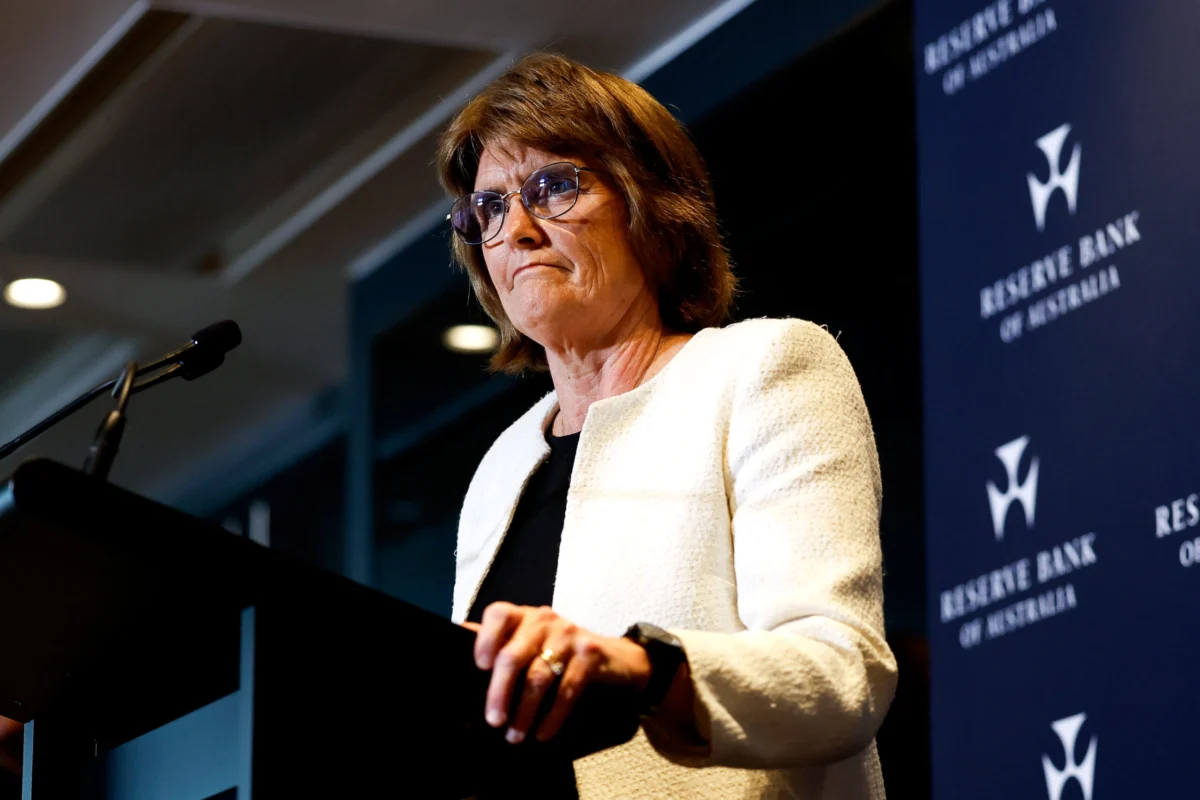
The Reserve Bank of Australia (RBA) announced a significant monetary policy shift on Tuesday, raising its official cash rate by 25 basis points to 4.6%. This decision marks the highest policy rate seen in Australia in 15 years, underscoring the central bank’s aggressive stance against persistent inflation, which has been exacerbated by a confluence of global and domestic factors, notably the broadening Middle East conflict and surging demand in the technology sector. The move, largely anticipated by economists surveyed by Reuters, reflects the RBA’s unwavering commitment to steer inflation back within its target band of 2-3%.
This latest adjustment brings the total rate hikes for the year to 100 basis points, spread across four separate increases. The RBA’s statement following the decision highlighted that several upside risks to inflation, initially flagged in its August policy meeting, have now demonstrably materialized. Among these, the central bank specifically pointed to the escalation of geopolitical tensions in the Middle East, which has driven global energy prices significantly higher than previous assumptions. Concurrently, an unexpected surge in demand linked to artificial intelligence (AI) advancements has contributed to rapid price increases for technology-related goods, adding another layer of inflationary pressure.
A Proactive Stance Against Entrenched Inflation
The RBA’s proactive tightening cycle began in late 2024, with a series of incremental increases designed to cool an overheating economy and curb rising consumer prices. Prior to this latest hike, the cash rate stood at 4.35%, itself a multi-year high. The central bank’s commitment was further solidified in its official statement, where it affirmed its readiness to "continue to do what it considers necessary" to contain inflation, explicitly including the possibility of further policy rate increases if economic data warrants such action. This hawkish forward guidance signals that Australian households and businesses should prepare for potentially tighter monetary conditions in the near future.
The decision on Tuesday was not made in isolation but as part of a broader global trend where central banks are grappling with persistent inflationary pressures stemming from supply chain disruptions, robust consumer demand post-pandemic, and more recently, geopolitical instability. Australia’s inflation trajectory has proven particularly challenging, remaining stubbornly above the RBA’s target range. For the calendar year 2026, inflation has consistently run hot, peaking at 4.6% in March. While a more recent print showed a moderation to 3.5% in July, beating some analyst estimates, concerns about its stickiness and potential for re-acceleration remain paramount for policymakers. The market now keenly awaits the August inflation data, scheduled for release on Wednesday, which will offer further insights into the efficacy of past rate hikes and the ongoing inflationary battle.
Deep Dive into Inflationary Drivers
The RBA’s emphasis on the Middle East conflict and AI-related demand underscores the evolving nature of current inflationary pressures. The geopolitical tensions in the Middle East have a direct and significant impact on global energy markets, particularly crude oil and natural gas prices. Australia, while a net energy exporter, is not immune to global price shocks, as higher energy costs permeate through the economy, affecting transportation, manufacturing, and utility expenses for both businesses and consumers. This "imported inflation" can quickly translate into higher domestic prices for a wide array of goods and services.
Simultaneously, the global surge in demand for AI technologies has created significant upward pressure on the prices of advanced semiconductors, specialized hardware, and related software and services. As Australia’s economy integrates more advanced technologies, businesses face higher input costs for essential digital infrastructure, which can then be passed on to consumers. This phenomenon illustrates how technological advancements, while beneficial for productivity in the long run, can present short-term inflationary challenges, especially in sectors with inelastic supply or high barriers to entry.
Economist Perspectives and Market Reactions
The RBA’s decision largely aligned with market expectations, a factor that likely contributed to the relatively muted reaction across Australian financial markets. Following the announcement, both the S&P/ASX 200 benchmark index and the Australian dollar remained largely flat. This indicates that investors and traders had largely priced in the 25 basis point increase, reflecting a consensus view among economists regarding the necessity of further tightening.
However, beneath the calm surface, underlying concerns about inflation’s persistence are palpable. A recent analysis from Bank of America (BofA) last week highlighted a worrying trend: Australian inflation appeared to be accelerating rather than converging back towards the RBA’s target. BofA’s note specifically cited the July Consumer Price Index (CPI) data as "the clearest evidence of this shift," pointing to a pattern of rising core inflation in recent months. The bank also warned of "second-round effects" from energy costs, a critical concern for central bankers. Second-round effects occur when initial price shocks, such as higher energy prices, lead to broader wage demands and price increases across other sectors, creating a self-reinforcing inflationary spiral that is notoriously difficult to break. This risk of inflation becoming entrenched in economic expectations and behavior is precisely what the RBA is striving to prevent with its aggressive policy stance.
Economic Growth and Future Outlook
The RBA acknowledges that its monetary tightening measures carry a significant trade-off: slowing economic growth. Higher interest rates increase borrowing costs for consumers and businesses, which can dampen investment, curb consumer spending, and ultimately lead to a deceleration in economic activity. Australia’s economy has already shown signs of moderating, with Gross Domestic Product (GDP) growth recorded at 2.1% in the second quarter, a noticeable slowdown from the 2.5% expansion observed in the first three months of the year. This deceleration underscores the delicate balancing act faced by the RBA – cooling inflation without triggering an overly severe economic downturn.
The central bank’s statement explicitly addressed this precarious outlook, noting that the "Middle East conflict remains unresolved, and there are scenarios where inflation is higher and activity lower than forecast." This candid assessment highlights the profound uncertainty facing policymakers and the potential for adverse global events to derail domestic economic projections. Should geopolitical tensions further escalate or supply chain disruptions intensify, Australia could face a challenging period characterized by stagflationary pressures, where high inflation coexists with sluggish economic growth.
Implications for Households and Businesses
The cumulative effect of successive interest rate hikes has significant implications for Australian households and businesses. For mortgage holders, particularly those on variable rates, each increase translates into higher monthly repayments, reducing discretionary income and potentially straining household budgets. This can lead to a contraction in consumer spending, a key driver of economic growth. Businesses, on the other hand, face higher costs for borrowing capital for investment and expansion, which could lead to reduced hiring, delayed projects, and a general slowdown in business activity. Small and medium-sized enterprises (SMEs), often more sensitive to changes in interest rates, may find themselves under particular pressure.
Furthermore, the RBA’s tightening cycle could impact the housing market, a sector traditionally sensitive to interest rate movements. Higher borrowing costs tend to cool demand for housing, potentially leading to price stabilization or even declines in some segments, which could affect household wealth and consumer confidence. The labor market, which has remained relatively robust, could also see some softening as businesses respond to higher operating costs and reduced demand. While the RBA’s primary mandate is price stability, the secondary goal of maintaining full employment remains a consideration, adding complexity to its policy decisions.
Chronology of RBA’s Tightening Cycle in 2025
The RBA’s journey to a 4.6% cash rate has been a carefully calibrated response to evolving economic conditions throughout 2025.
- Early 2025: Following a period of pause, the RBA resumed its tightening cycle with a 25 basis point hike, recognizing persistent inflationary pressures from strong domestic demand and global supply chain issues. The cash rate moved from 3.6% to 3.85%.
- Mid-2025: As inflation remained sticky and signs of a robust labor market persisted, the RBA implemented another 25 basis point increase, bringing the rate to 4.1%. This decision was often accompanied by statements emphasizing the data-dependent nature of future moves.
- Late 2025 (Pre-December): A third 25 basis point hike was enacted, pushing the cash rate to 4.35%. This move often followed the release of stronger-than-expected inflation figures or hawkish signals from other major central banks, reinforcing the RBA’s resolve. The RBA’s August meeting statement, for instance, explicitly flagged the "upside risks" that were later cited as materializing.
- December 2025: The latest 25 basis point increase to 4.6% culminates the year’s tightening efforts, bringing the total hikes to 100 basis points. This final move of the year solidified the RBA’s commitment to tackling inflation, particularly as new global factors like the Middle East conflict and AI demand gained prominence.
This sequence of actions demonstrates the RBA’s consistent and gradual approach, aimed at taming inflation without causing undue shock to the economy. Each decision was preceded by extensive analysis of domestic economic data, global developments, and forward-looking projections.
Broader Context and Global Parallels
Australia’s central bank is not alone in its fight against inflation. Major central banks worldwide, including the U.S. Federal Reserve, the European Central Bank, and the Bank of England, have also engaged in aggressive monetary tightening cycles over the past two years. While the specific drivers and magnitudes of inflation vary across economies, common themes include energy price volatility, post-pandemic demand surges, and labor market tightness. The RBA’s actions are thus part of a synchronized global effort to restore price stability, recognizing that domestic inflation can be significantly influenced by international factors. However, each central bank must tailor its policy to its unique economic circumstances, balancing inflation control with economic growth and employment considerations.
Conclusion: A Challenging Path Ahead
The RBA’s decision to raise interest rates to a 15-year high of 4.6% underscores the gravity of the inflationary challenge facing Australia. While the move was widely anticipated and aimed at reining in prices, it comes with the acknowledged risk of slowing economic growth. The confluence of geopolitical tensions in the Middle East, surging AI-related demand, and persistent domestic price pressures has created a complex environment for policymakers. The central bank’s explicit warning that it will "continue to do what it considers necessary," including potentially further rate hikes, signals a resolute commitment to its primary mandate of price stability. As Australia navigates this period of elevated interest rates and global uncertainty, the focus will remain firmly on incoming economic data, particularly inflation figures and indicators of economic activity, to gauge the effectiveness of the RBA’s strategy and chart the path forward. The path to achieving the RBA’s 2-3% inflation target promises to be a challenging one, demanding vigilance and adaptability from both policymakers and the broader economy.