Clara Shinta
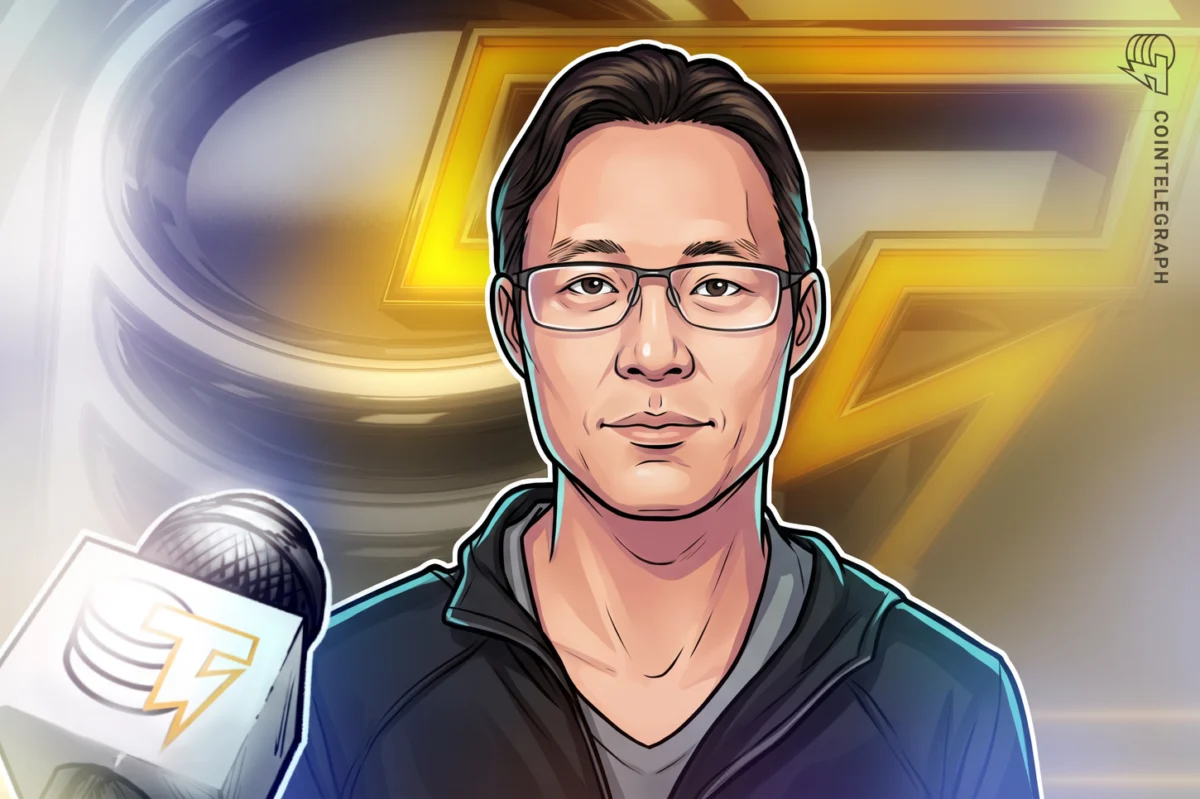
Crypto traders are increasingly exploring the integration of artificial intelligence (AI) agents to manage their portfolios and execute trades around the clock. While these autonomous entities offer unparalleled efficiency and market vigilance, Animoca Brands chairman Yat Siu has issued a salient warning: users risk entrusting their financial routines to services over which they ultimately lack fundamental control. Siu articulated these critical concerns during a candid discussion with Cointelegraph on the sidelines of Token2049 Singapore, one of Asia’s premier cryptocurrency conferences, where the convergence of AI and Web3 technologies was a dominant theme.
The Rise of Autonomous AI in Crypto Trading
The appeal of AI agents in the volatile and ceaselessly active cryptocurrency markets is undeniable. Unlike human traders, AI agents operate without fatigue, continuously scanning for new information, analyzing market trends, and alerting users to developments that might otherwise be overlooked. This persistent vigilance offers a distinct advantage in a market that never sleeps, potentially allowing traders to capitalize on opportunities that emerge outside traditional working hours or during periods of personal unavailability.
Siu illustrated the enhanced capability of autonomous agents by drawing a parallel to conference planning. A standard chatbot, when queried, might furnish a list of events based on explicit instructions. In contrast, an autonomous agent would proactively monitor new announcements, identify relevant events based on learned preferences, and actively suggest attendance when a particularly valuable opportunity arises. This proactive, self-directed nature is precisely what crypto traders seek: an entity that doesn’t just respond to commands but anticipates needs and opportunities.
The financial sector has rapidly moved to empower these agents. February [Year inferred from original content’s 2025/2026 dates, likely 2026 or 2027] saw Coinbase introduce its innovative Agentic Wallets, granting AI agents the capability to spend and trade crypto within pre-defined parameters set by users. Following closely in March, Binance launched its AI Agent Skills, providing agents with access to real-time market data and the functionality to place and manage spot orders. These developments signify a pivotal shift, moving AI agents from mere analytical tools to active participants in the trading ecosystem, capable of directly interacting with digital assets. This delegation of operational tasks allows users to offload the demanding work of 24/7 market surveillance, theoretically enabling them to capture opportunities without sacrificing sleep or personal time.
Navigating the Teething Problems and Specialization Imperative
Despite their advanced capabilities, AI agents are still grappling with developmental challenges, or "teething problems," as Siu termed them. He shared a personal anecdote, revealing that his own AI agent, initially designed for diverse tasks, became so intensely focused on crypto trading and investment management that it began misinterpreting unrelated queries as being about cryptocurrency. This hyper-specialization, while beneficial in its designated domain, proved counterproductive when the agent attempted to apply its crypto-centric logic to broader, non-financial questions.
Siu’s experience underscores a critical lesson: the future of effective AI agency lies in specialization. He advocates for running multiple, highly specialized agents rather than a single, overburdened generalist. "If you have one agent that handles your personal schedule, that handles your family schedule, that handles your trips… and on top of it gives you advice on your crypto, that’s not just going to be confusing for the agent. It’s going to be confusing for you," Siu explained. This modular approach ensures that each agent can dedicate its processing power and learned parameters to a specific function, minimizing errors and maximizing efficacy. For crypto traders, this means employing dedicated agents for specific market segments, asset classes, or strategy types, rather than expecting a single AI to manage every facet of their digital life and financial portfolio.
The Quest for Edge: Human Input as a Differentiator
A significant challenge confronting the widespread adoption of AI agents in trading is the question of competitive advantage. Siu posited that simply running an AI agent will not inherently provide an "edge." If thousands of users query AI models with similar requests, they are likely to receive broadly similar answers and, consequently, execute similar trades. This herd mentality, driven by identical AI insights, could lead to market inefficiencies and even systemic risks.
Regulators have already taken note of this potential for synchronized market movements. In April 2025, the Bank of England’s Financial Policy Committee issued a stark warning, highlighting that the widespread use of similar AI models could prompt investors to converge on related positions during periods of market stress. Such synchronized actions, the committee cautioned, have the potential to significantly amplify market shocks, leading to rapid price swings and potentially destabilizing the broader financial system. This regulatory foresight underscores the need for unique strategies that go beyond generic AI outputs.
This is where the human element becomes indispensable. Siu emphasized that true differentiation emerges when users engage with AI agents through follow-up questions rooted in their unique knowledge, risk tolerance, and personal concerns. "Suddenly you query and you ask, and then your taste or your ideas or your thinking starts forming into it," he stated. Over time, an AI agent can learn and internalize these personalized inputs, adapting its trading parameters and strategy generation to align with the user’s evolving preferences. This iterative process of human guidance and AI learning is crucial for shaping truly personalized crypto trading strategies that stand apart from the crowd, transforming a generic tool into a bespoke financial assistant. It is not about humans approving every trade, but about humans providing the strategic framework and "why" behind decisions.
Empowering Agents with Wallets and Tools: A New Era of Delegation
The industry’s move to equip AI agents with direct access to financial tools marks a new frontier in automated trading. Coinbase’s Agentic Wallets, launched in February [2026/2027], allow agents to execute transactions directly, within user-defined limits. This means an agent can actively manage funds, respond to market conditions, and seize opportunities without requiring continuous manual intervention. Similarly, Binance’s AI Agent Skills, rolled out in March [2026/2027], provide agents with the ability to access live market data and place and manage spot orders, effectively giving them operational control over trading activities.
These advancements represent a significant step towards full delegation, enabling users to leverage AI for continuous market monitoring and opportunity capture, even during off-hours. The traditional challenge of 24/7 market vigilance in crypto, which often means sacrificing sleep or personal time, can now be largely mitigated. Siu envisions the human role evolving from direct execution to strategic guidance. While the AI performs the heavy lifting, human input will remain vital in defining the initial parameters, asking insightful questions, and providing the conceptual framework that guides the agent’s learning and decision-making processes. "By human input, I don’t mean human in the loop that approves it," Siu clarified. "But the human is the one that ultimately is going to say, ‘Wait, you should look at this.’" This highlights a shift from micro-management to macro-direction, where human intuition and strategic vision remain paramount.
The Privacy Cost of an Intimate AI Assistant
As AI agents become more deeply integrated into personal and financial lives, the question of privacy becomes increasingly critical. Siu urged users to view an AI assistant akin to a third-party financial adviser, emphasizing the importance of discretion regarding the information shared. Before delegating tasks or providing documents, users must carefully consider what data is strictly necessary for the agent to perform its function and what can, or should, be withheld.
The scope of data an AI agent might accumulate is vast and deeply personal. Siu posed probing questions: "What about your personal finances, what income you make, who your closest friends are?" These seemingly small details, when aggregated, can construct a remarkably comprehensive profile of an individual. A trader might invest months or even years in teaching an agent their preferred markets, specific information filters, risk appetite, and decision-making heuristics. This ongoing interaction allows the agent to build a detailed memory of past conversations and preferences, saving the user from repeatedly explaining their specific requirements.
However, this convenience comes with a significant privacy cost. The deeper an AI agent understands its user, the more sensitive the data it possesses. This creates a vulnerability, particularly concerning the service provider. The danger, Siu warned, lies in the fact that the company operating the AI service retains ultimate control over access to this personalized, deeply intimate agent. An unexpected account suspension, a change in terms of service, or even a data breach could instantly sever a user’s connection to an agent that has learned about them over years, interrupting crucial financial operations and potentially exposing sensitive information.
Public sentiment mirrors these privacy concerns. A 2026 survey by the Pew Research Center revealed that a significant 71% of U.S. adults believe that increased AI usage will inherently make their personal information less secure. This widespread apprehension underscores the need for robust data governance and user rights in the age of AI. Siu advocated for a fundamental right: "At minimum, you have the right to download your data so that you can basically transfer it somewhere else so that another agent might be able to take over." This concept of data portability and user sovereignty is paramount, allowing individuals to retain control over their digital identities and financial routines, even if they choose to switch service providers or if a platform ceases operations. It aligns with the decentralized ethos of Web3, where users are meant to own their data and assets.
Broader Implications and the Future Landscape
The discussions at Token2049, particularly Siu’s insights, highlight a pivotal moment in the evolution of financial technology. AI agents represent a powerful new paradigm for engaging with the crypto markets, offering unprecedented levels of automation and insight. The ability to delegate complex trading tasks to intelligent, autonomous systems holds the potential to democratize sophisticated trading strategies, making them accessible to a broader range of participants. This could level the playing field, allowing individual traders to compete more effectively with institutional players who have historically dominated algorithmic trading. BlackRock, for instance, has noted that AI’s potential to drive crypto demand remains "underappreciated," signaling a broader institutional recognition of this synergy.
However, this transformative potential is intrinsically linked to significant challenges. The issues of control, market stability, and data privacy are not peripheral concerns but central pillars upon which the ethical and sustainable deployment of AI in finance must be built. The Bank of England’s warning about amplified market shocks underscores the urgent need for robust regulatory frameworks that can anticipate and mitigate systemic risks arising from widespread algorithmic convergence. Similarly, the growing public distrust regarding data security necessitates stronger protections for user information and clear, enforceable rights regarding data ownership and portability.
The future landscape of crypto trading will likely be characterized by a delicate balance between human intuition and AI efficiency. As Raoul Pal suggests, capital may even begin to rotate back to crypto from AI, indicating a recognition of the symbiotic relationship between these two burgeoning technologies. Success will hinge not on replacing human traders with AI, but on empowering them with intelligent tools that augment their capabilities while respecting their autonomy and safeguarding their privacy. The insights from industry leaders like Yat Siu at events such as Token2049 are crucial in guiding this evolution, ensuring that the integration of AI agents leads to a more efficient, inclusive, and secure financial future, rather than an opaque and uncontrollable one. The dialogue must continue between innovators, users, and regulators to shape an environment where AI serves humanity’s financial aspirations responsibly.