Gilang Muhammad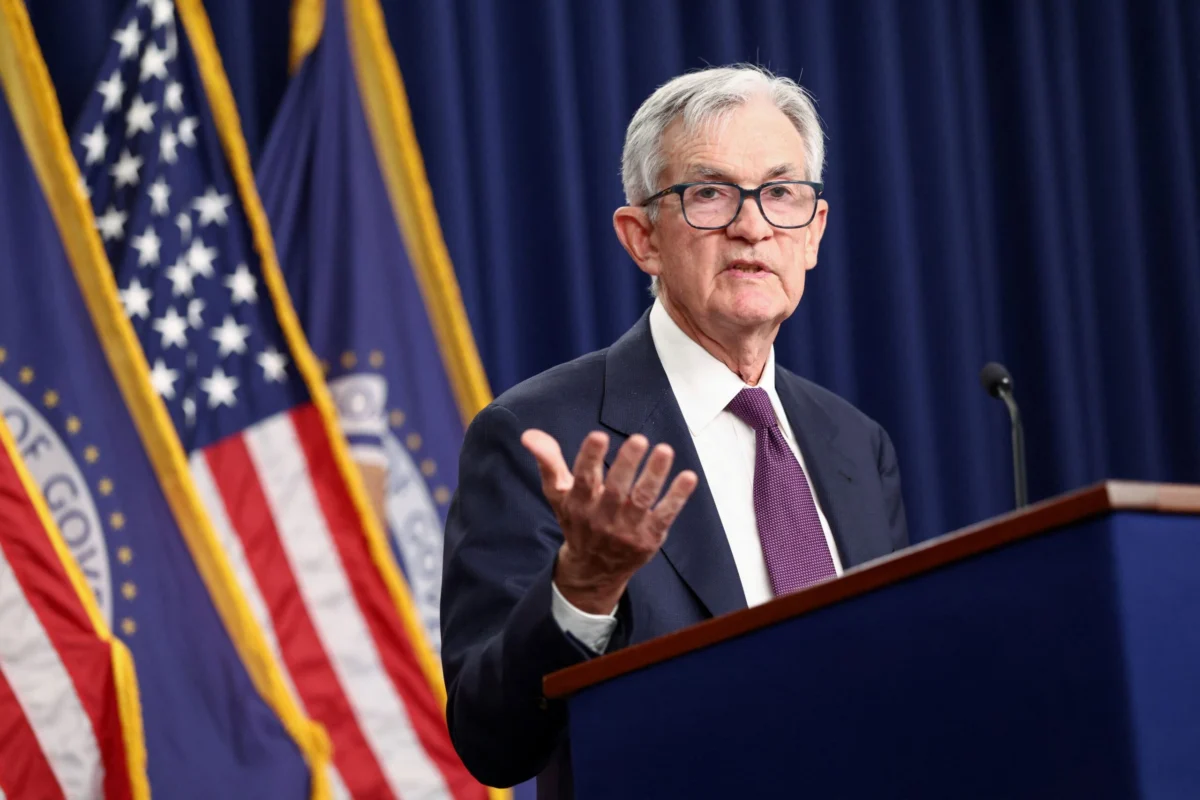
Federal Reserve Chair Jerome Powell finds himself at a critical juncture, likely in his final weeks leading the central bank, following a significant development from the Department of Justice. A decision announced Friday by U.S. Attorney Jeanine Pirro to refer a criminal probe into renovations at the Federal Reserve headquarters to the central bank’s inspector general effectively removes the Justice Department from the immediate investigation. This move presents Powell with a profound choice: to adhere to a long-standing historical precedent of departing the institution once his term as Chair concludes, or to remain on the Board of Governors for the remaining two years of his term. The ramifications of his decision extend far beyond personal career choices, potentially influencing the trajectory of monetary policy at a delicate economic period and setting a precedent for the central bank’s fiercely guarded independence.
The Crossroads for Chair Powell: A Matter of Precedent and Principle
Jerome Powell’s tenure as Federal Reserve Chair, which commenced in February 2018, has been marked by unprecedented economic challenges, from navigating the aftermath of a global pandemic to combating persistent inflation with aggressive interest rate hikes. His term as Chair is slated to conclude on May 15, 2026. Historically, Federal Reserve Chairs, upon the expiration of their leadership terms, have often chosen to fully step away from the institution, even if their separate, longer term as a Governor had not yet expired. This tradition underscores the unique, often all-consuming nature of the Chair’s role and aims to facilitate a clear transition of leadership without the potential for perceived influence from a former leader.
The referral of the criminal probe, which Powell had previously cited as a reason for his potential prolonged stay, now forces his hand. He had publicly vowed to remain at the Fed until the investigation was resolved, a commitment that now has a clearer, albeit potentially protracted, path towards resolution under the Inspector General’s purview. Krishna Guha, head of global policy and central bank strategy at Evercore ISI, observed, "Powell has kept his cards close to his chest. If the investigation had never taken place we think he would have left the Fed completely on May 15." However, Guha added, "But, we think the DoJ move may well have come too late – and the threat of restarting the probe is too inconclusive – for Powell to leave on May 15." This suggests a nuanced interpretation of "resolved," implying that an ongoing IG investigation might still be considered an unresolved matter by Powell, thus compelling him to stay.
Should Powell choose to remain as a regular Fed Governor, a position he is entitled to hold until January 2028, he would break with the recent norm established by predecessors like Ben Bernanke and Alan Greenspan, who departed the Board upon the end of their Chairmanship. This decision would undoubtedly be scrutinized for its implications on the transition of power and the symbolic weight it carries regarding the institution’s resilience against external pressures.
The Renovation Probe: A Catalyst for Uncertainty
The criminal probe into renovations at the Federal Reserve headquarters, while not extensively detailed in its specifics, has cast a long shadow over Powell’s final months as Chair. Such investigations, particularly when involving federal institutions, often pertain to potential irregularities in contracting, cost overruns, or even misuse of funds. The initial involvement of the Justice Department signals the gravity with which the allegations were initially perceived. The subsequent referral to the central bank’s own inspector general (IG) is a procedural shift that, while removing the immediate threat of a direct DOJ prosecution, does not necessarily extinguish the investigation itself. Instead, it moves the inquiry to an internal, independent oversight body within the Fed, which is tasked with investigating waste, fraud, and abuse.
For Powell, who has consistently championed transparency and accountability, the existence of an unresolved criminal inquiry tied to the institution he leads could be seen as a matter of institutional integrity. His pledge to stay until the probe’s resolution underscores a desire to ensure the Fed’s reputation remains untarnished and that any findings are properly addressed. The complexity arises from the fact that an IG investigation, by its nature, can be lengthy and its findings may or may not be publicly disclosed in their entirety, leaving open questions about what "resolved" truly entails in this context.
Political Pressures and the Fed’s Independence Under Siege
The backdrop to Powell’s decision is a highly charged political environment, characterized by unprecedented direct pressure on the Federal Reserve from the executive branch. President Donald Trump has been an outspoken critic of the central bank’s policies, particularly its interest rate decisions, far exceeding the rhetoric of most modern presidents. His demands for lower interest rates, often articulated through public statements and social media, have been accompanied by threats to remove Powell from his position and attempts to unseat other Fed Governors, such as Lisa Cook.
This sustained campaign of political badgering directly challenges the sacrosanct principle of Federal Reserve independence. Established by Congress, the Fed’s independence from political interference is crucial for its ability to make monetary policy decisions based on economic data and long-term stability rather than short-term political expediency. The perception of a politically compromised central bank can erode investor confidence, lead to market instability, and ultimately undermine the effectiveness of monetary policy tools.
Trump’s threats, including one on April 15, 2026, where he explicitly stated he would "fire Powell if he doesn’t leave office on his own," create an extraordinary dilemma. Should Powell depart now, it could be perceived as capitulating to political pressure, thereby weakening the institution’s defenses against future executive interference. Conversely, staying on could be interpreted by some as defiance, though others might see it as a principled stand to safeguard the Fed’s autonomy. Evercore ISI’s Guha articulated this concern: "Our hunch is Powell will stay on as a regular Fed governor for some months in order to avoid any impression of a de facto plea deal or exit under pressure." This highlights the delicate balance Powell must strike between personal integrity and institutional preservation.
The Succession Question: Kevin Warsh’s Candidacy and Policy Implications
Central to the debate over Powell’s future is the anticipated appointment of his successor, Kevin Warsh. A former Fed Governor during the George W. Bush administration and a prominent voice in conservative economic circles, Warsh has emerged as President Trump’s preferred choice for the next Fed Chair. His confirmation hearing this week before the Senate Banking Committee was closely watched, though a committee vote was reportedly held up by Senator Thom Tillis, R-N.C., pending the completion of the criminal investigation.
Warsh’s policy views and past statements have drawn scrutiny, particularly from some congressional Democrats who view him as a "Trump loyalist" whose appointment could further compromise the Fed’s perceived independence. Warsh’s previous remarks, including his notable call in July 2025 for "regime change" at the Fed and a call for "partnership with Treasury," have fueled concerns. Such language, implying a fundamental shift in the central bank’s operational philosophy and its relationship with the executive branch, stands in stark contrast to the traditional emphasis on the Fed’s insulation from political influence.
If Warsh assumes the chairmanship, his stated preference for lower interest rates and a "rethink of other Fed operations" could signal a significant departure from current policy frameworks. This potential shift, combined with the perception of a Chair more aligned with presidential directives, could create an environment of heightened uncertainty for markets and economic actors. Guha’s observation that Warsh’s "provocative talk of ‘regime change’ at the Fed likely also increases the likelihood Powell stays for a period to try to safeguard the institution and its staff" underscores the deep concern within certain circles about the potential erosion of the Fed’s traditional role and methodologies.
Market Reactions and Broader Economic Implications
Financial markets are acutely sensitive to leadership changes and policy shifts at the Federal Reserve, given its profound influence on interest rates, inflation, and economic growth. The uncertainty surrounding Powell’s departure and Warsh’s potential ascendancy has already generated considerable speculation among investors.
David Zervos, chief market strategist at Jefferies, who himself was reportedly considered for the Fed chair position, offered a counterintuitive perspective on market reactions. He suggested that Wall Street might react positively to Powell’s departure, leading to lower bond yields and higher prices. "A statement by Jay saying he’ll be leaving at the end of his term as chair, will actually cause the market to go up, the rates market to be more positive, meaning lower yields, higher prices," Zervos stated during a CNBC interview. He further added, "That will be a more significant impact than this lawsuit being dropped." This perspective might stem from an expectation that a new leadership, particularly one perceived as more inclined towards rate cuts, could usher in a period of looser monetary policy, potentially boosting equity markets and benefiting borrowers.
However, other analysts and investors might view a sudden or politically pressured departure as a negative, signaling instability and a weakening of the Fed’s independence, which could lead to increased risk premiums and market volatility. The Federal Open Market Committee (FOMC), comprising twelve members (seven Governors, President of the Federal Reserve Bank of New York, and a rotating panel of four other Federal Reserve Bank presidents), requires a voting majority to change interest rates. While a new Chair wields significant influence, the collective decision-making process is designed to mitigate the impact of any single individual. Nonetheless, the Chair’s ability to shape the agenda, guide discussions, and influence consensus is substantial.
If Powell were to leave now, President Trump would gain an immediate opportunity to appoint another member to the Board of Governors. With Warsh’s anticipated confirmation, Trump would have three appointees on the seven-member board, including Governors Christopher Waller and Michelle Bowman from his first term. While not an outright majority on the FOMC, a board majority does carry some limited but important influence over policy formulation and personnel decisions within the broader Fed system. This shift in the composition of the Board could subtly but significantly alter the internal dynamics and future direction of the central bank.
Historical Precedents and the Future of the Fed
The history of the Federal Reserve is replete with instances of Chairs navigating complex political landscapes. However, the direct and public nature of the pressures faced by Powell is relatively unprecedented in the post-WWII era. The tradition of Fed Chairs maintaining a degree of stoicism and distance from partisan politics is a cornerstone of the institution’s credibility.
For instance, when Alan Greenspan retired in 2006 after nearly two decades at the helm, he did so at the expiration of his Chairmanship, not his Governorship. Similarly, Ben Bernanke, after leading the Fed through the 2008 financial crisis, chose to step down from the Board when his term as Chair concluded in 2014. These departures reinforced the idea that the Chair’s role is distinct and, once completed, the individual moves on, allowing a fresh start for the institution. Powell’s decision will either uphold or challenge this modern precedent, with significant implications for how future transitions of power are managed at one of the world’s most powerful economic institutions.
Looking Ahead: The FOMC Meeting and Beyond
The immediate focal point for observation will be Powell’s scheduled news conference on Wednesday, following the conclusion of the two-day Federal Open Market Committee (FOMC) meeting. This public forum will provide Powell with his first opportunity to address the Justice Department’s referral, his intentions regarding his tenure, and potentially offer insights into the broader economic outlook. While Powell has maintained a tight-lipped approach to his personal plans thus far, markets, policymakers, and the public will be scrutinizing every word for clues about his decision and its implications.
Concurrently, the Senate’s progress on Kevin Warsh’s confirmation remains a critical variable. Should he be confirmed, the focus will shift to his initial actions and pronouncements as the incoming Chair, particularly regarding his previously expressed preferences for lower rates and a re-evaluation of Fed operations. As Zervos succinctly put it, "There will be a lot of power that comes with Kevin’s job. He can change the way a lot of things work around the table." This potential for "regime change," as Warsh himself termed it, underscores the profound and far-reaching consequences of the decisions unfolding at the apex of the U.S. central banking system. The stability of the U.S. economy, the trajectory of inflation, and the very integrity of the Federal Reserve’s independence hang in the balance as this pivotal transition takes shape.