Lina Wu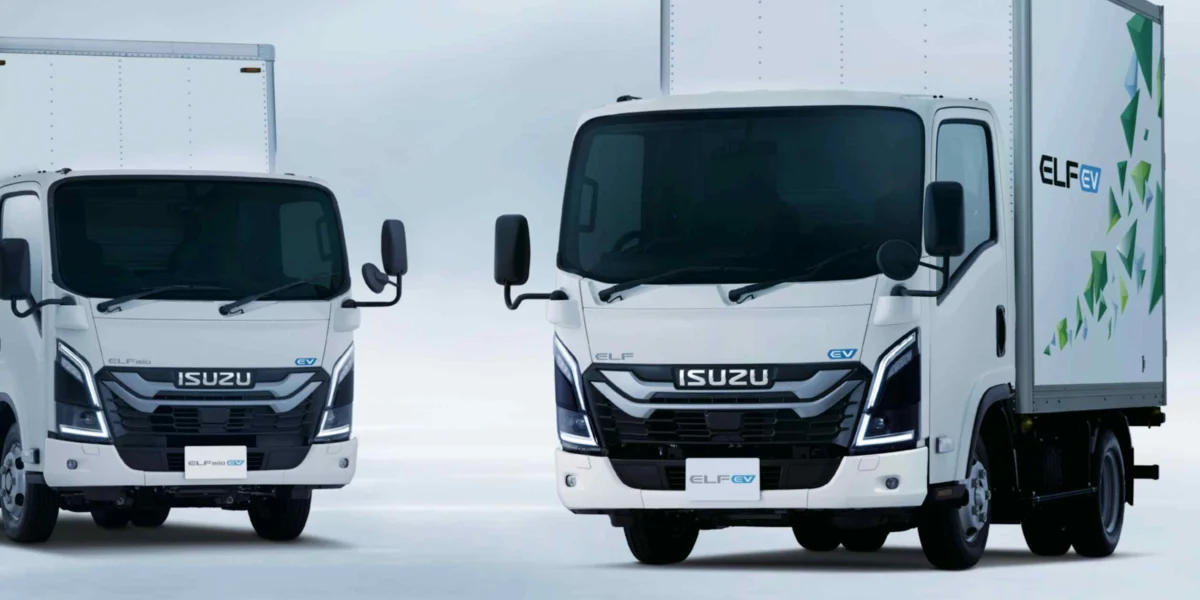
TOKYO/NAGOYA, Japan – Isuzu Motors, a venerable name in commercial vehicle manufacturing, is embarking on a significant collaborative venture with its Japanese counterpart, Toyota Motor Corporation, to develop and mass-produce light-duty fuel cell commercial trucks. This ambitious initiative, slated for initial production in fiscal year 2027, signals a strategic pivot towards smaller, more agile hydrogen-powered vehicles, designed to leverage the expanding hydrogen refueling infrastructure and address the evolving demands of urban logistics and specialized commercial applications. The partnership underscores a shared commitment to advancing hydrogen fuel cell technology as a viable decarbonization pathway for the transportation sector.
The nascent collaboration will see Isuzu’s expertise in commercial vehicle design and manufacturing converge with Toyota’s pioneering advancements in fuel cell technology, a field in which the automaker has invested heavily for decades, most notably with its Mirai passenger car. The immediate focus will be on integrating Toyota’s advanced fuel cell stacks into Isuzu’s existing light-duty truck platforms, specifically leveraging the architecture of the Elf EV, a battery-electric variant of Isuzu’s popular light-duty commercial vehicle. This approach allows for a streamlined development process, capitalizing on established chassis and body designs while introducing a novel, zero-emission powertrain.
Strategic Rationale: Addressing Infrastructure and Application Gaps
The decision to concentrate on light-duty fuel cell trucks is a calculated move, reflecting a keen understanding of the current limitations and future potential of hydrogen mobility. While heavy-duty trucks and long-haul applications are often cited as prime candidates for hydrogen power due to their range requirements and payload capacities, the development of light-duty fuel cell vehicles addresses a different, yet equally crucial, segment of the market. Light-duty trucks, often employed in urban delivery routes, last-mile logistics, and specialized services such as mobile workshops or emergency response vehicles, require greater operational flexibility and a broader network of refueling points.
Toyota’s extensive research and development in hydrogen technology, culminating in the commercialization of the Mirai sedan, provides a robust foundation for this partnership. The Mirai, now in its second generation, has demonstrated the viability of hydrogen fuel cells in passenger vehicles, showcasing impressive range and rapid refueling times, akin to traditional gasoline vehicles. By adapting this mature technology for commercial applications, Isuzu and Toyota aim to overcome one of the primary barriers to widespread fuel cell adoption: the availability of hydrogen refueling stations.
"Our collaboration with Toyota on light-duty fuel cell trucks is a testament to our shared vision for a sustainable future in commercial transportation," stated a spokesperson for Isuzu Motors, who requested anonymity as official details beyond the initial announcement are not yet public. "We recognize the critical role that light-duty vehicles play in urban economies, and by focusing on hydrogen, we can offer a compelling zero-emission solution that complements existing battery-electric options, particularly in scenarios where rapid refueling and extended operational uptime are paramount."
The fiscal 2027 target for mass production suggests a deliberate and thorough development cycle, encompassing rigorous testing, validation, and the establishment of a robust supply chain for fuel cell components, hydrogen storage systems, and specialized manufacturing processes. This timeline also aligns with anticipated government incentives and regulatory frameworks aimed at accelerating the adoption of zero-emission commercial vehicles in Japan and potentially other key global markets.
A History of Collaboration and the Evolution of Hydrogen
This latest venture between Isuzu and Toyota is not unprecedented. The two Japanese automotive giants have a history of collaboration, most notably their joint development of the medium-duty diesel truck platform that has seen global success. This prior working relationship likely provides a strong foundation of mutual trust and technical understanding, facilitating the current partnership.
The broader context of this announcement is the intensifying global race to decarbonize the transportation sector. While battery-electric vehicles (BEVs) have dominated headlines and market share growth in recent years, concerns regarding battery weight, charging times, and the availability of charging infrastructure for larger commercial vehicles have prompted renewed interest in alternative zero-emission technologies, including hydrogen fuel cells.
The International Energy Agency (IEA) has consistently highlighted the potential of hydrogen as a clean energy carrier for sectors that are difficult to electrify. In its "Global Hydrogen Review 2023," the IEA noted a significant increase in announced hydrogen production projects worldwide, indicating a growing momentum behind the hydrogen economy. However, the report also emphasizes the need for substantial investment in infrastructure, particularly refueling stations, to support the commercialization of hydrogen fuel cell vehicles.
By focusing on light-duty trucks, Isuzu and Toyota are strategically positioning themselves to capitalize on a network of hydrogen refueling stations that are expected to proliferate, especially in urban centers and along major transportation corridors. This targeted approach aims to avoid the chicken-and-egg problem often associated with new fuel technologies, where vehicle adoption is hampered by a lack of infrastructure, and infrastructure development is slowed by a lack of vehicles.
Technical Considerations and Future Implications
The development will likely involve significant engineering challenges. Chief among these will be the optimization of hydrogen storage systems to ensure adequate range for commercial applications without compromising payload capacity or vehicle maneuverability. The durability and longevity of fuel cell stacks in demanding commercial operating conditions will also be a critical area of focus. Toyota’s experience with the Mirai’s fuel cell system, which has accumulated millions of kilometers of real-world driving, will be invaluable in this regard.
Furthermore, the integration of fuel cell technology into Isuzu’s established manufacturing lines will require significant investment in new equipment and workforce training. The safety protocols associated with handling and storing hydrogen gas will also necessitate stringent design and operational standards.
The implications of this partnership extend beyond the immediate development of new trucks. It signals a potential bifurcation in the approach to decarbonizing commercial transportation, with both battery-electric and hydrogen fuel cell technologies playing complementary roles. While BEVs may continue to be the primary solution for shorter urban routes and applications where charging infrastructure is readily available, fuel cell trucks could become the preferred choice for longer distances, heavier payloads, or in regions where hydrogen refueling infrastructure is being prioritized.
"This collaboration is a significant step towards realizing the full potential of hydrogen in the commercial vehicle sector," commented an industry analyst specializing in sustainable transportation, who preferred to remain anonymous due to ongoing market research. "By targeting light-duty segments, Isuzu and Toyota are opening up new possibilities for businesses looking to reduce their carbon footprint without compromising operational efficiency. The success of this venture could pave the way for broader adoption of fuel cell technology across the entire commercial vehicle spectrum."
The announcement also underscores the strategic importance of domestic collaboration in advancing key industrial technologies. Japan has set ambitious decarbonization targets, and initiatives like this are crucial for its manufacturing sector to remain competitive in the global transition to cleaner energy.
Roadmap to Mass Production
The journey from concept to mass production for fiscal year 2027 will involve several critical phases:
- Phase 1: Technology Integration and Prototyping (Current – 2025): This phase will focus on adapting Toyota’s fuel cell technology to Isuzu’s Elf EV platform. Extensive prototyping and bench testing will be conducted to validate the performance, efficiency, and durability of the integrated system. This will likely involve the development of specialized hydrogen storage tanks and the integration of the fuel cell power management system.
- Phase 2: Real-World Testing and Validation (2025 – 2026): Prototypes will undergo rigorous real-world testing under various operational conditions, simulating typical commercial use cases. This will involve collecting extensive data on range, refueling times, energy consumption, and overall reliability. Feedback from a select group of pilot customers may also be incorporated during this phase.
- Phase 3: Manufacturing Setup and Supply Chain Development (2026 – 2027): Isuzu will adapt its manufacturing facilities to accommodate the production of fuel cell trucks. This includes establishing dedicated assembly lines and ensuring the availability of specialized components from a robust supply chain. Partnerships with hydrogen suppliers and refueling infrastructure developers will also be crucial.
- Phase 4: Mass Production Launch (Fiscal Year 2027): The initial series production of the light-duty fuel cell trucks will commence, targeting key markets and customer segments. The production volume will likely ramp up gradually as market demand and infrastructure development progress.
The success of this ambitious undertaking will depend on a confluence of factors, including technological advancements, supportive government policies, sustained investment in hydrogen infrastructure, and the willingness of commercial fleet operators to embrace this new form of propulsion. However, the strategic alignment between two of Japan’s leading automotive manufacturers signals a strong commitment to pushing the boundaries of sustainable commercial transportation. The world will be watching closely as Isuzu and Toyota work to bring these innovative fuel cell trucks to market, potentially redefining the future of urban logistics and beyond.