Gilang Muhammad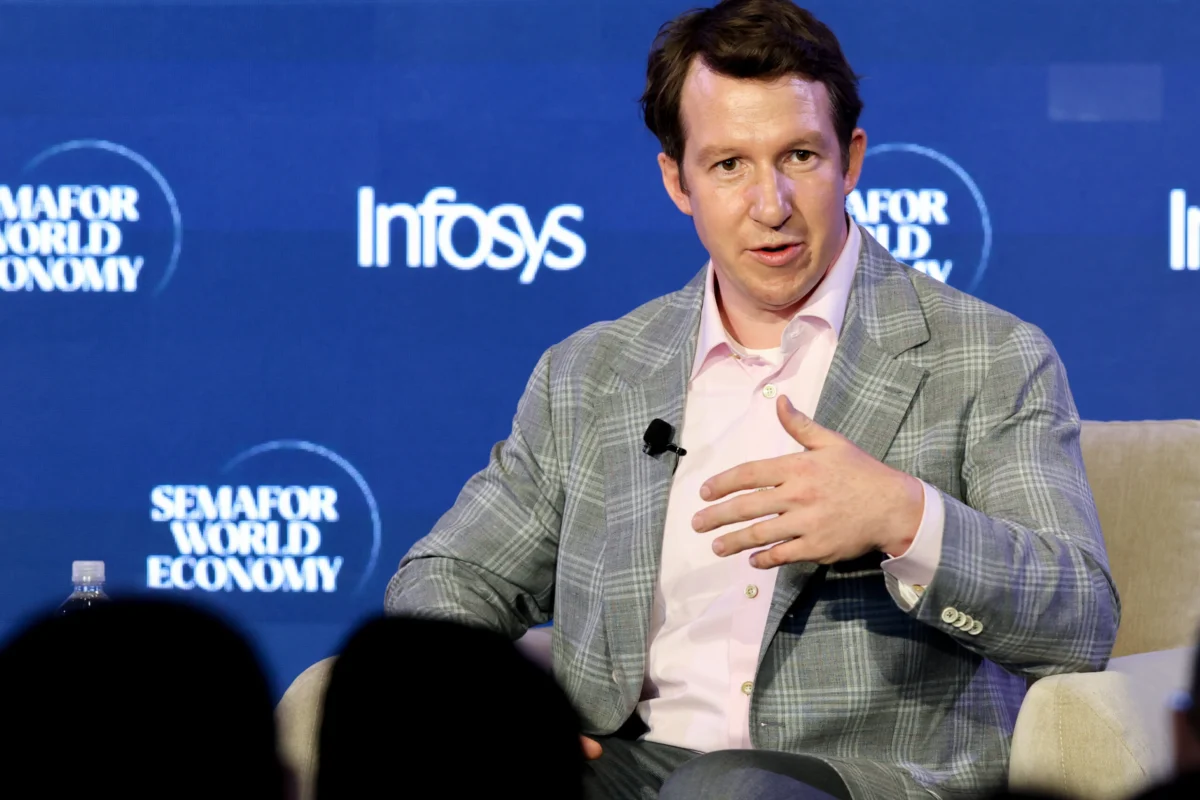
WASHINGTON, D.C. – The burgeoning debate over artificial intelligence’s transformative impact on global labor markets took center stage at the Semafor World Economy Summit, held during the high-profile International Monetary Fund (IMF) and World Bank Spring meetings in Washington, D.C. on Monday, April 13, 2026. Against a backdrop of widespread anxiety among workers and job seekers regarding their professional futures, industry leaders offered divergent perspectives on AI’s ultimate role. A notable point of contention emerged from within Anthropic, a leading AI research and deployment company, as co-founder Jack Clark publicly countered the more pessimistic projections of his own CEO, Dario Amodei, regarding potential job losses.
Clark, speaking to a gathering of policymakers, economists, and business executives, expressed a more optimistic outlook, asserting that any significant rise in unemployment due to AI represents a "policy choice" rather than an inevitable outcome. This stance directly challenges previous statements by Anthropic CEO Dario Amodei, who had warned that AI could potentially drive unemployment rates as high as 20% within the next five years. Clark’s argument is rooted in the belief that society possesses the time and collective capacity to adapt to the profound technological shifts heralded by AI, thereby mitigating widespread joblessness.
"I think that the aspect of this, which is a choice, is, if we’re correct, this technology really is going to change the world in a vast way," Clark stated from the conference stage. He emphasized AI’s impending influence across various sectors, from fundamental business operations and national security strategies to the very fabric of human interaction. "It will change how business is done, … aspects of national security, how we even relate to one another as people. And it’s impossible to reconcile that with a world where the economy doesn’t change in substantial ways as well." This perspective frames the economic transformation not as a threat leading to a static pool of jobs, but as an opportunity for redefinition and growth, contingent on proactive societal responses.
The Broader Context of the Semafor World Economy Summit
The Semafor World Economy Summit, an integral part of the larger IMF and World Bank Spring Meetings, serves as a critical forum for global leaders to discuss pressing economic issues, policy challenges, and emerging trends. Held annually, these meetings convene central bankers, finance ministers, development professionals, private sector executives, and academics to address global financial stability, poverty reduction, and sustainable development. In recent years, the rapid advancement of artificial intelligence has propelled it to the forefront of these discussions, given its potential to reshape economies, labor markets, and geopolitical dynamics. The presence of AI pioneers like Jack Clark underscores the urgency and importance of understanding and preparing for this technological revolution at a macroeconomic level. The debate surrounding AI’s impact on employment is particularly salient for institutions like the IMF and World Bank, which are tasked with fostering economic stability and inclusive growth worldwide.
Divergent Views within the AI Community and Beyond
The internal disagreement within Anthropic—one of the industry’s most prominent and well-funded AI developers—highlights a broader schism within the AI community itself regarding the technology’s long-term societal implications. Dario Amodei’s more cautious forecast of 20% unemployment echoes concerns raised by various economists and futurists who point to historical precedents of technological disruption, albeit at potentially slower paces. For instance, a 2023 report by Goldman Sachs estimated that generative AI could expose the equivalent of 300 million full-time jobs to automation across major economies, with some roles being fully replaced while others are augmented. Similarly, the World Economic Forum’s "Future of Jobs Report 2023" projected that AI and automation could displace 83 million jobs globally by 2027, though it also noted the creation of 69 million new jobs, resulting in a net loss.
Clark’s counter-argument, emphasizing adaptation and societal choice, aligns with a school of thought that views technological unemployment as a challenge that can be managed through policy interventions, education reform, and robust social safety nets. He posits that the multi-year timeline for such profound economic shifts provides ample opportunity for governments, educational institutions, and businesses to collaborate on re-skilling initiatives, new educational paradigms, and the development of novel industries. This viewpoint often draws parallels with past industrial revolutions, which, despite initial disruptions, ultimately led to new forms of work and increased overall prosperity, albeit with periods of significant social upheaval.
Market Reaction and the Rise of Agentic Systems
The anxieties surrounding AI’s disruptive potential are not confined to theoretical debates; they are already manifesting in financial markets. Anthropic, alongside other AI innovators, has been at the epicenter of these fears, contributing to a "bloodbath" for traditional software companies. Investors, suddenly perceiving these firms as vulnerable to technological obsolescence, are re-evaluating valuations in a world increasingly moving towards "agentic systems." These advanced AI models are designed to take autonomous actions and achieve objectives with minimal human oversight, fundamentally altering the traditional software interaction model.
The iShares Expanded Tech-Software Sector ETF (IGV), a key indicator for the software industry, has entered a bear market, plunging more than 30% from its peak in September of the previous year. This significant decline reflects a broader investor sentiment shift, signaling concerns that existing software paradigms and business models may be rapidly outmoded by more capable and autonomous AI solutions. The implications extend beyond just software; any industry reliant on routine digital tasks or information processing could face similar pressures as agentic AI systems become more sophisticated and widely adopted.
Preparing the Workforce: Clark’s Vision for Education
At the heart of Clark’s vision for navigating this transformation is the critical role of education and skill development. As the leader of The Anthropic Institute, a 30-person think tank dedicated to studying AI’s effects on the workplace, Clark is intimately involved in understanding these dynamics. He highlighted a perceived "weakness" in early graduate employment in some industries, attributing it to a mismatch between traditional educational offerings and the emerging demands of an AI-infused economy.
Clark emphasized that college students entering the job market today must cultivate a distinct set of skills, moving beyond rote memorization or basic programming. He advocated for abilities centered on critical analysis, interdisciplinary thinking, and the capacity to connect disparate pieces of information. "What AI allows us to do is it allows you to have access to sort of an arbitrary amount of subject matter experts in different domains," Clark explained. "But the really important thing is knowing the right questions to ask and having intuitions about what would be interesting if you collided different insights from many different disciplines." This paradigm shift suggests that future success will hinge not on possessing information, which AI can readily provide, but on the human ability to synthesize, innovate, and formulate complex inquiries. Traditional education models, focused on imparting specific technical skills that AI might soon automate, may need radical re-evaluation to prepare students for this new landscape.
Industry Leaders on AI Integration and Workforce Adaptation
The Semafor panel also featured other industry executives who shared their strategies and observations on integrating AI into their operations and preparing their workforces:
Jon Clifton, CEO of Gallup, provided crucial data on AI adoption rates. He noted that while a substantial 50% of American employees report using AI tools, a significant gap exists in its consistent application for productivity gains. "One of the challenges was … are you seeing the productivity gains? It’s not being used a lot. So interestingly enough, only 13% of employees are actually using it on a daily basis," Clifton revealed. This statistic highlights a key hurdle: mere access to AI tools does not automatically translate into improved efficiency or value creation. It underscores the need for effective training, cultural shifts, and clear guidelines for integrating AI into daily workflows to unlock its full potential. Gallup’s research often delves into workforce engagement and well-being, suggesting that successful AI integration will also depend on how employees perceive and interact with these new tools, rather than just their availability.
Daniel Herscovici, President and CEO of Plume, offered a practical approach to organizational integration, advocating for dedicated leadership. "We have an AI czar … she’s amazing, and she’s dictated our strategy moving forward. So I think that assigning somebody whose job is to wake up every day and [address] how to implement the infrastructure is quite important." This concept of an "AI czar" or chief AI officer is gaining traction in many large organizations, reflecting the strategic importance of AI and the need for a centralized vision and execution plan. Herscovici also directly addressed the question of personal productivity, stating that despite implementing AI more into his daily routine, he is "absolutely not" working less. Instead, he affirmed, "I am getting more done in my eight or nine or 12 hour day, that’s for sure." This anecdotal evidence supports the "augmentation" thesis, where AI empowers individuals to accomplish more within the same timeframe, potentially leading to increased output rather than reduced hours or job elimination.
Salil Parekh, Managing Director and CEO of Infosys, a global leader in consulting and IT services, detailed a comprehensive re-skilling initiative for his company’s vast workforce. "The approach we’ve chosen is to re-skill all our 300,000 employees on AI tools," Parekh explained. He outlined a strategic, phased approach: "first we do a lot of work, where, in the first few months of training, we encourage the sort of recent graduate to not use any AI tools and learn how software development is done. And then bring in, after two or three months, the usage of tools and see how things are enhanced." This methodology suggests a recognition that foundational skills remain crucial. Rather than immediately relying on AI as a crutch, employees first master core competencies, which then allows them to leverage AI as a powerful enhancement tool, fostering deeper understanding and more effective application. This approach could serve as a blueprint for other large corporations facing similar re-skilling challenges.
Broader Implications and the Path Forward
The discussions at the Semafor World Economy Summit underscore that AI’s impact on the labor market is multifaceted, extending far beyond simple job displacement. It touches upon education reform, corporate strategy, public policy, and societal resilience. Jack Clark’s assertion that widespread joblessness is a "choice" places a significant onus on policymakers and educators to proactively shape the future of work. This includes investing in lifelong learning programs, adapting curricula to foster critical thinking and interdisciplinary skills, and potentially exploring new social safety nets or universal basic income models to support individuals during transitional periods.
The "augmentation vs. displacement" debate will likely continue to evolve as AI capabilities advance. While executives like Herscovici report increased output, the long-term macroeconomic effects on aggregate employment levels remain a subject of intense study and debate. The shift towards agentic systems and the resulting market disruptions highlight the urgency for businesses to innovate and for governments to create regulatory frameworks that encourage responsible AI development while protecting workers.
Ultimately, the consensus among many leaders appears to be that the future of work in an AI-driven world will demand unprecedented adaptability from individuals and institutions alike. The challenge, as framed by Clark, is not to prevent change, but to steer it towards a future where human ingenuity and AI capabilities combine to create new opportunities and a more prosperous, inclusive society. The conversations held at the IMF and World Bank Spring Meetings serve as a vital starting point for coordinating these global efforts.