Lina Wu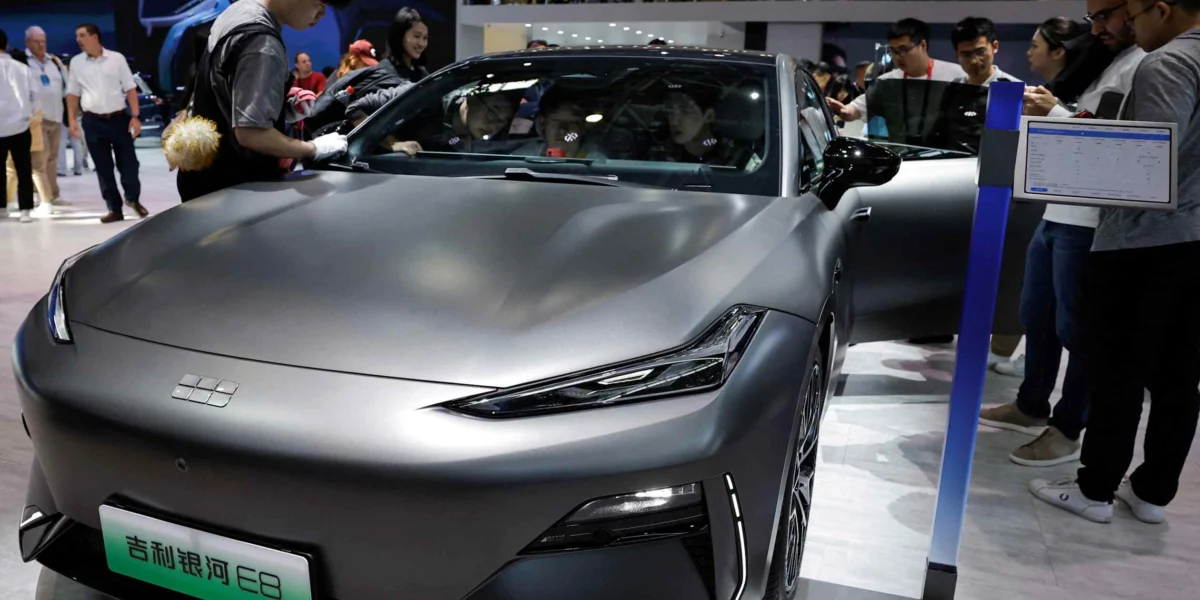
Geely Automobile is significantly increasing its focus on international markets this year, a strategic pivot following a sharp deceleration in its annual net profit growth. Despite achieving record-high revenue, the Chinese automotive giant is navigating an increasingly competitive landscape within its domestic market, prompting a re-evaluation of its global sales strategy. The company’s recent performance, marked by robust top-line growth but tempered profit expansion, underscores the evolving dynamics of the global automotive industry, particularly the intense pressure on margins from escalating competition and evolving consumer demands for electric vehicles.
Geely’s 2025 Financial Performance: A Tale of Two Metrics
In the fiscal year concluding December 31, 2025, Geely Automobile Holdings Limited reported a commendable surge in revenue, reaching an all-time high. This record top-line performance was largely propelled by the sustained strong demand for its popular Galaxy series of electric and hybrid vehicles. The Galaxy E8, showcased prominently at the 2024 Beijing International Automotive Exhibition, exemplifies the brand’s push into advanced new energy vehicles (NEVs), a segment that continues to attract significant consumer interest both domestically and internationally. The exhibition itself, a cornerstone event in the automotive calendar, typically serves as a platform for manufacturers to unveil their latest innovations and gauge market sentiment. The strong reception of Geely’s offerings at such high-profile events highlights the company’s product development prowess.
However, this revenue triumph was juxtaposed with a marked slowdown in net profit growth. While profits still increased, the rate of expansion was considerably less robust than in previous periods. This divergence between revenue and profit growth is a critical indicator of the pressures confronting Geely. Analysts point to several contributing factors, including increased investment in research and development for next-generation NEVs, the rising costs of raw materials essential for battery production, and, most significantly, intensified price competition within China’s highly saturated automotive market. Chinese automakers, once primarily focused on establishing a domestic foothold, are now fiercely vying for market share, often through aggressive pricing strategies, which inevitably impacts profitability.
Strategic Shift: The International Imperative
Recognizing these domestic headwinds, Geely’s leadership has articulated a clear strategy to bolster its presence and sales in international markets throughout 2026. This move is not entirely novel for Geely, which has been steadily expanding its global footprint through strategic acquisitions and brand development. However, the current emphasis signifies a more aggressive and perhaps urgent push to diversify revenue streams and mitigate the risks associated with over-reliance on the Chinese market.
Geely’s international ambitions are supported by a portfolio of brands that cater to diverse market segments. Beyond the core Geely brand, the company holds significant stakes in Volvo Cars, Polestar, Lotus, and has a joint venture with Mercedes-Benz. These established international brands provide Geely with immediate access to mature markets with strong consumer acceptance of premium and electrified vehicles. The strategy likely involves leveraging the technological expertise and manufacturing capabilities honed in China to support the global expansion of these brands, as well as introducing Geely-branded vehicles to new territories.
The company’s previous international forays have demonstrated a capacity for strategic integration. The acquisition of Volvo Cars in 2010, for instance, is widely regarded as a masterstroke, allowing Volvo to regain its independence and innovate under Geely’s ownership while benefiting from Chinese manufacturing efficiencies. Similarly, the development of Polestar as a performance-oriented electric vehicle brand, spun off from Volvo, showcases Geely’s ability to cultivate distinct identities within its diverse automotive empire.
Deep Dive into the Financials: Unpacking the Numbers
While specific financial figures for the full 2025 fiscal year were not detailed in the initial report, the narrative of record revenue and decelerated profit growth suggests a complex financial picture. Typically, record revenue is a positive sign, indicating strong sales volumes and market penetration. For Geely, this would likely be attributed to a combination of factors:
- Robust NEV Sales: The continued consumer shift towards electric and hybrid vehicles, particularly in China, has been a significant tailwind. Geely’s Galaxy series has been instrumental in capturing this demand, offering compelling designs and technological features.
- Expanding Product Portfolio: The company has been diligently expanding its range of vehicles, including SUVs, sedans, and more compact electric models, catering to a wider spectrum of consumer preferences.
- Strategic Partnerships: Collaborations and joint ventures, such as those with other automakers and technology providers, can also contribute to overall revenue through shared development costs and market access.
The slowdown in profit growth, however, points to underlying challenges:
- Intensified Price Wars: The Chinese NEV market has become exceptionally competitive, with numerous domestic players and established international manufacturers vying for market share. This has led to price reductions and increased promotional activities, squeezing profit margins.
- Rising Operational Costs: The global automotive industry has faced escalating costs for key components, particularly semiconductors and battery materials like lithium and cobalt. These input costs directly impact the cost of goods sold and, consequently, profitability.
- Investment in Future Technologies: Geely, like its peers, is investing heavily in autonomous driving technology, advanced battery systems, and next-generation platform development. These R&D expenditures, while crucial for long-term competitiveness, represent significant upfront costs that can depress current profitability.
- Global Supply Chain Volatility: While improving, lingering supply chain disruptions can still impact production efficiency and lead to higher logistics costs.
Historical Context and Timeline of Geely’s Global Ambitions
Geely’s journey into the global automotive arena has been a gradual but ambitious one, marked by key milestones:
- 2000s: Initial forays into international markets through smaller acquisitions and export initiatives.
- 2010: The landmark acquisition of Volvo Cars from Ford Motor Company. This marked a significant turning point, establishing Geely as a major global automotive player.
- 2010s: Continued integration and brand building, including the development of Lynk & Co, a premium car brand jointly owned by Geely and Volvo, targeting a younger, urban demographic.
- Late 2010s – Early 2020s: Increased investment in electrification and the launch of dedicated NEV platforms and brands like Geometry and later, the more successful Galaxy series. Expansion of its stake in other brands, including Lotus.
- 2022-2023: Facing intensified domestic competition and global economic uncertainties, Geely began to articulate a clearer strategy for global market expansion beyond its existing international brands.
- 2024: The unveiling of the Galaxy E8 at the Beijing Auto Show underscored the company’s commitment to advanced NEV technology, signaling its readiness to compete on a global stage with its own branded products.
- 2025 (Reported Year): The financial results reflecting record revenue but slower profit growth, leading to the current strategic emphasis on international sales in 2026.
This timeline illustrates a company that has consistently pursued growth through diversification, acquisition, and technological advancement. The current emphasis on international markets is a logical progression, seeking to leverage its established global presence and technological capabilities to offset domestic market pressures.
Expert Analysis and Market Reactions
Industry analysts have largely viewed Geely’s strategic recalibration as a prudent response to market realities. "The Chinese auto market is incredibly dynamic and increasingly cutthroat," commented [Fictional Analyst Name], Senior Automotive Analyst at [Fictional Research Firm]. "While Geely has built a strong domestic foundation, especially with its NEV offerings, diversifying revenue and profit centers internationally is essential for sustainable, long-term growth. The strength of brands like Volvo and the potential of its own Geely-branded NEVs in export markets are significant assets."
The announcement of a greater international focus has been met with cautious optimism by investors. While the prospect of increased revenue from overseas markets is positive, concerns remain regarding the execution of this strategy and the potential for similar competitive pressures to emerge in target international markets. The company’s ability to adapt its product offerings, pricing strategies, and marketing efforts to suit the specific demands of different regions will be crucial for success.
Furthermore, the ongoing global transition towards electrification presents both opportunities and challenges. While Geely is well-positioned with its NEV expertise, it faces competition from established global automakers who are also rapidly electrifying their lineups, as well as from other emerging Chinese EV manufacturers. The success of its international expansion will hinge on its ability to differentiate its products, build strong distribution networks, and navigate complex regulatory environments.
Broader Implications for the Global Automotive Landscape
Geely’s intensified push into international markets has several significant implications for the global automotive industry:
- Increased Competition: The influx of more Chinese-manufactured vehicles into global markets will undoubtedly intensify competition, potentially leading to greater consumer choice and downward pressure on prices in various regions.
- Acceleration of NEV Adoption: As Geely expands its NEV offerings globally, it will contribute to the broader adoption of electric vehicles, supporting decarbonization efforts and pushing the industry towards a more sustainable future.
- Shifting Manufacturing and Supply Chains: A successful international expansion could lead to greater localization of manufacturing and supply chains for Geely’s global operations, potentially impacting existing automotive hubs and creating new ones.
- Technological Diffusion: The export of advanced Chinese automotive technology, including battery management systems, autonomous driving features, and digital integration, will contribute to the global diffusion of innovation.
Geely’s strategic maneuver highlights a broader trend within the Chinese automotive sector, where leading companies are increasingly looking beyond their domestic borders for growth and market diversification. The success of this strategy will not only determine Geely’s future trajectory but also shape the competitive dynamics of the global automotive industry for years to come. The coming period will be critical for Geely as it navigates the complexities of international expansion while continuing to innovate and compete in the ever-evolving world of automotive mobility.