Lina Wu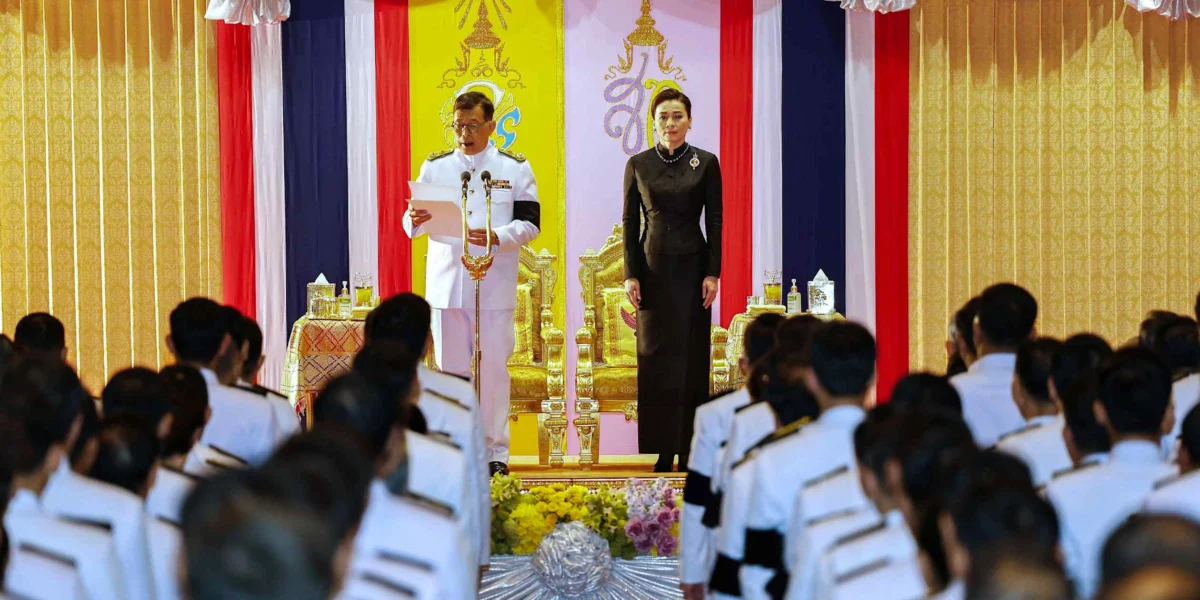
BANGKOK – Thailand’s parliament is poised to elect a new prime minister on Thursday, with incumbent Anutin Charnvirakul widely anticipated to secure a second term following a decisive victory for his Bhumjaithai Party in the general election held last month. The upcoming vote in the bicameral legislature marks a critical juncture for Thai politics, signaling a potential continuation of the current government’s policies and priorities.
The Bhumjaithai Party’s triumph was a significant outcome of the March election, defying pre-election predictions and altering the anticipated political landscape. The party secured a substantial mandate, allowing Anutin, who also serves as the Minister of Public Health, to consolidate his position as a leading contender for the premiership. This electoral success is attributed to a multifaceted campaign strategy that resonated with key voter demographics, particularly in the party’s strongholds in the northeast and central regions of Thailand.
Electoral Mandate and Bhumjaithai’s Ascent
The general election, held on March 9, 2026, saw an unprecedented surge in support for the Bhumjaithai Party. Preliminary results indicated that the party secured over 150 seats in the House of Representatives, a significant increase from its previous performance and a clear majority on its own. This landslide victory has provided Anutin with considerable leverage in the parliamentary vote for prime minister, where a candidate needs a majority of the combined votes of the House of Representatives and the Senate.
Bhumjaithai’s campaign focused on a platform of pragmatic economic policies, rural development, and a continuation of its signature health initiatives, including its controversial but popular cannabis legalization policy. The party also capitalized on its image as a stable and experienced political force, contrasting itself with some of the more volatile opposition parties. Analysts suggest that the party’s ability to connect with rural voters through targeted economic promises and its consistent messaging on public health issues were key drivers of its success.
The election saw a high voter turnout, reflecting a populace eager to participate in shaping the nation’s future. The results have been interpreted as a signal of public approval for the Bhumjaithai Party’s approach to governance and a desire for continuity after a period of significant political and economic challenges. The party’s performance is a testament to its effective grassroots organization and its ability to adapt its message to the evolving needs and concerns of the electorate.
The Path to Premiership: Parliamentary Vote Dynamics
The election of the prime minister in Thailand is a two-step process. Following the general election, the King formally opens Parliament. Subsequently, a joint sitting of the House of Representatives and the Senate convenes to vote for the prime minister. A candidate requires the support of at least 376 members of the combined 750-seat parliament (500 from the House and 250 from the Senate).
Given the Bhumjaithai Party’s substantial majority in the House of Representatives, Anutin is in a strong position to secure the required votes. While the Senate is appointed and its members do not vote based on direct electoral mandates, their alignment with the government or their perceived allegiances often play a role in such crucial votes. However, with the Bhumjaithai Party’s dominant performance in the lower house, the Senate’s support, or at least its non-obstruction, is likely to follow the electoral outcome.
Sources within the political establishment suggest that Anutin has been actively engaged in coalition building and securing the necessary endorsements to ensure a smooth parliamentary confirmation. The party’s leadership has expressed confidence in their ability to garner sufficient support, highlighting the broad appeal of their policy agenda and their proven track record in governance.
Background and Context: A Shifting Political Landscape
Anutin Charnvirakul first rose to prominence as a key figure in Thai politics, leading the Bhumjaithai Party. His political career has been marked by his pragmatic approach and his ability to navigate complex political alliances. Prior to the 2026 election, Anutin served as Deputy Prime Minister and Minister of Public Health in the coalition government led by former Prime Minister Prayut Chan-o-cha. During his tenure, he oversaw significant public health initiatives, most notably the pioneering legalization of cannabis for medical and industrial use in 2022, a policy that has become a defining feature of his political brand.
The March 2026 election was a highly anticipated event, following years of political maneuvering and shifts in public sentiment. The political climate leading up to the election was characterized by debates over economic recovery, social welfare, and the role of the monarchy in politics. The Bhumjaithai Party positioned itself as a unifying force, emphasizing stability and economic progress.
The election results represent a significant shift from the outcomes of previous elections, which had seen a more fragmented political landscape. The Bhumjaithai Party’s decisive victory suggests a public desire for a strong and stable government capable of implementing its agenda without significant parliamentary obstruction.
Supporting Data and Electoral Performance
The Bhumjaithai Party’s electoral success can be quantified by its seat allocation in the House of Representatives. While official final tallies are still being scrutinized, preliminary figures indicate the party secured approximately 155 seats. This represents a substantial leap from its previous standing of around 50-60 seats. This surge is particularly notable in the northeastern provinces, where the party has historically enjoyed strong support, but it also saw gains in central Thailand.
The party’s vote share is estimated to have risen to over 25% of the national vote, a considerable increase from previous elections where it hovered around 10-15%. This expanded voter base suggests a broadening appeal beyond its traditional strongholds, potentially due to effective campaigning and the popularity of its key policy proposals, such as the continued development of the cannabis industry and infrastructure projects aimed at improving rural livelihoods.
In contrast, some of the established major parties saw their support diminish, reflecting a dynamic shift in voter preferences. The outcome signals a consolidation of power around a few key political forces, with Bhumjaithai emerging as the dominant player.
Official Responses and Reactions
Following the election results, Anutin Charnvirakul expressed his gratitude to the Thai people for their trust and support. He reiterated his commitment to serving the nation and to implementing the Bhumjaithai Party’s vision for a prosperous and stable Thailand. "This victory is a mandate from the people to continue our work," Anutin stated in a press conference following the initial results. "We will work tirelessly to deliver on our promises and to improve the lives of all Thai citizens."
Leaders of other political parties have begun to offer their congratulations, though some have also expressed concerns about the future direction of Thai politics. The Pheu Thai Party, a major opposition force, has acknowledged the electoral outcome and indicated its intention to play a constructive role in the parliamentary process, although the extent of their cooperation will depend on the final coalition arrangements.
The business community has largely reacted positively to the prospect of Anutin’s re-election, citing his party’s focus on economic stability and its pragmatic approach to policy implementation. The continuation of policies related to tourism, infrastructure development, and the cannabis sector is expected to provide a degree of predictability for investors.
Broader Impact and Implications
Anutin’s expected re-election as prime minister carries significant implications for Thailand’s domestic and foreign policy. Domestically, it signals a continuation of the Bhumjaithai Party’s policy agenda, including further development of the medical and wellness tourism sectors, potential expansion of the cannabis industry, and continued investment in rural infrastructure and public health. This could lead to sustained economic growth, particularly in sectors that have been central to the party’s platform.
On the foreign policy front, a Bhumjaithai-led government is likely to maintain Thailand’s generally neutral stance in international affairs, focusing on strengthening economic ties and regional cooperation. The party has historically advocated for robust engagement with neighboring ASEAN countries and has shown a pragmatic approach to its relationships with major global powers.
The outcome of the prime ministerial vote will set the tone for the next parliamentary term, influencing legislative priorities and the overall direction of governance. The Bhumjaithai Party’s strong electoral performance suggests a period of relative political stability, allowing for the focused implementation of its policy initiatives. However, the effectiveness of Anutin’s premiership will also depend on his ability to manage parliamentary dynamics, foster consensus among coalition partners, and address the ongoing economic and social challenges facing Thailand. The nation watches with anticipation as its new prime minister prepares to take the helm, aiming to build upon the electoral mandate and steer the country towards its developmental goals.