Gilang Muhammad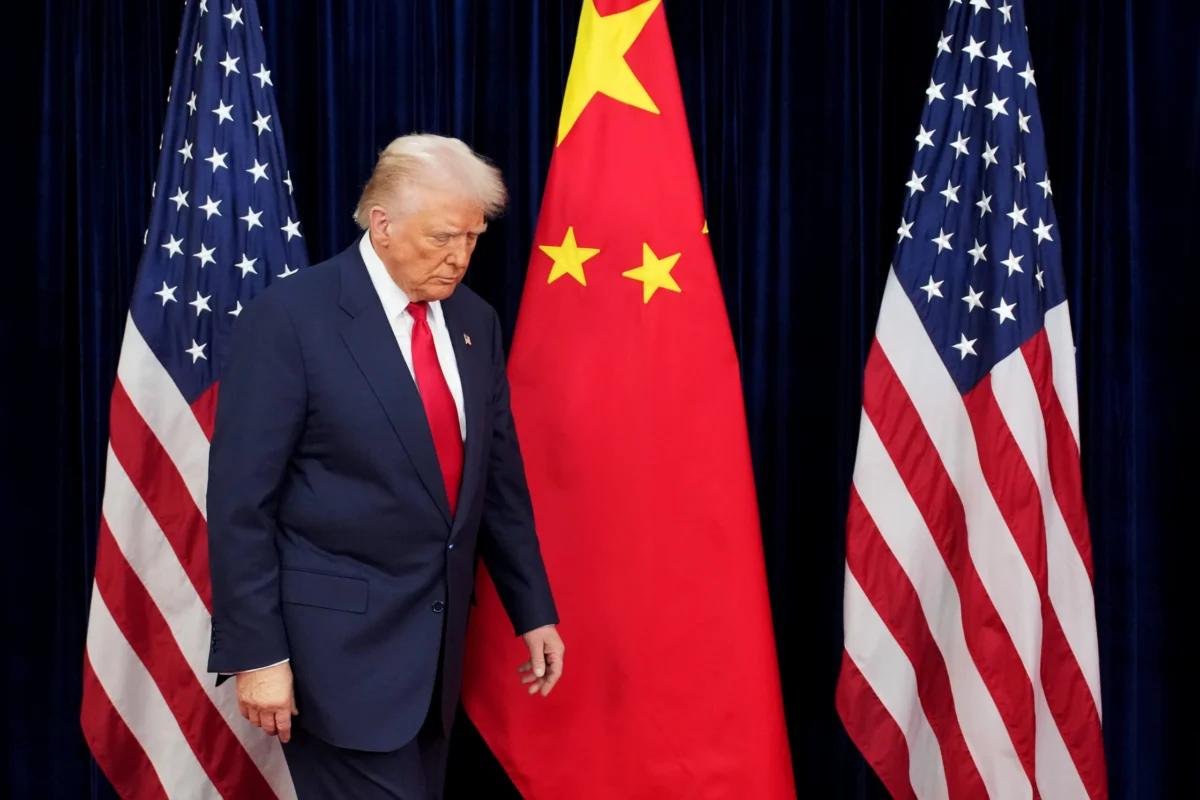
U.S. President Donald Trump has cast a shadow of uncertainty over a crucial upcoming summit with Chinese President Xi Jinping, suggesting the planned trip to Beijing could be delayed unless China assists in reopening the strategically vital Strait of Hormuz. This unexpected demand, voiced publicly on Sunday, underscores a fresh flashpoint in an already complex and often fraught bilateral relationship, raising questions about the stability of global trade and diplomatic efforts between the world’s two largest economies. The summit, originally slated for March 31 to April 2 in Beijing, aimed to build on a fragile trade truce established last year.
Speaking in an interview with the Financial Times, President Trump articulated his expectation that Beijing would actively contribute to unblocking the strait before his arrival. "We may delay," Trump stated without offering specifics on potential new timings, emphasizing that the two weeks leading up to the scheduled meeting constituted a "long time" during which Washington sought clarity on China’s commitment. This ultimatum introduces a new layer of complexity to high-stakes discussions that were already underway between top U.S. and Chinese economic officials in Europe. U.S. Treasury Secretary Scott Bessent met with his Chinese counterpart, He Lifeng, in Paris, for preparatory talks concerning the planned summit, discussions that now appear overshadowed by the President’s new condition.
Beijing has yet to officially confirm the dates for the summit, adhering to its typical practice of announcing such high-level engagements closer to their commencement. This reticence, combined with Trump’s public pressure, highlights the delicate dance of diplomacy preceding what would be the first visit by a U.S. President to China since Trump’s initial term in 2017. The proposed meeting comes five months after the two leaders last convened in Busan, South Korea, on October 30, 2025. That pivotal encounter saw an agreement on a one-year truce in a protracted trade war, a conflict that had previously seen retaliatory tariffs briefly escalate to triple-digit levels, inflicting significant economic strain on both nations and the global economy. Chinese top diplomat Wang Yi had earlier in the month indicated that the agenda for the exchange was already "on the table," suggesting that substantive preparations were well underway before President Trump’s recent remarks.
The Strategic Imperative of the Strait of Hormuz
The Strait of Hormuz is a narrow, 21-mile-wide waterway connecting the Persian Gulf with the Arabian Sea and the Gulf of Oman. Its geopolitical significance cannot be overstated, as it serves as the sole maritime passage for a substantial portion of the world’s crude oil and liquefied natural gas (LNG). Through this critical chokepoint, approximately one-fifth of the world’s daily oil supply—around 21 million barrels per day—transits, alongside a significant volume of LNG. Any disruption to shipping in the strait has immediate and profound repercussions for global energy markets, leading to soaring oil prices, increased shipping insurance premiums, and potential supply chain bottlenecks that ripple through international trade. The current closure or significant impediment to traffic in the Strait is understood to be a consequence of an escalating regional conflict, likely involving Iran, which erupted late last month. This conflict has intensified concerns over energy security and maritime safety across the globe.
President Trump, speaking aboard Air Force One on Sunday, framed China’s cooperation on the Strait of Hormuz as a matter of self-interest, asserting that China sources roughly 90% of its oil through the waterway. He emphasized that Washington has appealed to several European and Asian countries, including China, to assist in reopening the chokepoint. The President’s rationale suggests that China, as a major energy consumer, would be directly and severely impacted by a prolonged closure, thus providing an incentive for its intervention. However, a closer examination of China’s energy strategy and import data suggests that Beijing may be more insulated from the immediate economic fallout of the strait’s closure and the resultant surge in oil prices than Trump’s comments imply.
China’s Energy Resilience and Strategic Diversification
Contrary to President Trump’s assertion regarding China’s purported 90% reliance on the Strait of Hormuz for its oil, available data and expert analysis paint a more nuanced picture of Beijing’s energy security strategy. Over the past two decades, China has meticulously pursued a comprehensive strategy of energy source diversification and the accumulation of strategic reserves, specifically designed to mitigate the impact of precisely such prolonged disruptions.
As of January, China’s onshore crude stockpiles were estimated to hold approximately 1.2 billion barrels. This substantial reserve is sufficient to meet the nation’s demand for three to four months, providing a significant buffer against immediate supply shocks. This figure positions China among the leading nations in terms of strategic petroleum reserves, underscoring a deliberate policy to enhance energy independence and resilience.
Furthermore, maritime research firms and think tanks indicate that seaborne oil imports transiting the Strait of Hormuz now account for less than half of China’s total oil shipments. This marks a significant shift from historical reliance, reflecting successful efforts to diversify import routes and suppliers. China has invested heavily in overland pipelines, notably from Russia and Central Asian nations, which now deliver substantial volumes of crude oil directly, bypassing maritime chokepoints. Additionally, Beijing has expanded its sourcing from a wider array of global suppliers, including countries in Africa and South America, and increased its capacity for liquefied natural gas (LNG) imports from diverse global markets, further reducing its vulnerability to disruptions in any single maritime route.
Rush Doshi, director of the China Strategy Initiative at the Council on Foreign Relations, a prominent Washington-based think tank, highlighted this diversification. Echoing this perspective, Nomura analysts estimated that oil flows through Hormuz represent just 6.6% of China’s total energy consumption, a figure significantly lower than the one cited by President Trump. This distinction between total oil imports and overall energy consumption is crucial; while oil remains a key component, China’s rapidly expanding renewable energy sector and other fuel sources contribute to a broader energy mix, further diluting the impact of oil supply disruptions.
Adding another layer of complexity, satellite imagery tracked by maritime research firms suggests that Iran has continued to ship large amounts of crude oil to China since the regional conflict escalated late last month. This indicates potential efforts by both nations to circumvent or adapt to the strait’s partial closure, possibly through alternative routes or less detectable shipping methods, further insulating China from the immediate pressures of the crisis.
A "Bluff" or a Calculated Tactic?

The efficacy and sincerity of President Trump’s demand have been questioned by leading foreign policy experts. Edward Fishman, a senior fellow at the Council on Foreign Relations, dismissed Trump’s remarks as a "bluff," suggesting that Beijing is highly unlikely to deploy naval vessels to assist in reopening the Strait of Hormuz. Fishman also expressed skepticism regarding the president’s seriousness about outright canceling the Beijing summit.
Fishman argued that China’s long-term strategic investments in clean energy position it advantageously in the current global climate. "The bet that China made over a decade ago on clean energy – becoming the world’s biggest producer of solar panels, batteries and electric vehicles – is clearly paying off right now," Fishman observed. He contended that Beijing stands to gain significantly as world leaders, spurred by the volatility of traditional energy markets exacerbated by the Iran conflict, accelerate their pivot towards alternative energy sources.
This strategic foresight, Fishman explained, grants China substantial leverage on the global stage. "And that’s going to give China a huge amount of leverage, because they’re the ones who hold the key to all of those technologies," he added. China currently dominates the global supply chains for critical components in renewable energy, from solar photovoltaic panels to electric vehicle batteries and wind turbines. Its extensive manufacturing capacity and technological advancements in these sectors make it an indispensable partner for any nation seeking to transition away from fossil fuels. This leverage, Fishman implied, could be a powerful counter-negotiating tool for China in discussions with the U.S., particularly if Washington seeks Beijing’s cooperation on energy security issues that indirectly benefit China’s long-term strategic goals.
Escalating Trade Tensions: Beyond Energy
The current diplomatic friction over the Strait of Hormuz is unfolding against a backdrop of persistently high trade tensions between Washington and Beijing. Both sides appear to be ratcheting up pressure ahead of the high-stakes summit, irrespective of its potential delay. In a significant move preceding Trump’s ultimatum, the U.S. launched new Section 301 trade investigations into a broad swath of countries, with a clear focus on China, over alleged excess capacity and failures to address forced labor practices.
The Section 301 provision of the Trade Act of 1974 grants the U.S. President broad authority to respond to unfair trade practices by foreign countries. Historically, it was a primary tool used by the Trump administration during the initial phase of the U.S.-China trade war to impose tariffs on billions of dollars worth of Chinese goods. The new investigations target various sectors where U.S. officials claim Chinese government subsidies and other policies have led to global oversupply, distorting markets and harming American industries. These sectors are believed to include critical minerals, advanced manufacturing, and potentially certain agricultural products, alongside ongoing concerns about labor practices in specific regions of China.
China’s response to these new probes was swift and unequivocal. In a statement issued on Monday, China’s commerce ministry vehemently condemned the Trump administration’s actions, asserting that it had "once again abused the Section 301 investigation process to override domestic law over international rules." The ministry characterized the investigations as "extremely unilateral, arbitrary and discriminatory," echoing previous criticisms of U.S. trade enforcement actions.
Beijing confirmed that it had formally lodged strong representations with Washington against the investigations, signaling its intent to challenge the legality and fairness of the U.S. actions. A ministry spokesperson urged the U.S. side to "immediately correct its wrong practices and meet China halfway," advocating for dialogue and negotiated solutions rather than unilateral pressure. The ministry also warned that it would closely monitor the progress of the investigations and reserved the right to take "unspecified measures" to defend China’s interests, a veiled threat of potential retaliatory tariffs or other trade restrictions should the U.S. proceed with punitive actions. This reciprocal threat highlights the deeply entrenched nature of the trade disputes, which continue to fester despite the temporary truce agreed upon in Busan.
Broader Implications and Outlook
The potential delay of the U.S.-China summit, coupled with the Strait of Hormuz crisis and the renewed Section 301 investigations, carries significant implications for global geopolitics and the international economy. For U.S.-China relations, it signals a period of heightened uncertainty and potential instability. A delayed or canceled summit would undermine efforts to stabilize the relationship, hinder progress on critical issues, and could deepen mistrust between the two powers. It could also signal a more confrontational approach from Washington, potentially emboldening hardliners in both capitals.
Economically, the ongoing Strait of Hormuz situation threatens global energy markets with continued volatility. Sustained disruptions would drive up oil prices, increasing costs for businesses and consumers worldwide, and could trigger broader inflationary pressures. The uncertainty surrounding U.S.-China trade relations, exacerbated by the new Section 301 probes and the threat of Chinese countermeasures, adds another layer of risk for global supply chains and international investment. Businesses reliant on trade between the two giants will face increased pressure to diversify sourcing and rethink market strategies.
The diplomatic stalemate also underscores the challenge of balancing immediate geopolitical demands with long-term economic interests. While the U.S. seeks China’s cooperation on a critical maritime security issue, China appears to be leveraging its growing economic power, particularly in the green energy sector, to assert its own strategic priorities. The "bluff" hypothesis, articulated by analysts like Fishman, suggests that Trump’s move might be a negotiating tactic designed to extract concessions from Beijing, rather than a genuine threat to abandon dialogue. However, such high-stakes brinkmanship carries inherent risks, potentially alienating an indispensable partner at a time of global instability.
Ultimately, the future of the U.S.-China summit remains contingent on a resolution, or at least a significant de-escalation, of the Strait of Hormuz situation and a recalibration of the trade tensions. The coming weeks will be crucial in determining whether dialogue prevails or if the world’s two largest economies descend into a new phase of diplomatic and economic confrontation, with far-reaching consequences for global stability.