Lina Wu
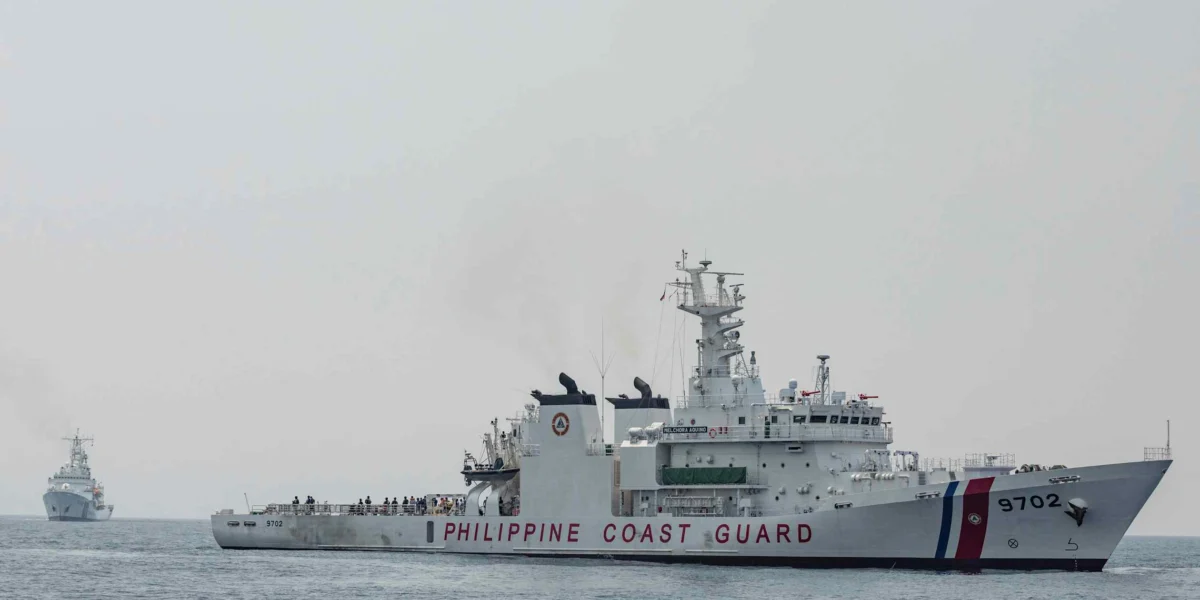
The recent joint maritime exercises between the Philippine Coast Guard and the Japan Coast Guard, conducted off the coast of Bataan in the South China Sea on June 6, 2023, represent a significant step forward in enhancing bilateral maritime security cooperation. These drills, involving the Philippine Coast Guard’s BRP Melchora Aquino (MRRV-9702) and Japan Coast Guard’s Akitsushima (PLH-32), underscored a shared commitment to improving search and rescue capabilities and bolstering maritime law enforcement in a strategically vital and increasingly contested region. This initiative, viewed within the broader context of escalating geopolitical competition in the Indo-Pacific, signals a deepening strategic alignment between Manila and Tokyo, with potential ramifications for regional stability and the international maritime order.
Background: A Shifting Geopolitical Landscape
The South China Sea has emerged as a focal point of international maritime disputes, primarily due to competing territorial claims by several nations, most notably China, which asserts expansive claims over nearly the entire sea. These claims, often enforced through assertive actions such as island building, the establishment of military outposts, and the deployment of coast guard and maritime militia vessels, have created significant friction with neighboring countries and international maritime powers. The Philippines, in particular, has been at the forefront of asserting its sovereign rights within its exclusive economic zone (EEZ), often encountering challenges from Chinese vessels.
Japan, while not a direct claimant in the South China Sea, has a vested interest in maintaining freedom of navigation and overflight, as well as the unimpeded flow of international trade through this critical waterway. Tokyo has consistently advocated for a rules-based international order and has increasingly expressed concern over China’s assertive actions, which it views as undermining regional stability and challenging the established international legal framework, particularly the United Nations Convention on the Law of the Sea (UNCLOS).
The deepening strategic partnership between the Philippines and Japan is not a sudden development but rather a culmination of years of growing shared concerns and mutual interests. Both nations have witnessed firsthand the impact of assertive maritime behavior on their economic activities and national security. This has led to a gradual but significant increase in defense and security cooperation, moving beyond traditional diplomatic channels to encompass tangible joint operations and capacity-building initiatives.
Chronology of Escalating Maritime Engagement
The joint drills on June 6, 2023, are part of a broader trajectory of increasing cooperation between the Philippines and Japan in the maritime domain.
- Early 2000s onwards: Initial phases of cooperation focused on humanitarian assistance and disaster relief (HADR) and non-traditional security threats. This laid the groundwork for more complex joint activities.
- Mid-2010s: Following the Permanent Court of Arbitration’s ruling in 2016, which invalidated China’s expansive claims in the South China Sea, there was a noticeable uptick in bilateral security dialogues and exercises between the Philippines and Japan. Japan began providing significant maritime security assistance to the Philippines.
- 2016-2017: Japan donated several patrol vessels to the Philippine Coast Guard, significantly enhancing its operational capabilities. This marked a tangible commitment to bolstering the Philippines’ maritime domain awareness and enforcement capacity.
- 2018 onwards: Regular joint exercises and training programs became more frequent, encompassing various aspects of maritime security, including maritime law enforcement, search and rescue, and maritime domain awareness.
- 2022-2023: The pace and scope of these exercises accelerated. The drills on June 6, 2023, were a prominent example of this increased tempo, specifically focusing on improving interoperability and coordination between the two coast guard agencies.
This chronological progression highlights a strategic evolution, from basic capacity building to sophisticated joint operations aimed at addressing complex maritime challenges.
Supporting Data and Capabilities
The participating vessels, the Philippine Coast Guard’s BRP Melchora Aquino (MRRV-9702) and Japan Coast Guard’s Akitsushima (PLH-32), represent significant assets in their respective fleets.
- BRP Melchora Aquino (MRRV-9702): This vessel is part of the MRRV-9700 class of offshore patrol vessels, built in Japan by Mitsubishi Heavy Industries. These vessels are specifically designed for extended offshore patrols, maritime law enforcement, and search and rescue operations. They are equipped with advanced communication systems, navigation equipment, and often have a flight deck capable of operating helicopters, significantly enhancing their operational reach and capabilities. The Philippine Coast Guard has acquired several such vessels, bolstering its ability to patrol vast maritime territories.
- Japan Coast Guard’s Akitsushima (PLH-32): The Akitsushima is a large, modern patrol vessel operated by the Japan Coast Guard. These "PLH" (Patrol vessel with Helicopter) class ships are among the largest and most capable coast guard vessels in the world. They are equipped with powerful engines, advanced radar and sonar systems, and are designed for long-duration deployments. Crucially, they carry helicopters, which are vital for aerial surveillance, search and rescue missions, and rapid response capabilities over large maritime areas.
The joint drills likely involved a range of activities designed to test and improve interoperability:
- Search and Rescue Scenarios: Practicing coordinated responses to maritime distress incidents, including simulated man-overboard situations, vessel fires, or search operations for distressed vessels. This would involve communication protocols, navigation coordination, and potential joint use of aerial assets.
- Maritime Law Enforcement Drills: Simulating scenarios related to enforcing maritime laws, such as boarding operations, vessel inspection, and the interdiction of illegal activities like piracy, smuggling, or illegal fishing.
- Information Sharing and Communication: Testing and refining communication systems and protocols to ensure seamless information exchange between the two vessels and their respective command centers. This is critical for effective maritime domain awareness and coordinated responses.
- Navigation and Formation Maneuvers: Practicing coordinated navigation and formation sailing to demonstrate tactical proficiency and the ability to operate effectively as a combined unit.
The involvement of these advanced assets underscores the seriousness with which both nations are approaching their maritime security cooperation. The Philippine Coast Guard’s increasing reliance on Japanese-built vessels highlights a successful technology transfer and capacity-building partnership.
Official Responses and Statements
While specific official statements directly following the June 6 drills might be limited to press releases from the respective coast guard agencies, the broader strategic direction from both governments provides ample context.
- Philippine Government: The Philippines has consistently emphasized its commitment to strengthening its maritime security capabilities and asserting its sovereign rights in the West Philippine Sea (the Philippine designation for the eastern parts of the South China Sea). President Ferdinand Marcos Jr.’s administration has continued to deepen alliances with like-minded countries, including Japan, to enhance its defense posture. Statements from the Department of Foreign Affairs and the Department of National Defense have repeatedly underscored the importance of multilateral cooperation and a rules-based international order in maintaining peace and stability in the Indo-Pacific.
- Japanese Government: Japan’s Ministry of Foreign Affairs and Ministry of Defense have consistently voiced concerns over the unilateral attempts to change the status quo by force in the South China Sea. Prime Minister Fumio Kishida has made strengthening maritime security cooperation with regional partners, including the Philippines, a cornerstone of Japan’s foreign policy. Japan’s commitment to a "Free and Open Indo-Pacific" strategy inherently involves supporting the maritime security of its partners. The provision of patrol vessels and the conducting of joint exercises are tangible manifestations of this commitment.
The nature of these drills, focusing on collaboration and enforcement, suggests an implicit acknowledgment of the challenges posed by assertive maritime actors. The drills serve as a visible demonstration of deterrence and a commitment to upholding international maritime law.
Broader Impact and Implications
The Philippines-Japan maritime exercises have several significant implications for the broader Indo-Pacific region:
- Enhanced Deterrence and Regional Stability: By showcasing a united front and improved operational capabilities, these joint drills contribute to a more robust security architecture in the region. This can serve as a deterrent against destabilizing actions and promote a more predictable maritime environment. The ability to conduct effective search and rescue operations also contributes to the safety of mariners and the mitigation of maritime accidents, which can often escalate into diplomatic incidents.
- Strengthening the Rules-Based International Order: The drills reinforce the importance of UNCLOS and the principles of freedom of navigation and overflight. They underscore the commitment of like-minded nations to uphold international law in the face of challenges, thereby strengthening the international legal framework that governs maritime activities.
- Deepening Bilateral Relations: The successful execution of these exercises solidifies the strategic partnership between the Philippines and Japan. This deepened trust and interoperability can pave the way for further cooperation in other areas, including intelligence sharing, joint patrols, and potentially joint responses to future maritime security crises.
- Signaling to Other Regional Actors: These exercises send a clear signal to other countries in the region, particularly China, about the growing resolve of nations to cooperate in maintaining maritime security and stability. They demonstrate that a coordinated approach to regional challenges is gaining momentum.
- Capacity Building for the Philippines: For the Philippines, these exercises are crucial for building its capacity to patrol and enforce its maritime rights. The continuous training and exposure to advanced operational procedures with a capable partner like Japan are invaluable for developing a more effective coast guard force.
- Potential for Broader Alliances: The growing cooperation between the Philippines and Japan could serve as a model or catalyst for even broader security collaborations involving other regional players, such as the United States, Australia, and other Southeast Asian nations. Such expanded alliances could further bolster regional security and collectively address common maritime security concerns.
In conclusion, the joint maritime exercises between the Philippine Coast Guard and the Japan Coast Guard represent a critical development in the ongoing efforts to ensure maritime security and stability in the Indo-Pacific. As geopolitical tensions continue to evolve, the strengthening of bilateral and multilateral security partnerships, exemplified by these drills, will be paramount in navigating the complex maritime landscape and upholding a rules-based international order. The commitment to enhancing search and rescue capabilities and maritime law enforcement underscores a shared vision for a safe, secure, and prosperous Indo-Pacific region.