Lina Wu
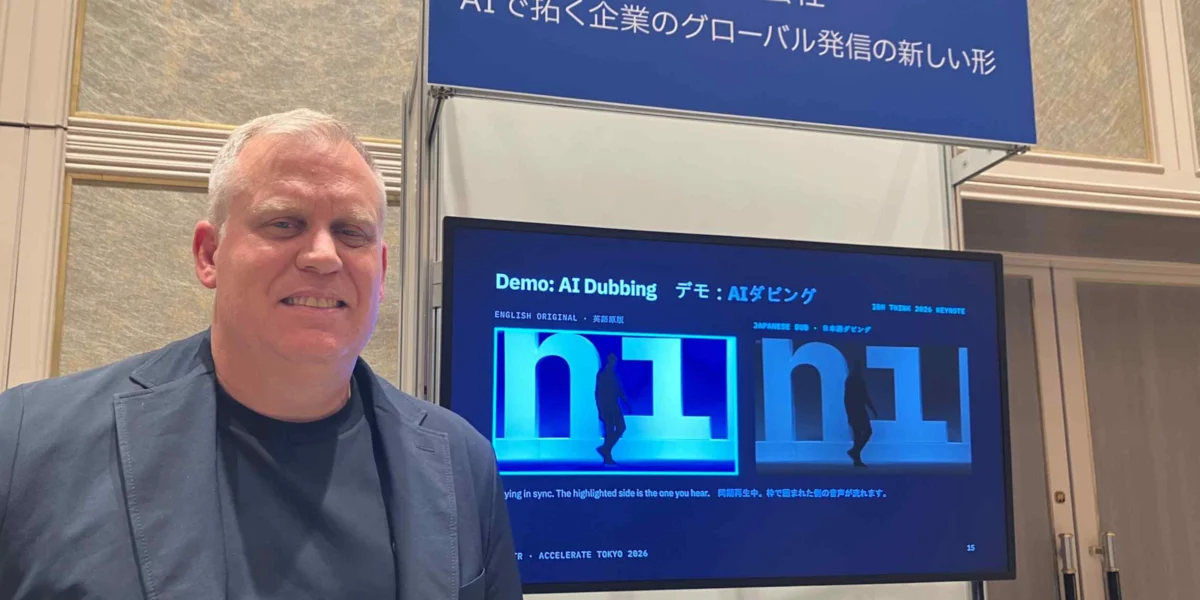
TOKYO — A New Zealand-based investor information services provider, Arbitr Group, has unveiled a groundbreaking artificial intelligence-powered dubbing service designed to instantaneously translate videos of company executives into a multitude of languages. This innovative technology promises to democratize global investor relations, breaking down language barriers that have historically hindered cross-border communication and investment. The service, piloted with a select group of Japanese corporations in the lead-up to its wider rollout, aims to revolutionize how companies disseminate critical financial and strategic information to an international audience.
The core of Arbitr Group’s new offering lies in its sophisticated AI engine, which analyzes not only the spoken words of an executive but also their vocal intonation, emotional nuances, and even subtle facial expressions. This multi-faceted approach allows the AI to generate dubbed audio that not only accurately conveys the linguistic content but also preserves the speaker’s intended tone and passion. This level of fidelity is a significant departure from traditional dubbing methods, which often struggle to capture the authentic delivery of an individual, potentially leading to a sterile or misinterpreted message.
The Genesis of an AI-Driven Solution
The development of this AI dubbing service is rooted in a growing recognition within the financial sector of the challenges posed by linguistic and cultural differences in global business. For decades, companies seeking to engage international investors have relied on a combination of written translations, in-person presentations with interpreters, and pre-recorded videos with human-voiced dubbing. Each of these methods, while effective to a degree, has inherent limitations. Written translations can lose the impact of a live presentation, interpreters, while vital, can add to logistical complexity and cost, and traditional dubbing often requires significant lead times and can fail to capture the speaker’s genuine enthusiasm.
Arbitr Group’s co-CEO, David Sowerby, highlighted these shortcomings in a recent interview. "Traditional dubbing has not always captured a speaker’s passion and nuance," Sowerby stated. "When a CEO is conveying a critical strategic shift or expressing confidence in future growth, it’s vital that this emotion and conviction is conveyed to every investor, regardless of their native language. Our AI aims to bridge that gap, ensuring that the authenticity of the original message remains intact."
The genesis of this project can be traced back to early 2024, when Arbitr Group began exploring advanced AI applications to enhance its suite of investor relations tools. Recognizing the increasing globalization of capital markets and the desire of companies to reach a wider investor base, the company invested heavily in research and development focused on natural language processing (NLP) and speech synthesis. The initial prototypes were tested internally, refining the AI’s ability to process different accents, speaking speeds, and even background noise.
A Timeline of Innovation
The journey to this public unveiling has been a methodical process, marked by several key milestones:
- Early 2024: Arbitr Group initiates research into AI applications for investor relations, focusing on language translation and content localization.
- Mid-2024: Development of the core AI engine begins, incorporating advanced NLP algorithms and deep learning models for speech synthesis. Initial focus on Mandarin Chinese and Spanish, given their significant economic influence.
- Late 2024: First functional prototypes of the AI dubbing system are developed and undergo internal testing.
- Early 2025: Expansion of language capabilities to include major European languages such as French, German, and Italian, along with key Asian languages like Korean and Indonesian.
- Mid-2025: Pilot program initiated with a select group of Japanese corporations, providing real-time feedback and data for further refinement. This phase proved crucial in adapting the AI to the specific linguistic and cultural nuances of the Japanese market.
- Late 2025: Significant improvements in emotional tone replication and facial expression synchronization are achieved, bringing the service closer to human-level dubbing quality.
- Early 2026: The AI dubbing service demonstrates the ability to translate and dub a one-hour corporate presentation into 15 languages within a matter of minutes.
- October 2026: Successful completion of the pilot program, with positive feedback from participating companies regarding efficiency, cost-effectiveness, and impact on international investor engagement.
- November 1, 2026: Public announcement and official launch of the AI-powered dubbing service.
Supporting Data and Market Demand
The demand for efficient and effective multilingual communication in the financial sector is substantial and growing. According to a report by the International Financial Analysts Association (IFAA) published in Q3 2026, approximately 45% of listed companies actively seek foreign investment, with a significant portion citing language barriers as a primary impediment to attracting a broader investor base. Furthermore, a separate market analysis by Global Insights Group estimates the global market for financial translation and localization services to reach $5.2 billion by 2028, underscoring the significant economic opportunity.
Arbitr Group’s AI dubbing service addresses this market need by offering a solution that is not only faster and more cost-effective than traditional methods but also promises superior quality. The company claims that its service can reduce the time required for dubbing a standard corporate video from weeks to mere minutes, and at a fraction of the cost of professional human voice actors and studio time. This efficiency is particularly appealing to smaller and mid-sized companies that may have limited budgets for international investor outreach.
The technology leverages advanced machine learning models trained on vast datasets of human speech and linguistic patterns. This allows the AI to not only translate text accurately but also to generate natural-sounding speech in the target language, mimicking the cadence, pitch, and rhythm of the original speaker. The synchronization with on-screen visuals, including lip movements, is also a key feature, ensuring a seamless and professional viewing experience for the end-user.
Reactions from Industry and Investors
The announcement has been met with a mixture of anticipation and cautious optimism from various stakeholders in the financial and technology sectors.
"This technology has the potential to be a game-changer for companies looking to expand their global footprint," commented Sarah Chen, a senior analyst at Capital Markets Watch. "The ability to instantly communicate with investors in their native language, while retaining the authenticity of the executive’s delivery, could significantly boost investor confidence and participation. We will be watching closely to see how widely it is adopted and its long-term impact on cross-border investment flows."
From the perspective of listed companies, the appeal lies in the operational efficiencies and expanded reach. A spokesperson for a major Japanese technology firm, which participated in the pilot program, shared their positive experience: "We were impressed by the speed and accuracy of the AI dubbing. It allowed us to quickly translate our latest earnings call into Mandarin and English for our overseas investors, a process that would typically take days and considerable expense. The quality of the dubbing was surprisingly natural, and it definitely enhanced our ability to connect with a wider audience."
However, some industry experts have raised questions about the AI’s ability to truly replicate human emotion and cultural context in highly sensitive financial communications. "While the technology is undoubtedly impressive, there’s a risk of over-reliance," noted Dr. Kenji Tanaka, a professor of cross-cultural communication at Tokyo University. "Financial markets are complex, and conveying subtle nuances or understanding deep-seated cultural expectations can be challenging even for human interpreters. It will be important to see how the AI handles situations requiring a high degree of cultural sensitivity and emotional intelligence."
Arbitr Group acknowledges these concerns and emphasizes that their AI is designed to augment, not replace, human expertise. The service is intended for corporate communications where clarity and accuracy are paramount, and they are continuously working to enhance the AI’s understanding of cultural context.
Broader Implications for Global Business and Finance
The implications of Arbitr Group’s AI dubbing service extend far beyond simple video translation. This technology could fundamentally alter the landscape of global business communication and investment:
- Democratization of Access: Smaller and medium-sized enterprises (SMEs), which often lack the resources for extensive international marketing and investor relations efforts, can now access global capital markets more effectively. This could lead to a more diverse and inclusive global investment ecosystem.
- Increased Efficiency in Mergers and Acquisitions (M&A): Cross-border M&A deals often involve extensive communication across different linguistic teams. AI dubbing could streamline the dissemination of information during due diligence and negotiation phases, potentially accelerating deal closures.
- Enhanced Crisis Communication: In times of crisis, rapid and clear communication is crucial. This AI service could enable companies to quickly disseminate accurate information to a global audience in their own language, helping to manage public perception and investor sentiment.
- Educational and Training Tools: Beyond investor relations, the technology holds promise for educational institutions and corporations looking to deliver training materials or lectures to a global audience without the cost and time associated with traditional localization.
- Content Creation and Media: The broader media industry, including documentary filmmaking and news reporting, could benefit from faster and more affordable dubbing options, making diverse content more accessible worldwide.
The success of Arbitr Group’s venture will likely spur further innovation in AI-driven language technologies. As AI continues to evolve, we can expect to see even more sophisticated tools that can handle complex linguistic tasks, bridging cultural divides and fostering greater global understanding and collaboration. The company has indicated plans to further expand its language offerings and to integrate its AI dubbing service with other investor relations platforms, aiming to become a central hub for multilingual corporate communications.
The long-term impact of this AI-powered dubbing service will be shaped by its ongoing development, market adoption, and its ability to consistently deliver on its promise of accurate, nuanced, and emotionally resonant translations, thereby truly connecting businesses and investors across the globe.