Lina Wu
NEW YORK – In a significant development that portends a renewed surge of protectionist policies, U.S. officials have finalized the requisite investigations, clearing the path for the imposition of new overcapacity tariffs on China, Japan, and more than a dozen other economies. This strategic move by the Trump administration signals a determined effort to leverage trade as a primary tool for reshaping global economic dynamics and addressing perceived imbalances. The culmination of these investigations marks a critical juncture, potentially ushering in a new era of heightened trade tensions and recalibrating international commerce.
The investigations, conducted under the purview of various U.S. government agencies, have focused on identifying and quantifying the extent of overcapacity in key industrial sectors within these targeted nations. Overcapacity, in economic terms, refers to a situation where the production capacity of an industry exceeds the demand for its products. This often leads to depressed prices, reduced profitability for domestic producers, and can be a precursor to increased dumping—selling goods in foreign markets below cost to offload excess inventory. The Trump administration has consistently argued that such practices, particularly by state-influenced economies, distort global markets and harm American industries and workers.
The Genesis of Overcapacity Tariffs: A Strategic Imperative
The current push for overcapacity tariffs is deeply rooted in the broader trade policy framework championed by President Donald Trump since his inauguration in 2017. His administration has consistently prioritized an "America First" approach, emphasizing the need to reduce trade deficits, protect domestic manufacturing, and counter what it perceives as unfair trade practices by international partners.
The concept of using tariffs as a retaliatory or corrective measure is not new in international trade. However, the Trump administration has elevated its application, employing Section 301 of the Trade Act of 1974 to investigate and address what it deemed unfair trade practices, particularly those related to intellectual property theft and forced technology transfer by China. This led to the imposition of substantial tariffs on billions of dollars worth of Chinese goods. The current investigations on overcapacity can be viewed as an extension and refinement of this strategy, aiming to address a more fundamental economic issue that underpins competitive imbalances.
The specific impetus for these recent investigations can be traced back to escalating concerns within the U.S. manufacturing sector. Data from the U.S. Bureau of Labor Statistics and various industry associations have consistently pointed to challenges faced by American producers in industries such as steel, aluminum, solar panels, and certain high-tech components. These challenges have often been attributed to the influx of lower-priced imports, which producers argue are a direct result of state subsidies and unbridled production expansion in countries like China.
A Chronology of Investigations and Preparations
The path to these impending tariffs has been a deliberate and methodical one, involving extensive data collection, analysis, and consultation. While the exact start dates for each investigation vary, the process has been ongoing for a considerable period, allowing for the accumulation of evidence and the development of a robust case for intervention.
-
Early 2023 – Mid-2024: Initial Data Gathering and Industry Consultations: U.S. government agencies, including the Department of Commerce and the U.S. Trade Representative (USTR), began engaging with domestic industries to identify sectors most affected by overcapacity. This involved soliciting information on production levels, import volumes, pricing trends, and the impact on U.S. jobs and profitability. Informal consultations with international bodies and trading partners may also have commenced during this period, laying the groundwork for a more formal approach.
-
Late 2024 – Early 2025: Formal Investigation Launches and Public Comment Periods: Formal investigations were initiated, likely under specific statutory authorities that permit the imposition of tariffs in cases of overcapacity and unfair trade practices. These investigations would have involved detailed questionnaires sent to foreign producers and importers, as well as public comment periods where interested parties could submit their views and evidence. This phase is crucial for ensuring due process and transparency, even within a protectionist framework.
-
Mid-2025 – Early 2026: Data Analysis and Preliminary Findings: Extensive analysis of the collected data would have been conducted by U.S. officials. This would involve sophisticated economic modeling to quantify the extent of overcapacity, assess its impact on the U.S. market, and determine the appropriate tariff levels. Preliminary findings might have been shared with relevant stakeholders, potentially leading to further rounds of information exchange.
-
Mid-2026: Conclusion of Investigations and Recommendation Formulation: The U.S. officials involved in these investigations have now completed their assessments. This signifies that the evidence required to justify the imposition of tariffs has been gathered and analyzed. The next step would typically involve formulating specific recommendations for the President, outlining the targeted economies, the specific products affected, and the proposed tariff rates.
-
Late October 2026: Public Announcement and Imminent Implementation: The recent announcement by U.S. officials indicates that these investigations have reached their conclusion. This suggests that the administration is on the cusp of formally announcing the new tariff measures, which could be implemented in the immediate aftermath of the announcement.
Supporting Data and Economic Rationale
The rationale behind imposing overcapacity tariffs is underpinned by a body of economic data and theoretical arguments. While specific figures from the concluded investigations remain confidential until formally released, general trends and historical data provide context.
-
Global Industrial Overcapacity: Reports from international organizations like the Organization for Economic Co-operation and Development (OECD) and the International Monetary Fund (IMF) have, at various times, highlighted significant global overcapacity in sectors such as steel, cement, and chemicals. China, as the world’s largest manufacturer, is often cited as a major contributor to this overcapacity due to state-driven investment and production expansion policies. For instance, in the steel sector, global overcapacity has been estimated to be in the hundreds of millions of tons annually, with a substantial portion attributed to China.
-
Impact on U.S. Industries: U.S. industry groups have provided data illustrating the detrimental effects of overcapacity-driven imports. For example, the American Iron and Steel Institute has frequently cited figures showing increased import penetration in the U.S. steel market, leading to plant closures and job losses. Similarly, the solar industry has pointed to the dumping of lower-cost panels from overseas, hindering the growth of domestic manufacturing capacity.
-
Trade Deficits: The Trump administration has consistently focused on reducing the U.S. trade deficit. While overcapacity tariffs are not solely aimed at deficit reduction, they are seen as a tool to rebalance trade flows by making imports less competitive and encouraging domestic production. The U.S. trade deficit with China, in particular, has been a persistent concern, exceeding hundreds of billions of dollars annually.
-
State Subsidies and Distortive Practices: A key element in the U.S. justification for these tariffs is the belief that overcapacity is often fueled by government subsidies, tax breaks, and other preferential treatment in the targeted countries. These practices are viewed as distorting market signals and creating an uneven playing field for foreign competitors. The U.S. Department of Commerce has a long history of investigating and imposing countervailing duties on subsidized imports.
Official Responses and Stakeholder Reactions
The announcement of the completed investigations is likely to elicit a spectrum of responses from various stakeholders, both domestically and internationally.
-
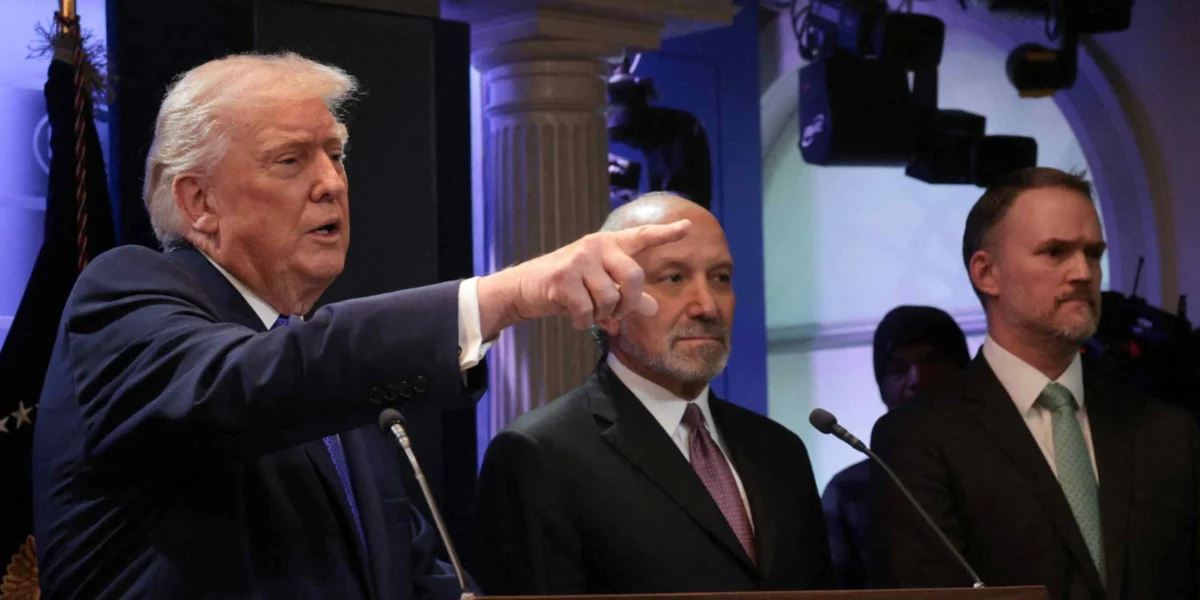
U.S. Administration: The Trump administration, through its trade representatives and economic advisors, is expected to frame these tariffs as a necessary measure to protect American jobs, bolster domestic industries, and ensure fair competition. Statements from the White House and the U.S. Trade Representative’s office will likely emphasize the findings of the investigations and the administration’s commitment to a strong manufacturing base. The image provided, showing President Trump speaking to media at the White House, suggests an imminent announcement and a proactive stance from the administration.
-
Targeted Economies (China, Japan, etc.): Countries facing these new tariffs are expected to express strong opposition. China, in particular, has historically retaliated against U.S. tariffs, leading to trade wars. Beijing is likely to argue that the tariffs are protectionist, violate World Trade Organization (WTO) rules, and will harm global trade. Japan and other affected economies may also voice concerns, potentially seeking consultations with the U.S. and exploring avenues for dispute resolution.
-
U.S. Industries: Domestic industries that have been advocating for such measures are expected to welcome the announcement. They will likely view these tariffs as a critical lifeline that will allow them to compete more effectively, invest in new capacity, and create jobs. Industry association leaders may issue statements expressing gratitude and support for the administration’s actions.
-
U.S. Consumers and Importers: Conversely, U.S. businesses that rely on imported goods from these countries, as well as consumers, may express concern about potential price increases. Importers could face higher costs, which may be passed on to consumers in the form of higher prices for a range of products, from electronics to apparel and manufactured goods.
-
International Organizations: Organizations like the World Trade Organization (WTO) will likely monitor the situation closely. If the U.S. tariffs are perceived to violate WTO rules, affected countries may initiate dispute settlement proceedings. The WTO’s role in adjudicating such disputes will be crucial in determining the legality and legitimacy of these measures under international trade law.
Broader Implications and Future Outlook
The imposition of these new overcapacity tariffs carries significant implications for both the U.S. economy and the global trading system.
-
Escalation of Trade Tensions: This move is likely to further escalate trade tensions between the U.S. and its trading partners, particularly China. A tit-for-tat response from Beijing could lead to retaliatory tariffs on U.S. exports, impacting American agricultural producers and other export-oriented industries.
-
Reshoring and Supply Chain Reconfiguration: The increased cost of imports could incentivize some U.S. companies to "reshore" production, bringing manufacturing back to domestic soil. This could lead to job creation in the U.S. but may also necessitate significant investments in new facilities and workforce training. It could also accelerate a broader reconfiguration of global supply chains, as companies seek to diversify away from potentially tariff-affected regions.
-
Impact on Global Economic Growth: Heightened trade friction and uncertainty can dampen global economic growth. Reduced trade volumes, increased business costs, and potential disruptions to supply chains can lead to slower economic expansion worldwide.
-
Strengthening of Protectionist Trends: If successful in achieving its stated objectives, these tariffs could embolden other countries to adopt similar protectionist measures, leading to a more fragmented and less interconnected global economy. Conversely, if these tariffs lead to significant retaliatory measures and economic disruption, it could serve as a cautionary tale.
-
Navigating WTO Rules: The legality of these overcapacity tariffs under WTO rules will be a critical factor. If the U.S. can demonstrate that the tariffs are justified under specific WTO provisions, such as those related to subsidies or dumping, they may withstand international scrutiny. However, if they are viewed as arbitrary or discriminatory, they could face significant challenges.
The completed investigations represent a pivotal moment, signaling the Trump administration’s unwavering commitment to its trade agenda. The coming weeks and months will be crucial in observing the specific details of these tariffs and the subsequent reactions from trading partners, which will ultimately shape their long-term impact on the global economic landscape. The administration’s actions are a clear indication that the era of aggressive trade policy, focused on addressing perceived imbalances through tariffs and other protectionist measures, is far from over.