Gilang Muhammad
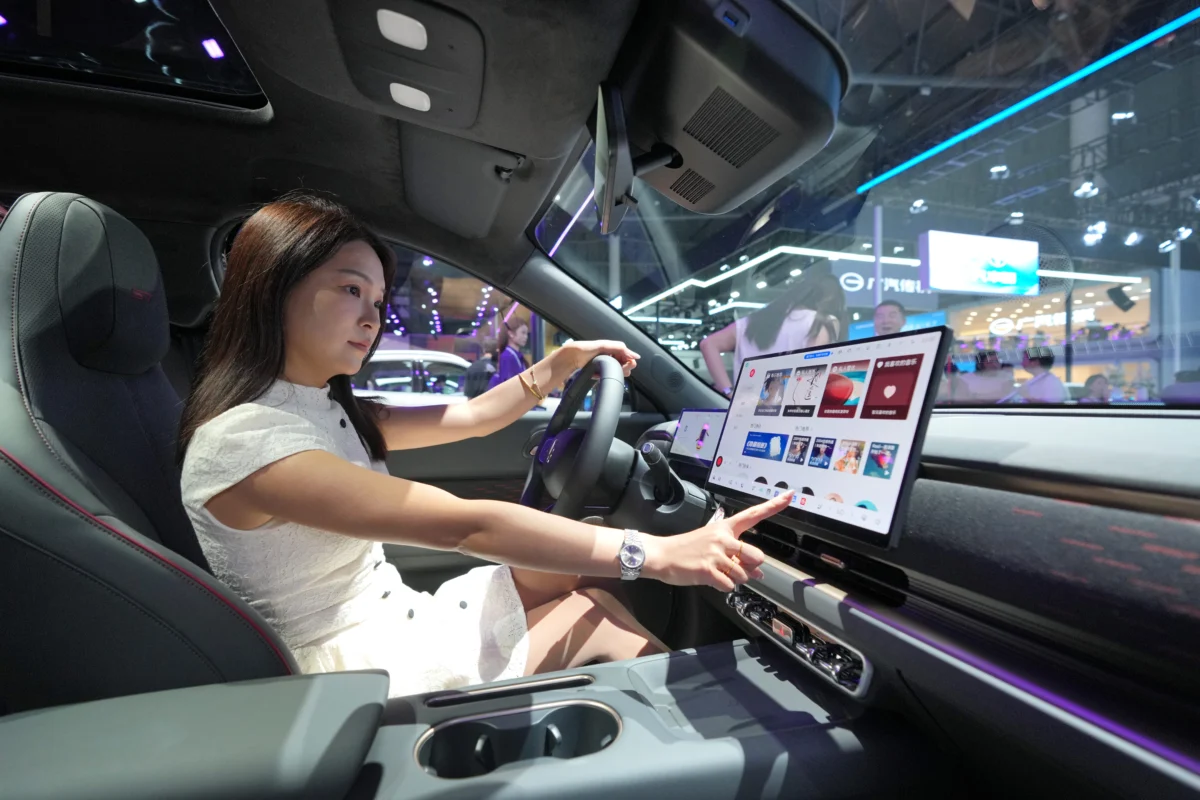
The vibrant halls of the 29th Chengdu International Automobile Exhibition, held on August 21, 2026, at the sprawling China Western International Expo City in Chengdu, Sichuan Province, served as a potent microcosm of the seismic shifts currently reshaping the global automotive landscape. Under the forward-looking theme "Leading the Trend, Moving Towards the New," nearly 120 mainstream domestic and international automobile brands converged, showcasing approximately 1,600 vehicles. While the event celebrated innovation and design, beneath the gleaming chrome and advanced displays, a profound industry challenge loomed: global automakers are grappling with an increasingly sophisticated and demanding customer base, one that now prioritizes cutting-edge technology and innovative features almost as much as, if not more than, competitive pricing.
This evolving consumer psyche, particularly pronounced in China, is creating a dual imperative for manufacturers worldwide. According to the latest Global Automotive Consumer Survey by Bain & Company, a leading management consultancy, technological prowess and a rich suite of features have become a primary purchase consideration for a striking 58% of Chinese consumers. This preference now outranks price as the leading factor in their buying decisions, a stark contrast to the United States and Europe, where price continues to hold the top spot, cited by 68% and 62% of consumers, respectively. However, the nuance in the Chinese market is critical: this elevated focus on technology does not diminish the expectation of affordability. Instead, it adds another layer of complexity to an already hyper-competitive environment.
The Chinese Paradox: Technology as a Baseline, Price as a Precondition
The unique dynamics within China’s automotive sector have fundamentally recalibrated consumer expectations. Intense domestic competition, fueled by a proliferation of innovative local brands and aggressive market strategies, has firmly entrenched low prices as a baseline expectation. As Bain executives explained, manufacturers are now compelled to differentiate themselves not merely through cost-effectiveness, but by excelling in technological innovation and feature integration. Klaus Stricker, the distinguished leader of Bain’s Global Automotive & Mobility practice, succinctly articulated this new reality, stating, "Competitive price is basically a precondition to be in consideration of the customer." This sentiment underscores a paradigm where value is no longer solely defined by cost, but by the seamless integration of advanced functionalities, intelligent connectivity, and superior user experience, all delivered within an accessible price bracket.
The Chengdu Auto Show itself offered tangible evidence of this trend. New energy vehicles (NEVs) – encompassing battery electric vehicles (BEVs), plug-in hybrid electric vehicles (PHEVs), and fuel cell electric vehicles (FCEVs) – dominated floor space and drew significant crowds. Visitors were observed meticulously examining infotainment systems, test-driving vehicles equipped with advanced driver-assistance systems (ADAS) nearing Level 3 autonomy, and engaging with AI-powered voice assistants. The emphasis was not just on power or range, but on the "smart cockpit" experience, the intuitive human-machine interface, and the potential for over-the-air (OTA) updates that promise continuous improvement. This cultural embrace of digital sophistication and rapid technological iteration among Chinese consumers has forced both domestic and international brands to accelerate their innovation cycles, transforming vehicles from mere modes of transport into sophisticated, connected devices.
Global Ripples: Western Markets Poised for Similar Shifts
The trends observed in China are not isolated; Stricker anticipates that Western markets will progressively mirror this evolution. He projects that competitive pricing will increasingly become a fundamental expectation, a mere entry ticket into the consumer’s consideration set, while technology will assume a progressively more dominant role in purchasing decisions. This shift is further intensified by the growing global presence of Chinese manufacturers, whose rapid advancements and aggressive pricing strategies are already exerting considerable pressure on established players, particularly in Europe.
The data supports this forecast. China’s vehicle exports have witnessed an explosive growth trajectory. Between January and August, shipments to Italy more than doubled, reaching an astonishing 209,258 units. Similarly, exports to the United Kingdom surged by approximately 86% to 365,672 vehicles within the same period, according to customs figures cited by the China Passenger Car Association. This dramatic increase is not merely a matter of volume; it signifies a growing acceptance and demand for Chinese-made vehicles, which often offer a compelling combination of advanced features, modern design, and attractive pricing that legacy automakers struggle to match. This export surge, driven by brands like BYD, SAIC (with MG), Geely, and Chery, is forcing a re-evaluation of product strategies, cost structures, and innovation timelines across European and North American boardrooms.
Erosion of Brand Loyalty: A Decades-Old Foundation Crumbles
Adding to the complexity, the automotive industry is grappling with a significant erosion of brand loyalty, a cornerstone upon which many established manufacturers, particularly in Europe, have built their business models for decades. Stricker noted that "European manufacturers [have] basically based their their business model for decades on brand loyalty," but this deeply ingrained allegiance is now demonstrably fading.
Bain’s survey reveals that more than a third of customers in Western markets are now openly receptive to new brands entering the market. This openness is particularly pronounced among buyers who express a keen interest in autonomous-driving technology. These consumers demonstrate a heightened willingness to switch manufacturers if it means gaining access to superior functionality and a more advanced technological experience. This demographic, often younger and digitally native, views vehicles less as a badge of heritage and more as a platform for cutting-edge technology and personalized experiences. For them, a car’s brand emblem holds less sway than its ability to integrate seamlessly into their digital lives, offer advanced safety features, or provide innovative entertainment options. The implications for legacy brands are profound, necessitating a shift from relying on historical reputation to actively demonstrating technological leadership and customer-centric innovation.
The Generational Divide Narrows: Western Youth Embrace Tech
Helen Liu, Asia automotive head and partner at Bain, highlights a critical convergence: younger consumers in the U.S. and Europe are increasingly mirroring their Chinese counterparts in their openness to and demand for technology. This demographic shift implies that the challenges currently faced by automakers in China will soon become universal. Liu’s assertion that Western manufacturers need to "up their game" to retain these tech-savvy customers underscores the urgency of this transformation. This involves not just integrating new features, but fundamentally rethinking product development cycles, software capabilities, and customer engagement strategies.
The traditional automotive development model, often characterized by long lead times and incremental improvements, is ill-suited for a market that demands rapid technological iteration. Western automakers are now investing heavily in software divisions, recruiting talent from the tech industry, and exploring agile development methodologies to keep pace. The race is on to transform from hardware-centric companies to software-defined mobility providers, a transition that requires significant cultural and operational shifts.
The Monetization Conundrum: Free Tech or Premium Feature?
While the imperative to integrate advanced features is clear, monetizing these technologies presents a formidable challenge. The prevailing consumer expectation, particularly in the mass market, is that advanced driving technology should be an included feature rather than carry a substantial premium. Stricker noted this reluctance to pay extra for what is increasingly perceived as standard. This creates a difficult tightrope walk for manufacturers: invest heavily in R&D for cutting-edge tech, but then struggle to recoup those investments through direct sales of those features.
Liu aptly summarized this predicament by stating that these demands leave Chinese and Western manufacturers "climbing different mountains." Emerging Chinese players, many of whom are relatively young and unburdened by legacy systems, face the task of rapidly building brand standing and trust in global markets. Their advantage lies in their agility, cost-effectiveness, and often, their native expertise in software and digital integration. They are entering the market with a "tech-first, price-competitive" strategy, aiming to capture market share through sheer value proposition.
Conversely, Western incumbents, while boasting established brands and extensive distribution networks, must rapidly strengthen their technology offerings. They need to innovate at an unprecedented pace, integrate complex software solutions, and shift their organizational cultures, all while managing the transition away from internal combustion engine (ICE) dominance and protecting their existing market share. This requires massive investment in R&D, retooling factories, retraining workforces, and often, making difficult strategic decisions about which legacy assets to divest or transform.
Crucially, both sets of players face the non-negotiable requirement of keeping prices competitive. In a market where consumer choice is abundant and information is instantly accessible, pricing strategy remains a critical determinant of success. The delicate balance involves offering superior technology without pricing oneself out of the consideration set, a feat that demands relentless efficiency, innovative supply chain management, and strategic product positioning.
Broader Implications: Industry Consolidation and Future Trajectories
The confluence of these pressures — demanding consumers, intense competition, eroding loyalty, and the monetization dilemma — points towards an inevitable period of industry consolidation. Manufacturers that can effectively bridge their respective gaps, whether it’s building brand recognition for newcomers or bolstering technological capabilities for incumbents, while simultaneously maintaining price competitiveness, are poised to gain the most as the industry reshapes itself.
Beyond the immediate market dynamics, the transformation has far-reaching implications:
- Supply Chain Reorientation: The shift towards electric vehicles and software-defined vehicles necessitates a complete overhaul of traditional automotive supply chains. Components like semiconductors, battery materials, and sophisticated sensors become paramount, often requiring new partnerships and investments in raw material extraction and processing.
- Talent War: The demand for software engineers, AI specialists, and data scientists within the automotive industry has skyrocketed. Companies are increasingly competing with tech giants for top talent, leading to a redefinition of roles and compensation structures within car manufacturers.
- Regulatory Landscape: Governments worldwide are responding with new regulations concerning emissions, safety (especially for ADAS and autonomous driving), data privacy, and intellectual property. These regulations can either foster innovation or create barriers, depending on their design and implementation.
- Geopolitical Dynamics: The rise of Chinese automakers and their export prowess has ignited debates around trade balances, industrial policy, and potential tariffs. The global automotive market is increasingly becoming a strategic arena for economic and technological leadership.
- New Business Models: Beyond vehicle sales, automakers are exploring new revenue streams such as subscription services for features (e.g., heated seats, advanced navigation), data monetization, and integrated mobility solutions like car-sharing and ride-hailing. The future of automotive profitability may lie less in the initial sale and more in the lifecycle of software and services.
The Chengdu International Automobile Exhibition in 2026, therefore, was more than just a showcase of new models; it was a vivid demonstration of an industry at a critical juncture. The road ahead for global automakers is paved with both immense opportunity and significant challenges, demanding unprecedented agility, strategic foresight, and a profound understanding of the evolving consumer. As the lines between technology and traditional manufacturing blur, only those who can master the dual imperatives of cutting-edge innovation and unyielding affordability will truly lead the trend and move towards the new era of mobility.
— CNBC’s Evelyn Cheng contributed to this story.