Gilang Muhammad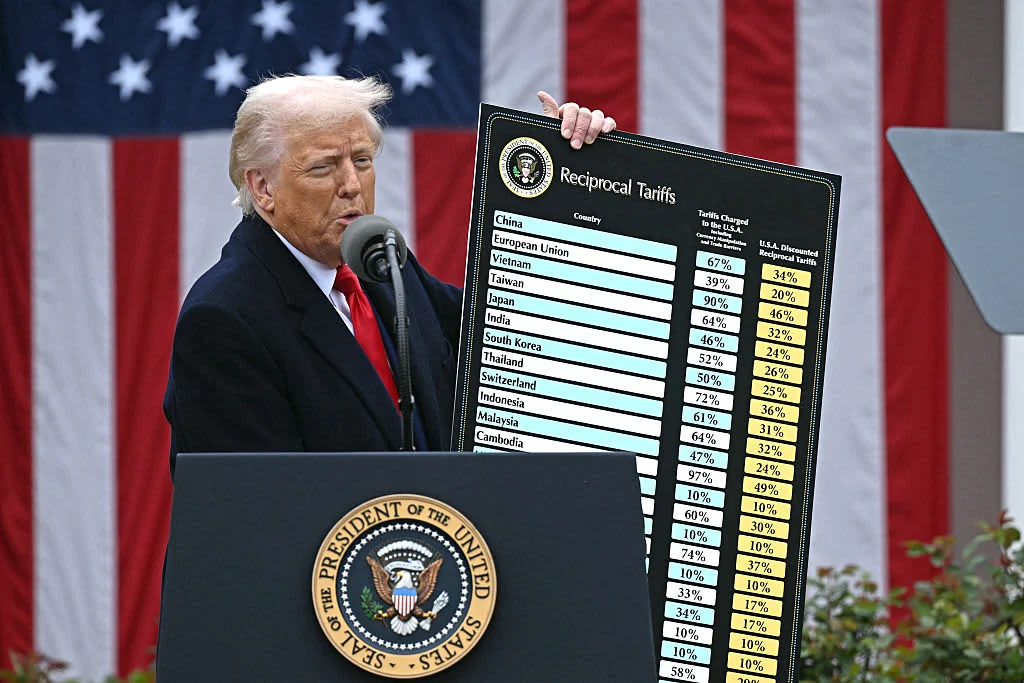
A comprehensive analysis by the New York Federal Reserve has provided the clearest and most definitive evidence to date, revealing that President Donald Trump’s tariff policies significantly elevated the cost of numerous everyday goods, reversing what would have otherwise been a period of price declines for American consumers. The report, published by a team of researchers at the central bank’s New York arm, meticulously detailed how these levies translated into higher prices across a broad spectrum of products, profoundly impacting household budgets and the broader economy.
Unpacking the New York Fed’s Definitive Findings
The pivotal findings from the New York Fed’s research underscore that the cost of 67 distinct categories of goods stood 2.9 percentage points higher as of February 2026, a direct consequence of the tariffs imposed by the Trump administration. Strikingly, the study further concluded that in the absence of these import taxes, prices for the very same products would have experienced a notable pullback of almost 1%. This stark contrast highlights the direct and measurable impact of the tariff regime on consumer purchasing power, indicating that American households paid more than they otherwise would have for a wide array of necessities and discretionary items.
The researchers, Mary Amiti, Sebastian Heise, and David Weinstein, who authored the paper, delved into the mechanics of how tariffs permeate the economy. Their work revealed a dual-pronged effect: approximately two-thirds of the tariff-related price impact stemmed directly from the levies themselves. The remaining increase, a substantial one-third, was attributed to crucial knock-on effects. These secondary impacts include instances where U.S.-based companies, reliant on imported parts and materials for their final products, faced increased input costs, which were then inevitably passed on to consumers. "Tariffs have a larger and more drawn-out impact on consumer prices than the direct effect alone would suggest," the authors emphasized, underscoring the complex ripple effects throughout the supply chain.
Despite the administration’s claims that foreign exporters would bear the brunt of the tariffs, the New York Fed team’s analysis directly contradicted this assertion. Their findings indicated that around 26% of the tariff increases from the previous year ultimately trickled down into higher consumer prices. This challenges the long-held tenet of the Trump administration’s trade policy, which posited that foreign entities, eager to maintain access to the lucrative American market, would absorb the added costs, thereby shielding domestic consumers.
A Chronology of Tariff Implementation and Its Economic Wake
The trajectory of President Trump’s tariff policies has been a defining feature of his economic agenda, marked by a series of implementations, economic repercussions, and subsequent legal challenges. Understanding this timeline is crucial to appreciating the full scope of the New York Fed’s findings.
The Initial Rationale and Rollout (2025 Onwards)
The genesis of the renewed tariff push under President Trump’s second term, building upon previous actions, was deeply rooted in his "America First" trade philosophy. This doctrine prioritized the protection of domestic industries, aimed at reducing persistent trade deficits, particularly with nations like China, and sought to leverage tariffs as a tool to renegotiate what the administration deemed unfair trade agreements. The rationale often invoked national security concerns (e.g., Section 232 tariffs on steel and aluminum) or addressed perceived unfair trade practices (e.g., Section 301 tariffs on Chinese goods).
As these tariffs were progressively implemented from 2025 onwards, they targeted a wide array of imported goods. While the specific 67 categories evaluated by the New York Fed were not disclosed, they likely encompassed everything from industrial components and raw materials to finished consumer products like electronics, apparel, and household goods. The administration consistently argued that these measures were necessary to level the playing field for American businesses and workers, stimulating domestic production and job growth.
Initial reactions from economists were largely cautionary. A broad consensus among economic experts had long predicted that tariffs, as a form of consumption tax, would inevitably lead to higher domestic prices. Concerns were also raised about potential retaliatory tariffs from trade partners, which could harm American exporters, and the disruption of global supply chains that had been optimized over decades for efficiency and cost-effectiveness. International trade partners, in turn, often expressed dismay, viewing the tariffs as protectionist and a violation of multilateral trade agreements, leading to a period of heightened global trade tensions.
Peak Impact and the Consumer Burden (Early 2026)
The New York Fed’s report highlights that the annual price growth attributable to these tariffs peaked significantly at the start of 2026. This period likely saw consumers feeling the most pronounced squeeze on their wallets. For families and individuals, this translated into tangible increases in the cost of living. A new refrigerator, a car part, certain types of clothing, or even everyday groceries with imported components – all could have seen their prices incrementally rise. This cumulative effect, while perhaps subtle on a single item, aggregated into a substantial burden on household budgets, forcing some to adjust their purchasing habits or reallocate discretionary spending. The report underscores that the policy’s impact was not merely theoretical but translated directly into a reduced purchasing power for millions of Americans.
Legal Challenges and Policy Adjustments (Feb-Sept 2026)
A significant turning point occurred in February 2026 when the Supreme Court delivered a landmark ruling, striking down many of the Trump administration’s tariffs. This decision, which garnered widespread attention, effectively dismantled a core component of the administration’s trade strategy and paved the way for substantial financial adjustments.
Following the Supreme Court’s ruling, a wave of refunds commenced. By August 2026, billions of dollars were returned to major retailers such as Walmart, Home Depot, and Target. These refunds represented the tariffs that companies had paid on imported goods and subsequently passed on to consumers. For these retailers, the refunds provided a significant financial injection, potentially allowing them to lower prices, invest in operations, or shore up their balance sheets. The sheer scale of these refunds underscored the vast sums of money that had been collected through the tariff mechanism, revealing the immense financial stakes involved.
Despite the Supreme Court’s intervention, the White House quickly vowed to push forward with levies through alternative measures. By September 2026, new tariff structures were in place, with products imported from many countries now often facing tariffs of about 10%. While this represented a significant reduction from the earlier, often much higher, rates that had been struck down, it still maintained a measurable level of import taxation. This pivot indicated the administration’s unwavering commitment to using tariffs as a policy lever, albeit within new legal boundaries.
The White House Stance Versus Economic Reality
Throughout the period of tariff implementation, the Trump administration consistently articulated a clear stance regarding the economic impact of its trade policies. White House spokeswoman Taylor Rogers reiterated this position in a statement to CNBC, asserting, "The Trump administration has consistently maintained that the cost of tariffs will ultimately be borne by foreign exporters who rely on access to the American economy." This perspective formed the bedrock of the administration’s argument, suggesting that the tariffs were a strategic tool to compel foreign producers to lower their prices or absorb the added costs, thereby benefiting American consumers and industries.
President Trump himself often echoed this sentiment, arguing that companies, particularly large retailers like Walmart, could "absorb" the increased cost from tariffs rather than passing them down to shoppers in the form of price hikes. The implication was that corporate profits were robust enough to cushion the impact, or that market competition would force foreign suppliers to capitulate.
However, the economic reality, as illuminated by the New York Fed’s rigorous analysis, presented a different picture. The report’s finding that approximately 26% of last year’s tariff increases ended up trickling into higher consumer prices directly challenges the administration’s narrative. This quantifiable pass-through demonstrates that American consumers were indeed shouldering a significant portion of the tariff burden, contradicting the claim that foreign exporters or corporate entities would fully absorb the costs.
This divergence between policy rhetoric and observed economic outcomes was largely anticipated by a vast majority of economists. Mainstream economic theory consistently posits that tariffs, as taxes on imports, increase the cost of goods for domestic consumers and businesses. While the precise degree of pass-through can vary depending on market conditions, elasticity of demand, and supply chain dynamics, the general expectation was always that at least some, if not a substantial portion, of the tariffs would manifest as higher domestic prices. The New York Fed’s report, therefore, did not present a surprising outcome to many economic observers but rather provided empirical confirmation of widely held predictions.
Broader Economic Implications and Consumer Outlook
The impact of the Trump-era tariffs extended far beyond the immediate price increases, rippling through various facets of the American and global economies.
Inflationary Pressures and Purchasing Power
The most direct and tangible implication for consumers was the exacerbation of inflationary pressures. Even beyond the direct price increases on imported goods, the tariffs contributed to a broader inflationary environment. Domestic producers, facing less competition from lower-priced imports, sometimes found room to raise their own prices. Additionally, the increased cost of imported intermediate goods for U.S. manufacturers led to higher production costs, which were then passed on to consumers in the form of elevated prices for finished products. This multifaceted contribution to inflation eroded the purchasing power of American households, effectively reducing the real value of their wages and savings. In a period where general inflation might already be a concern, tariff-induced price hikes added an additional layer of financial strain, making everyday necessities less affordable.
Supply Chain Disruptions and Business Adaptations
The imposition of tariffs also created significant disruptions within global supply chains. Businesses, previously optimized for efficiency and cost-effectiveness by sourcing components and products internationally, were suddenly faced with increased costs and uncertainty. This prompted a variety of adaptations: some companies sought alternative suppliers in non-tariffed countries, often at higher costs or with longer lead times. Others explored "reshoring" efforts, attempting to bring production back to the United States, a process that is often complex, capital-intensive, and time-consuming. These adjustments invariably led to increased operational costs, which, as the New York Fed report confirmed, were often transferred to the end consumer. For American manufacturers, especially those heavily reliant on imported parts, the tariffs could paradoxically make them less competitive globally, as their input costs rose relative to international rivals.
Global Trade Relations and Future Policy
Beyond domestic economic effects, the tariffs had profound implications for global trade relations. Many countries, particularly China, responded with retaliatory tariffs on American exports, harming U.S. agricultural producers and manufacturers. This tit-for-tat dynamic escalated trade tensions, created uncertainty for businesses engaged in international commerce, and strained diplomatic relationships. The period was characterized by a weakening of multilateral trade frameworks and an increased emphasis on bilateral negotiations.
The New York Fed’s report adds a crucial data point to the ongoing debate about the efficacy of tariffs as a foreign policy and economic tool. While proponents argue that tariffs can protect domestic industries and create leverage in trade negotiations, critics often highlight their inflationary impact, potential for retaliation, and disruption to global economic stability. The findings underscore the complex trade-offs inherent in such protectionist policies and provide empirical evidence for policymakers to consider in future trade strategy formulations.
Lingering Effects and the Road Ahead (Into 2027)
Despite the Supreme Court’s intervention in February 2026 and the subsequent reduction in average tariff rates, the New York Fed’s report cautions that consumers are still expected to pay elevated prices into 2027 as a direct result of the policy. This lingering effect can be attributed to several factors: the time it takes for supply chains to fully reconfigure, the slow adjustment of consumer expectations, and the persistent presence of the revised 10% average tariffs. The economic system does not instantly revert to pre-tariff conditions, and the cumulative impact of past policies can have a long tail.
The future of U.S. trade policy remains a subject of considerable uncertainty. While the direct impact of the initial, higher tariffs has waned, the White House’s commitment to "alternative measures" ensures that tariffs will likely remain a component of its economic strategy. This ongoing reliance on import duties, even at lower rates, means that central banks and economic bodies like the New York Fed will continue to closely monitor their impact on inflation, consumer spending, and overall economic growth.
The New York Federal Reserve’s report stands as a critical assessment, offering concrete, fact-based evidence on the significant and quantifiable impact of the Trump administration’s tariff policies on the American consumer. It serves as a vital resource for policymakers, businesses, and the public in understanding the intricate relationship between trade policy and domestic economic well-being, confirming that while the intent of tariffs may be varied, their cost to the everyday shopper is demonstrably real.