Lina Wu
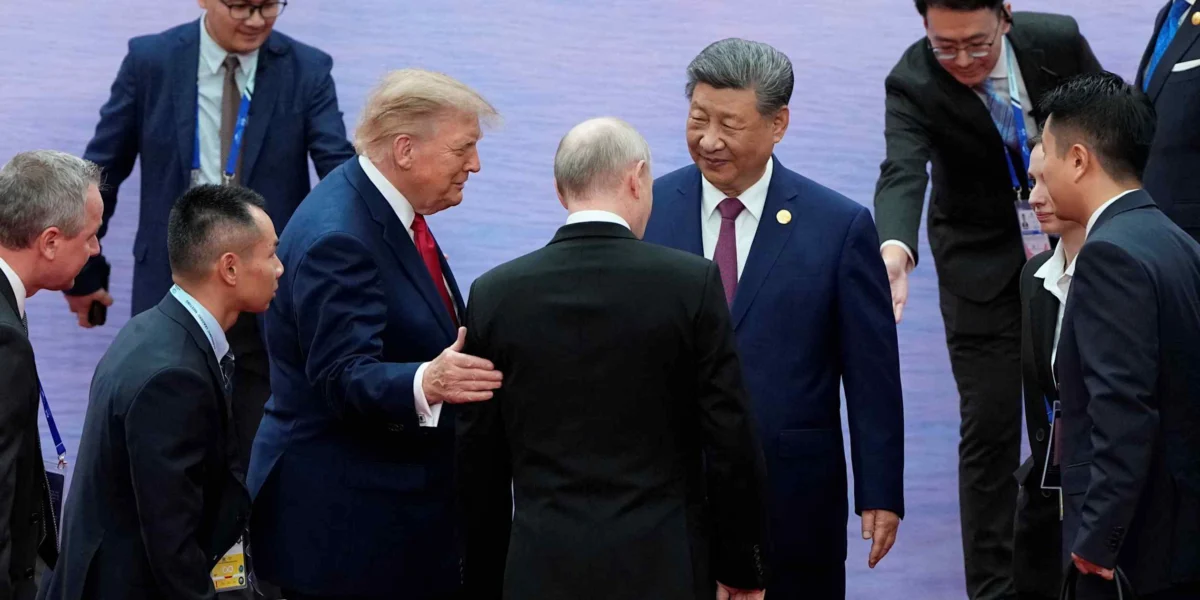
SHENZHEN — Chinese President Xi Jinping is presiding over this year’s Asia-Pacific Economic Cooperation (APEC) forum in the southern tech hub of Shenzhen, a gathering marked by the presence of U.S. President Donald Trump and Russian President Vladimir Putin, and set against a backdrop of escalating global conflicts and China’s own burgeoning technological prowess. The summit, which commenced with a CEO Summit on Tuesday, is scheduled to transition to an Economic Leaders’ Meeting on Wednesday, with significant diplomatic maneuvers expected on the sidelines.
The juxtaposition of these global leaders in Shenzhen, a city that has transformed from a humble fishing village into a beacon of technological innovation, underscores China’s ambition to project an image of stability and leadership amidst a fractured international landscape. The ongoing war in Ukraine and simmering tensions with Iran have cast a long shadow over the proceedings, amplifying the significance of any potential dialogues between the world’s major powers.
A focal point of the summit is the highly anticipated trilateral meeting between Xi, Trump, and Putin, scheduled for Thursday. This encounter has inevitably drawn comparisons to the Yalta Conference of 1945, where Allied leaders convened to discuss the post-war order of Europe. While the contemporary geopolitical stakes differ vastly, the parallel highlights the weight of this summit in potentially shaping regional and global dynamics.
Adding another layer of intrigue, President Trump hinted at the possibility of a meeting with North Korean leader Kim Jong Un during his visit to China. Such a development, if it were to materialize, would undoubtedly become another significant focal point of the U.S. president’s Asian tour, further underscoring the complex and often unpredictable nature of international diplomacy.
Nikkei Asia is providing on-the-ground coverage of these pivotal meetings.
Pre-Summit Diplomacy and Key Encounters
The lead-up to the main APEC sessions was marked by a flurry of bilateral meetings and diplomatic engagements. On Wednesday evening, Chinese President Xi Jinping hosted a banquet for APEC leaders, using the occasion to call for "concrete results" in the upcoming discussions. He emphasized the forum’s potential to foster mutual openness, drive innovation-led growth, and expand practical cooperation across various sectors. Recounting his first visit to Shenzhen in 1978, Xi highlighted the city’s remarkable transformation as a testament to China’s high-standard opening-up policy, declaring, "Openness is in Shenzhen’s DNA."
The banquet also provided a visual prelude to the anticipated diplomatic interactions. Footage captured U.S. President Donald Trump and Russian President Vladimir Putin engaging in handshakes, with President Xi observing. This moment, however brief, underscored the complex relationship dynamics that would be further explored in subsequent meetings. President Xi also shared a handshake with Japanese Prime Minister Sanae Takaichi, a significant gesture given the recent frostiness in China-Japan relations, particularly following Takaichi’s past remarks concerning a potential Taiwan crisis.
Earlier in the day, South Korean President Lee Jae Myung held discussions with President Xi. According to South Korean National Security Adviser Wi Sung-lac, Xi expressed willingness to support efforts aimed at easing tensions on the Korean Peninsula, including a North Korea-U.S. dialogue. This statement came as speculation about a potential Trump-Kim summit intensified. While Xinhua, China’s state-owned news agency, did not explicitly mention the possibility of a Trump-Kim meeting in its account of the Xi-Lee discussion, it did highlight Xi’s acknowledgment of the upcoming 35th anniversary of diplomatic relations between China and South Korea, framing it as an opportunity to promote steady ties. Xi also noted that both nations are "beneficiaries of multilateralism and free trade," a subtle nod to potential divergences with the U.S. on trade policies.
President Trump’s arrival in Shenzhen was met with a notable gesture of diplomatic reciprocity. Chinese President Xi Jinping greeted Trump on the tarmac, mirroring a rare airport welcome Trump had extended to Xi during his visit to Washington in September. Despite recent weeks of heightened tensions between the U.S. and China over technological restrictions and other contentious issues, the Shenzhen gathering offered an opportunity to maintain their fragile trade truce. The initial atmosphere at the airport appeared friendly, with the two leaders observed chatting and smiling.
Technological Showcase and Economic Undercurrents
The choice of Shenzhen as the APEC host city is itself a deliberate statement. Renowned for its rapid development into a global hub for technology and manufacturing, Shenzhen serves as a tangible showcase of China’s economic achievements and its aspirations in advanced industries. The CEO Summit preceding the leaders’ meeting featured discussions on innovation, digital transformation, and sustainable development, reflecting the region’s focus on future economic growth.
BYD Chairman and President Wang Chuanfu, speaking at a CEO panel, highlighted the company’s commitment to local employment and revenue generation through its international manufacturing operations, particularly in Thailand and Indonesia. He emphasized that BYD’s factories aim not only to export Chinese technology but also to foster mutually beneficial cooperation and "win-win outcomes," a statement made amidst growing trade tensions driven by a surge in Chinese vehicle exports.
The APEC summit also provided a platform for leaders to address broader economic challenges and opportunities. Canadian Prime Minister Mark Carney, in remarks to business leaders, spoke of "practical steps" being taken with China in financial cooperation and growing collaboration in the green economy sector. Despite past frictions between Canada and the U.S. under the Trump administration, Carney has prioritized improving relations with China, recognizing the importance of stability and shared economic interests. He praised Shenzhen’s transformation, stating, "The choices that built this city will lift this whole region."
Geopolitical Undercurrents and Regional Dynamics
The geopolitical undercurrents at the Shenzhen summit were palpable. Russian President Vladimir Putin, in his address to business leaders, implicitly criticized what he termed "former dominant powers" for attempting to suppress the development of other nations. He declared, "Economic domination and coercion are now a thing of the past," advocating for nations that preserve their independence and identity. Putin lauded Shenzhen as a symbol of transformation and expressed optimism for significant benefits from his upcoming trilateral meeting with Xi and Trump.
Malaysian Prime Minister Anwar Ibrahim, while commending China’s hospitality, delivered a subtle critique of protectionist trade policies, emphasizing the need for "free and open business activity" and warning against advocating trade while simultaneously restricting it.
The issue of Taiwan remained a sensitive undercurrent. Papua New Guinea Prime Minister James Marape assured President Xi that Taiwan no longer operates in his country, following PNG’s push for the closure of Taipei’s representative office. Marape expressed hope that this move would "assist you in your efforts for reunification," a statement that Beijing views favorably while Taipei rejects China’s territorial claims. Taiwan’s decision to halt spot gas purchases from PNG in response to the office closure was met with China’s commitment to increase its own purchases, illustrating the complex economic and political interplay surrounding the island.
Taiwan’s participation in APEC, as "Chinese Taipei," continues to be a delicate diplomatic act. Stan Shih, founder of Acer and Taiwan’s representative, expressed his intention to "actively" engage with other members, aiming to "show the international community Taiwan’s strength and contributions" as a "trustworthy" player in the global technology sector.
Trump’s Strategic Engagement and Potential Kim Meeting
President Trump’s participation in APEC signals a strategic effort to maintain ties with President Xi, particularly in the lead-up to their expected meeting at the G20 Summit in Miami the following month. His earlier departure from the 2023 summit in South Korea, where he secured a trade truce with Xi, contrasted with his more engaged presence in Shenzhen.
The possibility of a meeting between Trump and Kim Jong Un, first suggested by Trump before his departure for Asia, added a significant layer of anticipation. While North Korea is not an APEC member, the potential for a clandestine meeting on the sidelines of the summit cannot be dismissed. South Korean officials, however, had played down the likelihood of such an encounter prior to the summit. Russia’s Interfax news agency later cited the Kremlin indicating Putin’s potential willingness to meet Kim if he appeared in Shenzhen, further fueling speculation.
Economic and Technological Tensions
Underlying the diplomatic engagements are persistent economic and technological tensions. Beijing has yet to formally respond to the U.S.’s latest measures to restrict China’s access to advanced artificial intelligence chips via overseas data centers. Vice Premier He Lifeng had previously voiced concerns over U.S. restrictions on China during a phone call with his U.S. counterpart. The broader AI boom, while driving innovation, has also created market volatility, with Shenzhen’s tech-heavy ChiNext Index experiencing significant declines.
The engagement of global leaders in Shenzhen, a city synonymous with technological advancement, underscores the evolving landscape of international economic cooperation and competition. As the APEC forum unfolds, the world watches to see how these complex diplomatic maneuvers, set against a backdrop of global challenges, will shape the future of regional and international relations. The outcomes of these high-stakes discussions in Shenzhen will likely reverberate far beyond the Asia-Pacific region.