Putri Inara
The rapid ascent of pickleball from a niche backyard activity to the fastest-growing sport in the United States has provided a unique case study for digital content creators and professional bloggers seeking to navigate an increasingly saturated media landscape. As of 2024, the Sports & Fitness Industry Association (SFIA) reports that pickleball participation has grown by 223.5% over the last three years, reaching nearly 9 million players in the U.S. alone, while other estimates from the Association of Pickleball Professionals (APP) suggest the number of participants who played at least once in the past year exceeds 36 million. This explosion in popularity is not merely a result of the sport’s accessibility but is deeply rooted in strategic simplicity, community engagement, and a low barrier to entry—qualities that directly mirror the foundational requirements for building a successful professional blog in the modern creator economy.
The parallels between the two fields suggest that the strategic maneuvers used on the court can be translated into actionable frameworks for digital growth. Professional bloggers, currently facing challenges ranging from generative AI disruptions to volatile search engine algorithms, are increasingly looking toward non-traditional models of engagement and sustainability. By analyzing the mechanics of pickleball, from the tactical "dink" shot to the importance of "the kitchen," content strategists can identify new methods for retaining audience attention and fostering long-term brand loyalty.
The Evolution of a Phenomenon: A Chronology of Growth
To understand the lessons pickleball offers, it is necessary to examine its trajectory from a localized pastime to a global industry. The sport was invented in the summer of 1965 on Bainbridge Island, Washington, by three fathers—Joel Pritchard, William Bell, and Barney McCallum—who sought to create an activity that the entire family could play regardless of age or athletic ability. Using a lowered badminton net, improvised wooden paddles, and a perforated plastic ball, they established the basic rules that remain largely intact today.
By 1972, a corporation was formed to protect the sport, and by 1984, the United States Amateur Pickleball Association (USAPA) was organized to formalize the rules and promote the game nationally. However, the most significant surge occurred between 2020 and 2023. During the COVID-19 pandemic, the demand for outdoor, socially distanced activities skyrocketed. Pickleball’s small court size—roughly one-third the size of a tennis court—allowed for easy installation in driveways and community centers, facilitating a rapid expansion that mirrored the "gold rush" of the early blogging era.
For the blogging community, this timeline illustrates the power of the "Long Tail" theory. Just as pickleball existed in relative obscurity for decades before hitting a cultural tipping point, many of the most successful digital platforms today spent years building a foundation of content before achieving mainstream visibility. The lesson for creators is one of persistence and the recognition that "overnight success" is often nearly 60 years in the making.
Strategic Simplicity and the Power of the ‘Dink’
In professional pickleball, one of the most vital shots is the "dink"—a soft, controlled hit that drops just over the net into the opponent’s non-volley zone. While beginners often attempt to win points through "banging" or hard power shots, professionals understand that the dink is the ultimate tool for controlling the pace of the game and forcing an opponent into a mistake.
In the context of content strategy, "dinking" represents the art of simplifying complex information. According to data from the Nielsen Norman Group, users rarely read web pages word-for-word; instead, they scan for key information. Bloggers who master the "dink" prioritize clarity, brevity, and readability over dense, academic prose. By breaking down intricate topics into digestible, "snackable" content, creators can control the flow of information and keep readers engaged longer. Professional analysts suggest that as attention spans decrease—with some studies indicating a drop to an average of eight seconds—the ability to deliver value through simplicity has become a competitive advantage in the digital marketplace.
Community Dynamics: Rallies and Reader Retention
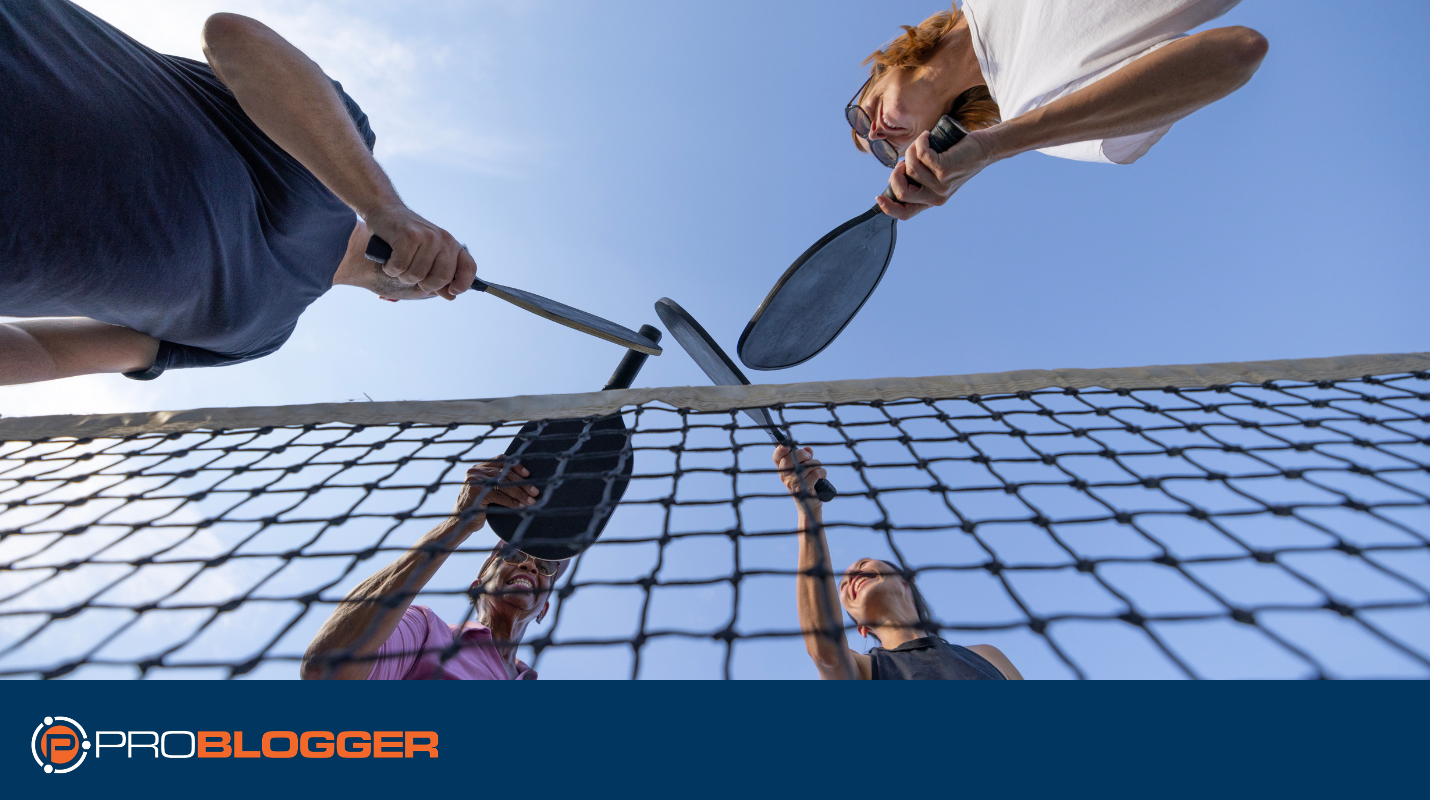
A defining characteristic of pickleball is its social nature. Unlike tennis, which can be solitary and intensely competitive, pickleball is built on the "rally"—a continuous exchange that encourages interaction. The sport’s growth has been driven largely by its ability to foster "Third Places"—social environments outside of home and work.
For bloggers, the "rally" is the feedback loop between the creator and the audience. Industry experts at HubSpot and Moz have long emphasized that community engagement is a primary driver of SEO and brand authority. Responding to comments, engaging in social media dialogues, and hosting live Q&A sessions are the digital equivalents of a sustained pickleball rally.
Data from the 2023 State of Content Marketing report indicates that blogs with active community sections see a 25% higher return visitor rate than those without. The implication is clear: a blog is no longer a one-way broadcast but a communal space. When readers feel they are part of a "rally," they are more likely to transition from casual visitors to brand advocates.
Navigating the ‘Kitchen’: Boundaries and the Sweet Spot
One of the most unique rules in pickleball involves the "non-volley zone," colloquially known as "the kitchen." Players are prohibited from volleying the ball while standing in this seven-foot area unless the ball has first bounced. This rule prevents players from simply standing at the net and smashing every shot, forcing a more strategic and nuanced game.
For digital creators, "the kitchen" represents the boundaries of their niche and the ethical limits of their engagement. In an era of "outrage bait" and aggressive monetization, bloggers must find their "sweet spot"—the area where they can provide maximum value without overstepping into intrusive advertising or irrelevant content. Strategic positioning involves understanding where the creator’s expertise intersects with the audience’s needs. Analysts suggest that blogs which stray too far from their core mission—entering the "kitchen" of unrelated niches or excessive self-promotion—often suffer from high bounce rates and a loss of perceived authority (E-E-A-T: Experience, Expertise, Authoritativeness, and Trustworthiness).
Resilience and the ‘Whiff’: Learning from Digital Failure
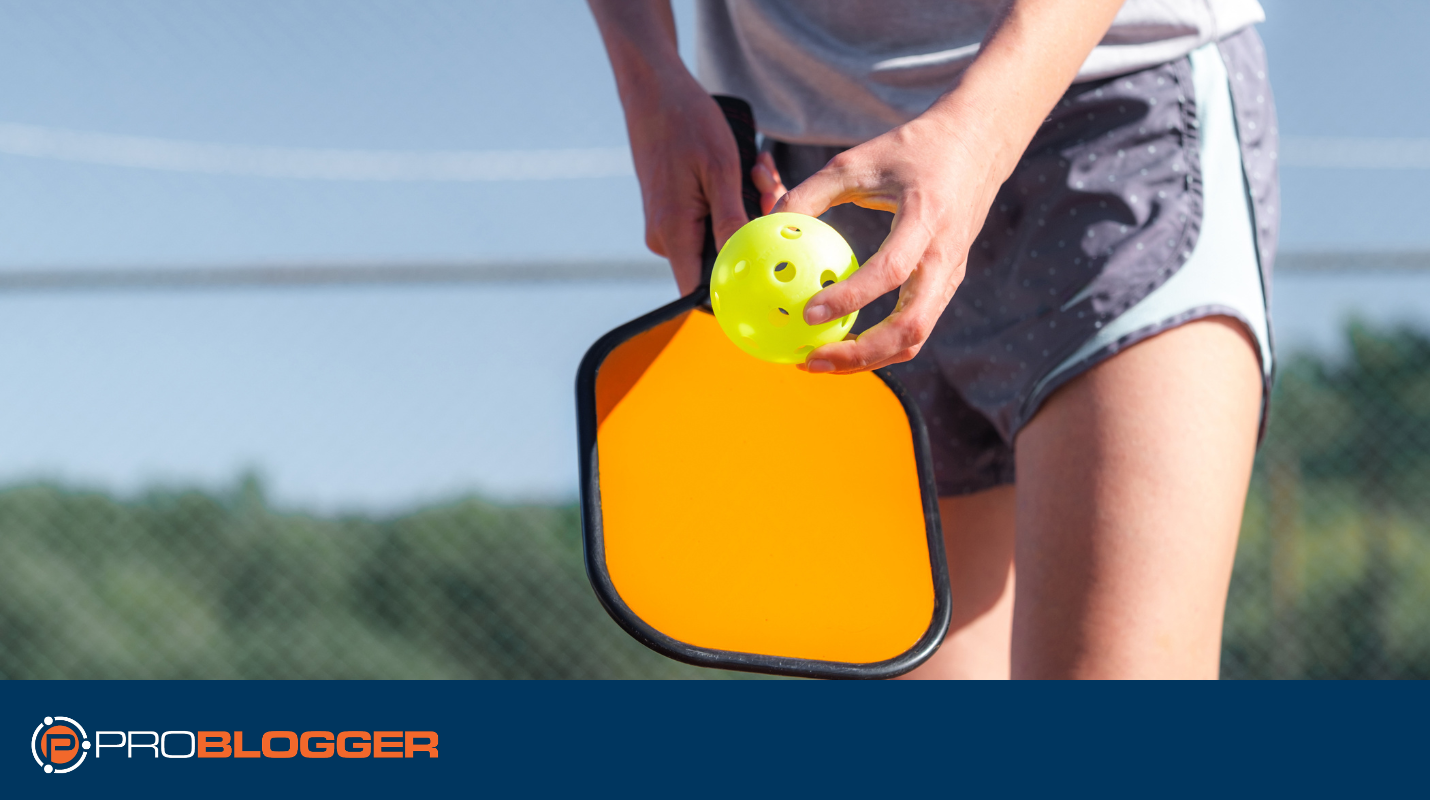
Even at the professional level, pickleball players occasionally "whiff"—a term used when a player swings and misses the ball entirely. Because the game moves quickly, the ability to recover from a whiff is more important than the mistake itself.
The blogging industry is characterized by high volatility. Algorithm updates, such as Google’s "Helpful Content Update," can result in sudden traffic losses for even established sites. A "whiff" in blogging might be a post that fails to gain traction or a marketing campaign that yields zero conversions. However, a factual analysis of the creator economy suggests that failure is an integral part of the iterative process.
According to a study by Orbit Media, the average blog post takes nearly four hours to write, yet only a small fraction of posts generate the majority of a site’s traffic. Successful bloggers use these "whiffs" as data points. By analyzing why a particular piece of content did not resonate, creators can refine their SEO strategy and content pillars, ensuring that the next "serve" is more accurately aimed at their target demographic.
Adaptability in a Shifting Landscape
The professionalization of pickleball has led to rapid advancements in paddle technology and player strategy. What worked on the court five years ago is often obsolete today. Players must continuously adapt their grip, footwork, and tactical approach to remain competitive.
The digital landscape is currently undergoing a similar seismic shift. The rise of Search Generative Experience (SGE) and AI-driven content requires bloggers to move beyond traditional keyword stuffing and toward "information gain"—providing unique insights that cannot be replicated by large language models. Adaptability is no longer optional; it is a requirement for survival. Those who treat their blog as a static entity, rather than an evolving platform, risk becoming as irrelevant as a player using a 1970s wooden paddle against modern carbon-fiber technology.
Conclusion: The Professional Impact of Joy and Strategy
The intersection of pickleball and blogging reveals a fundamental truth about modern professional endeavors: the most sustainable models are those that balance rigorous strategy with genuine engagement. The "fun" associated with pickleball is not accidental; it is a result of a well-designed system that encourages participation and rewards skill.
As the creator economy is projected to reach a valuation of $480 billion by 2027, the lessons of the pickleball court offer a roadmap for those looking to claim a share of that market. By starting with a clear foundation, fostering a robust community, maintaining simplicity, and remaining resilient in the face of "whiffs," bloggers can build platforms that are both professionally lucrative and personally fulfilling. The ultimate lesson is that in both sports and digital media, success is found in the ability to keep the ball in play, stay focused on the net, and enjoy the game.