Putri Inara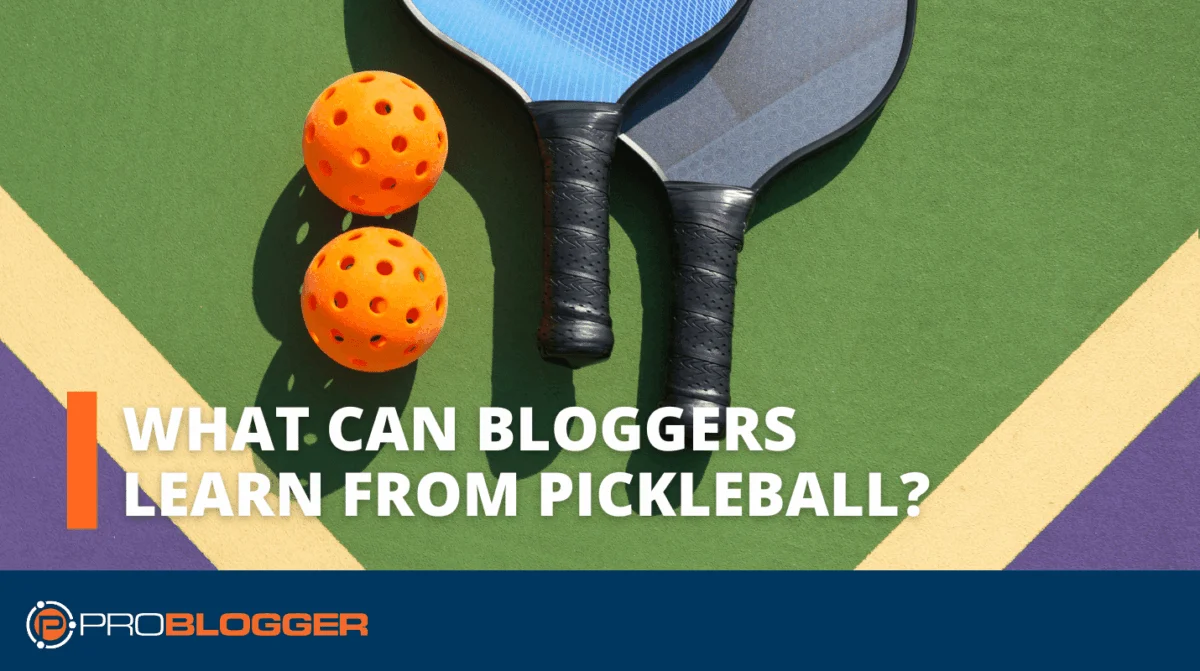
The rapid ascension of pickleball from a niche backyard pastime to the fastest-growing sport in the United States has caught the attention of sociologists, urban planners, and, increasingly, digital content strategists. As of 2023, the Sports & Fitness Industry Association (SFIA) reported that pickleball participation had grown by 223.5% over a three-year period, reaching an estimated 36.5 million players. Simultaneously, the global blogging and content marketing sector has evolved into a $400 billion industry, with over 600 million active blogs worldwide. While these two domains—one physical and one digital—appear disparate, a technical analysis reveals a profound overlap in their success metrics: low barriers to entry, high community engagement, and the necessity of strategic finesse over brute force.
The Chronology of Accessibility: From 1965 to the Digital Age
To understand the lessons pickleball offers the modern blogger, one must first examine the historical parallels of their development. Pickleball was conceptualized in 1965 on Bainbridge Island, Washington, by Joel Pritchard, Bill Bell, and Barney McCallum. The founders sought to create a game that was accessible to all family members, regardless of athletic prowess, utilizing improvised equipment including a perforated plastic ball and wooden paddles.
The evolution of blogging followed a similar trajectory of democratization. In 1994, Justin Hall created Links.net, widely recognized as the first personal blog. By the early 2000s, platforms like LiveJournal and Blogger removed the technical requirement of HTML knowledge, allowing the general public to publish content. Both movements began as grassroots efforts to simplify existing complex systems—tennis in the case of pickleball, and traditional journalism in the case of blogging.
The Strategy of the ‘Dink’: Mastering Information Density
In professional pickleball, the "dink" is a soft shot hit from the non-volley zone (the "kitchen") that just clears the net and drops into the opponent’s kitchen. It is a strategic move designed to neutralize power and force the opponent into a position of vulnerability. For the digital publisher, the dink represents the art of strategic simplification.
According to data from the NN/g Nielsen Norman Group, the average user reads only about 20% of the text on a webpage. This necessitates a "dinking" strategy in content creation: the conversion of complex, jargon-heavy information into digestible, high-value insights. Just as a well-placed dink controls the tempo of a match, clear and concise writing controls the user experience, reducing "bounce rates"—the digital equivalent of a forced error. Professional bloggers who master the "dink" prioritize readability, utilizing white space, bulleted lists, and active voice to maintain engagement without overwhelming the audience.
The Community Rally: Engagement as a Growth Engine
A defining characteristic of pickleball is its social infrastructure. Unlike tennis, which often requires a dedicated partner and scheduled court time, pickleball culture is built on "open play" formats where players rotate frequently, fostering a dense network of social connections.
This mirrors the "community-first" model of successful blogging. Industry data from HubSpot indicates that blogs that prioritize active engagement—defined by comment responses, social media integration, and newsletter interactivity—see a 45% higher retention rate than those that operate as one-way broadcast channels. The "rally" in blogging is the ongoing dialogue between the creator and the consumer. By participating in social media discussions and hosting live Q&A sessions, bloggers transition from being mere information providers to community architects. In both arenas, the longevity of the "rally" is the primary indicator of the health of the ecosystem.

Navigating the ‘Kitchen’: Brand Positioning and Boundaries
In pickleball, the "kitchen" is the seven-foot non-volley zone on both sides of the net. Players are prohibited from volleying while standing in this zone, a rule designed to prevent aggressive "smashing" at the net. This creates a strategic boundary that requires patience and positioning.
For bloggers, the "kitchen" represents the ethical and topical boundaries of their niche. Strategic positioning involves understanding where a brand can "volley" with its audience and where it must step back. Overstepping these boundaries—such as pivoting to unrelated topics or employing overly aggressive monetization tactics—can lead to a loss of authority. Market analysis suggests that "niche authority" sites, which maintain strict topical boundaries, command higher advertising premiums and stronger SEO (Search Engine Optimization) rankings than generalist sites. Success in both pickleball and blogging is often determined by how well a participant respects the constraints of their environment while maximizing opportunities within them.
Learning from the ‘Whiff’: Resilience in the Face of Algorithmic Shifts
Even at the professional level of the Association of Pickleball Players (APP) Tour, players occasionally "whiff"—missing the ball entirely. In the context of blogging, a "whiff" is a content piece that fails to gain traction or a sudden loss of traffic due to search engine algorithm updates.
The history of digital publishing is marked by significant disruptions, such as Google’s "Panda" and "Penguin" updates, which decimated the traffic of sites relying on low-quality content. A 2023 study by Content Marketing Institute found that 67% of successful bloggers cited "resilience and adaptability" as their most critical soft skill. Just as a pickleball player must reset their stance after a missed shot, a blogger must analyze data from failed posts to refine their future strategy. The "whiff" is not a terminal failure but a data point for optimization.

Data-Driven Adaptability: The Professionalization of Hobbies
The transition of pickleball from a recreational activity to a professional sport with significant venture capital investment—notably from figures like LeBron James and Tom Brady—parallels the professionalization of the "Creator Economy." Goldman Sachs estimates that the creator economy could approach a half-trillion dollar valuation by 2027.
This shift requires a move from intuitive content creation to data-driven strategy. Professional pickleball players now utilize wearable technology and video analytics to improve their game. Similarly, bloggers utilize tools like Google Analytics, SEMrush, and A/B testing to understand audience behavior.
- Key Insight: Both fields have moved from "participation for enjoyment" to "optimization for performance."
- Strategic Alignment: The most successful bloggers are those who treat their platform with the rigor of a professional athlete, constantly refining their "serve" (the headline and introduction) to ensure maximum impact.
Broader Impact and Market Implications
The intersection of sports logic and digital strategy has broader implications for how information is consumed in the 21st century. The success of pickleball is attributed to its "low-stakes, high-reward" nature—it is easy to learn but difficult to master. Blogging follows a similar psychological profile. The ease of publishing a post provides immediate gratification, while the complexity of building a sustainable brand provides a long-term challenge.
Economically, the "Pickleball Effect" has led to a surge in specialized retail and infrastructure development. Likewise, the blogging industry has birthed an entire ecosystem of supporting technologies, from AI-driven writing assistants to sophisticated affiliate marketing networks. The primary lesson is one of synergy: when a platform (or a sport) balances accessibility with strategic depth, it creates a self-sustaining cycle of growth.

Conclusion: The Final Serve
The parallels between pickleball and blogging underscore a fundamental truth in modern engagement: strategy and enjoyment are not mutually exclusive. As the digital landscape becomes increasingly crowded, the "brute force" methods of high-volume, low-quality content are being replaced by the "pickleball method"—strategic positioning, community engagement, and the art of the dink.
For the modern blogger, the paddle and the keyboard are tools of the same trade. Both require a keen eye on the "ball" (the core message), a respect for the "kitchen" (brand boundaries), and the agility to adapt to an ever-changing "court" (the digital marketplace). By adopting the mindset of a pickleball player, bloggers can transform their platforms from static pages into vibrant, resilient, and highly competitive community hubs. The game is no longer just about showing up; it is about how effectively one can serve, rally, and win in an increasingly sophisticated arena.