Farhan Pambudi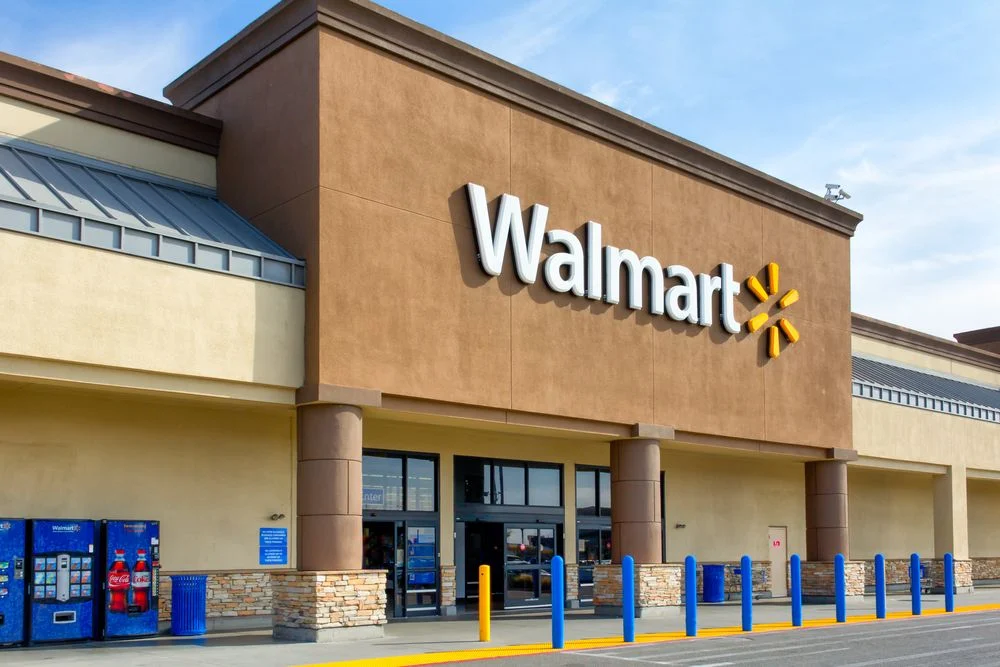
In a significant reversal of a decade-long corporate strategy, Walmart Inc. announced on Friday that it will officially begin accepting Apple Pay and Google Pay at its retail locations across the United States. The move, which includes both Walmart stores and Sam’s Club warehouses, represents the collapse of one of the final and most prominent barriers to universal contactless payment adoption in the American retail landscape. According to the company’s official statement, the integration of these "Tap to Pay" services will begin on August 24 at select locations, with a comprehensive rollout expected to reach all stores and clubs by the end of 2024. Furthermore, the company plans to extend this technology to its network of fuel stations by the middle of 2027.
For years, Walmart remained the most notable holdout against NFC (Near Field Communication) technology, the underlying system that allows smartphones and smartwatches to communicate with payment terminals. While competitors like Target, Costco, and Best Buy eventually embraced the technology to meet consumer demand, Walmart doubled down on its proprietary ecosystem. This shift signals a tactical pivot for the world’s largest retailer, which had previously prioritized data ownership and the avoidance of third-party transaction fees over the convenience of standard mobile wallets.
A History of Strategic Resistance: The MCX and CurrentC Era
To understand the weight of Walmart’s announcement, one must look back to the early 2010s, when the "mobile wallet wars" first began. In 2012, Walmart spearheaded a consortium of major retailers known as Merchant Customer Exchange (MCX). This group, which included giants like Target, Best Buy, 7-Eleven, and CVS, aimed to create a retailer-owned mobile payment system called CurrentC.
The primary objective of CurrentC was twofold: to eliminate the interchange fees associated with credit card transactions and to ensure that retailers maintained direct access to customer purchasing data. Unlike Apple Pay, which anonymizes transaction data to protect user privacy, CurrentC was designed to link directly to a customer’s bank account and integrate loyalty programs seamlessly. However, the system relied on QR codes, which many consumers found cumbersome compared to the "tap-and-go" simplicity of NFC.
The resistance turned aggressive in 2014 when Apple Pay launched. Several MCX members, including CVS and Rite Aid, initially disabled their NFC readers to prevent customers from using Apple’s service, steering them instead toward the then-unreleased CurrentC. Walmart remained the ideological leader of this movement. However, CurrentC suffered from security breaches during its pilot phase and failed to gain any significant consumer traction. By 2016, the project was officially postponed indefinitely, and the MCX consortium eventually sold its technology to JPMorgan Chase.
The Rise and Limitations of Walmart Pay
Following the failure of CurrentC, Walmart did not immediately surrender to Apple or Google. Instead, it launched Walmart Pay in late 2015. Integrated directly into the Walmart app, this proprietary solution also utilized QR codes. By keeping the payment process within its own application, Walmart was able to track every item a customer purchased, link those purchases to a digital profile, and offer targeted advertisements and discounts.
While Walmart Pay achieved moderate success—largely due to the sheer volume of Walmart’s foot traffic—it remained a point of friction for consumers who preferred the unified experience of a single mobile wallet. As of 2023, industry data suggested that while Walmart Pay was used by a dedicated segment of the store’s most frequent shoppers, it failed to capture the broader market of occasional visitors who did not wish to download a specific app just to complete a transaction.
The decision to finally adopt Apple Pay and Google Pay suggests that the "friction cost" of excluding these services eventually outweighed the data-collection benefits of Walmart Pay. Retail analysts have long noted that customers, particularly younger demographics like Gen Z and Millennials, increasingly view contactless payment not as a luxury, but as a basic utility.
Market Context and Consumer Trends
The timing of Walmart’s pivot aligns with a massive shift in consumer behavior accelerated by the COVID-19 pandemic. Before 2020, contactless payment adoption in the U.S. lagged significantly behind Europe and Asia. However, the need for "touchless" interactions during the pandemic forced a rapid upgrade of payment infrastructure and a change in shopper habits.
According to data from Apple, more than 85% of U.S. retailers now accept Apple Pay. Similarly, a 2023 report on digital payments indicated that over 150 million Americans have used a mobile wallet at least once, with that number projected to grow as physical cards become increasingly secondary. By refusing to support these methods, Walmart was effectively operating as an outlier in a market where "Tap to Pay" has become the standard.
Furthermore, the competitive landscape has shifted. Amazon, Walmart’s primary rival, has been experimenting with even more advanced frictionless technologies, such as "Just Walk Out" shopping and Amazon One palm-recognition payments. In this environment, Walmart’s insistence on a QR-code-based system began to appear technologically regressive.
Official Statements and Corporate Framing
In its official communication, Walmart attempted to frame the move as an expansion of consumer choice rather than a concession to market pressure. "Tap to Pay is a great addition to the other payment options already offered like cash, credit card or Walmart Pay," the company stated. "Giving customers and members more choice at checkout is part of a broader effort to make managing and using their money easier."
Despite the corporate spin, industry insiders view this as a pragmatic acknowledgment of reality. While Walmart Pay will continue to exist and will likely remain the preferred method for those using Walmart’s "Scan & Go" feature (which allows Sam’s Club members and Walmart+ subscribers to bypass traditional checkout lines), the addition of Apple and Google Pay removes a significant hurdle for the average shopper.
Timeline of the Rollout
The implementation of the new payment options will follow a phased approach to ensure system stability across Walmart’s massive infrastructure, which includes more than 4,600 stores in the U.S. and nearly 600 Sam’s Club locations.
- August 24, 2024: Pilot launch of Tap to Pay at select Walmart and Sam’s Club locations.
- Late 2024: Full integration of Apple Pay and Google Pay at all interior point-of-sale terminals nationwide.
- 2025–2026: Continued optimization of the checkout experience and integration with the Walmart+ loyalty ecosystem.
- Mid-2027: Completion of the rollout at all Walmart and Sam’s Club fuel stations.
The extended timeline for fuel stations is attributed to the specialized hardware requirements of outdoor pumps, which often require more intensive physical upgrades compared to indoor registers.
Broader Implications for the Retail Industry
Walmart’s capitulation is expected to have a ripple effect across the remaining holdouts in the retail sector. While most major chains have already adopted NFC technology, Walmart’s move puts immense pressure on smaller regional retailers and specialized chains that have resisted the upgrade costs.
From a financial perspective, the move may slightly impact Walmart’s bottom line regarding merchant fees. Apple and Google do not charge retailers extra for using their wallets, but by allowing customers to use these services, Walmart loses some of the leverage it had to push users toward lower-cost payment methods, such as direct ACH transfers or store-branded credit cards.
However, the primary gain is in customer satisfaction and transaction speed. Contactless payments are significantly faster than inserting a chip card or scanning a QR code, which can reduce checkout line wait times—a perennial pain point for Walmart shoppers. In the high-volume world of big-box retail, shaving even five seconds off every transaction can lead to millions of dollars in increased operational efficiency over a year.
Analysis: Why Now?
Market analysts point to several factors that likely forced Walmart’s hand. First is the maturation of the technology; NFC is no longer a "new" feature but a standard expectation. Second is the growth of Walmart+, the company’s subscription service. To compete with Amazon Prime, Walmart+ needs to offer a frictionless, premium experience. Requiring subscribers to use a specific app-based payment method while the rest of the world uses integrated mobile wallets was increasingly seen as a barrier to recruitment.
Finally, there is the issue of international consistency. In many of Walmart’s international markets, such as Canada and the UK, contactless payment has been the norm for years. Aligning the U.S. operation with global standards simplifies the company’s internal software development and hardware procurement processes.
Walmart’s decision to embrace Apple Pay and Google Pay marks the end of an era in the retail industry. It concludes a long-standing battle over the "front end" of the transaction and acknowledges that in the modern economy, consumer convenience is the ultimate currency. As the rollout begins this August, the retail giant finally steps into the mainstream of 21st-century digital commerce, ensuring that "hell freezing over" is simply the new standard for doing business.