Reynand Wu
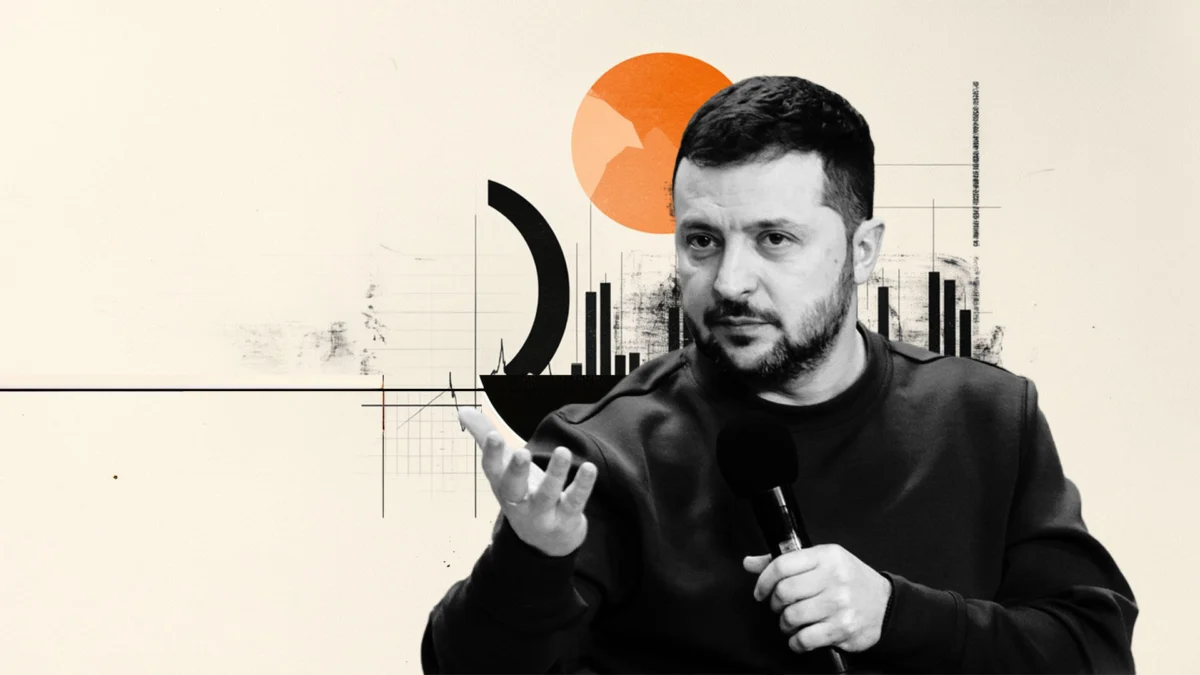
Ukrainian President Volodymyr Zelenskyy announced on Sunday that a pivotal trilateral meeting involving Kyiv, Washington, and Moscow is slated to take place in November. The declaration, initially reported by Reuters, signals a potential, albeit highly complex, diplomatic overture amidst the ongoing and brutal full-scale invasion of Ukraine by Russia, which commenced in February 2022. This proposed high-level engagement, if it materializes, would represent one of the most significant attempts at direct dialogue between the warring nations and Ukraine’s principal international backer since the initial, largely unsuccessful, peace talks in the early months of the conflict. The announcement comes at a critical juncture, with the war having entered its third year, marked by grinding trench warfare, sustained missile attacks, and immense human and material costs.
The Genesis of the Conflict and Diplomatic Deadlock
The roots of the current conflict are deeply embedded in post-Soviet geopolitical shifts and Russia’s persistent concerns over NATO expansion and Ukraine’s westward aspirations. Following the 2014 annexation of Crimea and the instigation of proxy wars in Ukraine’s eastern Donbas region, international efforts to de-escalate tensions largely coalesced around the Minsk Agreements. These accords, signed in 2014 and 2015, aimed to establish a ceasefire, facilitate political reforms, and integrate the Donbas region back into Ukraine under special conditions. However, their implementation remained largely stalled, with both sides accusing the other of violations and a fundamental disagreement on their interpretation.
On February 24, 2022, Russia launched a full-scale invasion of Ukraine, citing concerns over "denazification" and "demilitarization" – claims widely refuted by the international community. The invasion triggered the largest armed conflict in Europe since World War II, leading to widespread destruction, millions of displaced persons, and a staggering humanitarian crisis. Cities like Mariupol, Bakhmut, and Avdiivka have been reduced to rubble, and the United Nations High Commissioner for Refugees (UNHCR) estimates that over 6.5 million Ukrainians have fled the country, with millions more internally displaced. The economic impact has been profound, with Ukraine’s GDP shrinking by an estimated 29.1% in 2022, according to the World Bank, and global commodity markets experiencing significant volatility, particularly in energy and food sectors.
Throughout the conflict, direct high-level negotiations between Kyiv and Moscow have been scarce and largely unproductive. Initial talks held in Belarus and later in Istanbul in March 2022 offered a glimmer of hope but ultimately collapsed. Ukraine sought a complete withdrawal of Russian forces and security guarantees, while Russia demanded Ukraine’s neutrality, recognition of annexed territories, and other concessions deemed unacceptable by Kyiv. The maximalist positions adopted by both sides, coupled with deep-seated mistrust exacerbated by the atrocities committed during the war, have consistently hampered diplomatic progress.
Previous Attempts at Dialogue: A Troubled History
The path to any potential November meeting is littered with the failures of past diplomatic endeavors. The Minsk Agreements, despite being internationally brokered and endorsed, failed to prevent the full-scale war. Their inherent ambiguities and the lack of political will from both Moscow and Kyiv to fully implement their provisions ultimately rendered them ineffective. Ukraine viewed the agreements as strategically disadvantageous, potentially ceding significant sovereignty over its eastern territories, while Russia accused Kyiv of failing to grant sufficient autonomy to the separatist regions.
In the immediate aftermath of the 2022 invasion, several rounds of negotiations took place. The first direct talks between Ukrainian and Russian delegations occurred on February 28, 2022, on the Belarusian border, followed by subsequent meetings in Belarus and then Istanbul. During the Istanbul talks in late March 2022, negotiators reportedly discussed a framework that could see Ukraine declare neutrality in exchange for international security guarantees, while Russia would withdraw its forces. However, these discussions quickly unraveled, largely attributed to Russia’s continued military aggression, particularly the discovery of atrocities in Bucha and other liberated areas, which solidified Ukraine’s resolve against making significant concessions. Ukrainian officials later stated that Russia’s demands were unacceptable, and Moscow accused Ukraine of reneging on preliminary agreements. Since then, official high-level direct dialogue has largely ceased, replaced by indirect communication channels and international mediation efforts focused on specific issues like prisoner exchanges or the Black Sea Grain Initiative.
President Zelenskyy has, however, consistently put forward a ten-point "Peace Formula" as Ukraine’s blueprint for a lasting and just peace. This formula includes:
- Radiation and nuclear safety.
- Food security.
- Energy security.
- Release of all prisoners and deportees.
- Implementation of the UN Charter and restoration of Ukraine’s territorial integrity and the world order.
- Withdrawal of Russian troops and cessation of hostilities.
- Restoration of justice.
- Environmental protection.
- Prevention of escalation.
- Confirmation of the war’s end.
This comprehensive plan underscores Ukraine’s insistence on its sovereignty and territorial integrity as non-negotiable foundations for any peace settlement.
The Key Players’ Positions and Preconditions
For a trilateral meeting to yield any meaningful progress, a significant shift in the maximalist positions of all three parties, particularly Kyiv and Moscow, would be required.
Ukraine’s Stance:
President Zelenskyy and his administration have consistently maintained that Ukraine’s territorial integrity, including Crimea and all territories occupied since 2014, is non-negotiable. They demand a complete withdrawal of Russian forces from Ukrainian soil, accountability for war crimes, reparations for damages, and robust international security guarantees to prevent future aggression. Ukraine views any territorial concessions as a dangerous precedent and a betrayal of its national interest and the sacrifices made by its people. While open to diplomacy, Kyiv insists that any talks must respect its sovereignty and be based on its Peace Formula. There is a strong domestic consensus against concessions, particularly after the referendums orchestrated by Russia in occupied territories and their subsequent illegal annexation.
United States’ Position:
The United States has been Ukraine’s staunchest ally, providing unprecedented levels of military, financial, and humanitarian aid. Washington’s policy has been unwavering: support Ukraine’s ability to defend itself and reclaim its territory. US officials, including President Joe Biden, have repeatedly affirmed the principle of "nothing about Ukraine without Ukraine," emphasizing that any peace settlement must be acceptable to Kyiv. While the US supports diplomatic solutions, it has also stressed that the timing and terms of negotiations are for Ukraine to decide. The US has maintained an open channel of communication with Russia on de-escalation and strategic stability, but has consistently rejected Russian demands for a halt to NATO expansion or a re-division of spheres of influence in Europe. The US would likely participate in a trilateral meeting primarily to support Ukraine’s position, provide security assurances, and potentially act as a guarantor for any future agreements.
Russia’s Demands:
Russia’s preconditions for peace talks have remained largely consistent but fundamentally at odds with Ukraine’s and the West’s positions. Moscow demands that Ukraine recognize the "new realities" – specifically the annexation of Crimea and the four Ukrainian regions of Donetsk, Luhansk, Kherson, and Zaporizhzhia, which Russia illegally claimed as its own following sham referendums in September 2022. Additionally, Russia seeks Ukraine’s "demilitarization" and "denazification," terms that Kyiv and its allies view as thinly veiled attempts to undermine Ukrainian sovereignty and government. Russia also calls for an end to Western military aid to Ukraine and guarantees against Ukraine joining NATO. President Vladimir Putin has frequently stated Russia is "ready to negotiate," but these statements are almost always accompanied by non-negotiable demands that preclude genuine compromise.
The Significance of a Trilateral Format
The proposed trilateral format involving Kyiv, Washington, and Moscow is significant because it acknowledges the multifaceted nature of the conflict and the direct involvement of the United States as a primary stakeholder and security provider.
- Direct Engagement: It would allow for direct communication between the primary belligerents (Ukraine and Russia) with the critical participation of Ukraine’s most powerful ally.
- US Role: The United States’ presence elevates the talks from bilateral (Ukraine-Russia) to a broader international security discussion. The US can offer crucial security guarantees, economic support for post-conflict reconstruction, and exert diplomatic pressure on Russia. Its involvement could lend greater credibility and enforceability to any potential agreements.
- Addressing Broader Security Concerns: The conflict has profound implications for European and global security. A trilateral meeting could potentially address not just the immediate cessation of hostilities but also a future security architecture for the region, something that would inherently involve Washington.
- Risk Management: The US presence could also serve as a de-escalation mechanism, preventing the talks from devolving into mere blame games or propaganda exchanges.
However, the trilateral format also presents challenges. Russia might seek to elevate the discussion to a great power negotiation, bypassing Ukraine’s agency, which Kyiv and Washington would resist. Ukraine’s participation as an equal partner, rather than a subject of discussion between larger powers, would be paramount.
Potential Agenda Items for the November Meeting
While the precise agenda for such a high-stakes meeting would be subject to intense pre-negotiation, several critical issues are likely to dominate discussions:
- Ceasefire and De-escalation: The immediate priority for any peace talks is a cessation of hostilities. This would involve defining a ceasefire line, establishing monitoring mechanisms, and potentially creating demilitarized zones.
- Prisoner Exchanges and Humanitarian Issues: Discussions could focus on comprehensive prisoner-of-war exchanges, the return of deported Ukrainian children, and the establishment of safe humanitarian corridors for civilians.
- Black Sea Grain Initiative: The future of critical agreements like the Black Sea Grain Initiative, which ensures safe passage for Ukrainian agricultural exports, could be a key point, given its global food security implications.
- Security Guarantees for Ukraine: A central pillar of Ukraine’s demands, this would involve discussions on what form international security guarantees might take to deter future Russian aggression.
- Withdrawal of Forces: This remains perhaps the most contentious issue. Ukraine demands a full withdrawal to its 1991 borders. Russia is unlikely to agree without significant concessions, which Ukraine is unwilling to make.
- Status of Occupied Territories: Equally challenging is the question of territories currently occupied by Russia. Ukraine insists on their full return. Russia has annexed them, declaring them part of its sovereign territory, a move universally rejected by the international community. This issue alone could be a deal-breaker.
- Reparations and Accountability: Ukraine seeks financial reparations for the damage caused by the invasion and accountability for war crimes, issues that Russia firmly rejects.
Challenges and Hurdles to a Breakthrough
The announcement of a potential trilateral meeting, while offering a glimmer of hope, must be viewed through a lens of profound skepticism given the entrenched positions and deep mistrust. Numerous hurdles stand in the way of any meaningful breakthrough:
- Conflicting Maximalist Demands: The fundamental disagreement over Ukraine’s territorial integrity and sovereignty versus Russia’s claims over annexed territories creates an almost insurmountable obstacle. Neither side appears willing to compromise on these core issues.
- Lack of Trust: The sheer scale of the conflict, the immense human suffering, and the documented war crimes have eroded any remaining trust between Kyiv and Moscow. Building a foundation for genuine negotiation in such an environment is exceedingly difficult.
- Battlefield Realities: The ongoing military situation heavily influences negotiating positions. If one side perceives it has the upper hand, it may be less inclined to make concessions. Conversely, significant battlefield shifts could alter political will.
- Domestic Political Pressures: Leaders in all three countries face domestic pressures. Zelenskyy must contend with a Ukrainian public that overwhelmingly rejects territorial concessions. Putin operates under a system that demands a narrative of victory and strength. Biden faces a polarized political landscape that scrutinizes foreign policy decisions.
- Enforcement Mechanisms: Even if an agreement were reached, ensuring its enforcement would be a significant challenge. The failure of the Minsk Agreements highlights the difficulty of upholding complex international accords without robust and impartial enforcement mechanisms.
- Absence of a Common Ground: Without a pre-agreed framework or a set of principles that all parties can endorse, the meeting risks becoming a forum for reiterating grievances rather than forging solutions.
International Reactions and Expectations
The prospect of a trilateral meeting would likely be met with cautious optimism by the international community.
- European Union and NATO: European leaders and NATO allies would likely welcome any genuine effort towards de-escalation and peace, while reiterating their steadfast support for Ukraine’s sovereignty and territorial integrity. They would emphasize that any peace must be just and lasting, not merely a temporary cessation of hostilities that rewards aggression.
- United Nations: The UN Secretary-General and other international bodies would likely express hope for diplomatic progress, emphasizing the urgent need to uphold international law and protect civilians. The UN has consistently called for a peaceful resolution in line with the UN Charter.
- Global South: Nations in the Global South, many of whom have suffered economic consequences from the war (e.g., food and energy price inflation), would likely view such talks as a positive step towards stability and the alleviation of global crises.
- China: Beijing, while maintaining a strategic partnership with Russia, has also nominally called for peace talks. It would likely view a trilateral meeting as an opportunity to project its influence as a potential mediator, even if its role in this specific format is indirect.
Broader Implications for Regional and Global Security
Should the November meeting proceed, its outcome, regardless of success or failure, will have profound implications for regional and global security:
- Precedent for Future Conflicts: The nature of any agreement, particularly regarding territorial integrity and sovereignty, would set a significant precedent for how future international conflicts are resolved and whether aggression is seen to yield territorial gains.
- The Role of Great Power Diplomacy: It would test the efficacy of great power diplomacy in resolving high-stakes conflicts, especially when one permanent member of the UN Security Council is the aggressor.
- Future of European Security Architecture: The war has fundamentally reshaped Europe’s security landscape. Any resolution would inevitably influence the future of NATO, the role of the EU in defense, and the broader security guarantees for non-aligned or aspiring member states.
- US-Russia Relations: The meeting could offer a rare direct high-level channel for US-Russia communication, potentially addressing broader strategic stability issues beyond Ukraine, or it could further solidify their adversarial relationship depending on the outcome.
- Global Stability: A successful de-escalation could ease global tensions, stabilize energy and food markets, and free up international resources for other pressing global challenges. Conversely, a failure could prolong the conflict, further entrench geopolitical divisions, and exacerbate humanitarian crises.
President Zelenskyy’s announcement of a November trilateral meeting between Kyiv, Washington, and Moscow presents a delicate balance of hope and profound skepticism. While the very notion of such a high-level dialogue offers a sliver of diplomatic possibility, the deep chasm between the parties’ core demands, the lingering mistrust, and the brutal realities of the ongoing war mean that the path to a meaningful resolution remains fraught with immense challenges. The world will be watching to see if this diplomatic window, however narrow, can offer any tangible step towards peace or merely highlight the persistent impasse in one of the 21st century’s most devastating conflicts.