Gilang Muhammad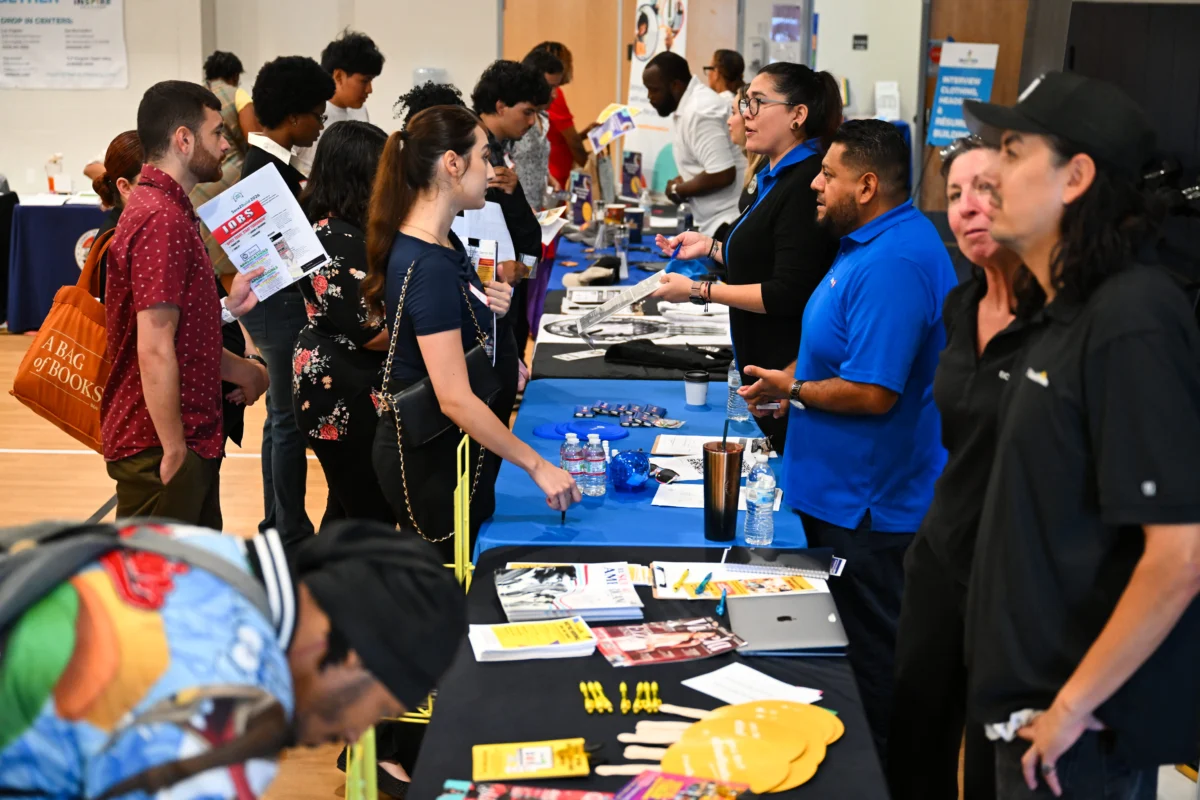
The U.S. labor market presented a perplexing tableau in July 2026, as nonfarm payrolls unexpectedly contracted while the unemployment rate simultaneously edged lower. This contradictory data, released by the Bureau of Labor Statistics, immediately sent ripples of uncertainty through financial markets and economic policy circles, prompting a scramble among analysts to decipher the true health and direction of the nation’s economy. The report emerged amidst a backdrop of ongoing inflation concerns and a Federal Reserve grappling with its mandate to achieve both maximum employment and price stability. The mixed signals complicate an already intricate economic landscape, leaving investors, policymakers, and ordinary citizens alike questioning whether the labor market’s recovery is stalling or merely rebalancing.
A Deep Dive into the Discrepant Figures
The headline numbers from the July jobs report painted a picture of economic dissonance. Nonfarm payrolls registered an unexpected decline of 55,000 jobs, sharply diverging from market expectations which had anticipated a modest gain of around 120,000 positions. This contraction marked the first monthly decrease in employment since late 2023, raising immediate flags about the momentum of job creation. However, concurrently, the national unemployment rate dipped to 3.7% from 3.8% in June, a seemingly positive development that nonetheless introduced a layer of ambiguity.
Further granularity within the report revealed a more complex narrative. The decline in payrolls was primarily concentrated in sectors sensitive to economic slowdowns and interest rate hikes. Manufacturing shed 25,000 jobs, reflecting persistent supply chain challenges and softening global demand. Retail trade saw a reduction of 15,000 positions, indicating a potential moderation in consumer spending. Temporary help services, often a bellwether for future hiring trends, also saw a notable decrease of 10,000 jobs. Conversely, some sectors demonstrated resilience, with healthcare adding 20,000 jobs and government employment remaining relatively stable.
The puzzling decline in the unemployment rate, despite fewer people being employed, could be attributed to a contraction in the labor force. The labor force participation rate, which measures the proportion of the working-age population either employed or actively looking for work, slightly decreased to 62.3% from 62.4%. This suggests that some individuals may have exited the workforce, potentially due to discouragement, retirement, or other factors, thereby reducing the pool of unemployed without necessarily creating more jobs. This dynamic implies that the dip in the unemployment rate might not be a robust indicator of labor market strength but rather a statistical artifact of a shrinking workforce.
Average hourly earnings, a key inflation metric closely watched by the Federal Reserve, showed a modest increase of 0.2% month-over-month, bringing the year-over-year growth to 4.0%. While still elevated compared to historical norms, this represented a slight deceleration from the 4.2% year-over-year growth recorded in June. This moderation in wage inflation offered a glimmer of hope to those advocating for a less aggressive monetary policy stance, suggesting that some inflationary pressures might be easing. However, with overall inflation (as measured by the Consumer Price Index) still running significantly above the Fed’s 2% target, this slight moderation in wage growth was unlikely to be a decisive factor in the immediate policy outlook.
Expert Reactions: A "Hall of Mirrors" Economy
The contradictory nature of the July jobs report immediately sparked divergent interpretations among leading economists and financial strategists. Kevin Gordon, head of macro research and strategy at the Schwab Center for Financial Research, encapsulated the prevailing sentiment of confusion, stating, "This report is like a hall of mirrors, tricking investors with different signals about whether labor’s recovery is stalling." Gordon’s analogy highlighted the difficulty in drawing clear conclusions from data points that pulled in opposite directions, creating a distorted view of economic reality. He emphasized that while a lower unemployment rate typically signals strength, a simultaneous decline in payrolls, particularly if coupled with a shrinking labor force, suggests underlying weakness that could manifest more clearly in future reports.
Aditya Bhave, U.S. economist at Bank of America, acknowledged the dovish implications of the report but maintained a firm stance on the Federal Reserve’s likely course of action. "We agree that the [July] jobs report was a bit dovish on net. But we are sticking with our call that the Fed will hike by 75 [basis points] this year, starting in [September]. The Fed is likely to remain more focused on inflation than labor. The [July] CPI report is a bigger event than today’s jobs numbers." Bhave’s commentary underscored the prevailing view that inflation remains the paramount concern for the Fed. Despite any signs of labor market cooling, as long as price stability remains elusive, the central bank is expected to prioritize monetary tightening. The upcoming Consumer Price Index (CPI) report for July, scheduled for release in mid-August, was widely anticipated to provide a more definitive picture of inflationary trends, thereby holding greater sway over the Fed’s September policy decision than the ambiguous jobs figures.
Echoing concerns about the broader economic implications, Peter Graf, chief Investment officer at Amova Asset Management Americas, warned investors against complacency. "Although the stock market is likely to welcome the dovish implications of the report, investors should be wary of the future growth potential of an economy where fewer people are working." Graf’s caution highlighted the long-term risks associated with a contracting labor market. While a perceived softening of the labor market might initially be interpreted by equity markets as reducing the likelihood of aggressive rate hikes (a dovish signal), sustained job losses inevitably translate into reduced consumer spending, lower corporate revenues, and ultimately, diminished economic growth. This perspective urged investors to look beyond immediate market reactions and consider the foundational health of the economy.
Market Reaction and Broader Implications
The immediate market reaction to the July jobs report was predictably volatile. U.S. stock futures initially surged as investors interpreted the payroll decline and moderating wage growth as signals that the Federal Reserve might adopt a less aggressive stance on interest rate hikes. The prospect of a "dovish pivot" or a slower pace of tightening was met with enthusiasm, particularly in technology and growth sectors that are sensitive to borrowing costs. However, this initial euphoria was tempered as analysts delved deeper into the data, recognizing the underlying signs of economic deceleration. Bond yields, which typically move inversely to bond prices, initially fell on expectations of less aggressive Fed action, but later stabilized as the complexity of the report became clearer. The U.S. dollar also experienced fluctuations, weakening against major currencies before paring some losses.
The implications for the Federal Reserve’s monetary policy trajectory are significant. For months leading up to July 2026, the Fed had been engaged in a concerted effort to tame inflation, which had proven more persistent than initially anticipated. A series of aggressive rate hikes throughout 2024 and 2025 had aimed to cool an overheating economy. The July jobs report presented the central bank with a difficult choice: continue its hawkish stance to combat inflation, potentially risking a deeper economic downturn, or temper its approach in light of a weakening labor market, potentially allowing inflation to remain elevated. The consensus, as articulated by Bhave, remained that the Fed would prioritize inflation, making the September Federal Open Market Committee (FOMC) meeting a pivotal moment.
Beyond monetary policy, the report raised concerns about consumer confidence and spending, which are crucial drivers of the U.S. economy. A decline in employment, even if offset by a statistical drop in unemployment, can lead to increased job insecurity and a reduction in discretionary spending. This could create a negative feedback loop, further slowing economic activity. Businesses, facing uncertain demand and potentially higher borrowing costs, might become more cautious in their hiring and investment plans, exacerbating the slowdown.
Chronology and Context: The Road to July 2026
The July 2026 jobs report did not emerge in a vacuum. It was the latest installment in a series of economic data releases that have painted an increasingly nuanced, and at times contradictory, picture of the U.S. economy. Following the robust post-pandemic recovery, characterized by strong job growth and surging demand, the economy entered a phase where persistent inflation became the dominant concern. Supply chain disruptions, elevated energy prices, and geopolitical tensions in early 2025 further fueled inflationary pressures, prompting the Federal Reserve to embark on an aggressive tightening cycle.
Throughout late 2024 and the first half of 2025, the Fed executed multiple interest rate hikes, pushing the federal funds rate to its highest level in over a decade. These actions were aimed at cooling demand and bringing inflation back down to the target. While these measures had started to show some effect in certain sectors, particularly housing, the labor market had remained remarkably resilient, confounding expectations of a more rapid slowdown. This resilience, while positive for employment, also fueled concerns that wage-price spirals could entrench inflation.
The June 2026 jobs report, for instance, had shown a more modest but still positive gain in nonfarm payrolls (around 100,000 jobs) with a stable unemployment rate, suggesting a gradual cooling rather than an abrupt halt. This made the unexpected decline in July all the more jarring, prompting questions about whether the cumulative effect of previous rate hikes was finally manifesting more forcefully in the labor market. The jobs report is typically released on the first Friday of each month, covering data from the previous month, making the July report a key indicator for the mid-year economic assessment. The subsequent release of the July CPI report would then complete the critical data set for the Fed’s September policy meeting.
A Glimpse into the Future: The Inspire Together Job Fair
The image accompanying the report, depicting job seekers at an "Inspire Together" job and resource fair in Los Angeles on July 29, 2026, served as a stark reminder of the human element behind the economic statistics. While the national unemployment rate might have dipped, the scene in Los Angeles underscored that many individuals were still actively seeking employment, retraining opportunities, or resources to navigate a dynamic job market. These regional and demographic nuances are often masked by aggregate national data. For instance, specific industries or geographical areas might experience greater job displacement due to automation, outsourcing, or shifts in consumer preferences, even as other sectors thrive. The fair’s presence highlights ongoing efforts to connect workers with available opportunities, providing a tangible counterpoint to the abstract numbers debated in financial centers.
Looking Ahead: The Path of Uncertainty
As the U.S. economy navigates the latter half of 2026, the July jobs report has undoubtedly amplified the existing uncertainty. The Federal Reserve’s path remains fraught with challenges, as it strives to achieve a "soft landing" – bringing inflation down without triggering a severe recession. The conflicting signals from the labor market make this task even more delicate. Future economic data, particularly the upcoming CPI report, retail sales figures, and manufacturing surveys, will be crucial in shaping the Fed’s decisions and investor sentiment.
Policymakers will be closely scrutinizing whether the July payroll decline was an anomaly or the beginning of a sustained downturn. Similarly, the trajectory of the labor force participation rate will be vital in understanding whether the unemployment rate’s fall is a genuine sign of labor market rebalancing or a symptom of a contracting workforce. The debate among economists about the true state of the economy and the appropriate policy response is likely to intensify, ensuring that the economic landscape of late 2026 remains a subject of intense scrutiny and speculation.