
 Gilang Muhammad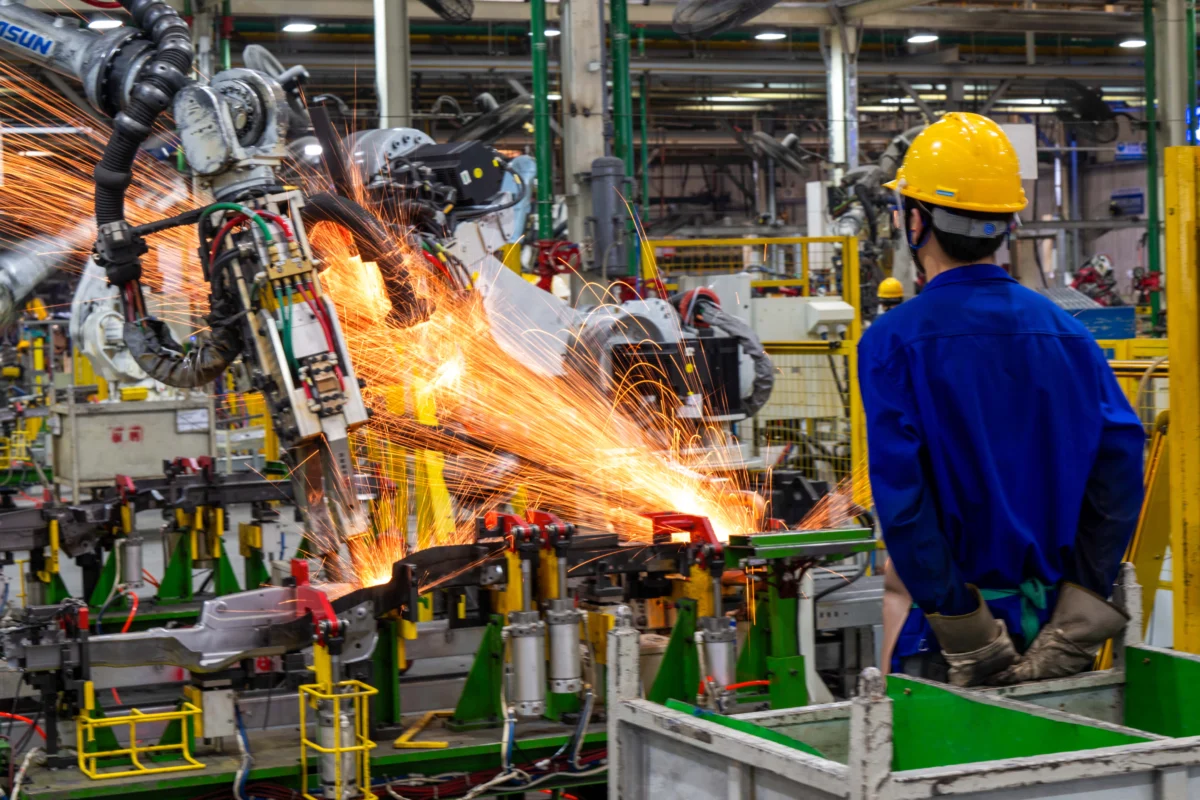
China’s manufacturing sector experienced an unforeseen contraction in July, marking the first decline since February and raising significant concerns about the nation’s economic momentum. The official manufacturing purchasing managers’ index (PMI) dropped to 49.2, down from 50.3 in June, according to data released by the National Bureau of Statistics (NBS) on Friday. This figure fell below the critical 50-point threshold that delineates expansion from contraction and significantly missed economists’ median forecast of 50.0. The unexpected downturn, underscored by a slump in domestic orders and production disruptions caused by typhoons, signals an unwinding of previous front-loading momentum and intensifies pressure on Beijing to implement more robust measures to bolster domestic demand and stabilize growth. The scene in industrial hubs like Liuzhou, Guangxi Zhuang Autonomous Region, where robotic arms diligently assemble auto parts, represents the advanced manufacturing capabilities of China, yet even such efficient operations are not immune to the broader economic currents impacting the nation’s industrial output.
A Deeper Dive into the Troubling Data
The headline PMI figure, which now stands at its weakest point since February, abruptly ended a four-month streak of expansion that had largely been sustained by exporters rushing shipments ahead of anticipated U.S. tariff increases. The primary drag on the overall index was the new orders sub-index, which plummeted to 48.5, reaching its lowest level in 38 months, according to official data accessed via Wind. This sharp decline in new orders points predominantly to a significant weakening of domestic demand, despite a slight softening in export orders. Julian Evans-Pritchard, head of China economics at Capital Economics, highlighted this internal weakness, stating, "Domestic weakness appears largely to blame — while the export orders index softened a bit." He anticipates that local governments will likely follow through on Beijing’s recent policy support pledges to reignite internal consumption and investment.
Further compounding the economic anxieties, the sub-index for factory-gate prices extended its decline in July. This persistent weakness in producer prices signals a lack of pricing power for manufacturers, extending beyond the brief, war-driven energy spike observed earlier in the year. It suggests that companies are struggling to pass on costs, potentially indicating overcapacity or subdued demand throughout the supply chain.
The economic malaise was not confined solely to manufacturing; it spread broadly across other key sectors. The construction PMI slumped to a record low of 47.0, reflecting significant challenges in the property and infrastructure sectors. The services gauge also fell to its weakest point since the initial Covid-19 lockdowns, indicating a broader slowdown in consumer-facing industries and business activities. Consequently, the composite PMI, which combines both manufacturing and non-manufacturing activity, dropped to 49.3, its lowest level since the pandemic officially concluded in 2022, according to Wind data. A spokesperson from the National Bureau of Statistics partially attributed this widespread PMI weakness to a recent spate of typhoons, which significantly disrupted operations and halted work on numerous projects across various regions.
Chronology of Economic Headwinds and Policy Responses
The July contraction follows a period of mixed signals and growing apprehension regarding China’s economic trajectory. In the second quarter of the year, China’s economy expanded by 4.3% from a year earlier, marking the slowest pace in over three years and notably missing the lower end of the government’s full-year growth target of 4.5% to 5%. This underperformance set a cautionary tone for the latter half of the year.
For much of the preceding months, exports had emerged as one of the economy’s few reliable growth engines. This momentum was particularly evident in June, when overall exports surged by 27%—the fastest pace in nearly five years—largely driven by businesses front-loading orders ahead of expected higher American tariffs. U.S.-bound shipments, in particular, saw a robust 14% increase in June. Manufacturers had been bracing for additional levies from President Donald Trump’s Section 301 probes, especially after a 10% broad-based duty expired on July 24. The anticipation of these tariffs created an artificial boost in export activity, which, by July, began to unwind as the tariff landscape shifted and the initial rush subsided. The China Beige Book, a research firm, noted that U.S.-bound shipments fell outright in July for the first time in several months, confirming the strain on this previously strong engine of growth.
The firm’s survey further revealed that factory activity decelerated across the board in July, with manufacturing registering the worst performance in employment. Job growth deteriorated across all surveyed sectors compared to a year earlier, indicating a widening impact on the labor market. Retail sales also experienced a decline in July, both from the prior month and year earlier, with travel and restaurants witnessing a particularly sharp on-year downturn, suggesting wavering consumer confidence and reduced discretionary spending.
Against this backdrop, the country’s top policymakers convened their mid-year meeting just a day before the PMI data release. On July 29, they acknowledged "difficulties and challenges facing the economy," a candid admission that underscored the seriousness of the situation. In response, they pledged to accelerate fiscal spending and roll out "incremental policies" aimed at shoring up growth in the second half of the year. However, the Politburo’s readout from the meeting stopped short of outlining concrete policy steps, leaving market participants awaiting more specific details.
Broader Economic Headwinds and Structural Challenges
Beyond the immediate factors like typhoons and the unwinding of tariff-related front-loading, China’s economy faces a confluence of deeper, more structural headwinds. The ongoing global trade tensions, particularly with the United States, continue to cast a long shadow over export-oriented industries, prompting global supply chain adjustments and diversification strategies away from China. This geopolitical uncertainty directly impacts investment sentiment and long-term business planning.
Domestically, the persistent slump in consumer confidence remains a critical concern. Lingering memories of stringent COVID-19 lockdowns, coupled with an unresolved property sector crisis, have made households more cautious about spending. The property market, once a cornerstone of China’s economic growth, continues to grapple with significant structural risks, including high levels of local government debt and vulnerabilities within smaller financial institutions. Eurasia Group analysts, commenting after the Politburo meeting, noted that "officials continue to prioritize risk containment over near-term growth," framing issues like property and local government debt as long-term structural risks to be managed rather than problems to be solved quickly. This approach, while prudent for financial stability, may delay aggressive stimulus measures that could otherwise boost short-term growth.
Furthermore, the envisioned transition of China’s economy towards "new-economy" sectors, such as artificial intelligence, has yet to fully materialize to offset the slowdown in traditional industries. Eurasia Group analysts suggested that "AI fail to offset the slowdown in traditional industries," contributing to the risk of growth falling below target in the second half of the year. This highlights the challenges inherent in rebalancing a colossal economy, particularly when global demand is sluggish and domestic structural issues persist.
Official Responses and Future Policy Outlook
The National Bureau of Statistics’ attribution of some PMI weakness to typhoons, while factually correct, may be seen by some analysts as downplaying the deeper, systemic issues at play. However, the Politburo’s acknowledgment of "difficulties and challenges" and its pledge for accelerated fiscal spending and "incremental policies" signal a clear recognition at the highest levels of government that more proactive intervention is needed.
Economists like Julian Evans-Pritchard interpret the relatively stable indices tracking firms’ expectations for future output, including an improvement in the construction sector, as a sign that "Firms believe the latest deterioration in activity will prove short-lived, perhaps because they anticipate a stronger tailwind from fiscal policy over the rest of the year." This suggests that businesses are holding out hope for forthcoming government support to turn the tide.
The disappointing July data will undoubtedly sharpen expectations for more aggressive easing measures. While the Politburo meeting avoided concrete policy announcements, the "incremental policies" could encompass a range of fiscal and monetary tools. On the fiscal front, this might involve an acceleration of infrastructure project approvals and spending, increased tax breaks for businesses, or targeted subsidies to stimulate consumer spending in specific sectors like automotive or home appliances. Local governments, which often bear the brunt of implementing such policies, are expected to play a crucial role.
From a monetary policy perspective, the People’s Bank of China (PBOC) might consider further cuts to benchmark interest rates or reductions in the reserve requirement ratio (RRR) for banks to inject more liquidity into the financial system and lower borrowing costs for businesses and consumers. However, the PBOC has historically exercised caution, balancing growth imperatives with concerns about financial stability and inflation. Given the producer price weakness, there might be room for monetary easing without immediately stoking consumer inflation.
Broader Implications and the Path Ahead
The unexpected contraction in China’s factory activity has significant implications, not only for the domestic economy but also for global supply chains, commodity markets, and overall international trade. A prolonged slowdown in China, the world’s second-largest economy, would inevitably ripple through global markets, affecting demand for raw materials, components, and finished goods.
Beijing’s policy dilemma is complex: how to stimulate near-term growth without exacerbating existing structural risks, particularly in the property market and local government debt. The emphasis on "risk containment" suggests that any stimulus measures are likely to be carefully calibrated and targeted, rather than a broad-based, aggressive injection of funds. This cautious approach reflects a long-term strategy to rebalance the economy towards higher-quality, sustainable growth, even if it means sacrificing some short-term expansion.
The deterioration in employment across sectors, as highlighted by the China Beige Book, poses a direct threat to social stability and consumer confidence. Maintaining employment levels will likely be a key focus of any future policy interventions. Furthermore, the ability of new-economy sectors to eventually pick up the slack from traditional industries will be crucial for China’s long-term economic transformation. The current data suggests this transition is still in its nascent stages and not yet robust enough to counteract the broad-based slowdown.
In the coming months, global observers will be closely watching for the specifics of Beijing’s promised "incremental policies." The effectiveness and speed of implementation of these measures will determine whether the July contraction was a temporary blip caused by specific factors or an early warning sign of a more entrenched period of economic weakness that could challenge China’s growth trajectory for the foreseeable future. The pressure is undeniably on China’s policymakers to restore confidence and inject renewed dynamism into an economy facing a growing array of domestic and international challenges.








